Israel has recognized Somaliland as an "independent and sovereign state," Israeli Prime Minister Benjamin Netanyahu said on Friday.
"Together with Foreign Minister Sa'ar and the President of the Republic of Somaliland, we signed a joint and mutual declaration," Netanyahu posted to X.
"This declaration is in the spirit of the Abraham Accords signed at the initiative of President Trump," he said.
In doing so, Israel became the first country to recognize the breakaway region.
Somalia's Foreign Ministry denounced Israel's "deliberate attack" on its sovereignty and warned that recognizing Somaliland as an independent state would "undermine regional peace."
"Illegitimate actions of this nature seriously undermine regional peace and stability, exacerbate political and security tensions," the ministry said in a statement.
Somaliland broke ties with Somalia in 1991, and the region has sought international recognition as an independent state since then.
But no foreign government recognized its sovereignty until now.
In recent years, Somaliland has struck major power investment deals with foreign powers, including Ethiopia and United Arab Emirates.
Netanyahu said Israel would seek immediate cooperation with Somaliland in agriculture, health, technology and economy.
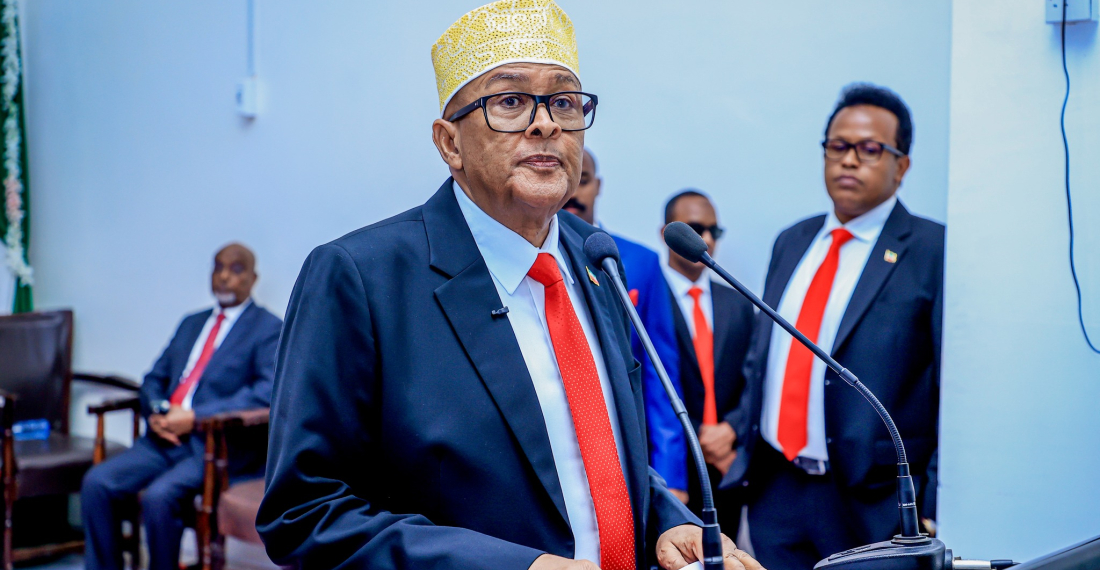
Netanyahu congratulated Somaliland's president, Abdirahman Mohamed Abdullahi, praised his leadership and invited him to visit Israel
Somaliland's president came to power last year and has since sought international recognition of the self-declared republic.
Somaliland President Abdirahman Mohamed Abdullahi said in a statement that the breakaway state would join the Abraham Accords, calling it a step toward regional and global peace.
He said Somaliland was committed to building partnerships, boosting mutual prosperity and promoting stability across the Middle East and Africa.
Somaliland's Ministry of Foreign Affairs posted to X: "Somaliland's moment has arrived." The Abraham Accords are US President Donald Trump's signature foreign policy achievement from his first term.
The set of deals to normalize relations between Israel and other Arab nations was considered a big step toward peace in the Middle East region at the time.
There have been some success stories with Israel having normalized relations with the United Arab Emirates, Bahrain, Sudan and others.
Trump hopes to expand the number of countries that sign the accords that bring mutual economic and security benefits during his second term.
Egyptian Foreign Minister Badr Abdelatty said he held phone calls with his counterparts from Somalia, Turkey and Djibouti to discuss what they described as dangerous developments in the Horn of Africa, following Israel's announcement
The ministers condemned Israel’s recognition of Somaliland, reaffirmed their full support for Somalia’s unity and territorial integrity, and warned that recognizing breakaway regions poses a threat to international peace and security, Egypt's Foreign Ministry said.
"This initiative by Israel, which aligns with its expansionist policy and its efforts to do everything to prevent the recognition of a Palestinian state, constitutes overt interference in Somalia's domestic affairs," the Turkish Foreign Ministry said in a statement.
The African Union (AU) joined the condemnations of Israel's recognition of Somaliland.
"Any attempt to undermine the unity, sovereignty, and territorial integrity of Somalia... risks setting a dangerous precedent with far-reaching implications for peace and stability across the continent," an AU statement read.
Israel said that it has now established diplomatic relations with Somaliland, and the two will soon set up embassies.
commonspace.eu political editor said in a comment that by recognising Somaliland Israel has opened Africa's pandora's box. The borders of most African countries were drawn in colonial times, and in the post-colonial period of the last seventy years, these borders have been considered sacrosanct. The two exceptions are also to be found in the Horn of Africa, where Eritrea broke away from Ethiopia and South Sudan broke away from Sudan.
source: commonspace.eu with Deutsche Welle (Cologne) and agencies
picture: The president of Somaliland, Abdirahman Mohamed Abdullahi