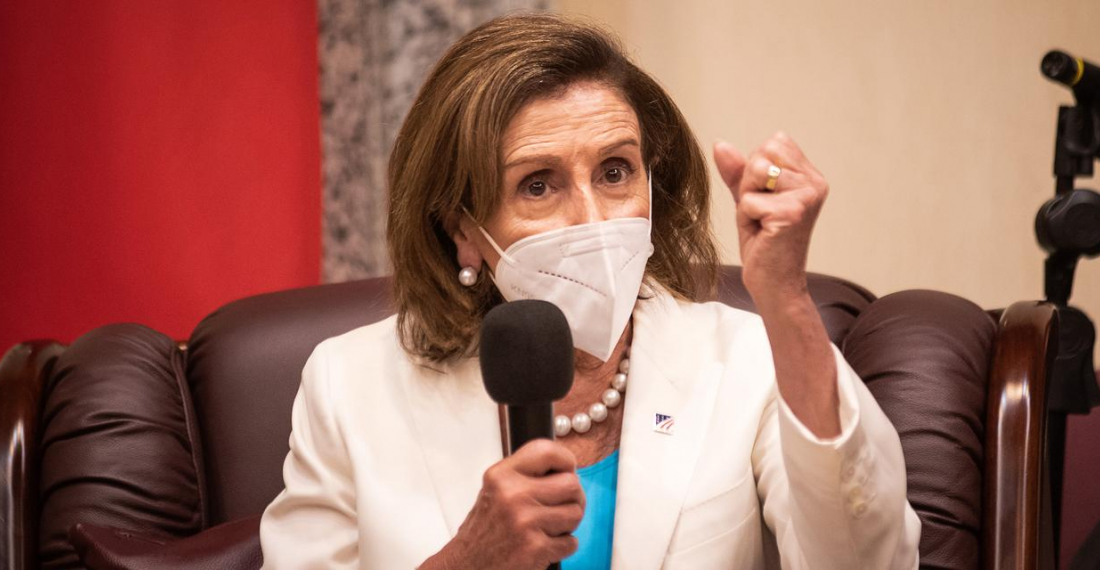
Since February 24, 2022, the international community's focus was concentrated entirely on the war in Ukraine and the growing Russia – West confrontation. It seemed that nothing could change the situation until the end of hostilities in Ukraine. However, on August 2 and 3, almost everyone’s attention shifted from Ukraine to Taiwan. As the Speaker of the US House of Representatives, Nancy Pelosi, stated her intention to visit Taiwan, up to half a million people were watching the trajectory of her plane on air flight tracking sites. The negative reaction of China, including the warning of President Xi during his conversation with President Biden that those who played with fire would be perished by it, created hype around this visit. Many were discussing the possibility of Chinese military jets closing the airspace over Taiwan and preventing Pelosi’s plane from landing in Taiwan, while some enthusiasts were even contemplating the possibility of a US-China direct military clash. As Pelosi landed in Taiwan and met with the Taiwanese President, the global social media was full of amateur assessments about the strategic victory of the US and the confirmation of the US global hegemony. However, as the dust settles down, and information noise and manipulation eventually decreases, a more serious assessment is needed to understand the real consequences of this visit.
Pelosi will probably not be re-elected as Speaker after the mid-term elections scheduled for November 2022, and she wanted to effectively end her political career by showing her support for Taiwan and democracy in general.
First of all, it should be noted that this was not the first visit of its kind. Newt Gingrich met with Taiwanese President Lee Teng-hui in Taipei in 1997. To be sure, Gingrich was a Republican Speaker during a Democratic administration, while Pelosi and Biden, in contrast, belong to the same party. However, anyone familiar with the US government system understands that the head of the executive branch has no legal ability to force the Speaker of the House of Representatives to do or not to do something. Yes, Biden and Pelosi are Democrats, but Biden is not the Chairman of the Democratic party, and neither is Pelosi a Vice-Chairwoman who is forced to listen to her boss. Theoretically, Biden could ban the military jet that took Pelosi to Taiwan to fly to the island using his powers as commander-in-chief, but that step would be challenging to explain, especially as in June 2021, three US senators arrived in Taiwan aboard a US Air Force plane. Other American officials visited Taiwan too. For example, the Trump administration in 2020 sent the US Health and Human Services Secretary Alex Azar to Taipei.
The real reason for China’s resentment was not the fact of Pelosi’s visit, which was not agreed with President Biden. Pelosi will probably not be re-elected as Speaker after the mid-term elections scheduled for November 2022, and she wanted to effectively end her political career by showing her support for Taiwan and democracy in general. Pelosi had very complicated relations with China in the last three decades. Most famously, in 1991, she visited Tiananmen Square and displayed a banner honoring the demonstrators, while the Chinese government has made no secret of its disdain for Pelosi, once labeling her "full of lies and disinformation."
The core reason behind Beijing's complaints is the belief that the United States is moving away from its one-China policy. Secretary of State Mike Pompeo congratulated Taiwanese President Tsai Ing-wen on her inauguration in 2020, and Secretary of State Antony Blinken publicly referred to Taiwan as a “country.” The Biden administration invited Taiwan to participate in its Summit for Democracy held in December 2021. Given the growing arms sales to Taiwan, Beijing argues that the US violates the third communique on arms sales to Taiwan signed by the US and China in August 1982. Thus, China believes that the chances for the peaceful reunification of Taiwan with China are diminishing due to the shift in US policy. At the same time, according to the Chinese Anti-Secession law adopted in March 2005, Taiwan is part of China, and the Chinese state shall never allow the "Taiwan independence" secessionist forces to make Taiwan secede from China under any name or by any means. According to article 8 of that law, if possibilities for a peaceful reunification are completely exhausted, the Chinese state shall employ non-peaceful means and other necessary measures to protect China's sovereignty and territorial integrity.
The world may end up with the establishment of two rival blocs, while other great powers, such as India and Brazil, will seek to balance between them, thus pushing forward the idea of multi-polarity to succeed a unipolar world order.
For at least a decade, the Chinese army has been preparing to takeover Taiwan militarily. Of course, this does not mean China will start the war in the coming weeks or months. From the Chinese perspective, time is on China’s side, as China will continue to rise while the US passes its peak of power and enters the inevitable path of decline, like any other empire. Thus, if a war over Taiwan is inevitable, it makes no sense to start it now if, in 2030 or 2035, China will be in a much better position to achieve its objective. The war over Taiwan will significantly damage the Chinese economy, potentially throwing back decades of economic achievements; thus, there is no need to do it now, since China still has potential for further growth. However, China will not wait forever. In an official document called “Outline of the 14th Five-year plan (2021-2025) for National Economic and Social Development and Vision 2035 of the People’s Republic of China", there is a particular point on constructing a high-speed railway that will connect Taiwan and the Chinese coastal province of Fujian. That suggests that China should finish the process of return of Taiwan by at least 2035.
Meanwhile, the perception in China that the US has dropped its one-China policy – amidst other growing tensions in US-China relations such as the situation in Xinjiang, Hong Kong and Tibet, and the trade war started by the administration of President Trump – will probably push China closer to Russia. As the war in Ukraine resulted in a complete rupture in Russia – West relations and brought about the US-led Western efforts to isolate Russia from the West, the Kremlin would positively view a closer partnership between Russia and China. The two countries may deepen their defense cooperation and continue their efforts to abandon the US dollar in their bilateral trade, seeking to undermine US global financial hegemony. As discussions on the resumption of the Iranian nuclear talks are very close to failure, Iran may join this partnership, thus creating some loose anti-Western alliance. The world may end up with the establishment of two rival blocs, while other great powers, such as India and Brazil, will seek to balance between them, thus pushing forward the idea of multi-polarity to succeed a unipolar world order.
source: Benyamin Poghosyan is the founder and Chairman of the Centre for Political and Economic Strategic Studies in Yerevan.
photo: Getty Images
The views expressed in opinion pieces and commentaries do not necessarily reflect the position of commonspace.eu or its partners.