NKR at 22 - Unrecognised but entrenched

The self-declared Nagorno-Karabakh Republic on Monday celebrated the 22nd anniversary of its declaration of independence. On 2 September 1991 a joint session of the Nagorno Karabakh Oblast and Shahoumian regional councils of people's deputies with the participation of deputies of councils of all levels issued the following declaration:

"Expressing the will of people, in fact, fixed by a referendum and in the decisions of the NKAO and Shahoumian regional authorities in 1988-1991, its strive for freedom, independence, equality and good neighbourly relations;

ascertaining proclamation by the Azerbaijani Republic of the "restoration of 1918-1920 state independence";

taking into consideration that the policy of apartheid and discrimination pursued in Azerbaijan created an atmosphere of hatred and intolerance in the Republic towards the Armenian people, which led to armed conflict, human victims, mass deportation of the population from peaceful Armenian villages;

being guided by the USSR acting Constitution and laws giving the population of autonomous units and compactly living ethnic groups the right to decide independently the issue of their state-legal status in case of a Soviet Republic's secession from the USSR;

considering the Armenian people's strive for unification natural and in line with the norms of international law;

striving for restoration of good neighbourly relations between Armenian and Azerbaijani peoples, based on mutual respect of each other's rights;

taking into consideration the complexity and contradictoriness of the situation in the state, uncertainty of the Union's future, Union's structures of authority and governance;

respecting and following the principles of General Declaration on Human Rights and International Pact on Economic, Social and Cultural Rights, International Pact on Civil, Political and Cultural Rights and with hope for international community's understanding and support,

PROCLAIMS:

THE NAGORNO KARABAKH REPUBLIC WITHIN THE BORDERS OF THE CURRENT NAGORNO KARABAKH AUTONOMOUS OBLAST AND NEIGHBORING SHAHOUMIAN REGION. (NKR)

The Nagorno Karabakh Republic enjoys the authorities given to Republics by the USSR Constitution and legislation and reserves the right to decide independently the issue of its state-legal status based on political consultations and negotiations with the leadership of Union and Republics.

The USSR Constitution and legislation, as well as other laws currently in force, which do not contradict the goals and principles of this Declaration and peculiarities of the Republic apply on the territory of the Nagorno Karabakh Republic, until the NKR Constitution and laws are adopted."

Commenting on the 22nd anniversary of the establishment of the NKR, commonspace.eu political editor said:

"Twenty-two years later the Nagorno-Karabakh Republic continues to remain unrecognised internationally, but firmly well entrenched internally. Behind a wall of trenches and barbed wire, and with the help of thousands of soldiers from Armenia, it has frustrated Azerbaijan's ambitions to re-assert control over its territory. In these twenty-two years NKR has developed its own mini institutions, a Presidency, a government, parliament, political parties, army, and even a small civil society. They are often show-cased as a sign of its success. Yet this is a society under siege, militarised in many ways, and constantly reminded of the perils and dangers from the enemy at the gates. That enemy has changed a lot in the last twenty two years. In 1991 Azerbaijan emerged from the ashes of the USSR divided, weak and in political turmoil. Today it is a confident country, which whilst not without its own serious problems, has all the hallmarks of success. It has invested a lot of its revenues from oil into building a strong Armed Forces whose primary aim is to prepare to reverse the political and military defeats of two decades ago and bring back Nagorno-Karabakh within the Azerbaijani fold. The Karabakh conflict is often depicted as a struggle between the two well entrenched principles - the right for self determination, as expressed by the resolution adopted twenty two years ago, and the principle of territorial integrity, based on the recognition of Azerbaijan by the international community within the borders of the Azerbaijan SSR, which included Nagorno-Karabakh. In this case the two principles contradict each other and any solution is going to require compromise, flexibility and ingenuity. With the Armenian population of Karabakh living for a generation under siege, and with the Azerbaijani population of Karabakh living for the same amount of time as refugees displaced by the conflict, there are in this story no winners, only losers. Nor will there be any winners in case a new war is fought. One generation has been lost already. It is time to give the next one a better future."

source: commonspace.eu. Text of the declaration of the Nagorno-Karabakh Republic reproduced from www.nkr.am

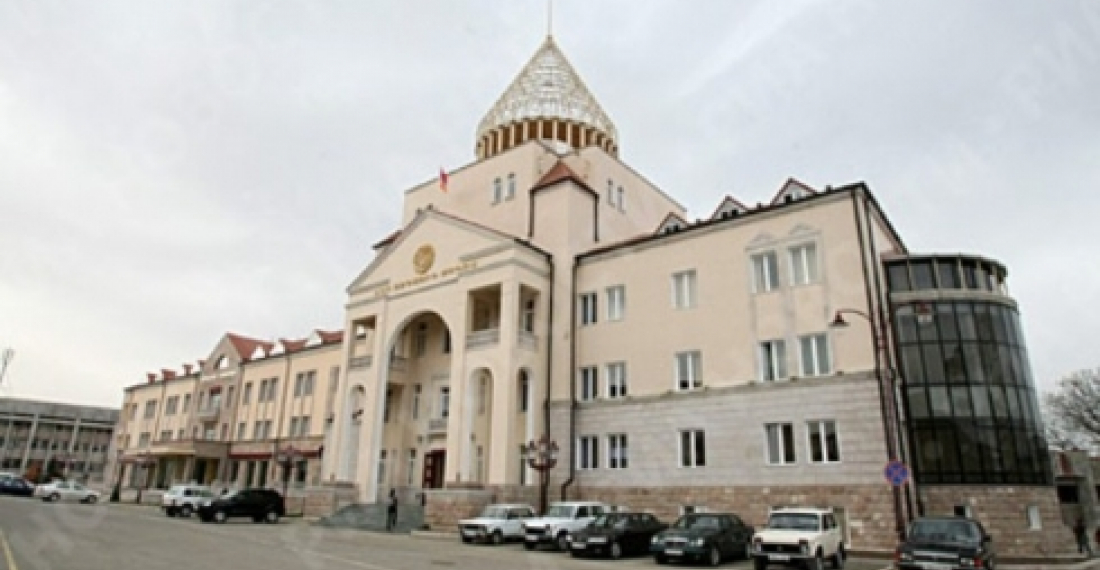
photo: The government building in the NKR capital, Stepanakert.
Related articles

Editor's choice
News
UN Security Council will discuss "Children and Armed Conflict" on Monday

UN Security Council will discuss "Children and Armed Conflict" on Monday

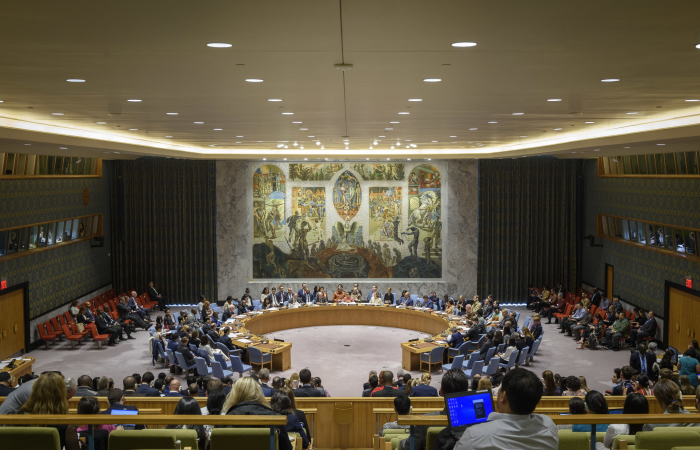
On Monday (26 October), the United Nations Security Council will hold an open briefing to mark the 30th anniversary of the establishment of the children and armed conflict mandate by the General Assembly. Greek Minister of Foreign Affairs Giorgos Gerapetritis is expected to chair the meeting, which is a signature event of Greece’s October Council presidency. The anticipated briefers are Special Representative of the Secretary-General for Children and Armed Conflict Vanessa Frazier; UNICEF Executive Director Catherine Russell; the Special Envoy for Children Affected by Armed Conflict of the African Union (AU), Jainaba Jagne; and the Director of Watchlist on Children and Armed Conflict, Bethany Ellis. Greece served as the chair of the Working Group on Children and Armed Conflict in 2025, but has yet to be reappointed this year due to the ongoing delays in the allocation of subsidiary body chairs. It has nonetheless continued to prioritise the agenda, including by promoting a resolution addressing the impact of digital technologies on the perpetration of violations and abuses against children, which was adopted unanimously on 19 October as resolution 2832 and was co-sponsored by 93 member states. (For more information, see our 18 October What’s in Blue story.) In addition to organising tomorrow’s signature event, Greece invited civil society briefers focusing on the protection of children to two Council meetings—on Yemen and Syria, on 9 and 12 October, respectively—and chaired a meeting of the Working Group on Children and Armed Conflict on 13 October. Greece has circulated a concept note ahead of tomorrow’s meeting, which says that the briefing aims to assess the progress achieved in the 30 years since the children and armed conflict agenda was established as well as the challenges it faces. (click image to read more)
Editor's choice
News
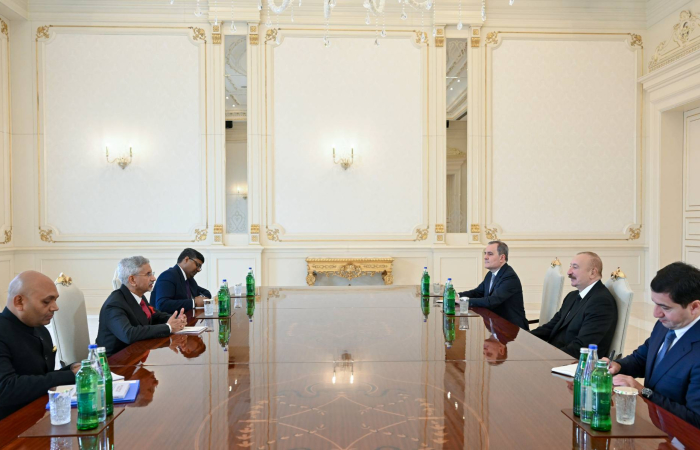
Indian Foreign Minister meets Aliyev in Baku

Indian Foreign Minister meets Aliyev in Baku

On October 23, the president of Azerbaijan Ilham Aliyev met in Baku with Subrahmanyam Jaishankar, Minister of External Affairs of India. This was the highest level visit by an Indian official to Azerbaijan in a long time. According to the website of the Azerbaijani president, Aliyev fondly recalled his meeting with Indian Prime Minister Narendra Modi in Bishkek and the exchange of views during that meeting. President Ilham Aliyev highly appreciated the visit of India’s Minister of External Affairs to Azerbaijan on the instructions of Prime Minister Narendra Modi, stressing its importance for discussing the current state and prospects of bilateral relations. During the meeting, the sides held an extensive exchange of views on the current state of relations between Azerbaijan and India, highlighting ample opportunities to develop cooperation in areas of mutual interest. The sides noted that Azerbaijan and India, as members of the Global South, share similar positions on a number of issues on the international agenda, including matters of concern to countries of the Global South. In this regard, they discussed prospects for bilateral cooperation in political, trade and economic, high-tech, cultural, humanitarian and other fields. The conversation also touched upon the importance of cooperation within international organizations. The sides emphasized the need to intensify political contacts and organize reciprocal visits at various levels, including exchanges involving economic and business delegations, to further advance bilateral relations.

Popular

Editor's choice
Interview
Thursday Interview: Murad Muradov

Thursday Interview: Murad Muradov

Today, commonspace.eu starts a new regular weekly series. THURSDAY INTERVIEW, conducted by Lauri Nikulainen, will host  persons who are thinkers, opinion shapers, and implementors in their countries and spheres. We start the series with an interview with Murad Muradov, a leading person in Azerbaijan's think tank community. He is also the first co-chair of the Action Committee for a new Armenian-Azerbaijani Dialogue. Last September he made history by being the first Azerbaijani civil society activist to visit Armenia after the 44 day war, and the start of the peace process. Speaking about this visit Murad Muradov said: "My experience was largely positive. My negative expectations luckily didn’t play out. The discussions were respectful, the panel format bringing together experts from Armenia, Azerbaijan, and Turkey was particularly valuable during the NATO Rose-Roth Seminar in Yerevan, and media coverage, while varied in tone, remained largely constructive. Some media outlets though attempted to represent me as more of a government mouthpiece than an independent expert, which was totally misleading.  Overall, I see these initiatives as important steps in rebuilding trust and normalising professional engagement. The fact that soon a larger Azerbaijani civil society visits to Armenia followed, reinforces the sense that this process is moving in the right direction." (click the image to read the interview in full)