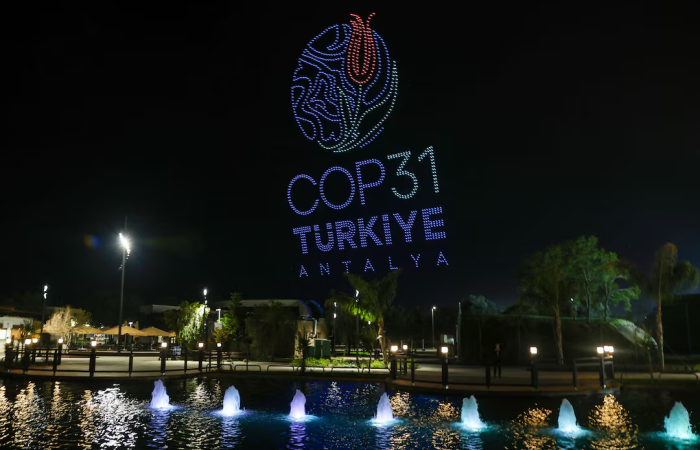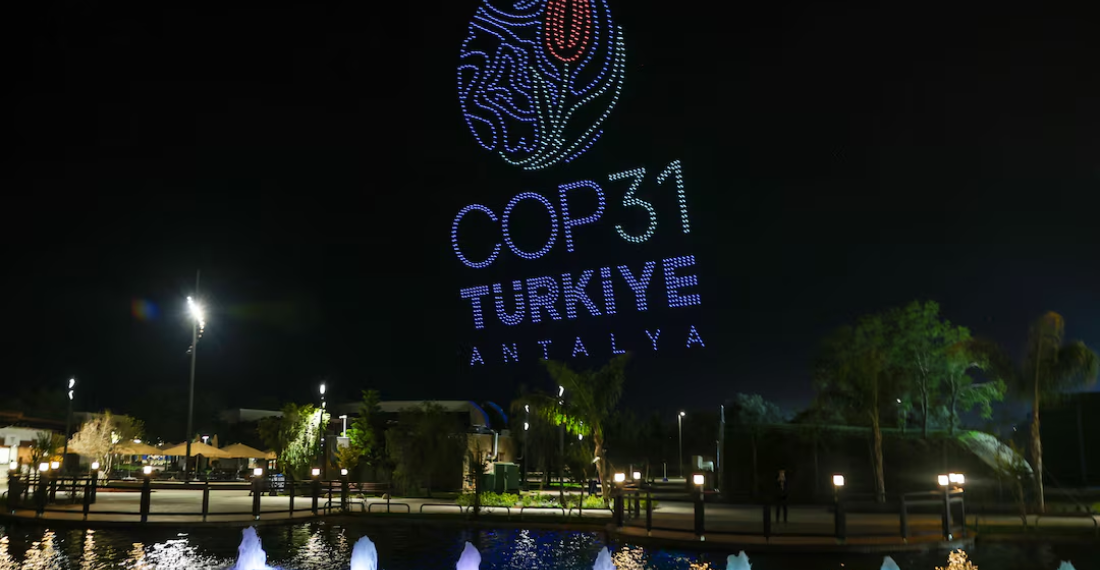
COP31 negotiations in Antalya, Türkiye, remained deadlocked on key climate finance and political issues on Wednesday, November 18, with 21 agenda items still awaiting agreement. At the same time, ministers called for more targeted support to help developing countries implement their climate commitments, while the EU and Canada secured additional members for the Global Ocean Observing System.
At a session organised by the UNFCCC secretariat, representatives from Uganda, Panama, Cameroon, Saint Kitts and Nevis highlighted the gap between national climate targets and the resources available to implement them. Uganda’s Minister of State for Environment, Beatrice Anywar Atim, called for country-specific technical assistance rather than a uniform approach, as well as increased funding for the UNFCCC secretariat and its Regional Collaboration Centres. Panama’s Environment Minister, Juan Carlos Navarro, pointed to UNFCCC technical guidance that helped develop the country's Nature Pledge and implementation roadmap, bringing climate, biodiversity and land restoration commitments under one framework. He stressed that climate action required funding and political will rather than additional targets. Cameroon, Saint Kitts and Nevis similarly highlighted the need for cross-ministerial coordination, institutional capacity and technical expertise.
Separately, the EU and Canada announced further international support for the OceanEye International Alliance for the Global Ocean Observing System (GOOS). At a side event co-hosted by European Commissioner for Fisheries and Oceans Costas Kadis and Canadian Ocean Envoy Diana Fox Carney, participating countries and organisations committed to improving observation infrastructure, and international data sharing and research. Launched by the EU and Canada at the UN General Assembly in September 2026, the Alliance now has 33 members.
Nevertheless, major divisions between developed and developing countries stubbornly persist. In a communication to heads of delegations, COP31 President Murat Kurum and Australian Climate Change Minister Chris Bowen, serving as President of Negotiations, identified 21 outstanding agenda items and urged Parties to accelerate discussions. Additional negotiating time was allocated for Wednesday, with revised draft texts expected by Thursday, November 19.
One of the central points of the dispute is the Climate Finance Work Programme. The EU rejected the draft text prepared by the co-facilitators, prompting the G77 and China to call for a suspension of discussions. The disagreement revolves around Article 9.1 of the Paris Agreement: developing countries want the programme to focus specifically on developed countries' obligation to provide climate finance, whereas the EU supports addressing Article 9 as a whole. Developing countries fear that this wider approach could dilute the focus on developed countries' financial commitments.
Parties also remain divided over the proposed cover decision, particularly its references to developed countries' historical responsibility, the transition away from fossil fuels and a proposed increase in adaptation finance to USD 120 billion. Ministers are scheduled to discuss these cross-cutting issues in an informal meeting on Wednesday evening. The first closing plenaries are expected on Thursday, ahead of the conference's scheduled conclusion on Friday, November 20.
Source: Anna Szedlacsek prepared this report for commonspace.eu with the European Commission Directorate-General for Maritime Affairs and Fisheries (Brussels), Third World Network (Penang) and UNFCCC (Bonn).