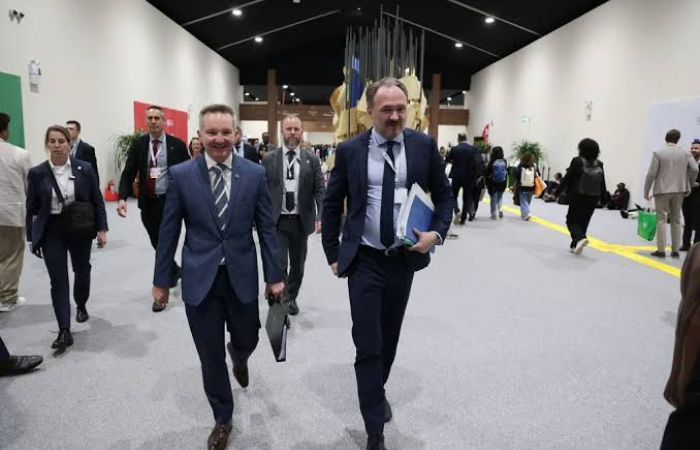
COP31 negotiations in Antalya, Türkiye, extended beyond their scheduled conclusion on Friday, November 20, as countries remained divided over climate finance, adaptation funding and the inclusion of fossil fuels in the final agreement.
At a press conference, African Group of Negotiators chair Zanetor Agyeman-Rawlings accused developed countries of failing to honour their commitments and undermining trust in the UN climate process. She said African countries were being sidelined through technical barriers and inaccessible financing, insisting that the continent was demanding money already promised rather than aid. She warned that Africa should not be reduced to a supplier of resources for other countries' energy transitions.
Another polemic point is the question of fossil fuels. Eight countries — France, Panama, Belgium, Côte d’Ivoire, Finland, Greece, Solomon Islands and Sweden — have called for fossil fuels to be included in the final agreement, condemning the previous draft, which omitted any mention of them. Panama’s climate minister Juan Carlos Navarro said a COP outcome that failed to mention fossil fuels was unacceptable. The group also called for increased renewable energy deployment, methane reductions and climate-finance contributions reflecting countries’ responsibility for emissions.
Negotiators have also disputed a proposed target of $120 billion in annual adaptation finance by 2035, with disagreements over how the funding should be calculated and delivered. African representatives have argued that commitments without clear financing mechanisms would not translate into practical support. However, so far not only mechanisms are missing but the funds as well: African countries received approximately $52 billion in 2022, against estimated annual needs of $190 billion.
On the positive side, the last day of negotiations saw the launch of the UN Disaster Risk Financing Platform, a joint initiative involving six UN agencies. The Platform aims to mobilise more than $3 billion by 2030 to protect 75 million people from climate-related disasters. The initiative will expand pre-arranged financing, insurance and early-action programmes to allow humanitarian agencies to provide assistance before disasters escalate.
Delegations are continuing to negotiate, but with developing and developed countries both appearing reluctant for now to make steps towards a compromise, it is yet to be seen when COP 31 will be to produce the final draft needed to conclude this year’s summit in Antalya.
Source: Anna Szedlacsek filed this update for commonspace.eu with Deutsche Welle (Bonn), the International Organization for Migration (Geneva), and The Guardian (London).