Theme

Diplomacy

Editor's choice
News
Germany accuses Russia of cyberattacks and disinformation campaign

Germany accuses Russia of cyberattacks and disinformation campaign

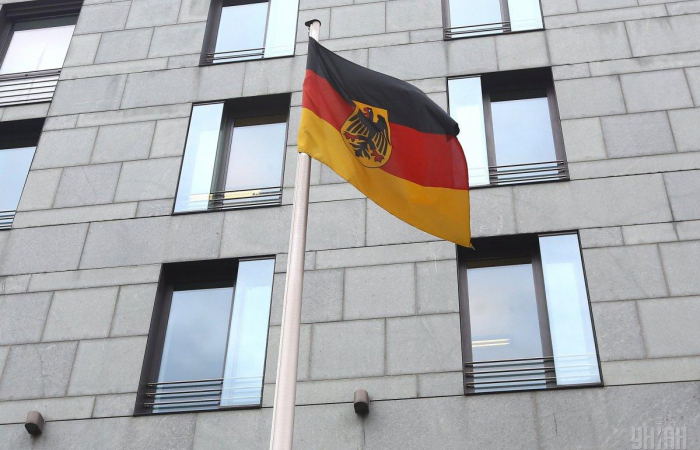
The German government holds Russia responsible for a cyberattack on German air traffic control, and for targeted disinformation campaigns before the last federal election. According to the German Foreign Office in Berlin, the incidents could be clearly attributed to the Russian military intelligence service, the GRU. In response, the Russian ambassador to Berlin was summoned to the Foreign Ministry. "We have been observing a massive increase in threatening hybrid activities by Russia for some time now," a spokesperson for the Foreign Ministry stated. These range from disinformation campaigns and espionage to cyberattacks and sabotage attempts. The aim is to divide society, sow distrust, and undermine confidence in democratic institutions. The spokesperson added that with these actions, Russia is "very concretely threatening our security, not only through its war of aggression against Ukraine, but also here in Germany."  The Foreign Ministry spokesperson explained that the cyberattack on air traffic control in August 2024 was clearly attributed to the hacker collective "APT28," known as "Fancy Bear," and to the responsibility of the Russian military intelligence service, the GRU. Furthermore, it could now be "conclusively stated" that Russia had attempted "to influence and destabilize both the last Federal election and the ongoing internal affairs of the Federal Republic of Germany." There was "absolutely irrefutable evidence" for this". The so-called "Storm 1516" campaign, which has been running since 2024, is allegedly backed by "reliable information" that the Moscow-based think tank "Center for Geopolitical Expertise" is behind it. The Center is also said to be supported by Russian military intelligence. Its primary aim is to influence democratic elections in the West. (Click the image to read more).
Editor's choice
Opinion
Opinion: A sustainable peace requires consistent long-term European involvement

Opinion: A sustainable peace requires consistent long-term European involvement

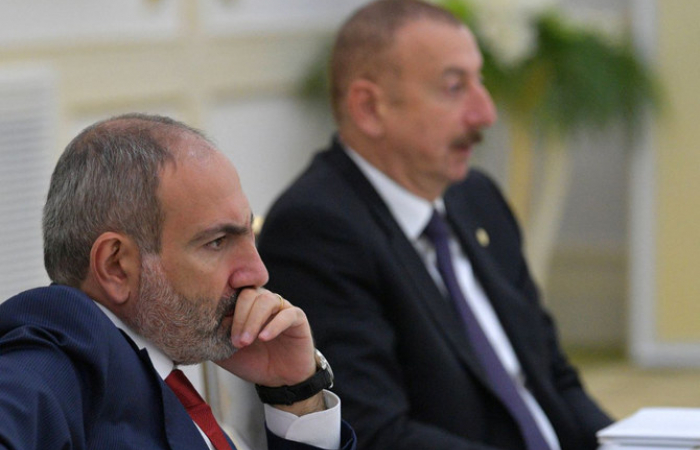
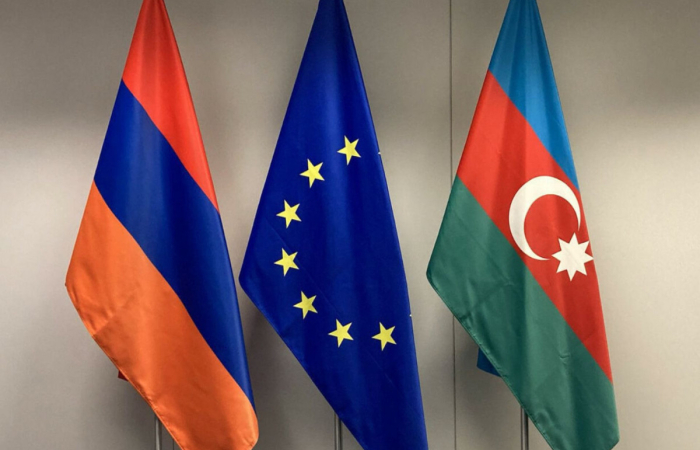
There is no denying that the EU, especially key member states acting in support, helped bring Baku and Yerevan closer to the Washington Declaration of August 8, 2025. But a declaration is not a treaty. Turning principles into a peace deal and eventually to a sustainable peace requires consistent long-term European involvement, writes Yalchin Mammadov in this-op-ed for commonspace.eu Before facilitating trust between Armenia and Azerbaijan, the EU is first expected to address its own credibility gap with Baku. A more balanced approach—such as including Azerbaijan, alongside Armenia, in the European Peace Facility—could be a useful first step. Diplomats can negotiate peace; societies must build peace. In this context, the EU can do what it does the best: long-term societal engagement. By expanding youth and academic exchange programmes, investing in cross-border civil society initiatives, and fostering people-to-people cooperation, Brussels can help shape a new generation equipped to sustain peace beyond political cycles. Such tools are slow and unglamorous, but if ignored, even the strongest treaty risks collapse. And obviously, these aspects require two-way engagement and genuine willingness by both governments to facilitate contact. If Brussels wants to remain influential, it needs to replace outdated one-size-fits-all policies with ambitious, interest-driven and differentiated approaches. Without a clear regional strategy, which appears to be the current situation, the South Caucasus will continue to sit at the margins of Europe’s security architecture—leaving space for other powers to take the lead. (You can read the op-ed in full by clicking the image.)

Filter archive

Publication date
Editor's choice
News
NATO countries sign the accession documents for Finalnd and Sweden to join the alliance

NATO countries sign the accession documents for Finalnd and Sweden to join the alliance

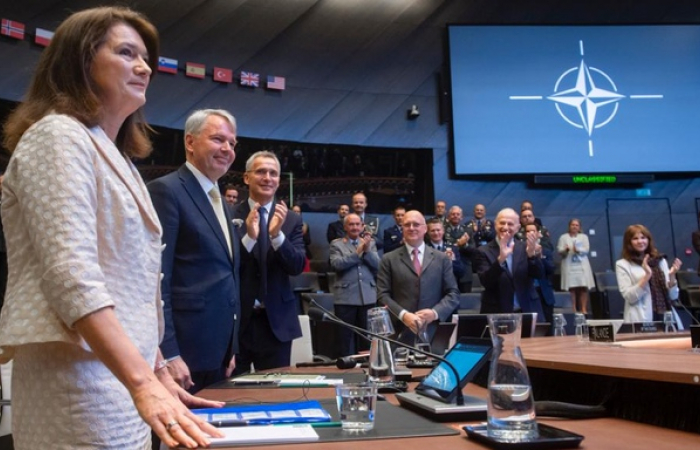
NATO Ambassadors signed the Accession Protocols for Finland and Sweden at NATO Headquarters on Tuesday (5 July 2022), in the presence of Finnish Foreign Minister Pekka Haavisto and Swedish Foreign Minister Ann Linde. The protocols now need to be approved by the countries of all thirty member states, and this procedure will take a while. But for many practical purposes Sweden and Finland are now members of the alliance, breaking with decades of neutrality as Europe continues to face Russian aggression against Ukraine. NATO Secretary General, Jens Stoltenberg said that NATO’s door remains open to European democracies who are ready and willing to contribute to our shared security: “With 32 nations around the table, we will be even stronger and our people will be even safer, as we face the biggest security crisis in decades.”
Editor's choice
News
Leaders of “Caspian Five” hold their sixth summit in Ashgabat

Leaders of “Caspian Five” hold their sixth summit in Ashgabat

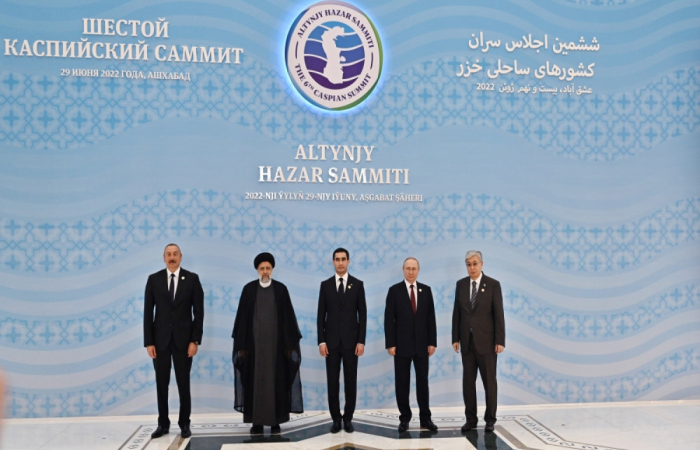
The leaders of the five Caspian littoral states, participated in a summit meeting in the capital of Turkmenistan, Ashgabat on Wednesday (29 June). The Caspian “five” are Azerbaijan, Iran, Kazakhstan, Russia and Turkmenistan. Addressing the gathering, Russian president Vladimir Putin said: “Russia unfailingly supports expanding partnerships within the Caspian “five” – in politics, security, the economy and nature conservation, as well as many other items on the humanitarian agenda.” Putin quickly reminded his four colleagues of Russia’s first priority when it comes to the Caspian, namely the exclusion of anyone else apart from the littoral states: “At the same time, we believe that prosperity in our shared region can only be guaranteed by an unfailing commitment to the principles enshrined in the Convention on the Legal Status of the Caspian Sea. The Convention stipulates the crucial provision, which is that the countries of the Caspian “five” are responsible for the Caspian region’s preservation and its sustainable development for current and future generations.”
Editor's choice
News
Is the Negev Forum about to become something bigger?

Is the Negev Forum about to become something bigger?

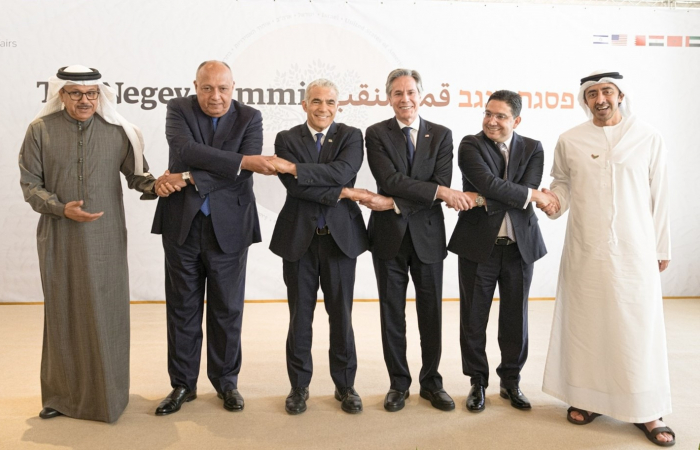
On 27–28 March 2022 in Sde Boker, Israel hosted the foreign ministers of four Arab states – Bahrain, UAE, Egypt and Morocco, as well as US Secretary of State Antony Blinken for an unusual summit aimed at putting together a united front of countries concerned with Iran’s destabilising role in the Middle East. By all accounts the meeting appeared to be hastily prepared, and lacking proper focus. A lot of the serious fault-lines of the region emerged in the meeting too, including different perspectives on the Palestinian question and relations with Russia. But the participants did agree that they want to turn their meeting into a permanent process, and so the creation of the Negev Forum was announced. Now, it seems, the six countries have taken the first step to making this platform a regional player. On Monday (27 June) senior officials from the foreign ministries of Bahrain, Egypt, Israel, Morocco, the United Arab Emirates, and the United States held the inaugural meeting of the Negev Forum Steering Committee in Manama, Bahrain. The Committee’s main objective is to further coordinate collective efforts and advance a common vision for the region. In this context, they outlined a framework document for the Negev Forum, setting out the objectives of the Forum, and the working methods of its four-part structure: the Foreign Ministers’ Ministerial, the Presidency, the Steering Committee, and the Working Groups.
Editor's choice
News
A busy week for western leaders as they prepare the next steps in response to Russian aggression in Ukraine

A busy week for western leaders as they prepare the next steps in response to Russian aggression in Ukraine

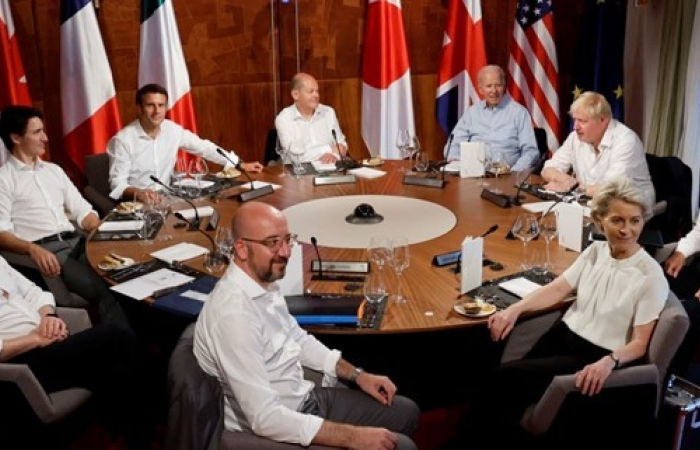
It is a busy week for Western leaders, as they prepare the next steps in response to Russian aggression in Ukraine. The leaders of the G7 - Canada, France, Germany, Italy, Japan, the United States and the Untied Kingdom, together with the European Union - started a summit meeting in Germany on Sunday. Later this week they will travel to Madrid for a summit meeting of NATO countries. The G7 meeting is taking place at a Castle in Germany’s Bavarian Alps were leaders went out of their way on Sunday (26 June), to show that they are united against Russian President Vladimir Putin’s invasion of Ukraine while discussing ways to minimize the war’s effect on rising global food and energy costs. U.S. President Joe Biden and German Chancellor Olaf Scholz met ahead of formal talks that also included the leaders of Britain, France, Canada, Italy, Japan and the European Union. Scholz said, "Germany and the U.S. will always act together when it comes to questions of Ukraine's security, and we made that clear once more." In a pre-summit show of force, Russia launched new missile attacks Sunday on Ukraine’s two biggest cities, the capital of Kyiv and Kharkiv, even as the G-7 leaders held talks to determine new ways to isolate Moscow. Biden announced the G-7 nations would ban new imports of Russian gold, the latest in an array of sanctions Western nations have imposed on Russia in an attempt punish it for Putin’s invasion of Ukraine, now in its fifth month.
Editor's choice
Commentary
Commentary: A historic decision leaves Ukrainians delighted, Moldovans ecstatic and Georgians grumpy

Commentary: A historic decision leaves Ukrainians delighted, Moldovans ecstatic and Georgians grumpy

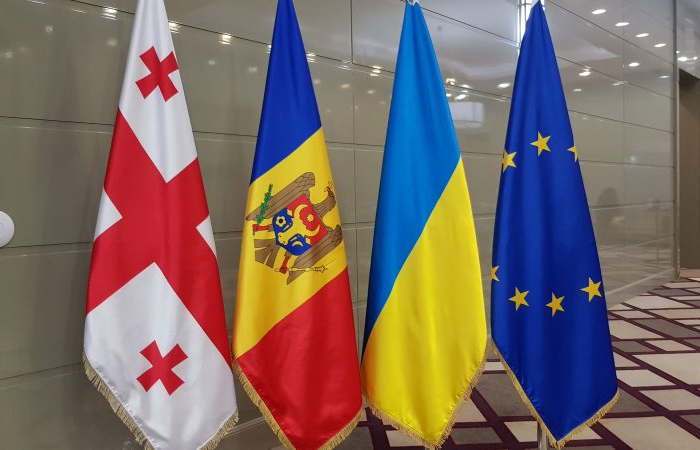
the European Council which gathers the 27 EU member states and the institutions, agreed to give Ukraine and Moldova candidate status with immediate effect. It gave Georgia "a membership perspective", with candidate status in the future if they can get their act together quickly. The Ukrainians were delighted. President Zelensky described it as a victory and promised not to rest until Russia’s defeat and full membership had been secured. In Moldova, the pro European government was ecstatic. Things had moved much faster than they had anticipated. In Georgia the situation is different, and the country is somewhat grumpy. Georgians do not  like to be last, and in a sense in this process at which they were until last year at the centre, they find themselves lagging behind the other two trio countries. The government has tried to put on a brave face saying that being given a membership perspective was a victory for Georgia too. The opposition accuses the government of squandering a historic opportunity which will have long lasting impact. In many ways both are right. An EU membership perspective is important for Georgia, even if it is largely an abstract term. It consolidates the relationship. But it would have been much better for Georgia if they had been given candidate status with the others. The ball is now in the court of the Georgian politicians, and the world will be watching.
Editor's choice
Opinion
Opinion: Israel and Lebanon move towards resolving a long standing dispute on their maritime border

Opinion: Israel and Lebanon move towards resolving a long standing dispute on their maritime border

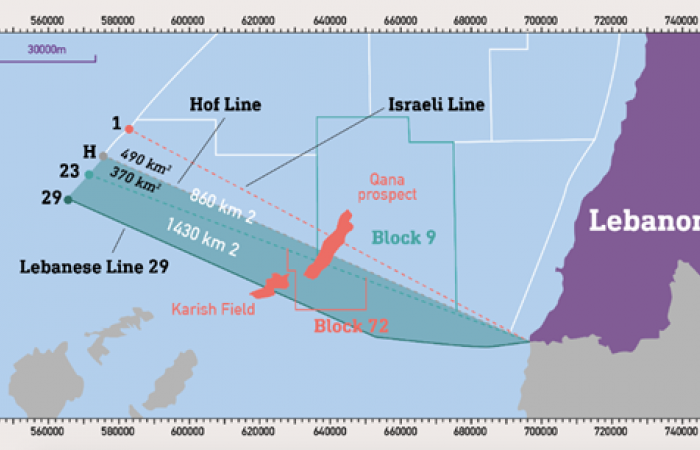
There are reports that the US may be about to broker a deal between Israel and Lebanon, resolving a long-standing dispute about their maritime border and the exploitation of two large oil and gas fields in the Levantine Basin. Amos Hochstein, the US Senior Advisor for Energy Security, this month mediated indirect talks between the two countries, who technically are still at war with each other, and have no formal diplomatic relations in an attempt to resolve the issue. After his meetings in Lebanon last week, it seemed that a breakthrough had finally been reached, when the Lebanese president, Michel Aoun, reportedly presented a unified position on behalf of the government, which offered the prospect for a compromise This new proposal would create an S shaped maritime border, granting Lebanon access to the whole of the Qana field, while leaving Israel the entirety of Karish. In the past, the lack of agreement within the Lebanese government, and its unwillingness to compromise had been the key factors holding back negotiations, and this new approach led Hochstein to strike an optimistic note, saying that Lebanon had taken “a very strong step forward”. The US Energy advisor will now relay the offer to Israel and await a response. Both countries stand to gain from a swift and peaceful resolution to this decade long problem which has prevented them from extracting any value out of the fields. 
Editor's choice
News
The great Saudi-Turkish restart

The great Saudi-Turkish restart

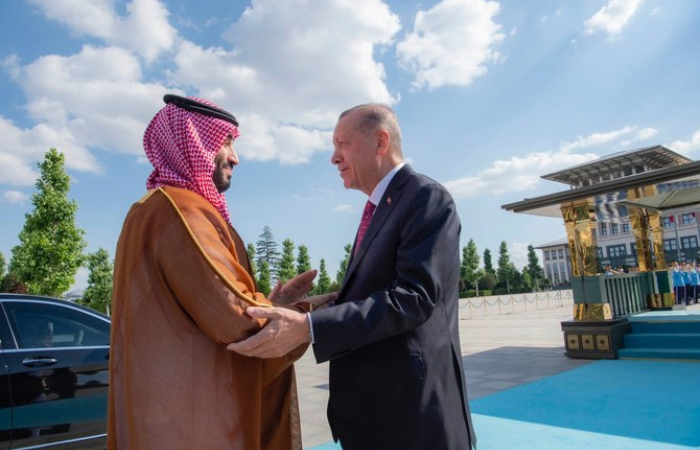
After years of dispute during which relations fell to a historical low, Turkey and Saudi Arabia on Wednesday sealed a restart in their relations during a state visit to Turkey by the Kingdom's Crown Prince, Mohamed bin Salman. The turquoise carpet was laid out at the presidential palace in Ankara as the Crown prince arrived to be greeted by Turkey's president, Recip Tayip Erdogan. The two men held discussions on bilateral relations and regional and international issues. But this visit was mainly about symbolism. The substance had already been sorted over weeks and months of discussions involving senior officials from the two countries. President Erdogan was himself in Saudi Arabia only a month ago. But the visit of Mohammad bin Salman to Ankara had huge symbolic significance and it marked the final act in a process that saw the two countries draw back from years of animosity, rooted mainly in different perspectives on the future of the Middle East and the broader Islamic world. Both countries see themselves as leaders in the region, as well as a beacon for Muslims worldwide. Prior to visiting Turkey, the Saudi Crown Prince also visited Egypt and Jordan. In a few weeks time he will welcome in Riyadh US President Joe Biden, in a final act that will see the complete rehabilitation of the heir to the Saudi throne who had been caught in international controversy.