Theme

Diplomacy

Editor's choice
News
Germany accuses Russia of cyberattacks and disinformation campaign

Germany accuses Russia of cyberattacks and disinformation campaign

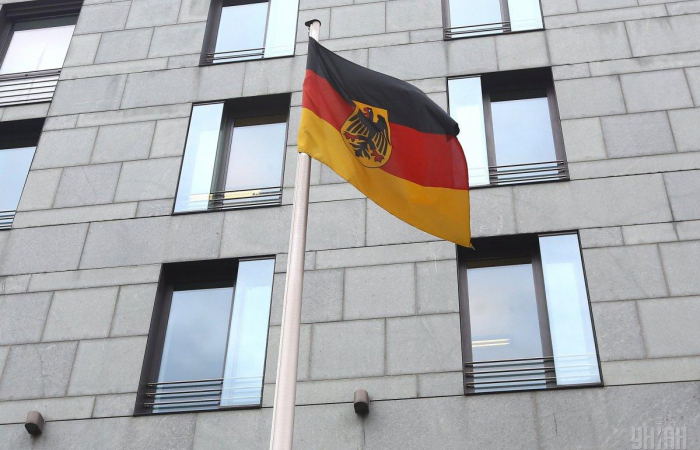
The German government holds Russia responsible for a cyberattack on German air traffic control, and for targeted disinformation campaigns before the last federal election. According to the German Foreign Office in Berlin, the incidents could be clearly attributed to the Russian military intelligence service, the GRU. In response, the Russian ambassador to Berlin was summoned to the Foreign Ministry. "We have been observing a massive increase in threatening hybrid activities by Russia for some time now," a spokesperson for the Foreign Ministry stated. These range from disinformation campaigns and espionage to cyberattacks and sabotage attempts. The aim is to divide society, sow distrust, and undermine confidence in democratic institutions. The spokesperson added that with these actions, Russia is "very concretely threatening our security, not only through its war of aggression against Ukraine, but also here in Germany."  The Foreign Ministry spokesperson explained that the cyberattack on air traffic control in August 2024 was clearly attributed to the hacker collective "APT28," known as "Fancy Bear," and to the responsibility of the Russian military intelligence service, the GRU. Furthermore, it could now be "conclusively stated" that Russia had attempted "to influence and destabilize both the last Federal election and the ongoing internal affairs of the Federal Republic of Germany." There was "absolutely irrefutable evidence" for this". The so-called "Storm 1516" campaign, which has been running since 2024, is allegedly backed by "reliable information" that the Moscow-based think tank "Center for Geopolitical Expertise" is behind it. The Center is also said to be supported by Russian military intelligence. Its primary aim is to influence democratic elections in the West. (Click the image to read more).
Editor's choice
Opinion
Opinion: A sustainable peace requires consistent long-term European involvement

Opinion: A sustainable peace requires consistent long-term European involvement

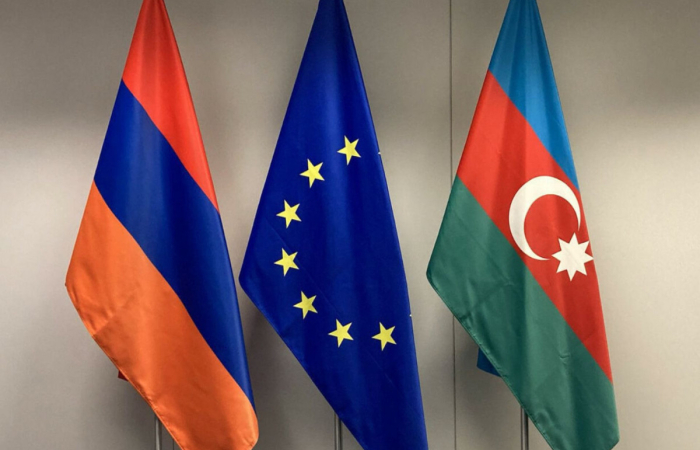
There is no denying that the EU, especially key member states acting in support, helped bring Baku and Yerevan closer to the Washington Declaration of August 8, 2025. But a declaration is not a treaty. Turning principles into a peace deal and eventually to a sustainable peace requires consistent long-term European involvement, writes Yalchin Mammadov in this-op-ed for commonspace.eu Before facilitating trust between Armenia and Azerbaijan, the EU is first expected to address its own credibility gap with Baku. A more balanced approach—such as including Azerbaijan, alongside Armenia, in the European Peace Facility—could be a useful first step. Diplomats can negotiate peace; societies must build peace. In this context, the EU can do what it does the best: long-term societal engagement. By expanding youth and academic exchange programmes, investing in cross-border civil society initiatives, and fostering people-to-people cooperation, Brussels can help shape a new generation equipped to sustain peace beyond political cycles. Such tools are slow and unglamorous, but if ignored, even the strongest treaty risks collapse. And obviously, these aspects require two-way engagement and genuine willingness by both governments to facilitate contact. If Brussels wants to remain influential, it needs to replace outdated one-size-fits-all policies with ambitious, interest-driven and differentiated approaches. Without a clear regional strategy, which appears to be the current situation, the South Caucasus will continue to sit at the margins of Europe’s security architecture—leaving space for other powers to take the lead. (You can read the op-ed in full by clicking the image.)

Filter archive

Publication date
Editor's choice
News
West Africa's military governments play for time in the face of potential sanctions

West Africa's military governments play for time in the face of potential sanctions

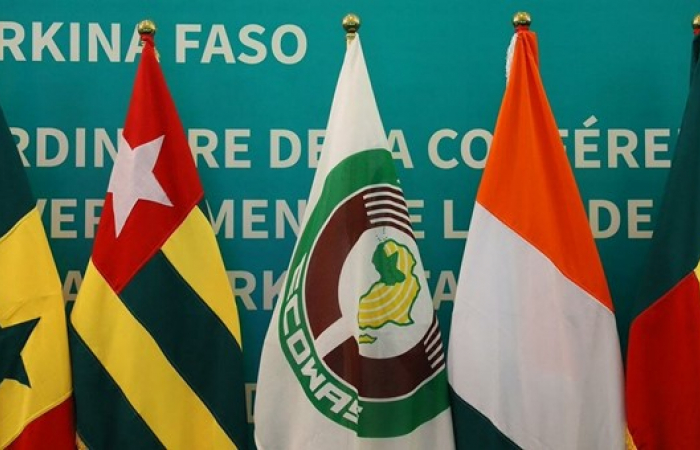
Burkina Faso and Guinea have requested additional time to present a plan to hand back power to civilians and reinstate democratic rule following an ultimatum by the Economic Community of West African States (ECOWAS), which had set a deadline for Monday, 25 April. In Conakry as in Ouagadougou, where the military recently seized power by force, the transitional authorities are asking for more time to pursue consultations, according to an ECOWAS communiqué issued on 27 April. The potential impact of these sanctions on poor, landlocked countries has caused great concern, but also widespread resentment, beyond Mali, Guinea and Burkina Faso, against regional organisations.
Editor's choice
Analysis
Macron gets a second chance to push for a new type of French partnership with Africa

Macron gets a second chance to push for a new type of French partnership with Africa

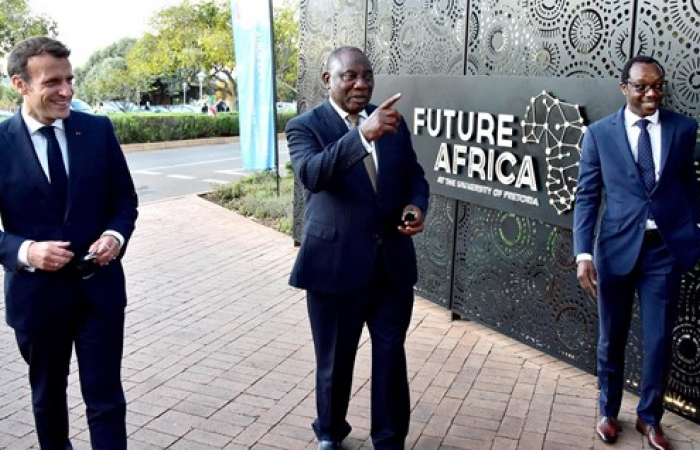
The re-election of Emmanuel Macron as President of the French Republic was the occasion for many congratulations from African heads of state with most leaders hailing the French president's "brilliant" election. Yet on the continent, not everyone is so enthusiastic, and speculation is high how France’s Africa policy will play out during Macron’s second term. The silence of Bamako, Conakry and Ouagadougou reflects the challenges of Emmanuel Macron's African policy in the years to come. Macron has put a great deal of energy into opening a new chapter in the relationship between France and Africa, but the results have been below expectations. A sustainable and mutually beneficial relationship is very important in these new, uncertain times. Whether it is through the gas alternative proposed by some North African countries, or the emergence of new partnerships in the Sahel and in English-speaking Africa, France will have to play a prominent role and has much to gain from being close with Africa. 
Editor's choice
News
NATO membership can be arranged quickly once Finland and Sweden submit application

NATO membership can be arranged quickly once Finland and Sweden submit application

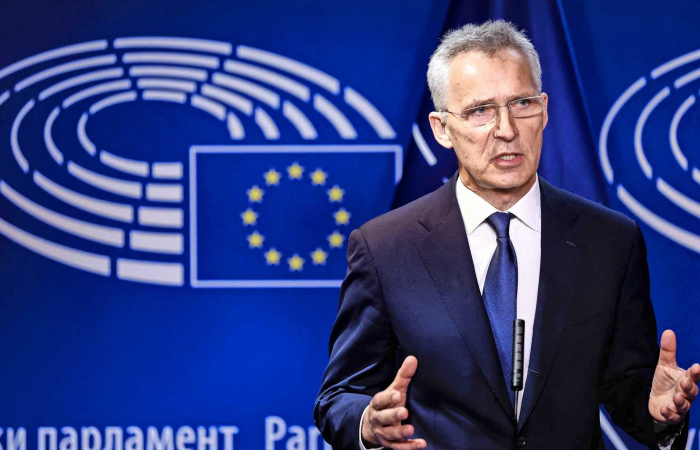
The NATO membership of Finland and Sweden will be arranged quickly if they apply to join the Western military alliance. There will also be 'interim measures' until the two countries become full members of the organisation. NATO chief Jens Stoltenberg said this on Thursday (28 April) at a press conference at the European Parliament in Brussels. "If they decide to apply, Finland and Sweden will be warmly welcomed and I expect the process to go quickly".Sweden and Finland announced two weeks ago that they are considering membership in NATO. The Swedish government may want to submit a formal application as early as the end of June. The two countries have had a neutral status for various historical reasons. Since the war in Ukraine, their position on neutrality has changed.
Editor's choice
Opinion
Russia’s war against Ukraine: where do we stand and what can the future bring?

Russia’s war against Ukraine: where do we stand and what can the future bring?

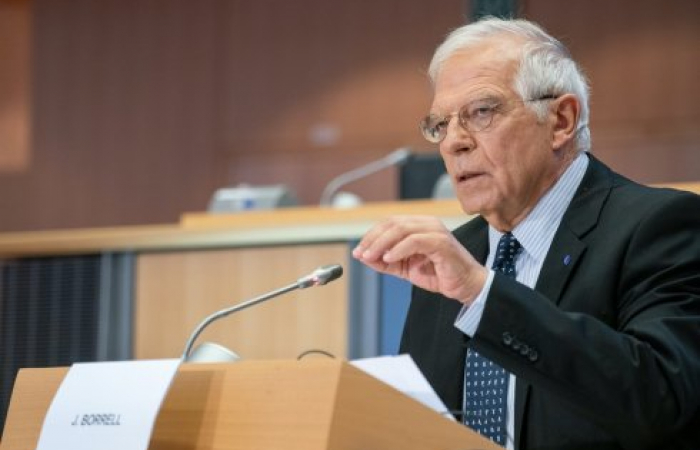
"Two months into the war against Ukraine there is no end in sight and Russia’s most recent actions even point to an intensification of the fight. The Russian leadership must stop the aggression and reconsider the unacceptable path it has chosen: for the sake of Ukraine, Russia, Europe and the wider world", says Josep Borrell, EU High Representative for foreign and security policy in this article which first appeared on his blog on the website of the European External Action Service on 26 April 2022. In the article the head of the EU diplomacy says that "Defending Ukraine from Russia’s invasion is rejecting the law of the jungle, the notion that “might makes right”. Being “neutral” is a false concept here. One country has invaded another one. Putting them on the same footing fails to differentiate between the attacker and the attacked. Such “neutrality” may respond, of course, to a variety of reasons, from hidden alignment to fear of reprisals, but it becomes in practice support to Russia and its war of aggression."
Editor's choice
News
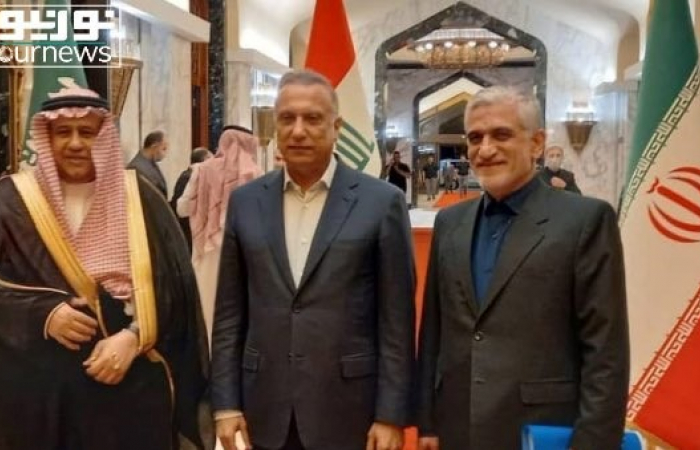
Iran and Saudi Arabia conclude another constructive round of talks in Baghdad

Iran and Saudi Arabia conclude another constructive round of talks in Baghdad

Iran and Saudi Arabia have held a fifth round of direct talks in the Iraqi capital, Baghdad, aimed at restoring relations between the Middle East's two regional powers, according to sources close to Iran’s security forces. The meeting date was not publicised beforehand, and Iraqi and Saudi sources have made no reference to it.   Senior representatives of Iran’s Supreme National Security Council (SNSC) and Saudi Arabia’s intelligence chief, Khalid bin Ali Al Humaidan, attended the talks.  The source mentioned that the main challenges to re-establishing ties between the two countries were discussed in a “positive” atmosphere that “painted a brighter outlook” for the future of bilateral relations. Iran and Saudi Arabia broke diplomatic ties in 2016, and recent efforts led by Iraq aim to restore diplomatic relations between the two countries as a first step. Both countries, however, downplayed the expectations of a major breakthrough anytime soon. A major achievement so far has been the reopening of Iran's office at the Jeddah-based Organisation of Islamic Cooperation (OIC).