Theme

Diplomacy

Editor's choice
News
Germany accuses Russia of cyberattacks and disinformation campaign

Germany accuses Russia of cyberattacks and disinformation campaign

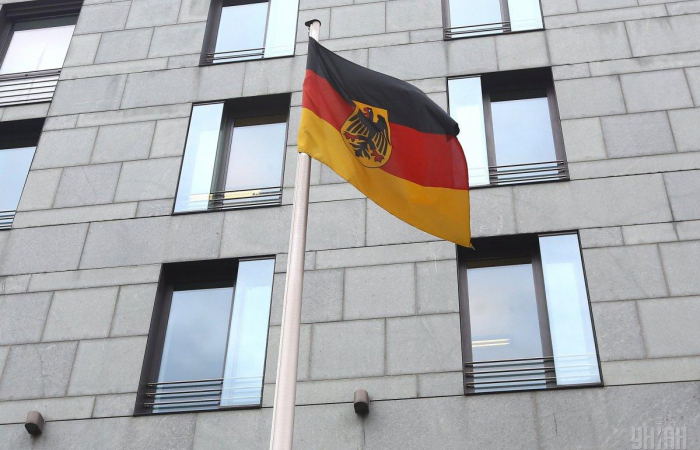
The German government holds Russia responsible for a cyberattack on German air traffic control, and for targeted disinformation campaigns before the last federal election. According to the German Foreign Office in Berlin, the incidents could be clearly attributed to the Russian military intelligence service, the GRU. In response, the Russian ambassador to Berlin was summoned to the Foreign Ministry. "We have been observing a massive increase in threatening hybrid activities by Russia for some time now," a spokesperson for the Foreign Ministry stated. These range from disinformation campaigns and espionage to cyberattacks and sabotage attempts. The aim is to divide society, sow distrust, and undermine confidence in democratic institutions. The spokesperson added that with these actions, Russia is "very concretely threatening our security, not only through its war of aggression against Ukraine, but also here in Germany."  The Foreign Ministry spokesperson explained that the cyberattack on air traffic control in August 2024 was clearly attributed to the hacker collective "APT28," known as "Fancy Bear," and to the responsibility of the Russian military intelligence service, the GRU. Furthermore, it could now be "conclusively stated" that Russia had attempted "to influence and destabilize both the last Federal election and the ongoing internal affairs of the Federal Republic of Germany." There was "absolutely irrefutable evidence" for this". The so-called "Storm 1516" campaign, which has been running since 2024, is allegedly backed by "reliable information" that the Moscow-based think tank "Center for Geopolitical Expertise" is behind it. The Center is also said to be supported by Russian military intelligence. Its primary aim is to influence democratic elections in the West. (Click the image to read more).
Editor's choice
Opinion
Opinion: A sustainable peace requires consistent long-term European involvement

Opinion: A sustainable peace requires consistent long-term European involvement

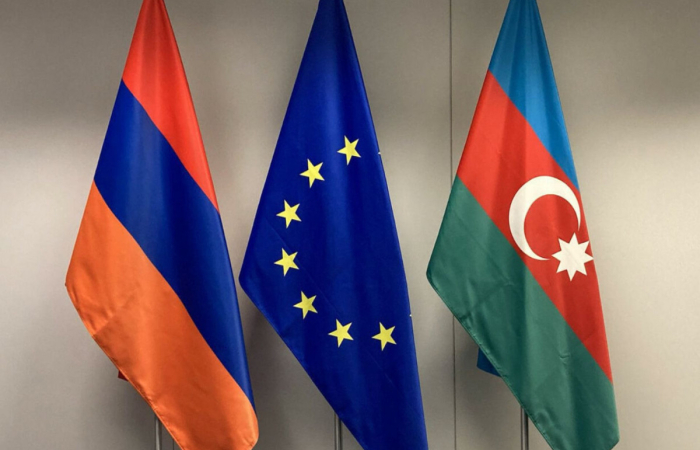
There is no denying that the EU, especially key member states acting in support, helped bring Baku and Yerevan closer to the Washington Declaration of August 8, 2025. But a declaration is not a treaty. Turning principles into a peace deal and eventually to a sustainable peace requires consistent long-term European involvement, writes Yalchin Mammadov in this-op-ed for commonspace.eu Before facilitating trust between Armenia and Azerbaijan, the EU is first expected to address its own credibility gap with Baku. A more balanced approach—such as including Azerbaijan, alongside Armenia, in the European Peace Facility—could be a useful first step. Diplomats can negotiate peace; societies must build peace. In this context, the EU can do what it does the best: long-term societal engagement. By expanding youth and academic exchange programmes, investing in cross-border civil society initiatives, and fostering people-to-people cooperation, Brussels can help shape a new generation equipped to sustain peace beyond political cycles. Such tools are slow and unglamorous, but if ignored, even the strongest treaty risks collapse. And obviously, these aspects require two-way engagement and genuine willingness by both governments to facilitate contact. If Brussels wants to remain influential, it needs to replace outdated one-size-fits-all policies with ambitious, interest-driven and differentiated approaches. Without a clear regional strategy, which appears to be the current situation, the South Caucasus will continue to sit at the margins of Europe’s security architecture—leaving space for other powers to take the lead. (You can read the op-ed in full by clicking the image.)

Filter archive

Publication date
Editor's choice
News
Impasse in the dialogue between Serbia and Kosovo

Impasse in the dialogue between Serbia and Kosovo

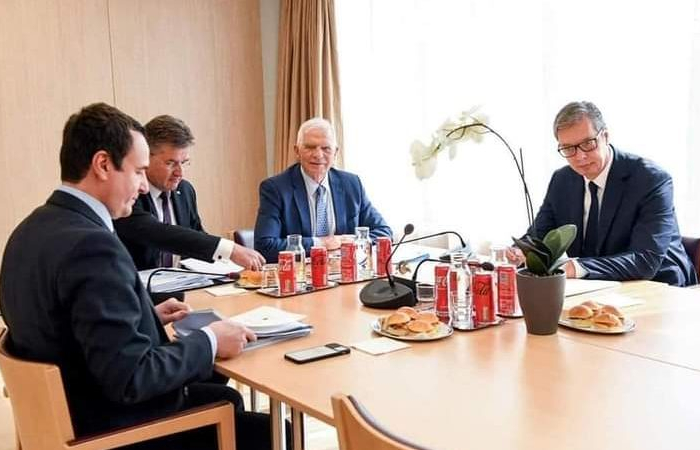
High level talks between Serbia and Kosovo, facilitated by the European Union, have failed to unblock the impasse between them.  EU High Representative Josep Borrell hosted the talks between Serbian President Aleksandar Vučić and Kosovo Prime Minister Albin Kurti in Belgrade on Thursday, 18 August. Kosovo declared independence unilaterally from Serbia in 2008, after a long period of tension with Belgrade which had already emerged during the time of Yugoslavia.  Serbia still considers Kosovo an integral part of its territory. Around a hundred countries, including most EU member states, recognise Kosovo's independence. Kosovo has a population of 1.8 million population, which is 90% ethnic Albanian. However 5% are Serbs, and it is the rights of this community that are the present stumbling block, but it is also recognised that differences are more substantial and wide-ranging. A clearly disappointed EU High Representative told the media after the event that the immediate objective of the talks had failed, but that both sides agreed to keep talking.
Editor's choice
News
The arrival of a Chinese spy ship in Sri Lanka unsettles India

The arrival of a Chinese spy ship in Sri Lanka unsettles India

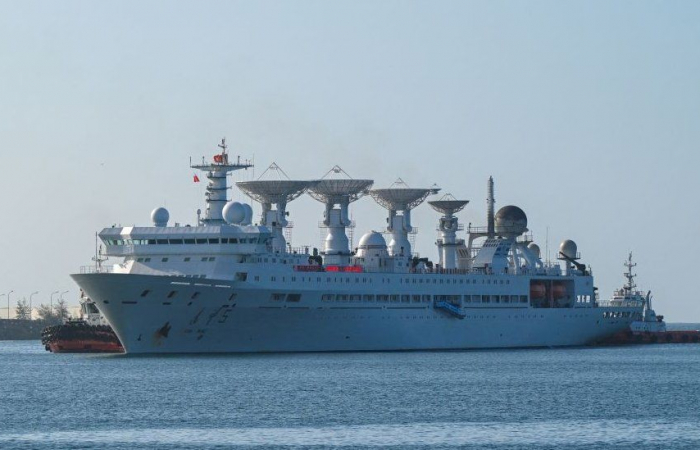
China’s satellite tracking vessel Yuan Wang 5 arrived at Sri Lanka’s southern Hambantota Port, on Tuesday (16 August) despite the concerns of both India and the United States. The vessel was earlier scheduled to dock at the Chinese managed Hambantota port on August 11 for “replenishment”, according to officials. Its arrival was postponed by five days after Sri Lankan authorities made a request to China, reportedly citing Indian security concerns. Sri Lanka's Foreign Ministry said the ship will be allowed to remain in the Chinese-run port until 22 August. Foreign security analysts quoted by Reuters describe the Yuan Wang 5 as one of China's latest generation space-tracking ships, used to monitor satellite, rocket and intercontinental ballistic missile launches. Several Indian media reports described it as a "dual-use spy ship". Shipping analytics websites call it a research and survey vessel. One report by Indian news site NDTV said the government in Delhi was concerned about "the possibility of the ship's tracking systems attempting to snoop on Indian installations while on its way to Sri Lanka". Earlier in July, an Indian foreign ministry spokesman said the government was monitoring the ship's planned visit, adding that Delhi would protect its security and economic interests.
Editor's choice
News
International community calls on Russia to withdraw from Zaporizhzhia Nuclear Power Plant

International community calls on Russia to withdraw from Zaporizhzhia Nuclear Power Plant

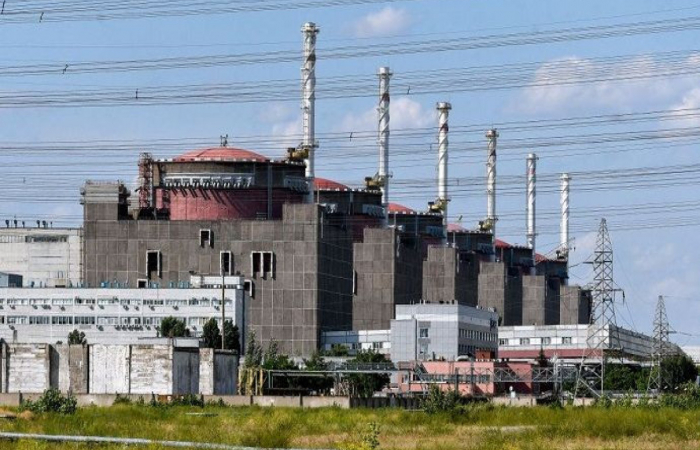
EU member states and other countries in the international community have issued a statement on the situation around the Zaporizhzhia Nuclear Power Plant, and have called on Russia to withdraw its troops from the territory of the plant. In a statement the 42 countries called on Russia to immediately withdraw its military forces and all other unauthorised personnel from the Zaporizhzhia Nuclear Power Plant, its immediate surroundings, and all of Ukraine so that the operator and the Ukrainian authorities can resume their sovereign responsibilities within Ukraine’s internationally recognized borders and the legitimate operating staff can conduct their duties without outside interference, threat, or unacceptably harsh working conditions. This will also enable the IAEA to carry out its verification pursuant to Ukraine’s safeguards obligations under safe and secure conditions and in a timely manner. The statement said that the international community will hold Russia accountable for its aggression, and Russia must bear full responsibility for its unlawful actions in Ukraine.
Editor's choice
News
Turkey, Sweden and Finland to meet on 26 August

Turkey, Sweden and Finland to meet on 26 August

Turkish representatives will meet counterparts from Sweden and Finland on 26 August in an effort to remove the final stumbling blocks for the accession of the two Scandinavian countries into NATO. Turkey is one of seven out of thirty NATO countries still to ratify the decision taken at the last NATO summit to admit Sweden and Finland into the alliance. Speaking at a Conference for Turkish Ambassadors across the world, being held this week in Ankara, Turkish Foreign Minister Mevlut Cavusoglu said Sweden and Finland are yet to deliver their commitments arising from the trilateral memorandum signed at the NATO summit in Madrid in June and they haven't taken any solid steps on Turkey's requests on extradition of terrorists yet. He described the remarks by Swedish and Finnish authorities on their promises as "well intentioned," and reiterated Turkey's desire to see concrete steps from the two countries.
Editor's choice
News
Decision time for the future of the Iran nuclear deal

Decision time for the future of the Iran nuclear deal

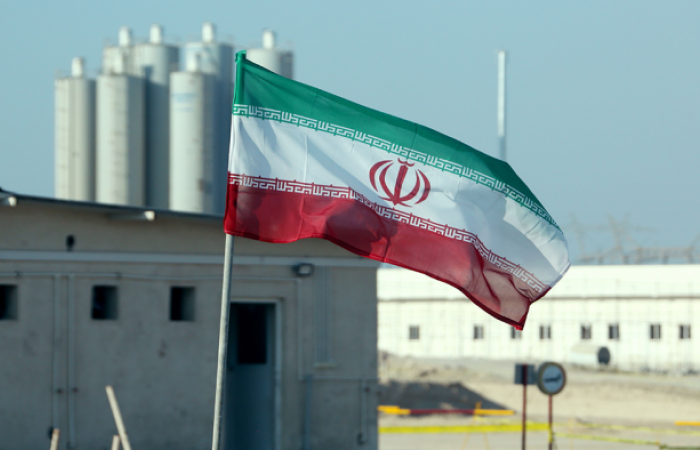
After years of uncertainty and negotiations, it is finally decision time for the future of the Iran nuclear deal, known as the Joint Comprehensive Plan of Action (JCPOA). On Monday (8 August), the European Union submitted a “final text” at talks to salvage the 2015 deal aimed at reining in Iran’s nuclear ambitions. Tehran said it was reviewing the proposals. Britain, China, France, Germany, Iran and Russia, as well as the United States indirectly, resumed talks on Thursday in Vienna, months after they had stalled. The European Union has submitted a “final text,” a European official said on Monday. “We worked for four days and today the text is on the table,” the official told reporters on condition of anonymity. “The negotiation is finished, it’s the final text... and it will not be renegotiated.” “Now the ball is in the court of the capitals and we will see what happens,” the European official added. AFP news agency quoted European diplomats as saying that the final draft tabled is non-negotiable, and “stretches us all to the limits of our flexibility.”  According to The Wall Street Journal correspondent Laurence Norman, a senior EU official said that EU foreign policy chief Josep Borrell will send messages to participating states setting out the next steps. The EU has been co-ordinating the efforts to revive the JCPOA, which involved mediating indirect talks between Iran and the United States.
Editor's choice
Opinion
Opinion: The moment of the Minsk Group has passed

Opinion: The moment of the Minsk Group has passed

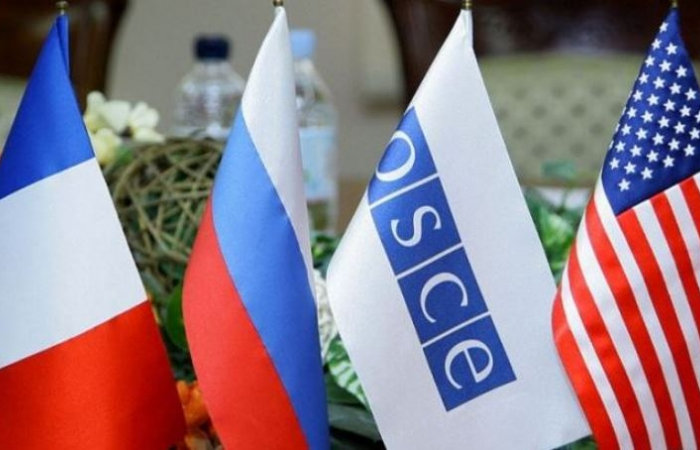
Since 1992, the OSCE Minsk Group had the mandate to facilitate a resolution of the conflict between Armenia and Azerbaijan. Their failure to do so and the fact that there is no agreement between the parties in the conflict on its future role in the changed situation after the 2020 war leaves this process without any legitimacy, argues Vasif Huseynov in this op-ed. "The calls of the French and American representatives to give a second chance to the Minsk Group are perceived in Baku as more of geopolitical nature rather than as an honest attempt to contribute to the peace efforts", he argues.