Theme

Diplomacy

Editor's choice
News
Germany accuses Russia of cyberattacks and disinformation campaign

Germany accuses Russia of cyberattacks and disinformation campaign

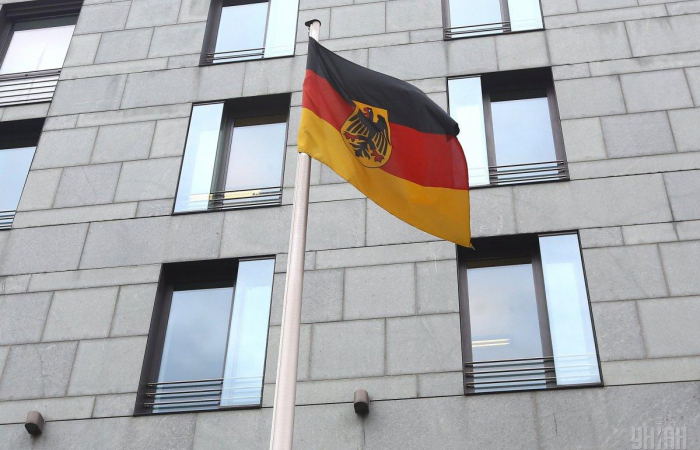
The German government holds Russia responsible for a cyberattack on German air traffic control, and for targeted disinformation campaigns before the last federal election. According to the German Foreign Office in Berlin, the incidents could be clearly attributed to the Russian military intelligence service, the GRU. In response, the Russian ambassador to Berlin was summoned to the Foreign Ministry. "We have been observing a massive increase in threatening hybrid activities by Russia for some time now," a spokesperson for the Foreign Ministry stated. These range from disinformation campaigns and espionage to cyberattacks and sabotage attempts. The aim is to divide society, sow distrust, and undermine confidence in democratic institutions. The spokesperson added that with these actions, Russia is "very concretely threatening our security, not only through its war of aggression against Ukraine, but also here in Germany."  The Foreign Ministry spokesperson explained that the cyberattack on air traffic control in August 2024 was clearly attributed to the hacker collective "APT28," known as "Fancy Bear," and to the responsibility of the Russian military intelligence service, the GRU. Furthermore, it could now be "conclusively stated" that Russia had attempted "to influence and destabilize both the last Federal election and the ongoing internal affairs of the Federal Republic of Germany." There was "absolutely irrefutable evidence" for this". The so-called "Storm 1516" campaign, which has been running since 2024, is allegedly backed by "reliable information" that the Moscow-based think tank "Center for Geopolitical Expertise" is behind it. The Center is also said to be supported by Russian military intelligence. Its primary aim is to influence democratic elections in the West. (Click the image to read more).
Editor's choice
Opinion
Opinion: A sustainable peace requires consistent long-term European involvement

Opinion: A sustainable peace requires consistent long-term European involvement

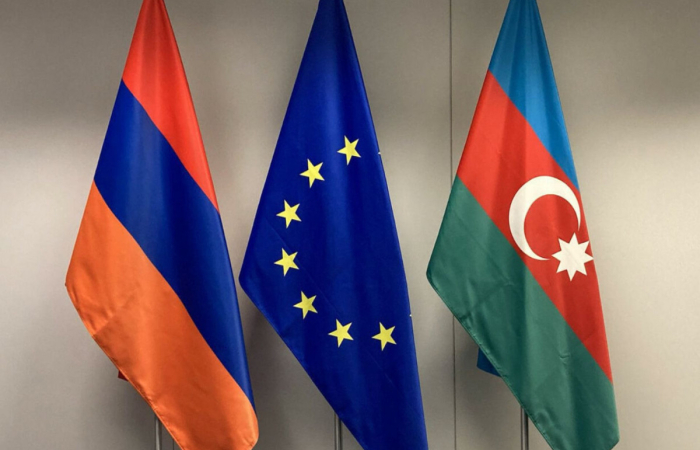
There is no denying that the EU, especially key member states acting in support, helped bring Baku and Yerevan closer to the Washington Declaration of August 8, 2025. But a declaration is not a treaty. Turning principles into a peace deal and eventually to a sustainable peace requires consistent long-term European involvement, writes Yalchin Mammadov in this-op-ed for commonspace.eu Before facilitating trust between Armenia and Azerbaijan, the EU is first expected to address its own credibility gap with Baku. A more balanced approach—such as including Azerbaijan, alongside Armenia, in the European Peace Facility—could be a useful first step. Diplomats can negotiate peace; societies must build peace. In this context, the EU can do what it does the best: long-term societal engagement. By expanding youth and academic exchange programmes, investing in cross-border civil society initiatives, and fostering people-to-people cooperation, Brussels can help shape a new generation equipped to sustain peace beyond political cycles. Such tools are slow and unglamorous, but if ignored, even the strongest treaty risks collapse. And obviously, these aspects require two-way engagement and genuine willingness by both governments to facilitate contact. If Brussels wants to remain influential, it needs to replace outdated one-size-fits-all policies with ambitious, interest-driven and differentiated approaches. Without a clear regional strategy, which appears to be the current situation, the South Caucasus will continue to sit at the margins of Europe’s security architecture—leaving space for other powers to take the lead. (You can read the op-ed in full by clicking the image.)

Filter archive

Publication date
Editor's choice
News
Armenia and Azerbaijan recognise each other's territorial integrity and sovereignty

Armenia and Azerbaijan recognise each other's territorial integrity and sovereignty

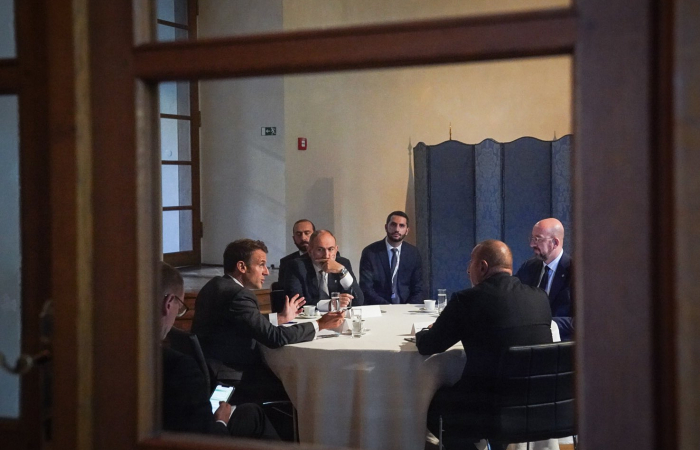
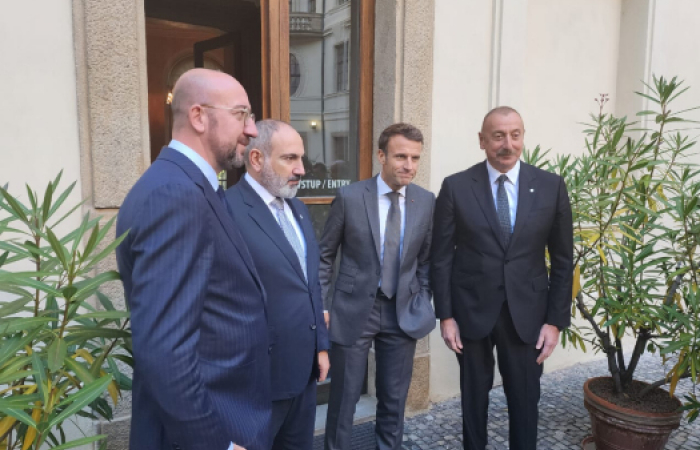
After hours of negotiations, with the mediation of European Council president Charles Michel, and French president Emanuel Macron, the leaders of Armenia and Azerbaijan , Nikol Pashinyan and Ilham Aliyev, have taken a historic step towards lasting peace. Both countries have recognised each other's territorial integrity and sovereignty, and committed to tangible steps to establish peace and stability in the region. President Macron tweeted early this morning "Tonight, Armenia and Azerbaijan confirmed their commitment to the Charter of the United Nations and the Alma Ata 1991 Declaration through which both recognize each other's territorial integrity and sovereignty." The four leaders held two long sessions of negotiations on the margins of the summit of the European Political Community which was launched at Prague Castle on Thursday afternoon (6 October). It is also understood that a number of other decisions were taken. It was agreed that the EU will deploy on the Armenian side of the Armenia-Azerbaijan border a civilian monitoring mission, for a period of two months starting from October.
Editor's choice
News
First Summit of the European Political Community opens in Prague

First Summit of the European Political Community opens in Prague

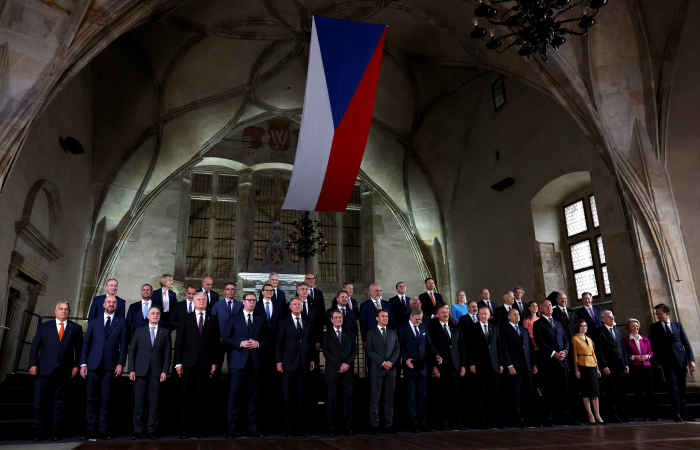
In the historic settings of Prague Castle, leaders from across Europe gathered on Thursday for the first summit of the European Political Community. Apart from the leaders of the 27 EU member states, leaders from non EU member states are also attending, including Albania, Armenia, Azerbaijan. Bosnia and Herzegovina, Georgia, Iceland, Kosovo, Liechtenstein, Moldova, Montenegro, North Macedonia, Norway, Serbia, Switzerland, Turkey, Ukraine and the United Kingdom With the dramatic consequences of Russia’s aggression war, EU leaders agreed during the European Council meeting in June 2022 to launch the European Political Community with the aim of bringing together countries on the European continent. The ambition is to bring leaders together on the European continent and to foster their cooperation on issues of common interest, revolving around peace and security, the economic situation, energy and climate, and migration and mobility. No formal written outcome of the European Political Community is envisaged. After the traditional family photo, the meeting kicked off with a round table discussion on peace and security in Europe. This story will be updated throughout the day.
Editor's choice
News
Leaders gather in Prague for first summit of European Political Community

Leaders gather in Prague for first summit of European Political Community

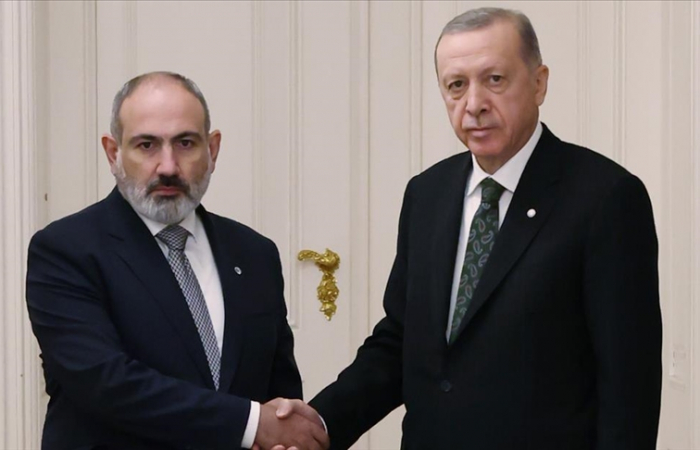
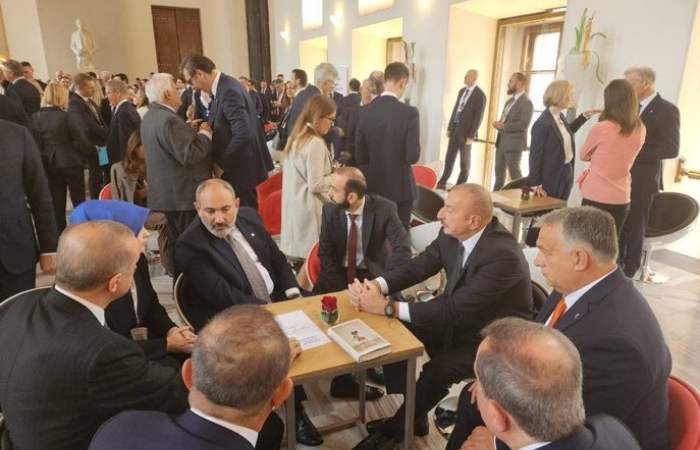
Leaders from across Europe have gathered at Prague Castle for the launch of the European Political Community. Apart from the leaders of the 27 EU member states, leaders from non EU member states are also attending, including Albania, Armenia, Azerbaijan. Bosnia and Herzegovina, Georgia, Iceland, Kosovo, Liechtenstein, Moldova, Montenegro, North Macedonia, Norway, Serbia, Switzerland, Turkey, Ukraine and the United Kingdom An unusual scene, even before the summit had started was of Armenian Prime Minister Nikol Pashinyan, Azerbaijan President Ilham Aliyev and Turkish President Recip Tayip Erdogan meeting informally before the opening of the summit. This story will be updated throughout the day.
Editor's choice
News
EU to integrate financial contributions to Ukraine into its 2023 budget

EU to integrate financial contributions to Ukraine into its 2023 budget

On Tuesday (4 October), the European Union announced that it will integrate financial support to Ukraine into its 2023 budget, making its monetary contributions more structured and predictable, thus easing the economic pressures on war-torn Ukraine. The support payments will tighten the links between the EU and Ukraine, which got one step closer to achieving full EU membership after being granted candidate status earlier this year.  The decision to formalise the financial support was taken after criticism from the United States and others, who have accused the EU of delaying current support payments, and thereby raising doubts on how committed the EU is to Ukraine’s reconstruction after the war’s conclusion.  Out of the €9 billion promised in May this year, only €1 billion has so far been paid out, while the next payment of €5 billion is expected to reach Kyiv before the end of the year. Meanwhile, the United States has contributed over €10 billion in financial support, and over €25 billion in military aid to Ukraine since the beginning of the full-scale Russian invasion in late February. Financially, Ukraine is struggling significantly as a result of the ongoing war with Russia. Reports estimate that monthly foreign aid of approximately €5 billion is required for the Ukrainian economy to stay afloat. Oleg Ustenko, the economic adviser to Ukrainian President Volodymyr Zelensky, predicts that Ukraine’s deficit will shrink in the coming year to approximately €3.5 billion per month, as Ukraine has managed to resume initially disrupted economic activities in its western regions.
Editor's choice
News
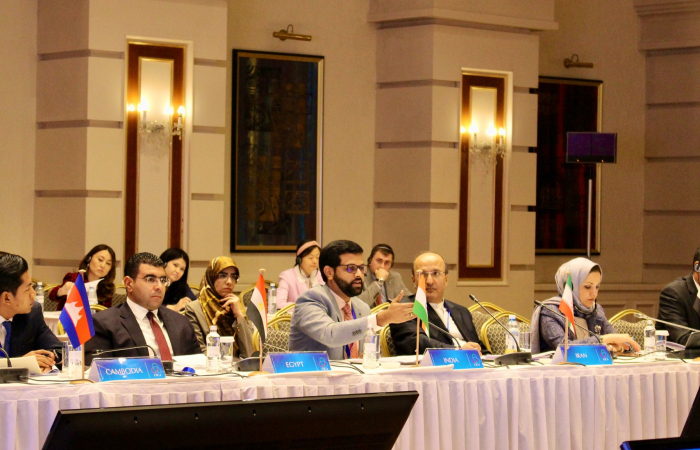
CICA set to become an international organisation at this month's Astana summit

CICA set to become an international organisation at this month's Astana summit

The Conference on Interaction and Confidence Building Measures in Asia (CICA) is set to become a fully fledged international organisation during a summit of leaders of its members to be held in Astana, Kazakhstan on 12-13 October. A Special Working Group (SWG) meeting held on 28-29 September, has made a major advance in preparing draft documents to be adopted at the upcoming sixth CICA Summit. The main document includes a draft Astana Statement on CICA Transformation, which is designed to transform CICA into a full-fledged international organization. Other draft documents include a draft of the CICA Leaders’ Statement on Cooperation in the Field of Security and in the Use of Information and Communications Technologies and draft the CICA Plan of Action on the Implementation of the United Nations (UN) Global Counter-Terrorism Strategy.