Ukraine's charm offensive in Africa may be too little too late

Ukraine's foreign minister, Dymitro Kuleba, is currently on a ten day tour of Africa, where he is trying to counter the Russian narrative of the invasion of his country, which has left many African countries indifferent to Ukraine's predicament.

Despite the fact that the scene of a big country trying to swollow its smaller neighbour should have had resonance with African countries, the reverse has been the case. 

Speaking in Dakar, Senegal, Kuleba said, “I arrived here and I hear, ‘This isn’t our war, the West is fighting against Russia’; ‘Russia and Ukraine are one people’; and ‘Russia attacked you because you were going to become a NATO member’” .

“Russian narrative has been very present here,” he said on Tuesday (4 October) in a 30-minute conversation with a group of journalists in Dakar, Senegal’s capital. “Now it’s time for Ukrainian truths.”

Sympathy for Moscow harks back to the time of anti colonial struggle, when Moscow was a generous supporter of liberation movements.

Ousmane Sène, the director of the Dakar-based West Africa Research Center, told the New York Times that many on the continent had not heard of the independent country of Ukraine until a few months ago.

“The country called Ukraine is on African television screens because of the Russian invasion,” Mr. Sène said. “The only ties that many see between Ukraine and Africa, are the consequences of the food crisis in the shopping basket of Senegalese consumers,” he added. “And many think that both Russia and Ukraine are to blame for that.”

None of Mr. Kuleba’s predecessors had done a tour of Africa, Mr. Kuleba said on Tuesday, acknowledging that Ukraine had long neglected the continent.

Senegal currently holds the presidency of the African Union. Its President Macky Sall, said at the United Nations General Assembly last week that Africa “does not want to be the breeding ground of a new Cold War,”

Mr. Kuleba said he had “a long and honest conversation” with Mr. Sall on Monday.

The Senegalese presidency did not release a statement about the conversation and declined requests for comment.

Public views on the war in Ukraine varies widely across Africa’s 54 countries and 1.4 billion people. But it is in West Africa, where Mr. Kuleba started his tour, that Russia has enjoyed the largest rate of public approval. Mr Kuleba travelled from Senegal to Ivory Coast on Wednesday for meetings with officials and business leaders.

related content on commonspace.eu: Monday Commentary by Dennis Sammut Preparing for the worst, whilst working to avoid it

Kuleba's trip to Africa is long overdue, but some consider that it is too little too late, and that Ukraine and all those who support it, need to revisit how they are communicating their message to the world beyond Europe and North America and the G7 space.

source: commonspace.eu New York Times and agencies
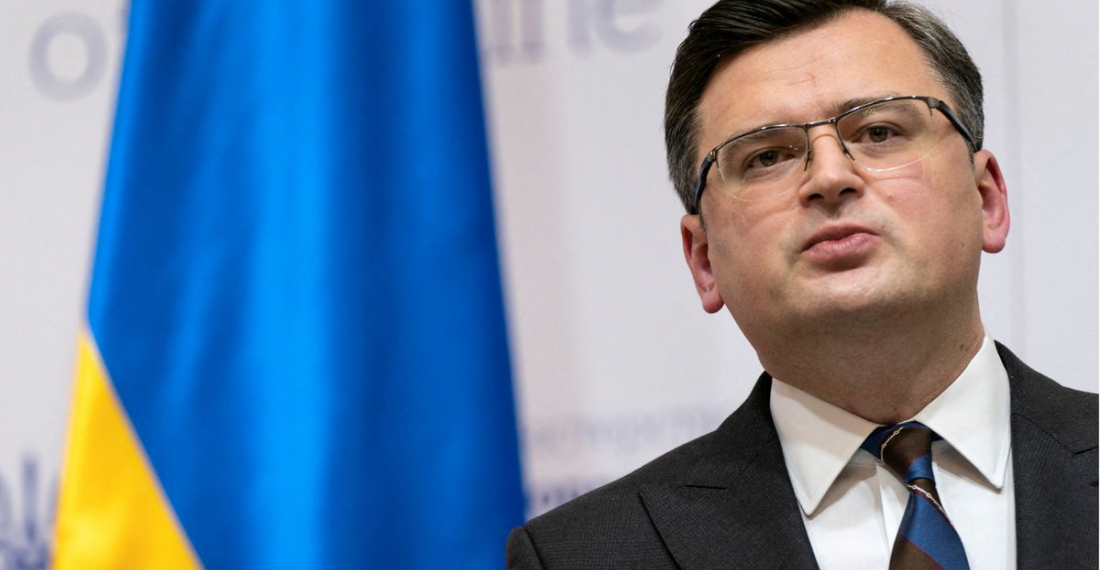
photo: Dymytro Kuleba (archive picture)

 

Related articles

Editor's choice
News
Borrell tells the European Parliament that the situation in Afghanistan was critical, but the EU will remain engaged

Borrell tells the European Parliament that the situation in Afghanistan was critical, but the EU will remain engaged

Borrell underlined that the European Union will make every effort to support the peace process and to remain a committed partner to the Afghan people. "Of course, we will have to take into account the evolving situation, but disengagement is not an option.  We are clear on that: there is no alternative to a negotiated political settlement, through inclusive peace talks.
Editor's choice
News
Germany accuses Russia of cyberattacks and disinformation campaign

Germany accuses Russia of cyberattacks and disinformation campaign

The German government holds Russia responsible for a cyberattack on German air traffic control, and for targeted disinformation campaigns before the last federal election. According to the German Foreign Office in Berlin, the incidents could be clearly attributed to the Russian military intelligence service, the GRU. In response, the Russian ambassador to Berlin was summoned to the Foreign Ministry. "We have been observing a massive increase in threatening hybrid activities by Russia for some time now," a spokesperson for the Foreign Ministry stated. These range from disinformation campaigns and espionage to cyberattacks and sabotage attempts. The aim is to divide society, sow distrust, and undermine confidence in democratic institutions. The spokesperson added that with these actions, Russia is "very concretely threatening our security, not only through its war of aggression against Ukraine, but also here in Germany."  The Foreign Ministry spokesperson explained that the cyberattack on air traffic control in August 2024 was clearly attributed to the hacker collective "APT28," known as "Fancy Bear," and to the responsibility of the Russian military intelligence service, the GRU. Furthermore, it could now be "conclusively stated" that Russia had attempted "to influence and destabilize both the last Federal election and the ongoing internal affairs of the Federal Republic of Germany." There was "absolutely irrefutable evidence" for this". The so-called "Storm 1516" campaign, which has been running since 2024, is allegedly backed by "reliable information" that the Moscow-based think tank "Center for Geopolitical Expertise" is behind it. The Center is also said to be supported by Russian military intelligence. Its primary aim is to influence democratic elections in the West. (Click the image to read more).

Popular

Editor's choice
News
Germany accuses Russia of cyberattacks and disinformation campaign

Germany accuses Russia of cyberattacks and disinformation campaign

The German government holds Russia responsible for a cyberattack on German air traffic control, and for targeted disinformation campaigns before the last federal election. According to the German Foreign Office in Berlin, the incidents could be clearly attributed to the Russian military intelligence service, the GRU. In response, the Russian ambassador to Berlin was summoned to the Foreign Ministry. "We have been observing a massive increase in threatening hybrid activities by Russia for some time now," a spokesperson for the Foreign Ministry stated. These range from disinformation campaigns and espionage to cyberattacks and sabotage attempts. The aim is to divide society, sow distrust, and undermine confidence in democratic institutions. The spokesperson added that with these actions, Russia is "very concretely threatening our security, not only through its war of aggression against Ukraine, but also here in Germany."  The Foreign Ministry spokesperson explained that the cyberattack on air traffic control in August 2024 was clearly attributed to the hacker collective "APT28," known as "Fancy Bear," and to the responsibility of the Russian military intelligence service, the GRU. Furthermore, it could now be "conclusively stated" that Russia had attempted "to influence and destabilize both the last Federal election and the ongoing internal affairs of the Federal Republic of Germany." There was "absolutely irrefutable evidence" for this". The so-called "Storm 1516" campaign, which has been running since 2024, is allegedly backed by "reliable information" that the Moscow-based think tank "Center for Geopolitical Expertise" is behind it. The Center is also said to be supported by Russian military intelligence. Its primary aim is to influence democratic elections in the West. (Click the image to read more).