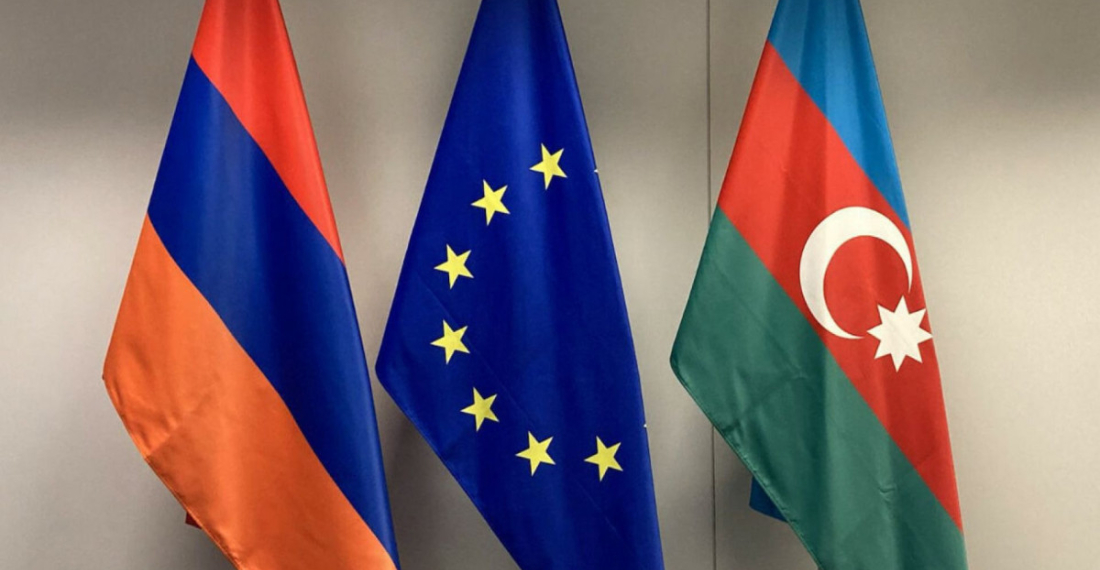
The so-called “Brussels track” of mediation between Azerbaijan and Armenia was initially perceived as the most promising format after the 2020 war. European diplomacy managed to curb tensions, promote direct dialogue and, for a while, outperform both Russian and American mediation. Yet today it is obvious: the process did not lead to a peace agreement, partly due to geopolitical competition among actors and partly because the EU’s engagement remains incomplete.
There is no denying that the EU, especially key member states acting in support, helped bring Baku and Yerevan closer to the Washington Declaration of August 8, 2025. But a declaration is not a treaty. Turning principles into a peace deal and eventually to a sustainable peace requires consistent long-term European involvement.
Supporting resilience against hybrid threats
Armenia’s June elections will be decisive. Political forces advocating compromise and regional normalization are under pressure from nationalist factions at home and especially from abroad, exploiting public trauma after the 2020 and 2023 wars.
The EU cannot endorse any side, but it can help create conditions for a fair process by combating disinformation, including from foreign actors, as well as supporting institutional reforms and strengthening resilience against hybrid threats.
This matters for Azerbaijan too. Baku faces its own information warfare, cyber-attacks and geopolitical pressure. European assistance should therefore be balanced, rather than reinforcing the perception that Brussels “supports Armenia against Azerbaijan”—a perception currently fueling distrust in Azerbaijan.
Regional connectivity: a peace dividend
The future of peace does not depend solely on diplomacy; it also depends on shared economic interests.
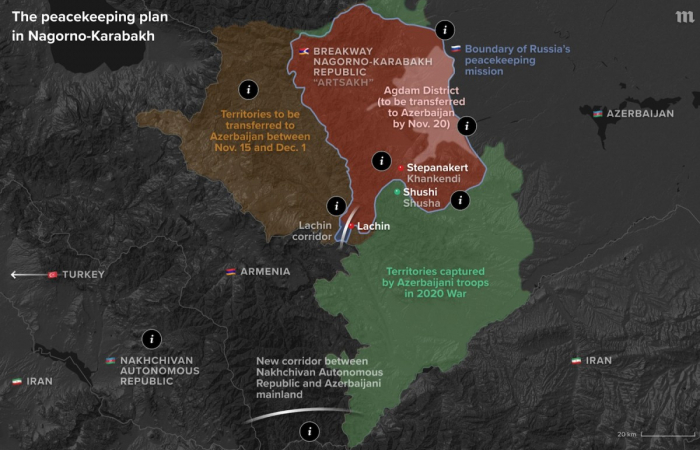
The August TRIPP agreement—the Trump Route for International Peace and Prosperity, a US-backed plan to rebuild a railway across Armenia linking Azerbaijan to its exclave Nakhchivan—could transform regional dynamics. If implemented successfully, it would intertwine both economies reducing incentives for conflict, reintegrate Armenia into regional trade routes, and connect Nakhchivan to mainland Azerbaijan.
Relying solely on Washington would be insufficient for the project to reach its full potential. The EU’s unique blend of technical expertise and financial instruments remains indispensable. Political endorsement already exists within EU institutions; the challenge is to operationalise this commitment. TRIPP is just one among many possible connectivity initiatives. A bold investment strategy could also help unlock the full potential of the Trans-Caspian International Transport Route, offering strategic benefits both to the EU and the countries of the region.
Honest broker: balancing relations with both countries
Becoming a predictable partner for both Yerevan and Baku seems to be the only way for the EU to regain credibility as an honest broker.
As a reflection of Yerevan’s attempt to reduce its dependence on Moscow, Armenia deepens ties with the EU and gains political support in European capitals while still formally remaining in the Russia-led CSTO and Eurasian market. At the same time, Armenia’s alignment with EU foreign and security policy has grown from 7% in 2022 to 37% in 2025, showing a clear political trajectory.
Azerbaijan’s cooperation with the EU is mostly transactional (energy partnership, investments, support for Ukraine), but political trust is low. According to the latest Eurobarometer, only one in four Azerbaijani respondents expresses a positive view of the EU, and their trust in Brussels ranks below their trust in Russia and China. Azerbaijan’s EU foreign and security policy alignment data is outdated but indicated a negative trend after 2010.
This suggests that, before facilitating trust between Armenia and Azerbaijan, the EU is first expected to address its own credibility gap with Baku. A more balanced approach—such as including Azerbaijan, alongside Armenia, in the European Peace Facility—could be a useful first step.
People-to-People contact
Diplomats can negotiate peace; societies must build peace. In this context, the EU can do what it does the best: long-term societal engagement. By expanding youth and academic exchange programmes, investing in cross-border civil society initiatives, and fostering people-to-people cooperation, Brussels can help shape a new generation equipped to sustain peace beyond political cycles.
Such tools are slow and unglamorous, but if ignored, even the strongest treaty risks collapse. And obviously, these aspects require two-way engagement and genuine willingness by both governments to facilitate contact.
Rethinking the Eastern Partnership
With Ukraine, Moldova and Georgia entering the enlargement track, and Belarus isolating itself, the Eastern Partnership model is becoming obsolete. Armenia has advanced through a Comprehensive and Enhanced Partnership Agreement, while cooperation with Azerbaijan remains stuck under a minimally ambitious 1999 Partnership and Cooperation Agreement. Negotiations on a modern agreement have stalled for years.
If Brussels wants to remain influential, it needs to replace outdated one-size-fits-all policies with ambitious, interest-driven and differentiated approaches. Without a clear regional strategy, which appears to be the current situation, the South Caucasus will continue to sit at the margins of Europe’s security architecture—leaving space for other powers to take the lead.
source: Yalcin Mammadov contributed this op-ed to commonspace.eu
The views expressed in opinion pieces and commentaries do not necessarily reflect the position of commonspace.eu or its partners