Theme

Diplomacy

Editor's choice
News
Germany accuses Russia of cyberattacks and disinformation campaign

Germany accuses Russia of cyberattacks and disinformation campaign

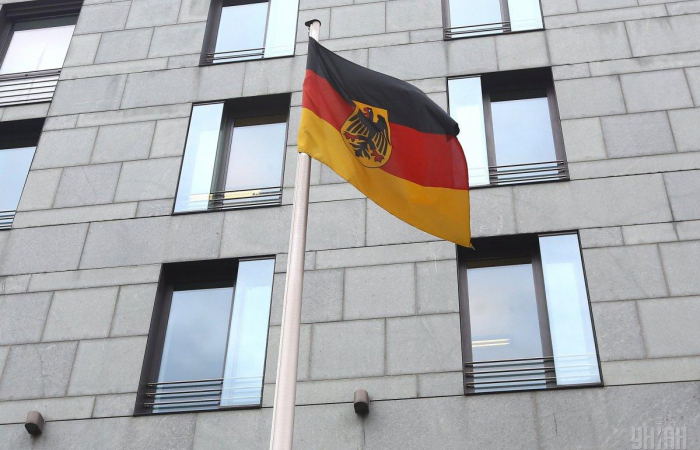
The German government holds Russia responsible for a cyberattack on German air traffic control, and for targeted disinformation campaigns before the last federal election. According to the German Foreign Office in Berlin, the incidents could be clearly attributed to the Russian military intelligence service, the GRU. In response, the Russian ambassador to Berlin was summoned to the Foreign Ministry. "We have been observing a massive increase in threatening hybrid activities by Russia for some time now," a spokesperson for the Foreign Ministry stated. These range from disinformation campaigns and espionage to cyberattacks and sabotage attempts. The aim is to divide society, sow distrust, and undermine confidence in democratic institutions. The spokesperson added that with these actions, Russia is "very concretely threatening our security, not only through its war of aggression against Ukraine, but also here in Germany."  The Foreign Ministry spokesperson explained that the cyberattack on air traffic control in August 2024 was clearly attributed to the hacker collective "APT28," known as "Fancy Bear," and to the responsibility of the Russian military intelligence service, the GRU. Furthermore, it could now be "conclusively stated" that Russia had attempted "to influence and destabilize both the last Federal election and the ongoing internal affairs of the Federal Republic of Germany." There was "absolutely irrefutable evidence" for this". The so-called "Storm 1516" campaign, which has been running since 2024, is allegedly backed by "reliable information" that the Moscow-based think tank "Center for Geopolitical Expertise" is behind it. The Center is also said to be supported by Russian military intelligence. Its primary aim is to influence democratic elections in the West. (Click the image to read more).
Editor's choice
Opinion
Opinion: A sustainable peace requires consistent long-term European involvement

Opinion: A sustainable peace requires consistent long-term European involvement

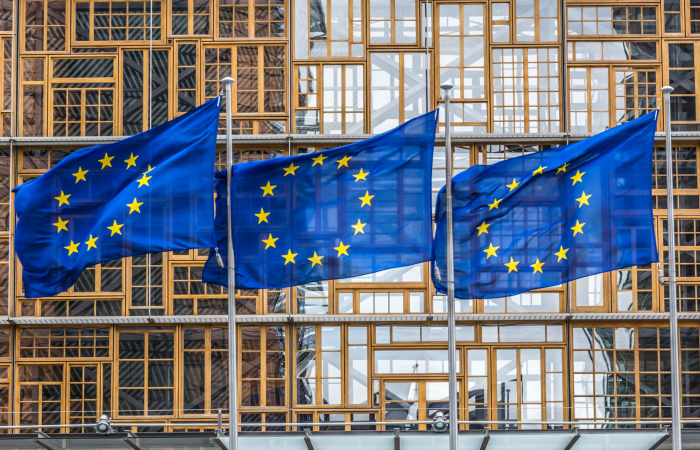
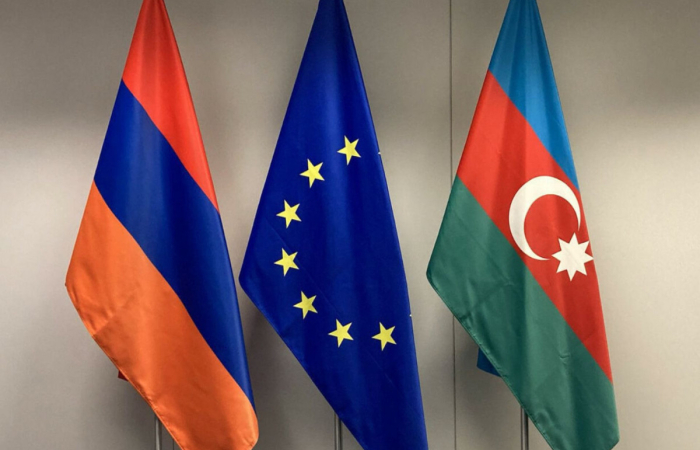
There is no denying that the EU, especially key member states acting in support, helped bring Baku and Yerevan closer to the Washington Declaration of August 8, 2025. But a declaration is not a treaty. Turning principles into a peace deal and eventually to a sustainable peace requires consistent long-term European involvement, writes Yalchin Mammadov in this-op-ed for commonspace.eu Before facilitating trust between Armenia and Azerbaijan, the EU is first expected to address its own credibility gap with Baku. A more balanced approach—such as including Azerbaijan, alongside Armenia, in the European Peace Facility—could be a useful first step. Diplomats can negotiate peace; societies must build peace. In this context, the EU can do what it does the best: long-term societal engagement. By expanding youth and academic exchange programmes, investing in cross-border civil society initiatives, and fostering people-to-people cooperation, Brussels can help shape a new generation equipped to sustain peace beyond political cycles. Such tools are slow and unglamorous, but if ignored, even the strongest treaty risks collapse. And obviously, these aspects require two-way engagement and genuine willingness by both governments to facilitate contact. If Brussels wants to remain influential, it needs to replace outdated one-size-fits-all policies with ambitious, interest-driven and differentiated approaches. Without a clear regional strategy, which appears to be the current situation, the South Caucasus will continue to sit at the margins of Europe’s security architecture—leaving space for other powers to take the lead. (You can read the op-ed in full by clicking the image.)

Filter archive

Publication date
Editor's choice
News
Macron hosts Pashinyan at the Elysee to discuss situation in the South Caucasus

Macron hosts Pashinyan at the Elysee to discuss situation in the South Caucasus

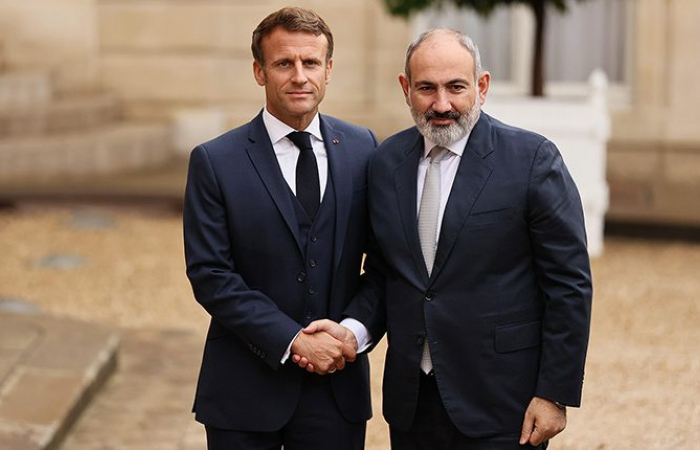
French president. Emanuel Macron on Monday (26 September) hosted Armenian prime minister Nikol Pashinyan at the Elysee Palace to discuss the current situation in the South Caucasus, and particularly Armenian-Azerbaijani relations. Macron described the situation following the recent armned clashes on 13-14 September as "critical". President Macron said France will do everything to pursue its goal, which is a stable, safe and prosperous South Caucasus." Macron also discussed the issue of relations between Armenia and Turkey. "This is a difficult but very necessary process and you know that France is also committed to this issue. This process is very important for the region", he said. In conclusion, Macron reiterated France's commitment to achieving peace and stability for Armenia and the entire region. "I welcome your sense of responsibility and your position to do everything to establish peace.  I want your country to have calm and peaceful borders", Macron told Pashinyan in his opening remarks.
Editor's choice
News
Germany seals major energy deal with the UAE

Germany seals major energy deal with the UAE

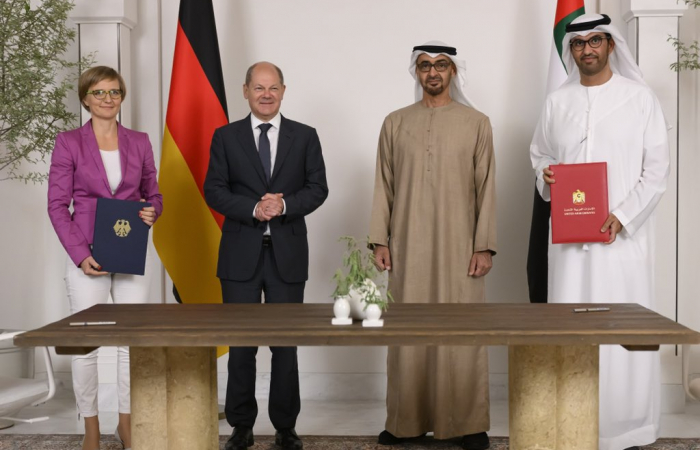
The United Arab Emirates (UAE) and Germany signed a "landmark agreement" on Sunday (25 September) aimed at accelerating joint efforts to boost energy security, decarbonisation and combat climate change. The major deal was struck in the presence of UAE President, Sheikh Mohammed bin Zayed, and German Chancellor Olaf Scholz, who is currently visiting the Emirates. The deal secures the delivery of 137,000 cubic meters of LNG to be sent to the new LNG terminal in Brunsbüttel near Hamburg in December. According to the dpa news agency, the amount included in the first delivery equates to around 0.95 billion kilowatt hours of electricity. However, the LNG deal can only make up for a small part of the 56.3 billion cubic meters of gas that Germany received from Russia in 2020.
Editor's choice
Opinion
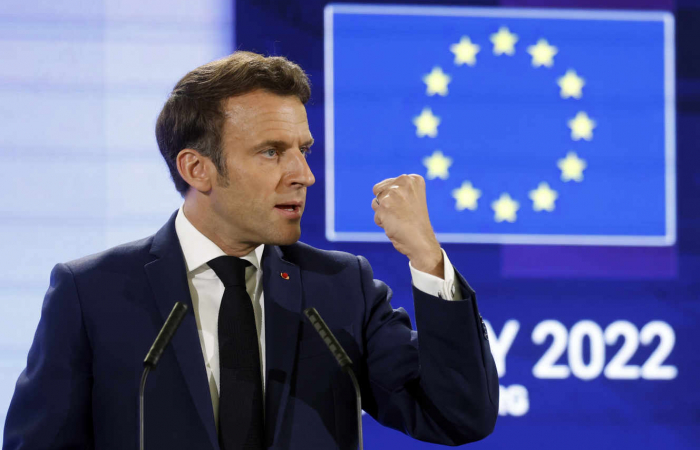
Opinion: Macron's 'European Political Community' offers an opportunity for a continent-wide approach to critical security issues

Opinion: Macron's 'European Political Community' offers an opportunity for a continent-wide approach to critical security issues

French President Emmanuel Macron's proposal to create a "European Political Community" can, if handled correctly, provide a permanent framework where EU countries and other European states can interact on critical political and security issues. However, for the community to succeed it must not simply become an extension of the EU. It must be designed to ensure that all countries involved have a voice in fostering political dialogue and cooperation in order to address issues of common interest, writes Maximiliaan van Lange in this op-ed for commonspace.eu. Overall the idea of a European Political Community is a positive one. Ensuring that countries like Türkiye and the UK can be equal partners in the discussion on the future of Europe's security, is an important and positive step. Making sure that smaller countries in the Balkans and the Caucasus can also be part of the conversation is equally relevant. But for the Community to succeed it must quickly carve a niche for itself in the crowded field of European institutions, which apart from NATO and the EU, also includes the Council of Europe, the OSCE, the Western European Union, not to mention multiple sub regional entities. The best option for the new community is to focus on security, and the security threats poised by the new Russian and Chinese assertivness.
Editor's choice
News
Biggest prisoner exchange between Ukraine and Russia, including Azov battalion fighters

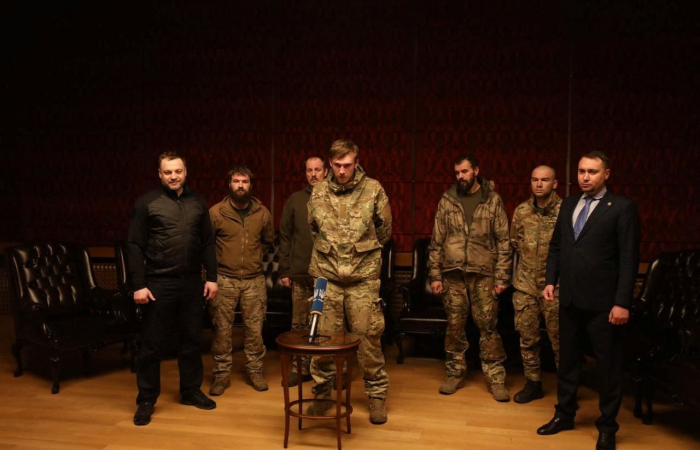
Biggest prisoner exchange between Ukraine and Russia, including Azov battalion fighters

In a surprise move, Russia and Ukraine on the night from Wednesday to Thursday (22 September) implemented the biggest prisoner exchange since the start of the war between them in February Russia released over a hundred captured Ukrainian fighters in a prisoner exchange, including fighters from the Azov battalion.  In numerical terms, the prisoner swap represents a major victory for Ukrainian morale. Among others, Ukraine got back three commanders who led the last Ukrainian resistance in the port city of Mariupol and over 100 more members of the battalion. A total of 215 Ukrainians have been released. Among them are policemen, border guards, soldiers and pregnant fighters. In a seperate move ten foreigners who were fighting for the Ukrainian side and were captured by the Russians, were released thanks to the mediation of Crown Prince Mohamed bin Salman of Saudi Arabia.
Editor's choice
Opinion
Opinion: Beware of Americans bearing gifts

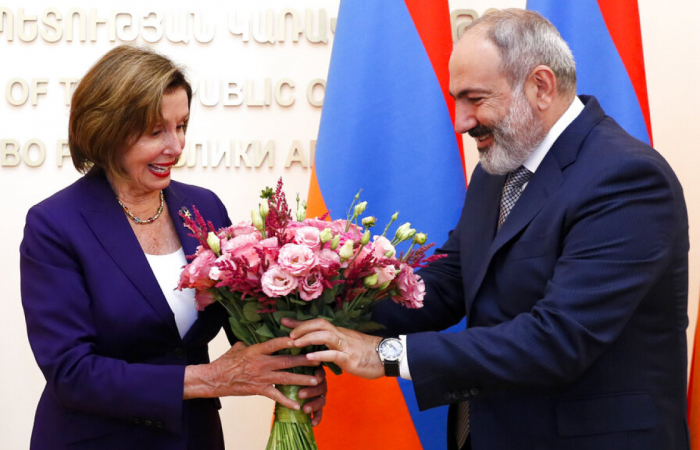
Opinion: Beware of Americans bearing gifts

In this op-ed for commonspace.eu, Benyamin Poghosyan says that the visit of Nancy Pelosi to Armenia created quite a lot of hype, since some saw in it the prospects for national salvation. But the visit's "democracy vs authoritarianism agenda" is risky for Armenia he argues.   Armenia should send clear signals to Russia and Iran that it has no intention to join the “democracy vs. authoritarianism fight” and will never allow anyone to use its territory for anti-Iranian or anti-Russian activities.
Editor's choice
News
Guterres warns the world: "Winter is coming"

Guterres warns the world: "Winter is coming"

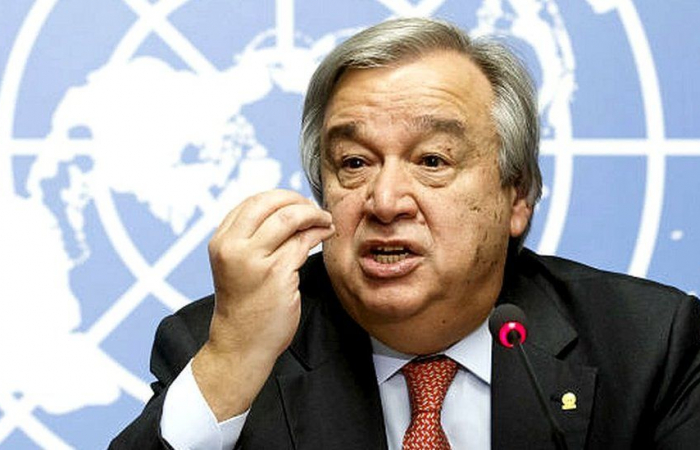
UN Secretary General, Antonio Gutteres has warned  global leaders that the world is in ‘great peril’ and facing a winter of discontent. Guterres said leaders meeting in person for the first time in three years must tackle conflicts and climate catastrophes, increasing poverty and inequality — and address divisions among major powers that have gotten worse since Russia invaded Ukraine. In speeches and remarks leading up to the start of the leaders’ meeting Tuesday, Secretary-General Antonio Guterres cited the “immense” task not only of saving the planet, “which is literally on fire,” but of dealing with the persisting COVID-19 pandemic. He also pointed to “a lack of access to finance for developing countries to recover — a crisis not seen in a generation” that has seen ground lost for education, health and women’s rights. Guterres delivered his “state of the world” speech at Tuesday’s opening of the annual high-level global gathering. UN spokesman Stephane Dujarric said it contained “a sober, substantive and solutions-focused report card” for a world “where geopolitical divides are putting all of us at risk.” In an alarming assessment, Guterres told world leaders that nations are “gridlocked in colossal global dysfunction” and aren’t ready or willing to tackle the major challenges that threaten the future of humanity and the fate of the planet.