Theme

Diplomacy

Editor's choice
News
Germany accuses Russia of cyberattacks and disinformation campaign

Germany accuses Russia of cyberattacks and disinformation campaign

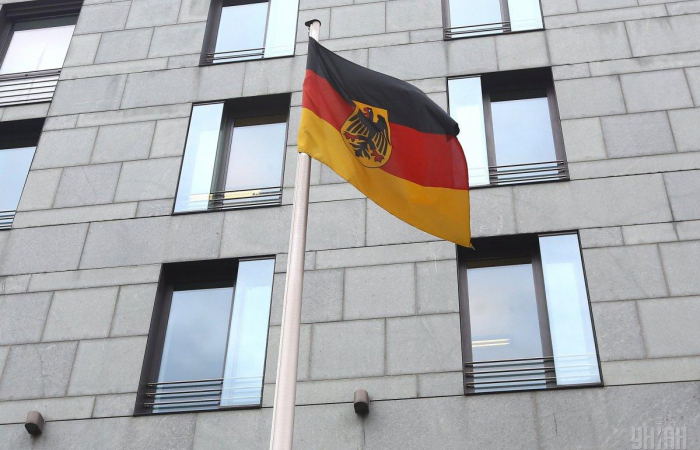
The German government holds Russia responsible for a cyberattack on German air traffic control, and for targeted disinformation campaigns before the last federal election. According to the German Foreign Office in Berlin, the incidents could be clearly attributed to the Russian military intelligence service, the GRU. In response, the Russian ambassador to Berlin was summoned to the Foreign Ministry. "We have been observing a massive increase in threatening hybrid activities by Russia for some time now," a spokesperson for the Foreign Ministry stated. These range from disinformation campaigns and espionage to cyberattacks and sabotage attempts. The aim is to divide society, sow distrust, and undermine confidence in democratic institutions. The spokesperson added that with these actions, Russia is "very concretely threatening our security, not only through its war of aggression against Ukraine, but also here in Germany."  The Foreign Ministry spokesperson explained that the cyberattack on air traffic control in August 2024 was clearly attributed to the hacker collective "APT28," known as "Fancy Bear," and to the responsibility of the Russian military intelligence service, the GRU. Furthermore, it could now be "conclusively stated" that Russia had attempted "to influence and destabilize both the last Federal election and the ongoing internal affairs of the Federal Republic of Germany." There was "absolutely irrefutable evidence" for this". The so-called "Storm 1516" campaign, which has been running since 2024, is allegedly backed by "reliable information" that the Moscow-based think tank "Center for Geopolitical Expertise" is behind it. The Center is also said to be supported by Russian military intelligence. Its primary aim is to influence democratic elections in the West. (Click the image to read more).
Editor's choice
Opinion
Opinion: A sustainable peace requires consistent long-term European involvement

Opinion: A sustainable peace requires consistent long-term European involvement

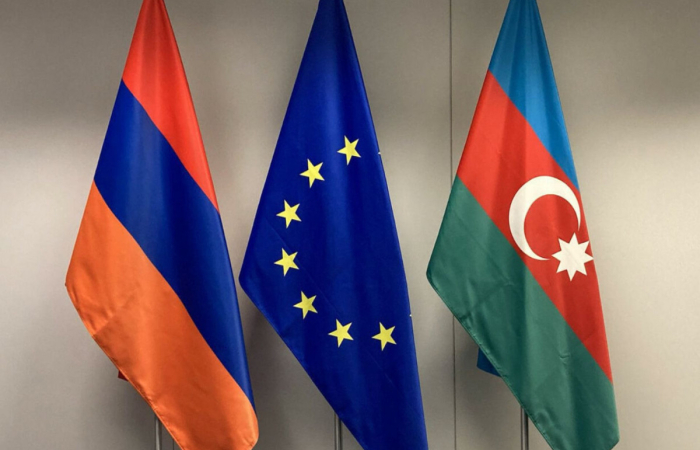
There is no denying that the EU, especially key member states acting in support, helped bring Baku and Yerevan closer to the Washington Declaration of August 8, 2025. But a declaration is not a treaty. Turning principles into a peace deal and eventually to a sustainable peace requires consistent long-term European involvement, writes Yalchin Mammadov in this-op-ed for commonspace.eu Before facilitating trust between Armenia and Azerbaijan, the EU is first expected to address its own credibility gap with Baku. A more balanced approach—such as including Azerbaijan, alongside Armenia, in the European Peace Facility—could be a useful first step. Diplomats can negotiate peace; societies must build peace. In this context, the EU can do what it does the best: long-term societal engagement. By expanding youth and academic exchange programmes, investing in cross-border civil society initiatives, and fostering people-to-people cooperation, Brussels can help shape a new generation equipped to sustain peace beyond political cycles. Such tools are slow and unglamorous, but if ignored, even the strongest treaty risks collapse. And obviously, these aspects require two-way engagement and genuine willingness by both governments to facilitate contact. If Brussels wants to remain influential, it needs to replace outdated one-size-fits-all policies with ambitious, interest-driven and differentiated approaches. Without a clear regional strategy, which appears to be the current situation, the South Caucasus will continue to sit at the margins of Europe’s security architecture—leaving space for other powers to take the lead. (You can read the op-ed in full by clicking the image.)

Filter archive

Publication date
Editor's choice
News
Erdogan says there is no problem between Turkey and the US that the two strategic partners cannot solve

Erdogan says there is no problem between Turkey and the US that the two strategic partners cannot solve

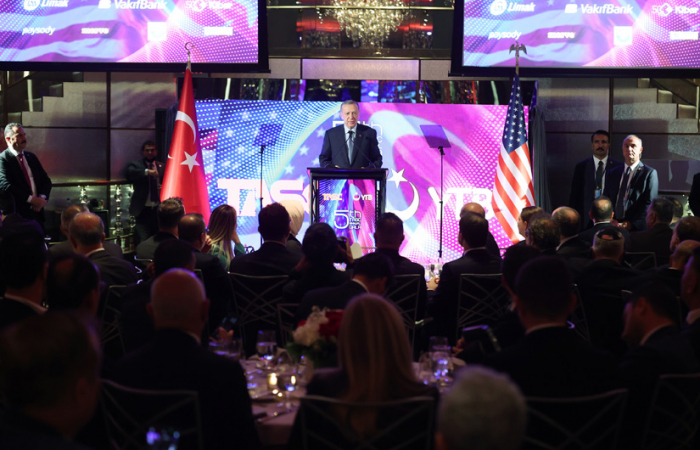
Turkish President Recep Tayyip Erdogan has said Turkey and the United States are be able to resolve bilateral problems and develop cooperation based on common interests. Erdogan is in New York to address this year's UN General Assembly. “There is no problem between Turkey and the U.S. that they, as two strategic partners and 70-year-long allies, cannot resolve. Although we have some differences of opinion over the issues concerning our national security, we share similar attitudes in many regional and global matters,” Erdogan said on Sunday (18 September) at a dinner event organized by the Turkish American National Steering Committee (TASC). Stating that Turkey is one of the countries most affected by terrorism and at the forefront of the fight against terrorism, Erdogan said they would continue to resolutely fight against all terrorist organizations, including PKK-YPG, ISIL and FETO, without making any distinction. “We will definitely remove the bloody and dark shadow of terrorism from our region,” he said.
Editor's choice
News
World leaders gather in London for the funeral of Elizabeth II

World leaders gather in London for the funeral of Elizabeth II

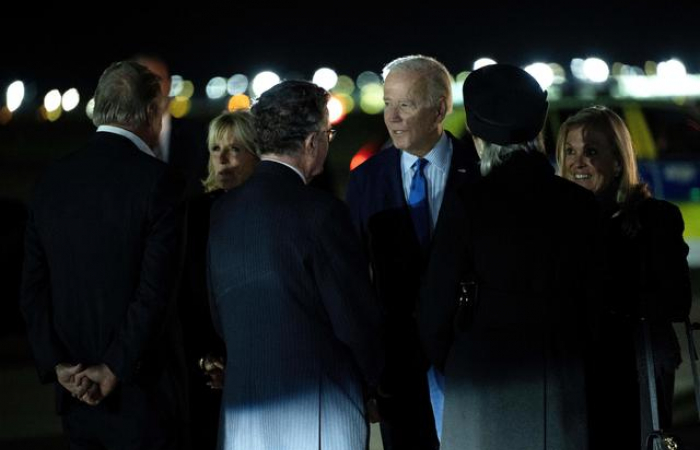
World leaders have descended on London this weekend ahead of Monday's funeral of Queen Elizabeth II who died on 8 September. US President Joe Biden is among the world leaders already in the British capital. The fifty-six Commonwealth countries, who were held in special affection by the Queen, will all be fully represented, most of them by their heads of state or prime ministers. Monday's funeral will be culmination of days of public events to mark the death of Queen Elizabeth II and the accession to the throne of her son King Charles III. Tributes for Queen Elizabeth have come from across the UK, the Commonwealth and the rest of the world, with most highlighting the Queen's extraordinary sense of duty and service, served with commitment over the seventy years of her reign.  Tens of thousands of people queued for many hours to pass by the coffin of Queen Elizabeth II which has been laying in state at London's Westminster Hall, a reflection of the very solid bond that the Queen had forged with her people during her long reign.
Editor's choice
News
Xi sets the tone, and Putin answers questions

Xi sets the tone, and Putin answers questions

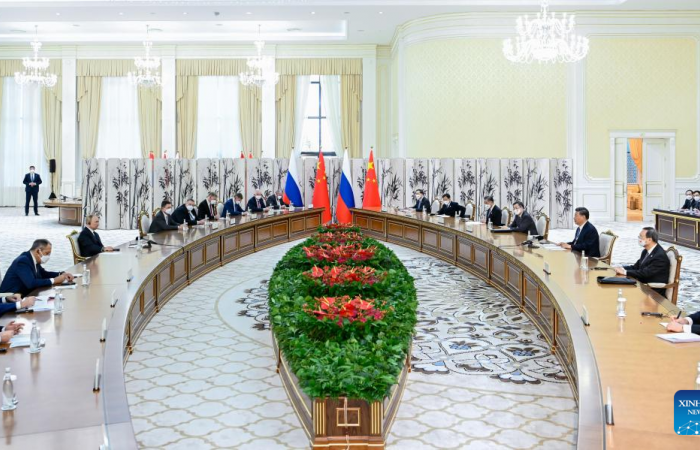
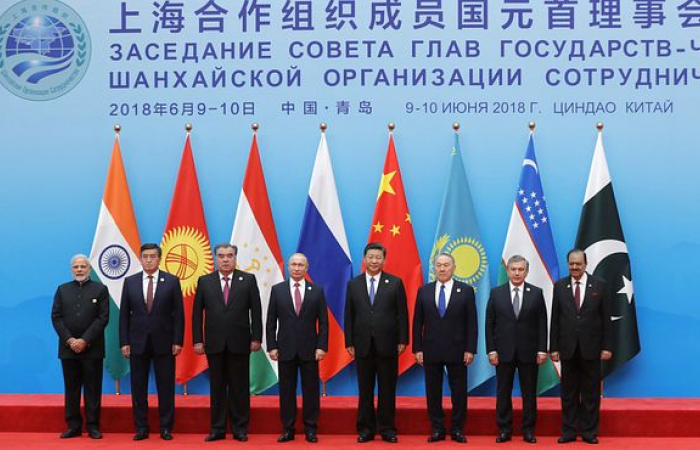
Chinese President Xi chose Central Asia for his first foray overseas after a long hiatus due to the Covid pandemic, travelling to Kazakhstan, and then onwards to Samarkand to attend the meeting of the Shanghai Co-operation Organisation (SCO) and have various bilateral meetings. Chinese protocol these days demand that all meetings with Xi are fully masked, and so attired delegations troded in to meet the Chinese leader: Azerbaijan President Ilham Aliyev was early in queue. There was Uzbekistan's president Miriyzoyev, who for good measure gave President Xi Uzbekistan's "Order of Friendship", and Belarus President Lukashenko. But most interest was focused on when Putin's turn came. Increasingly the Russian leader is starting to look like the junior partner in the relationship with Xi. Certainly the official language was all proper and correct, but there was something in the body language that showed Putin's awkwardness at the new situation.Putin said Russia will consolidate and deepen bilateral and multilateral communication and collaboration with China, and expand cooperation in key areas such as economy, trade and energy. “We highly value the balanced position of our Chinese friends when it comes to the Ukraine crisis,” Putin said in televised remarks to Xi. “We understand your questions and concern about this. During today’s meeting, we will, of course, explain our position.” "Questions and concern" - not exactly enthusiastic support then by China for Putin's adventure in Ukraine.
Editor's choice
News
Armenia triggers mutual defence mechanism with Russia and CSTO

Armenia triggers mutual defence mechanism with Russia and CSTO

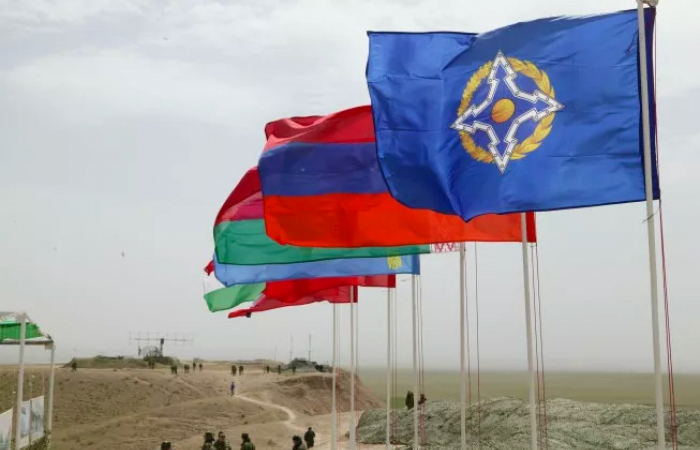
In the aftermath of deadly clashes with Azerbaijan overnight, which left dozens of Armenian soldiers killed or injured, Armenia has triggered mutual defence clauses in its agreements with Russia and with the Russia led Collective Security Treaty Organisation, of which Armenia is a full member. Armenian prime minister Nikol Pashinyan spoke on the phone with Russian president Vladimir Putin as the fighting was raging. Armenia's Defence and Foreign Ministers have also been in touch with their Russian counterparts. Armenia has a defence treaty with Russia. Armenian leaders have also been in touch with the Secretariat of the Collective Security Treaty Organisation, of which Armenia is a full member. It is understood that the Council of the CSTO is to meet soon to discuss the matter. There is increasing frustration in Armenia at the failure of both Russia and the CSTO to support it in the face of what it claims to be Azerbaijani aggression.
Editor's choice
News
Albania cuts diplomatic relations with Iran accusing it of a massive cyberattack

Albania cuts diplomatic relations with Iran accusing it of a massive cyberattack

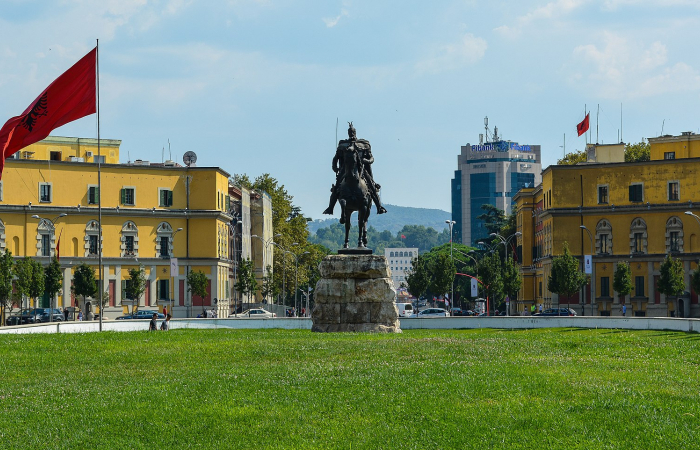
Albania broke diplomatic relations with Iran on Wednesday. Announcing the decision, Prime Minister Edi Rama said Iran had launched a massive cyberattack against the country during the summer. “The Council of Ministers has decided on the severance of diplomatic relations with the Islamic Republic of Iran with immediate effect,” he said. The prime minister accused Iran of targeting the computer networks of Albanian institutions on July 15 in an attempt to “paralyze public services and hack data and electronic communications from the government systems.” He said: “The said attack failed its purpose. Damages may be considered minimal compared to the goals of the aggressor. All systems came back fully operational and there was no irreversible wiping of data.” He added that Iranian diplomats and support staff would be given 24 hours to leave the country.
Editor's choice
Event
EU tells Georgia the door for membership is still ajar

EU tells Georgia the door for membership is still ajar

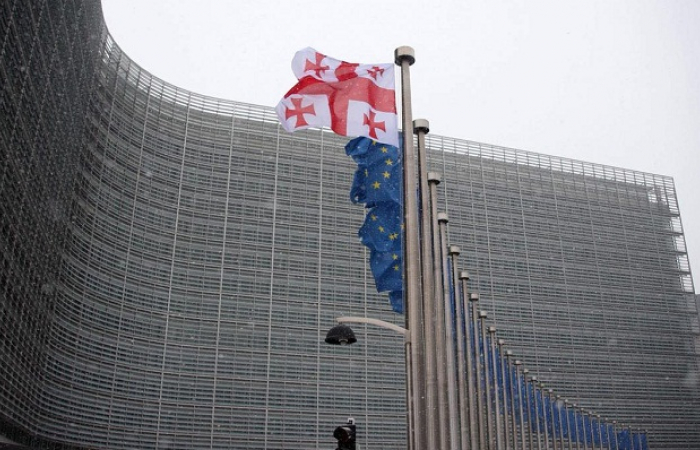
Relations between Georgia and the European Union  have been passing through a difficult patch recently. Whilst both sides profess eternal love and loyalty, tensions over ongoing domestic Georgian political processes have marred what was once a good example of a harmonious relationship. Georgian prime minister, Irakli Garibashvili is currently in Brussels where he is co-chairing, with EU High Representative, Josep Borrell, a session of the EU-Georgia Council, the body that oversees the relationship. At the heart of the current state of relations is the EU's refusal to grant candidate status to Georgia, as it did recently with Ukraine and Moldova. The Georgian government is still reeling from the snub, and the Georgian opposition continues to use this as a stick to beat the government. At a press conference yesterday both sides tried to downplay differences, and the EU made it clear that the door for Georgian EU membership, whilst not exactly wide-open, was still ajar.
Editor's choice
News
Opinion: The role of the Shanghai Cooperation Organisation goes beyond managing Russia-China relations in Central Asia

Opinion: The role of the Shanghai Cooperation Organisation goes beyond managing Russia-China relations in Central Asia

"As the world comes closer to multi-polarity, the role of such organizations as SCO will grow further. Russia and China will seek to use them as a counterbalance to western dominated international political and economic organizations, such as G7, the EU, the World Bank and IMF", writes Benyamin Poghosyan in this op-ed. He argues that in the present context of emerging great power competition, the SCO started to be viewed less as a tool to manage Russia – China relations in Central Asia, or counter terrorist threats from Afghanistan, and more as a significant grouping of non-western powers in the emerging multipolar world.