Theme

Conflict and Peace

Stories related to violent conflicts, diplomatic tensions, and conflict prevention, mediation and resolution.

Editor's choice
News
Thai-Cambodia border clashes enter fourth day

Thai-Cambodia border clashes enter fourth day

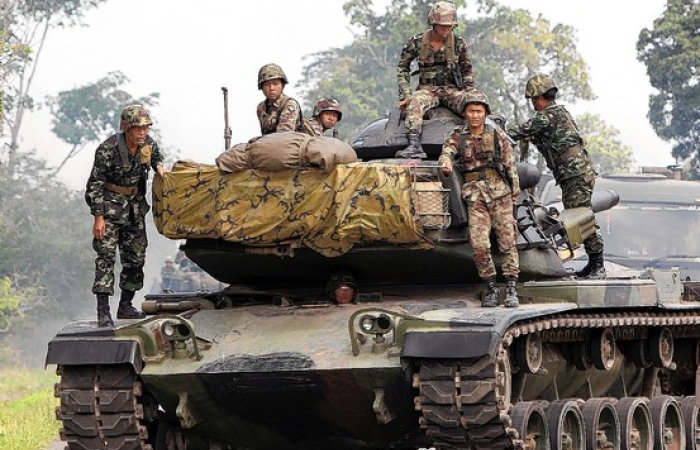
Renewed fighting between Thailand and Cambodia has entered its fourth day, with both sides accusing one another of violating international law, as they await a promised phone call from United States President Donald Trump. Cambodia’s Ministry of Defence accused Thailand’s military of carrying out numerous attacks within the country in the early hours of Thursday morning, including deploying tanks and artillery to strike targets in the country’s Pursat, Banteay Meanchey, and Oddar Meanchey provinces. In one such attack, Cambodia accused Thai soldiers of violating international humanitarian law by firing on civilians in Prey Chan village in Banteay Meanchey province. In another, it accused Thai forces of shelling “into Khnar Temple area”, and said Thai forces had also “fired artillery and support fire into the O’Smach area”. “Cambodia urges that Thailand immediately stop all hostile activities and withdraw its forces from Cambodia’s territorial integrity, and avoid acts of aggression that threaten peace and stability in the region,” the Defence Ministry said. Clashes took place on Wednesday at more than a dozen locations along the contested colonial-era demarcated 817-kilometre (508-mile) Thai-Cambodian border, with some of the most intense fighting being reported since a five-day battle in July, which saw dozens killed on both sides. Cambodia’s Ministry of the Interior said homes, schools, roads, Buddhist pagodas and ancient temples had been damaged by “Thailand’s intensified shelling and F-16 air strikes targeting villages and civilian population centres up to 30km [18.6 miles] inside Cambodian territory”. (click the image to read the full story).
Editor's choice
Young voices
Opinion: The children of Sudan that the world forgot to see

Opinion: The children of Sudan that the world forgot to see

Sudan’s latest war began in April 2023, though the seeds of its violence were planted long before. The Sudanese Armed Forces and the Rapid Support Forces did not collide out of nowhere; they emerged from decades of political rot, unaddressed grievances, ethnic persecution, and military rule that carved deep fractures into the country’s social fabric. When fighting exploded across Khartoum and later consumed Darfur, Kordofan, and the east, it unleashed one of the worst humanitarian catastrophes of the 21st century. In this op-ed, Ioana-Maria Ungureanu, Junior Research Assistant at LINKS Europe, takes a heartfelt look at the plight of Sudan, and its children. When the latest war started, whole cities emptied. Markets burned. Families fled on foot. And a famine began tightening its grip, slow and suffocating. And yet, the world remained mostly silent. Sudanese death is too often framed as an unfortunate feature of the region, a tragedy that feels expected rather than outrageous. Even when evidence of atrocity is abundant, it fails to command the same emotional weight. Sudan should not have to beg for visibility. It deserves it. Because its people deserve to live. And their lives deserve the same respect, safety, and hope that we demand for our own. (read the op-ed in full by clicking the image above)

Filter archive

Publication date
Editor's choice
Commentary
Commentary: Putin’s partial mobilisation exposes how weak he really is

Commentary: Putin’s partial mobilisation exposes how weak he really is

Speaking in a pre-recorded speech that was originally scheduled for the evening before, Russian President Vladimir Putin announced on Wednesday morning (21 September) a partial mobilisation of 300,000 reservists to boost his faltering invasion of Ukraine. Far from being a demonstration of strength, however, his announcement exposes how weak a position Russia currently finds itself in, and on a number of levels too, writes commonspace.eu Deputy Editor Patrick Norén. The Russian President finds himself hamstrung across three fronts: his narrative of "everything is going according to plan" is imploding; the risks of doing nothing or declaring a full mobilisation have resulted in an unsatisfactory fudge that does not address the root cause of the problem; and Russia's far-right, furious at the disastrous invasion of Ukraine, is baying for blood.
Editor's choice
News
Russia mobilises 300,000 reservists in a desperate effort to reverse setbacks in Ukraine

Russia mobilises 300,000 reservists in a desperate effort to reverse setbacks in Ukraine

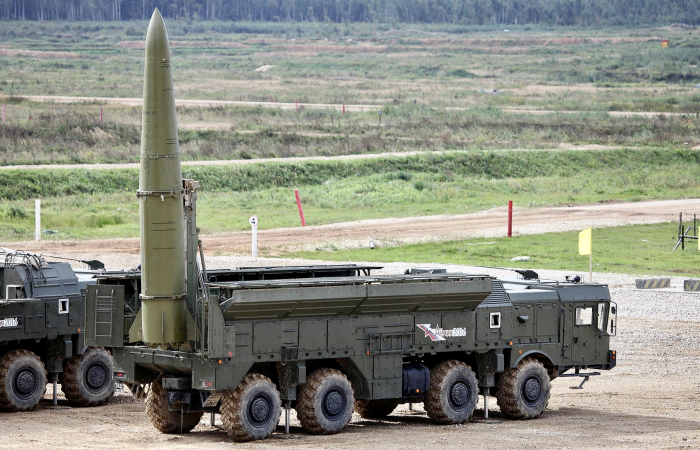
Russian president Vladimir Putin has ordered a partial mobilisation as part of an effort to boost its military effort in Ukraine. Putin made the announcement during a pre-recorded television speech which was first scheduled to be aired on Wednesday evening, but was eventually delayed until Thursday morning. After the speech was aired, Russia's defence minister, Sergei Shoigu gave further details on the partial military mobilisation, saying 300,000 reservists will be conscripted into the armed forces. Sergei Shoigu said that number represented a small fraction of Russia's available resources, while students and those who had already served as conscripts would not be called up. He said all those being conscripted would be given military training before being sent to Ukraine. In his speech Vladimir Putin said the decision, which followed the announcement of referendums to pave the way for the formal annexation of swathes of Ukraine, is meant to "protect our Motherland and our territorial integrity." Claiming the West was threatening Russia with nuclear weapons, Mr Putin said: "We have lots of weapons to reply - it is not a bluff."
Editor's choice
News
Guterres warns the world: "Winter is coming"

Guterres warns the world: "Winter is coming"

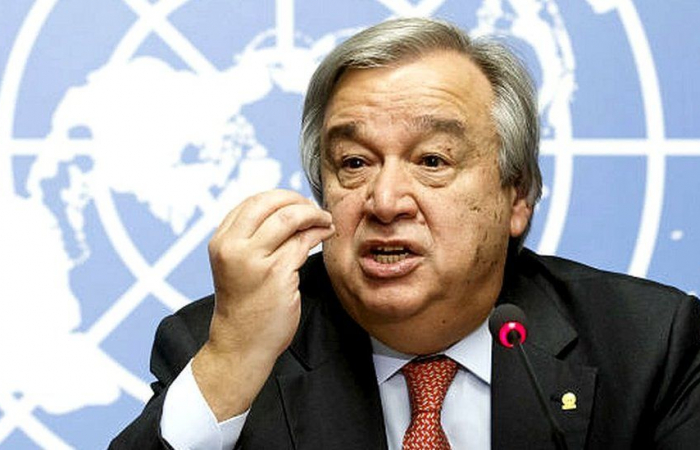
UN Secretary General, Antonio Gutteres has warned  global leaders that the world is in ‘great peril’ and facing a winter of discontent. Guterres said leaders meeting in person for the first time in three years must tackle conflicts and climate catastrophes, increasing poverty and inequality — and address divisions among major powers that have gotten worse since Russia invaded Ukraine. In speeches and remarks leading up to the start of the leaders’ meeting Tuesday, Secretary-General Antonio Guterres cited the “immense” task not only of saving the planet, “which is literally on fire,” but of dealing with the persisting COVID-19 pandemic. He also pointed to “a lack of access to finance for developing countries to recover — a crisis not seen in a generation” that has seen ground lost for education, health and women’s rights. Guterres delivered his “state of the world” speech at Tuesday’s opening of the annual high-level global gathering. UN spokesman Stephane Dujarric said it contained “a sober, substantive and solutions-focused report card” for a world “where geopolitical divides are putting all of us at risk.” In an alarming assessment, Guterres told world leaders that nations are “gridlocked in colossal global dysfunction” and aren’t ready or willing to tackle the major challenges that threaten the future of humanity and the fate of the planet.
Editor's choice
News
Dozens dead or injured and tens of thousands displaced after clashes on the border between Kyrgyzstan and Tajikistan

Dozens dead or injured and tens of thousands displaced after clashes on the border between Kyrgyzstan and Tajikistan

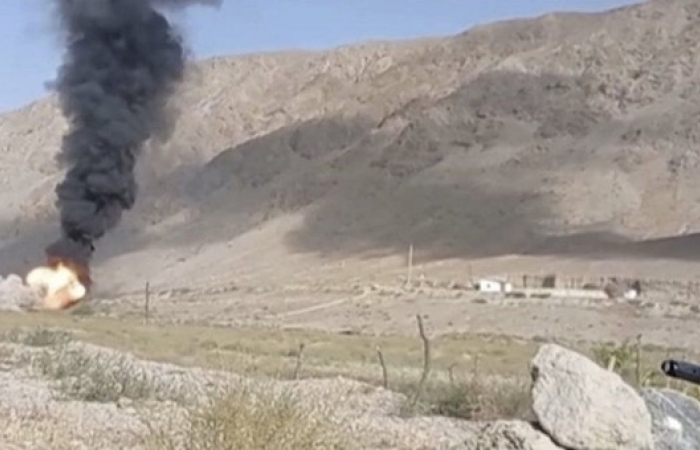
Fighting on the border between the Central Asian republics of Kyrgyzstan and Tajikistan on Friday (16 September) killed at least 24 people, wounded dozens and prompted a mass evacuation. Both sides blamed each other for responsibility for the incidents. Kyrgyzstan’s Health Ministry said early Saturday that the bodies had been delivered to hospitals in the Batken region that borders Tajikistan. An additional 87 people were wounded, the ministry said. Clashes on the border that began earlier this week grew into large-scale fighting Friday involving tanks, artillery and rocket launchers. As part of the shelling, Tajik forces struck the regional capital, Batken, with rockets. Kyrgyzstan’s Emergencies Ministry said 136,000 people were evacuated from the area engulfed by the fighting. Kyrgyzstan's president, Sadyr Zhaparov, and his Tajik counterpart, president Emomali Rakhmon, were both in Samarkand in nearby Uzbekistan on Friday, participating in the Summit of the Shanghai Co-operation Organisation, and are reported to have met on the margins of the main event.
Editor's choice
News
UN Security Council starts discussing situation on Armenia-Azerbaijan border

UN Security Council starts discussing situation on Armenia-Azerbaijan border

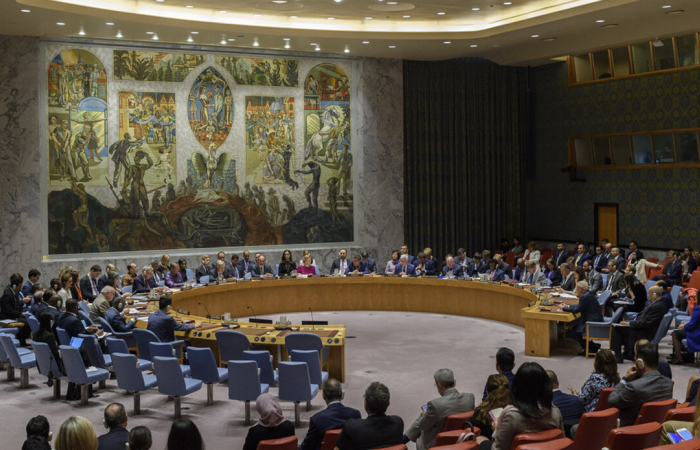
The United Nations Security Council on Wednesday (14 September) started discussing, in close session, the situation on the Armenia and Azerbaijan border. The meeting was held at the request of Armenia, who accuses Azerbaijan of encroaching on its territory. Diplomatic sources told the media that there was overall in the discussion unanimity in calling on the sides to immediately cease hostilities and return to diplomatic negotiations. It is understood that the Council will continue with its deliberations today, and the meeting this time will be in public. Meanwhile, the Secretary of National Security Council of Armenia on Wednesday evening told Armenian Public TV that following the mediation of the international community a cease fire had been agreed by both Armenia and Azerbaijan starting from 20.00 hours. There have so far not been any reports of new clashes overnight. In Armenia, the political situation remains tense, with the opposition collecting signatures from MPs for the impeachment of prime minister Nikol Pashinyan. But so far only opposition MPs have joined the initiative which is likely to fail.