Commentary: Putin’s partial mobilisation exposes how weak he really is

Speaking in a pre-recorded speech that was originally scheduled for the evening before, Russian President Vladimir Putin announced on Wednesday morning (21 September) a partial mobilisation of 300,000 reservists to boost his faltering invasion of Ukraine. Far from being a demonstration of strength, however, Putin's announcement exposes how weak a position he currently finds himself in, and on a number of levels too, writes commonspace.eu Deputy Editor Patrick Norén.

Firstly, the long-held Kremlin line that “everything is going according to plan” simply cannot survive contact with reality any longer. In recent days we have seen TV propagandists lambast the chaotic collapse of the Russian frontline in Kharkiv two weeks ago, combined with public acknowledgements that the situation is “difficult” and euphemisms of “regrouping” away from regions where Russia had erected billboards declaring that “Russia is here forever”. To observers in Russia, this should confirm what the West has known since March. Putin’s invasion of Ukraine has been worse than a disaster. Arrogance has been replaced by desperation, and the Kremlin’s narrative is imploding.

Secondly, the partial mobilisation confirms that Putin is cornered. Doing nothing is not an option, because he, quite simply, is running out of men and urgently needs more soldiers lest he be forced into further “goodwill gestures”. On the other hand, he is equally unable to declare a full mobilisation, a measure that would tank an already crippled economy and could result in widespread unrest. The result is a fudge. It is an unsatisfactory, temporary compromise that does not address the root cause of the problem. 

Furthermore, ever since rumours began to circulate about a potential mobilisation on Tuesday evening (20 September), it has been reported that cost of flights from Russia to Turkey, Georgia, and Armenia - countries for which Russians do not require visas - have skyrocketed, and are now fully booked. In some cases, a seat on one of these flights would set you back thousands of US dollars. If this is the response to what in actual fact amounts to a very small mobilisation, how would Russians react to a full mobilisation?

To be clear, Vladimir Putin needed 300,000 extra soldiers months ago, and not in a few months’ time. Declaring a partial mobilisation today does not mean he will be winning the war tomorrow. Notwithstanding the fact that Ukraine declared a full mobilisation back in February and has millions of reservists, the enormous logistical exercise of drafting, training, arming, and dispatching these Russian soldiers to the frontlines is a feat within itself, and one which, given their past difficulties with wartime logistics, will probably not make much difference on the battlefield anyway, at least not in the short term. One must also not forget that Ukraine's lend-lease deal with the United States has not even taken effect yet; this kicks in on 1 October and should represent a huge shot in the arm to an already emboldened Ukrainian Armed Forces.

Finally, one must turn to the situation inside the Russian political establishment. The Russian far-right, of which Vladimir Putin, believe it or not, is not a member, is incensed at how badly the so-called “special military operation” is going. For example, far-right nationalist Igor Girkin said in August, “While the Kremlin continues to slowly chew the usual snot, our respected Ukrainian partners are matter-of-factly destroying everything they can reach…the failure of the Russian military strategy in Ukraine is obvious.” 

For all the anti-Western rhetoric, to which the West grew desensitised long ago, this partial mobilisation and the upcoming “referenda” on the currently occupied regions “joining Russia”, are attempts to pacify a furious far-right that is baying for blood. While the general wisdom since 24 February 2022 has been that Vladimir Putin has been controlling operations in Ukraine, this fudge of a mobilisation could be a recognition that vultures are beginning to circle much closer to home. Is Putin beginning to look over his shoulder?

Again, to be clear, one should not get carried away and suggest that the Russian President will be ousted any time soon. But this partial mobilisation exposes how weak Vladimir Putin really is.
source: Patrick Norén is the Deputy Editor of commonspace.eu.
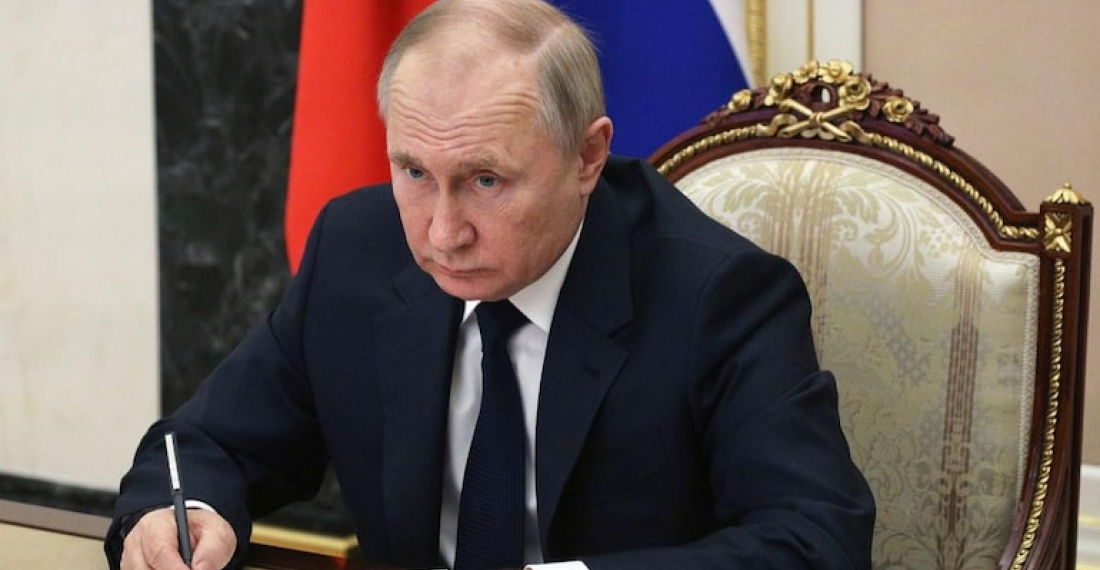
photo: Vladimir Putin, Associated Press
 
The views expressed in opinion pieces and commentaries do not necessarily reflect the position of commonspace.eu or its partners.

Related articles

Editor's choice
News
Situation in South Yemen strains relations between Saudi Arabia and UAE

Situation in South Yemen strains relations between Saudi Arabia and UAE

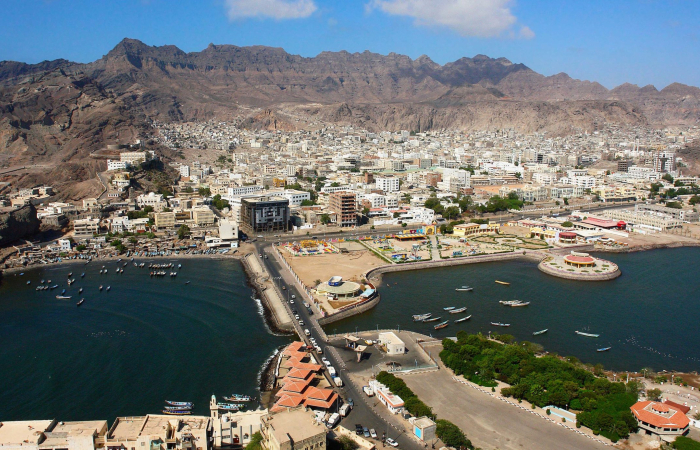
The relations between Saudi Arabia and the United Arab Emirates (UAE) are increasingly strained as a result of the different approach of the two countries towards Yemen. Whilst both countries were initially together in resisting the Houthi take over in Yemen, the UAE subsequently focused on the South of the country, backing the Southern Movement (STC), which seeks to restore the independence of South Yemen. South Yemen became an independent country in 1967, at the end of British rule, and only unified with the north in 1990. The Saudi-led “Coalition to Support Legitimacy in Yemen” on Tuesday, 30 December, said it conducted a “limited” airstrike targeting two ships “that smuggled weapons and other military hardware into Mukalla in southern Yemen”. The ships originated in the UAE port of Furjeirah. In a statement carried by the Saudi Press Agency (SPA), the Coalition Forces spokesman, Major General Turki Al-Maliki, said that two ships coming from the port of Fujairah in the United Arab Emirates entered the Port of Mukalla in Hadramaut without obtaining official permits from the Joint Forces Command of the Coalition. He stressed the Coalition's "continued commitment to de-escalation and enforcing calm in the governorates of Hadramawt and Al-Mahra, and to prevent any military support from any country to any Yemeni faction without coordination with the legitimate Yemeni government and the Coalition. The Southern Transitional Council (STC), launched a sweeping military campaign early in December, seizing the governorates of Hadramaut along the Saudi border and the eastern governorate of Al-Mahra in Yemen’s border with Oman. The UAE-backed STC forces captured the city of Seiyun, including its international airport and the presidential palace. They also took control of the strategic PetroMasila oilfields, which account for a massive portion of Yemen’s remaining oil wealth. (click the image to read the article in full).

Popular

Editor's choice
News
Situation in South Yemen strains relations between Saudi Arabia and UAE

Situation in South Yemen strains relations between Saudi Arabia and UAE

The relations between Saudi Arabia and the United Arab Emirates (UAE) are increasingly strained as a result of the different approach of the two countries towards Yemen. Whilst both countries were initially together in resisting the Houthi take over in Yemen, the UAE subsequently focused on the South of the country, backing the Southern Movement (STC), which seeks to restore the independence of South Yemen. South Yemen became an independent country in 1967, at the end of British rule, and only unified with the north in 1990. The Saudi-led “Coalition to Support Legitimacy in Yemen” on Tuesday, 30 December, said it conducted a “limited” airstrike targeting two ships “that smuggled weapons and other military hardware into Mukalla in southern Yemen”. The ships originated in the UAE port of Furjeirah. In a statement carried by the Saudi Press Agency (SPA), the Coalition Forces spokesman, Major General Turki Al-Maliki, said that two ships coming from the port of Fujairah in the United Arab Emirates entered the Port of Mukalla in Hadramaut without obtaining official permits from the Joint Forces Command of the Coalition. He stressed the Coalition's "continued commitment to de-escalation and enforcing calm in the governorates of Hadramawt and Al-Mahra, and to prevent any military support from any country to any Yemeni faction without coordination with the legitimate Yemeni government and the Coalition. The Southern Transitional Council (STC), launched a sweeping military campaign early in December, seizing the governorates of Hadramaut along the Saudi border and the eastern governorate of Al-Mahra in Yemen’s border with Oman. The UAE-backed STC forces captured the city of Seiyun, including its international airport and the presidential palace. They also took control of the strategic PetroMasila oilfields, which account for a massive portion of Yemen’s remaining oil wealth. (click the image to read the article in full).