Theme

Conflict and Peace

Stories related to violent conflicts, diplomatic tensions, and conflict prevention, mediation and resolution.

Editor's choice
News
Thai-Cambodia border clashes enter fourth day

Thai-Cambodia border clashes enter fourth day

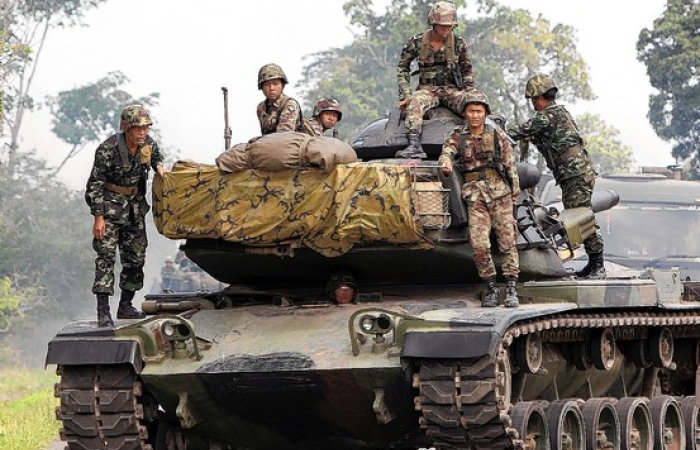
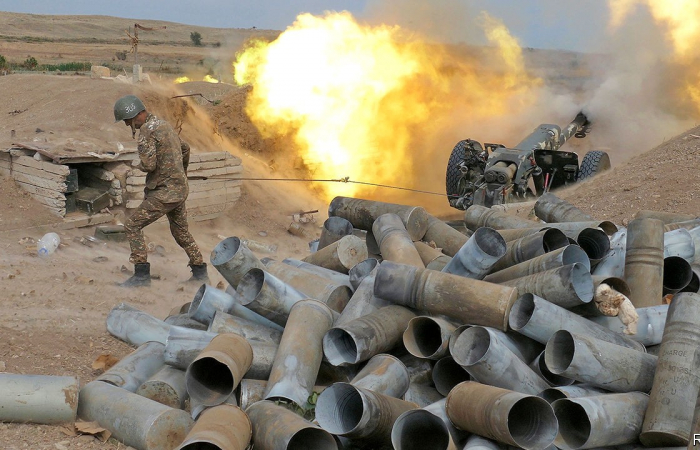
Renewed fighting between Thailand and Cambodia has entered its fourth day, with both sides accusing one another of violating international law, as they await a promised phone call from United States President Donald Trump. Cambodia’s Ministry of Defence accused Thailand’s military of carrying out numerous attacks within the country in the early hours of Thursday morning, including deploying tanks and artillery to strike targets in the country’s Pursat, Banteay Meanchey, and Oddar Meanchey provinces. In one such attack, Cambodia accused Thai soldiers of violating international humanitarian law by firing on civilians in Prey Chan village in Banteay Meanchey province. In another, it accused Thai forces of shelling “into Khnar Temple area”, and said Thai forces had also “fired artillery and support fire into the O’Smach area”. “Cambodia urges that Thailand immediately stop all hostile activities and withdraw its forces from Cambodia’s territorial integrity, and avoid acts of aggression that threaten peace and stability in the region,” the Defence Ministry said. Clashes took place on Wednesday at more than a dozen locations along the contested colonial-era demarcated 817-kilometre (508-mile) Thai-Cambodian border, with some of the most intense fighting being reported since a five-day battle in July, which saw dozens killed on both sides. Cambodia’s Ministry of the Interior said homes, schools, roads, Buddhist pagodas and ancient temples had been damaged by “Thailand’s intensified shelling and F-16 air strikes targeting villages and civilian population centres up to 30km [18.6 miles] inside Cambodian territory”. (click the image to read the full story).
Editor's choice
Young voices
Opinion: The children of Sudan that the world forgot to see

Opinion: The children of Sudan that the world forgot to see

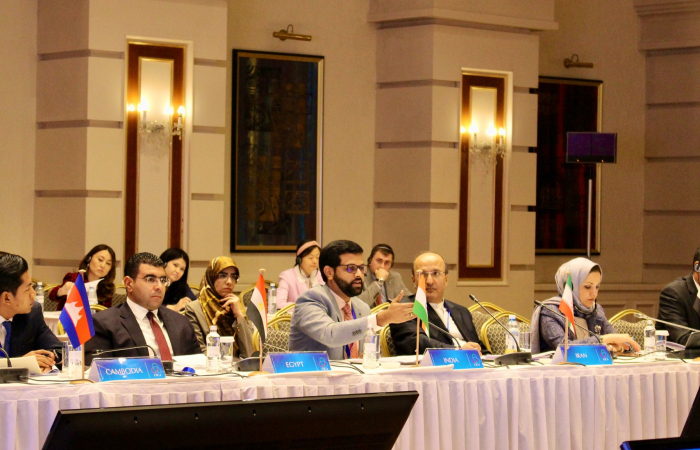
Sudan’s latest war began in April 2023, though the seeds of its violence were planted long before. The Sudanese Armed Forces and the Rapid Support Forces did not collide out of nowhere; they emerged from decades of political rot, unaddressed grievances, ethnic persecution, and military rule that carved deep fractures into the country’s social fabric. When fighting exploded across Khartoum and later consumed Darfur, Kordofan, and the east, it unleashed one of the worst humanitarian catastrophes of the 21st century. In this op-ed, Ioana-Maria Ungureanu, Junior Research Assistant at LINKS Europe, takes a heartfelt look at the plight of Sudan, and its children. When the latest war started, whole cities emptied. Markets burned. Families fled on foot. And a famine began tightening its grip, slow and suffocating. And yet, the world remained mostly silent. Sudanese death is too often framed as an unfortunate feature of the region, a tragedy that feels expected rather than outrageous. Even when evidence of atrocity is abundant, it fails to command the same emotional weight. Sudan should not have to beg for visibility. It deserves it. Because its people deserve to live. And their lives deserve the same respect, safety, and hope that we demand for our own. (read the op-ed in full by clicking the image above)

Filter archive

Publication date
Editor's choice
Editorial
Editorial: A dark day in the history of Europe

Editorial: A dark day in the history of Europe

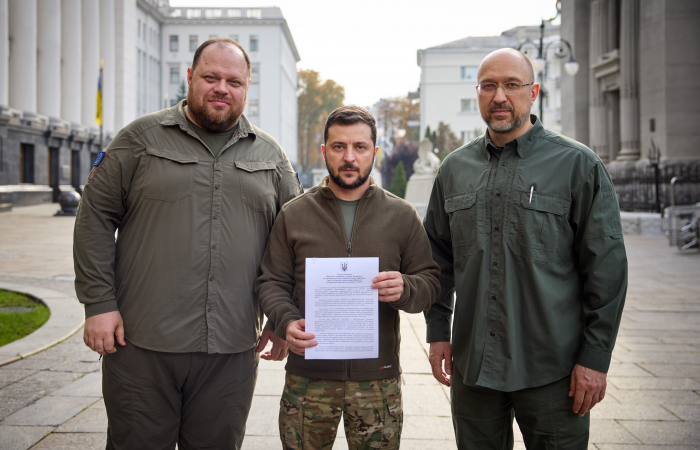
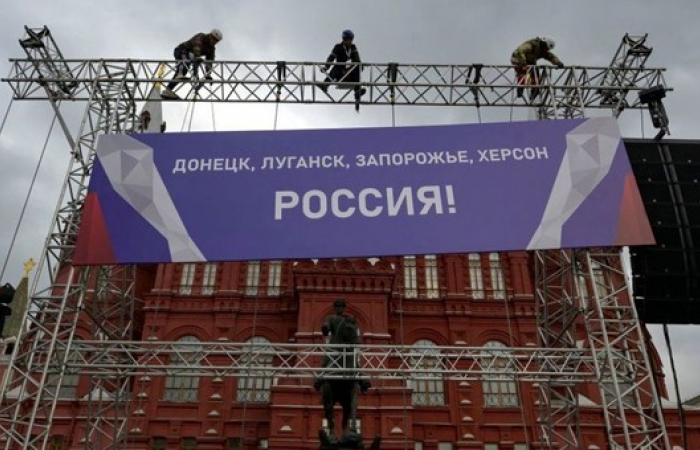
Friday, 30 September 2022 will for a long time be remembered as a sad and dark day for Europe. This afternoon, at 15:00 (12:00 GMT) in the St George Hall of the Grand Kremlin Palace president Vladimir Putin will hold a signing ceremony annexing four more regions of Ukraine into the Russian Federation. The events in Europe in the 1930 are repeating themselves with an eerie familiarity: a big country invades a smaller neighbouring country, organises a sham referendum in parts or all of that country, after which it claims the moral authority to annex that territory or country.  In an act of cynicism late on Thursday, the Russian president signed two decrees recognising Zaporizhzhia and Kherson as independent territories. Their so called independence will last for only a few hours, before they are absorbed into Russia. The documents, shared on Russian state media, say the independence of the two regions is being recognised in accordance with international law and "enshrined in the Charter of the United Nations". However, UN Secretary General António Guterres has said any annexation of a country's territory based on the use of force violates the UN Charter and international law. Europeans thought that those times were over, and that the lessons had been learnt. Apparently not. Russia's invasion of Ukraine last February set the stage for what will take place in the Kremlin today. After votes in Luhansk and Donetsk in the east of Ukraine, and in Zaporizhzhia and Kherson in the south, Russia will annexe them, in defiance of the wish of the Ukrainian people and their legitimate government, and of most of the international community. It has already acted in this way once, when in 2014, in similar circumstances it occupiued and annexed Crimea. Today's events are being hailed as a victiory by the Kremlin. A stage has already been set up in Moscow's Red Square, with billboards proclaiming the four regions as part of Russia and a concert planned for the evening in celebration. Some Russians may decide to follow the misguided steps of their leaders, but for the rest of Europe today is a sad and dark day.
Editor's choice
Editorial
Editorial: Lukashenko's trip to Abkhazia is another act in Putin's nefarious plan

Editorial: Lukashenko's trip to Abkhazia is another act in Putin's nefarious plan

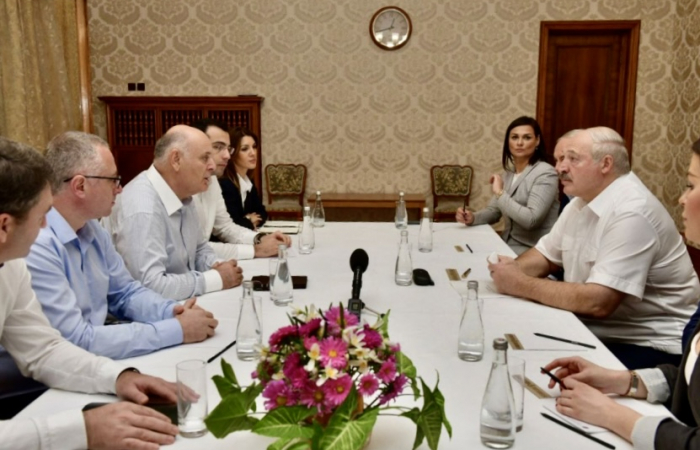
The president of Belarus, Alexandre Lukashenko, made a surprise appearance in Abkhazia on Wednesday (28 September), in a move that many see as being part of the Kremlin’s present strategy to further distabilise Eurasia to help achieve the ultimate aim, which is complete Russian hegemony on the post-Soviet Space. For sure, Lukashenko did not go to Sukhumi to have a last dip in the Black Sea before winter sets in. This was a calculated political move, typical of Lukashenko. So why did he go, and why now? Lukashenko has long been a tool of the Kremlin, not only when it comes to affairs in his own Belarus, but more broadly on the international stage. Yet he has also tried to cultivate the image of being independent-minded, not the sort to take orders from Vladimir Putin, but rather one that is able to influence the Kremlin and its policies. This visit proves that in fact he is simply a stooge.
Editor's choice
News
Macron hosts Pashinyan at the Elysee to discuss situation in the South Caucasus

Macron hosts Pashinyan at the Elysee to discuss situation in the South Caucasus

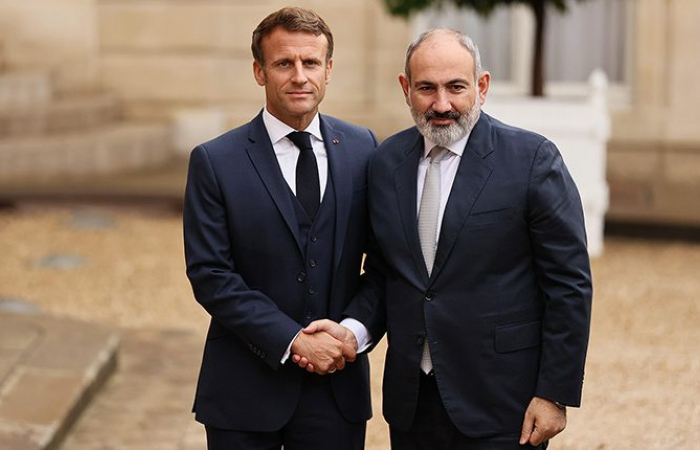
French president. Emanuel Macron on Monday (26 September) hosted Armenian prime minister Nikol Pashinyan at the Elysee Palace to discuss the current situation in the South Caucasus, and particularly Armenian-Azerbaijani relations. Macron described the situation following the recent armned clashes on 13-14 September as "critical". President Macron said France will do everything to pursue its goal, which is a stable, safe and prosperous South Caucasus." Macron also discussed the issue of relations between Armenia and Turkey. "This is a difficult but very necessary process and you know that France is also committed to this issue. This process is very important for the region", he said. In conclusion, Macron reiterated France's commitment to achieving peace and stability for Armenia and the entire region. "I welcome your sense of responsibility and your position to do everything to establish peace.  I want your country to have calm and peaceful borders", Macron told Pashinyan in his opening remarks.
Editor's choice
News
Biggest prisoner exchange between Ukraine and Russia, including Azov battalion fighters

Biggest prisoner exchange between Ukraine and Russia, including Azov battalion fighters

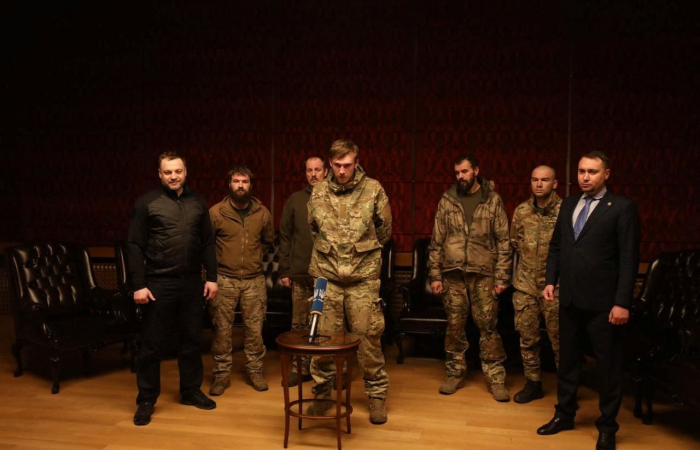
In a surprise move, Russia and Ukraine on the night from Wednesday to Thursday (22 September) implemented the biggest prisoner exchange since the start of the war between them in February Russia released over a hundred captured Ukrainian fighters in a prisoner exchange, including fighters from the Azov battalion.  In numerical terms, the prisoner swap represents a major victory for Ukrainian morale. Among others, Ukraine got back three commanders who led the last Ukrainian resistance in the port city of Mariupol and over 100 more members of the battalion. A total of 215 Ukrainians have been released. Among them are policemen, border guards, soldiers and pregnant fighters. In a seperate move ten foreigners who were fighting for the Ukrainian side and were captured by the Russians, were released thanks to the mediation of Crown Prince Mohamed bin Salman of Saudi Arabia.
Editor's choice
Opinion
Opinion: A peace process in jeopardy

Opinion: A peace process in jeopardy

"The recent flare-up along the Armenia-Azerbaijan border and the subsequent developments in Armenia  raise concerns that the region might be, unfortunately, still far away from a peace treaty and a peaceful future", writes Vasif Huseynov in this op-ed for commonspace.eu. "Surprisingly for many observers, the proposal for a peace treaty on the basis of mutual recognition of each other’s territorial integrity and inviolability of internationally-recognized borders is not supported by a large number of Armenians", he adds.
Editor's choice
Analysis
Analysis: Russia's "Wagner group" poses a threat to peace and security in the Sahel

Analysis: Russia's "Wagner group" poses a threat to peace and security in the Sahel

While the world’s attention is focused on Russia’s invasion of Ukraine, Russia’s presence in Africa, and particularly in Mali, increasingly represents a threat to international security, writes Camille Victor for commonspace.eu. Russia’s presence in Mali has generated considerable controversy since the end of 2021, with many Western powers denouncing the activities of the Russian “Wagner Group” paramilitary mercenaries in the country, accusing them of violating human rights and the rule of law. Indeed, while Mali had been cooperating closely with France in the fight against terrorism since 2013, the Malian junta that seized power in a coup in May 2021 has drastically changed its foreign policy, now turning to Moscow to help stabilise the security situation by employing the services of this shady Kremlin-linked private security group. Given that Mali’s security is currently in the hands of forces that not only fail to effectively counter an increasing terrorist threat, but also to fail to respect human rights and the rule of law, all the while facing zero accountability for their abuses, ensuring that the junta upholds its commitment to conduct democratic elections in 2024 must remain a priority. In the meantime, an integrated security risk management and peacebuilding strategy should include measures that encourage transparency and accountability for abuses and breaches to the rule of law committed by security forces, notably through strengthening civilian institutions and oversight mechanisms.