Theme

Conflict and Peace

Stories related to violent conflicts, diplomatic tensions, and conflict prevention, mediation and resolution.

Editor's choice
News
Thai-Cambodia border clashes enter fourth day

Thai-Cambodia border clashes enter fourth day

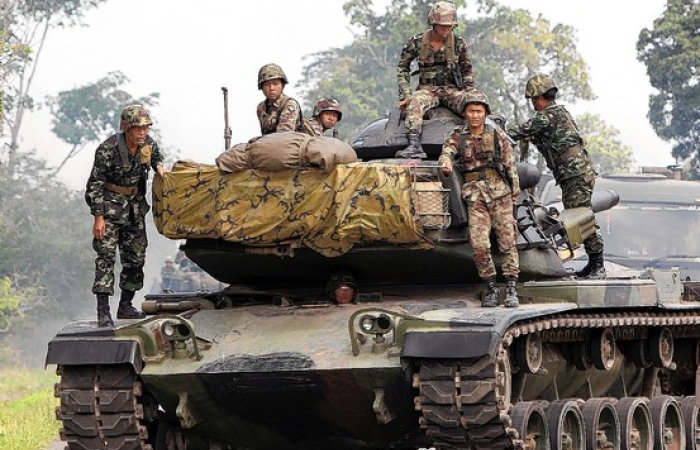
Renewed fighting between Thailand and Cambodia has entered its fourth day, with both sides accusing one another of violating international law, as they await a promised phone call from United States President Donald Trump. Cambodia’s Ministry of Defence accused Thailand’s military of carrying out numerous attacks within the country in the early hours of Thursday morning, including deploying tanks and artillery to strike targets in the country’s Pursat, Banteay Meanchey, and Oddar Meanchey provinces. In one such attack, Cambodia accused Thai soldiers of violating international humanitarian law by firing on civilians in Prey Chan village in Banteay Meanchey province. In another, it accused Thai forces of shelling “into Khnar Temple area”, and said Thai forces had also “fired artillery and support fire into the O’Smach area”. “Cambodia urges that Thailand immediately stop all hostile activities and withdraw its forces from Cambodia’s territorial integrity, and avoid acts of aggression that threaten peace and stability in the region,” the Defence Ministry said. Clashes took place on Wednesday at more than a dozen locations along the contested colonial-era demarcated 817-kilometre (508-mile) Thai-Cambodian border, with some of the most intense fighting being reported since a five-day battle in July, which saw dozens killed on both sides. Cambodia’s Ministry of the Interior said homes, schools, roads, Buddhist pagodas and ancient temples had been damaged by “Thailand’s intensified shelling and F-16 air strikes targeting villages and civilian population centres up to 30km [18.6 miles] inside Cambodian territory”. (click the image to read the full story).
Editor's choice
Young voices
Opinion: The children of Sudan that the world forgot to see

Opinion: The children of Sudan that the world forgot to see

Sudan’s latest war began in April 2023, though the seeds of its violence were planted long before. The Sudanese Armed Forces and the Rapid Support Forces did not collide out of nowhere; they emerged from decades of political rot, unaddressed grievances, ethnic persecution, and military rule that carved deep fractures into the country’s social fabric. When fighting exploded across Khartoum and later consumed Darfur, Kordofan, and the east, it unleashed one of the worst humanitarian catastrophes of the 21st century. In this op-ed, Ioana-Maria Ungureanu, Junior Research Assistant at LINKS Europe, takes a heartfelt look at the plight of Sudan, and its children. When the latest war started, whole cities emptied. Markets burned. Families fled on foot. And a famine began tightening its grip, slow and suffocating. And yet, the world remained mostly silent. Sudanese death is too often framed as an unfortunate feature of the region, a tragedy that feels expected rather than outrageous. Even when evidence of atrocity is abundant, it fails to command the same emotional weight. Sudan should not have to beg for visibility. It deserves it. Because its people deserve to live. And their lives deserve the same respect, safety, and hope that we demand for our own. (read the op-ed in full by clicking the image above)

Filter archive

Publication date
Editor's choice
News
Armenia and Azerbaijan bury their dead

Armenia and Azerbaijan bury their dead

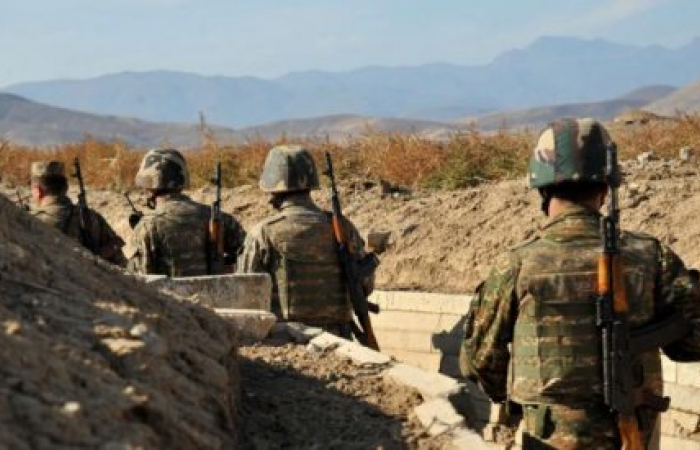
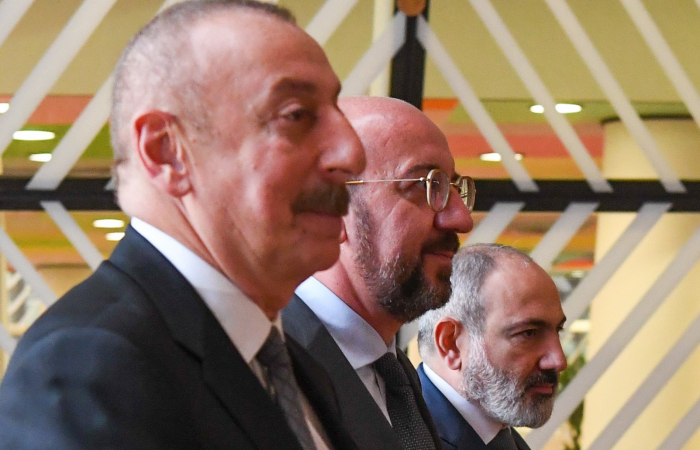
Armenia and Azerbaijan have been burying the dead from the violence on their border on Tuesday. Official figures indicate that 49 Armenian soldiers and fifty Azerbaijani soldiers were killed during the overnight clashes from Monday to Tuesday (12-13 September). Reports suggest that the final figures are likely to be higher. Armenia has also reported three civilians injured during the fighting. Details as to what exactly happened are unclear. Azerbaijan says it was responding to Armenian provocations. Armenia accuses Azerbaijan of trying to take by force chunks of its territory in order to establish a land corridor between its mainland territory and the exclave of Nakhichevan which is separated by the Armenia  province of Siyunik. There have been widespread calls by the international community for an immediate end to the fighting and for both sides to return to previously held positions in order to allow all issues to be resolved in negotiations. Armenia on Tuesday appealed to Russia, with which it has a defence treaty, and to the Collective Security Treaty Organisation, of which it is a full member, for support. A virtual summit of the CSTO countries took place on Tuesday afternoon and the organisation agreed to send an investigation mission to the region. EU Special Representative for the South Caucasus, Toivo Klaar, has arrived in Baku where he is expected to consult with government leaders before travelling to Yerevan.
Editor's choice
News
Updated: Intense diplomatic activity after clashes on Armenia-Azerbaijan border

Updated: Intense diplomatic activity after clashes on Armenia-Azerbaijan border

International efforts are under way to try to contain fighting on the Armenian-Azerbaijani border. EU Special Representative for the South Caucasus Toivo Klaar said the EU is in close contact with the sides to contribute to de-escalation. "The fighting along the Armenian-Azerbaijan border & the reported intense shelling need to stop immediately", Klaar tweeted. Dozens of soldiers are reported to have been killed in the heavy exchange of fire overnight. Armenia says that at least 49 of its soldiers are dead. Azerbaijan has also reported casualties. It is not yet clear if there were civilian casualties on  either side There was intensive diplomatic activity in the early hours of Tuesday (13 September) following armed clashes between Armenia and Azerbaijan on their border. Both sides accuse each other of provocations and there were reports of use of heavy weapons, including artillery, mortars and drones. There are also reports of casualties, although this cannot as yet be confirmed. Armenian sources said that prime minister Nikol Pashinyan spoke on the phone with Russian president, Vladimir Putin, French president Macron and US Secretary of State Antony Blinken. Some reports suggested that the two sides had agreed to a cease fire starting at 0900 local time Tuesday (13 September).
Editor's choice
News
Reports of serious incidents on the Armenia - Azerbaijan border

Reports of serious incidents on the Armenia - Azerbaijan border

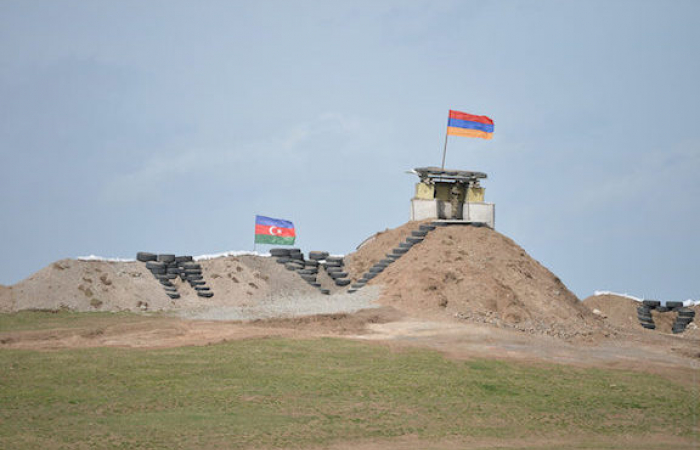
Both Armenia and Azerbaijan are reporting serious incidents on the border of the two countries. The two sides accuse each other of starting the fighting. There are reports of casualties but these cannot as yet be confirmed. Shooting appears to have started late on Monday evening (12 September) and continued in the early hours of Tuesday (13 September), and involved artillery and mortar exchanges and the use of other heavy weapons. The Armenian side says that the areas affected are in the direction of Goris, Jermuk and Sotyk Districts. Azerbaijan says that the areas affected are Lachin, Kelbajar and Dashkesan. Armenian media source quote European Union spokesperson Peter Strano saying that the EU is monitoring closely the situation. "The European Union calls on the sides to refrain from any actions that could exacerbate the situation and undermine the ongoing settlement process, which the European Union strongly supports and remains committed to", Strano was quoted as saying.
Editor's choice
News
Russia attacks power stations and civilian infrastructure in Ukraine

Russia attacks power stations and civilian infrastructure in Ukraine

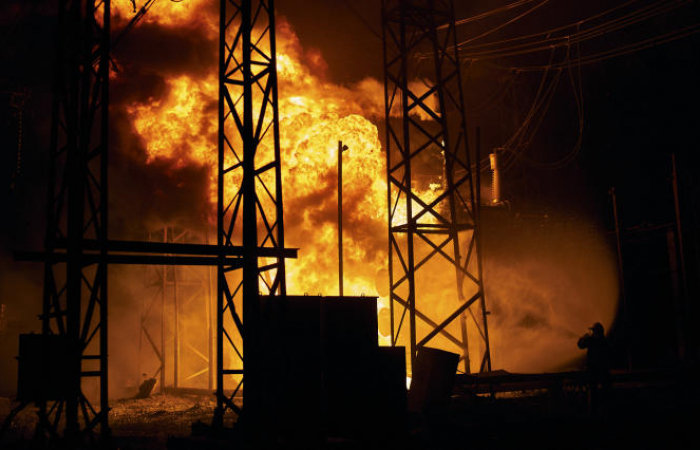
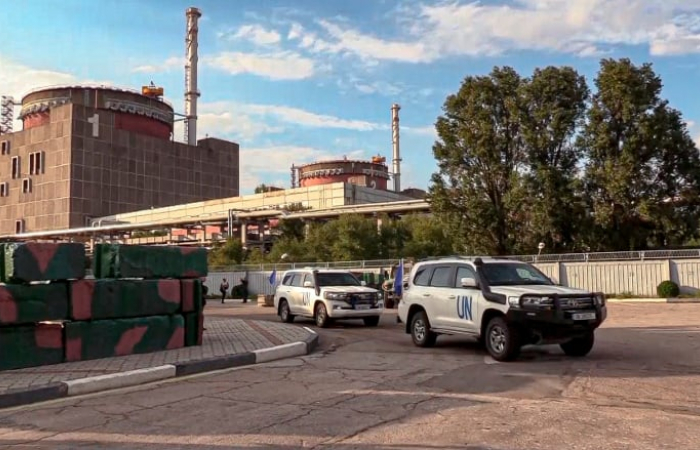
Russia attacked power stations and other civilian infrastructure in Ukraine on Sunday (11 September), causing widespread outages across the country as Kyiv’s forces pressed a swift counteroffensive that has driven Moscow’s troops from large swaths of territory it had occupied in the northeast. The bombardment ignited a massive fire at a power station on Kharkiv’s western outskirts and killed at least one person. President Volodymyr Zelensky denounced the “deliberate and cynical missile strikes” against civilian targets as acts of terrorism. Ukraine’s second-largest city of Kharkiv appeared to be without power Sunday night. Cars drove through darkened streets, and the few pedestrians used flashlights or mobile phones to light their way. Separately, the Zaporizhzhia Nuclear Power Plant in the Russia-occupied south completely shut down in a bid to prevent a radiation disaster as fighting raged nearby.
Editor's choice
News
Ukrainian army makes advances liberating big chunks of territory

Ukrainian army makes advances liberating big chunks of territory

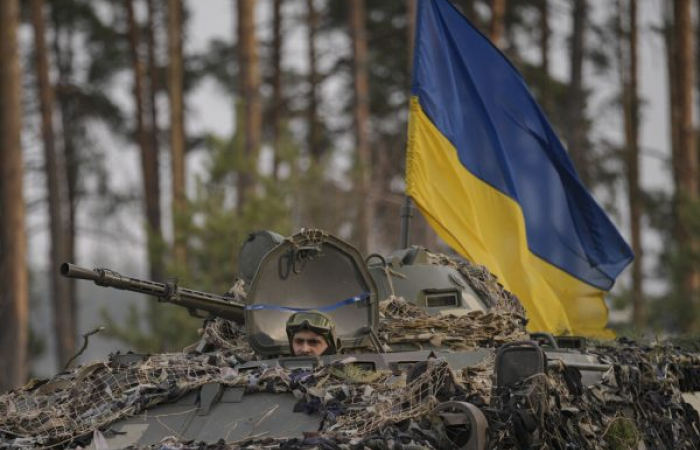
Ukrainian forces have liberated over 2,000 sq km (772 sq miles) of territory from Russian occupation in a rapid counter-offensive in eastern Ukraine. Ukraine's rapid advance saw troops enter the key towns of Izyum and Kupiansk on Saturday, although fighting continues in the vicinity of the towns. Officials in Kyiv said Ukrainian forces were still fighting to gain control of a number of settlements around Izyum, while adding that more than 30 towns and villages have been retaken in the Kharkiv region. Russia's defence ministry confirmed its forces' retreat from Izyum itself and Kupiansk, which it said would allow its forces "to regroup" in territory held by Moscow-backed separatists. The Russian ministry also confirmed the withdrawal of troops from a third key town, Balaklyia, in order to "bolster efforts" on the Donetsk front. Ukrainian forces entered the town on Friday. Meanwhile, the head of the Russia-installed administration in the Kharkiv region recommended that its people evacuate to Russia "to save lives".
Editor's choice
News
Vostok-2022 military exercises are meant to show that Russia is not isolated

Vostok-2022 military exercises are meant to show that Russia is not isolated

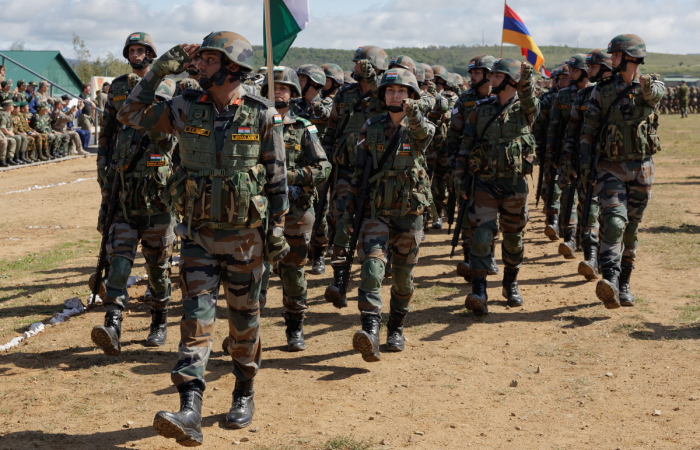
For the last few days Russia has been conducting military exercises in the Far East, with the participation of tens of thousands of soldiers, and multiple military hardware. But apart from the limited military value, Vostok-2022 are meant to show that Russia is far from being isolated in the international community, despite the sanctions and pressure of the west, following its invasion of Ukraine on 24 February. Commonspace.eu political editor said in a comment that "it is to be noted that in recent military exercises, the Russian Ministry of Defence invited contingents from the unrecognised Russian protectorates of Abkhazia and South Ossetia. This allowed a number of countries to refuse to participate, citing  the Abkhaz and South Ossetian presence as diplomatically problematic. This year the Russians decided to take no chances. Participation of countries such as India was of much more political importance than that of Moscow's South Caucasus proxies." "Regardless however, Vostok-2022 has exposed once again a weakness in the diplomatic war that Ukraine is waging against Russia with the support of western countries. The response in the Middle East, Africa and Asia against the blatant aggressive invasion has been lukewarm."
Editor's choice
News
The world waits whilst Tehran and Washington haggle about nuclear deal

The world waits whilst Tehran and Washington haggle about nuclear deal

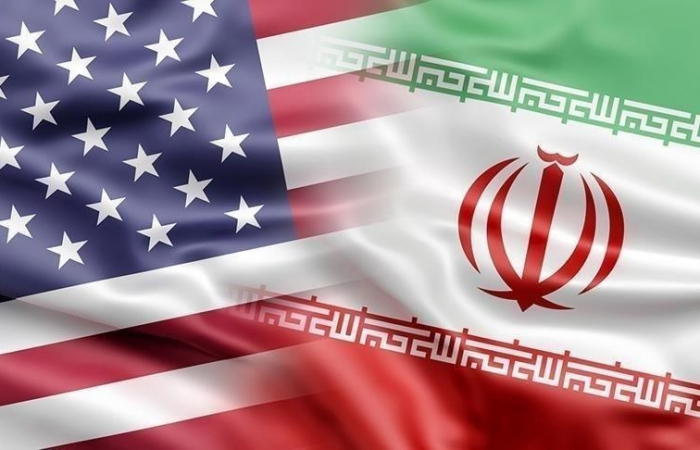
After years of tension and months of negotiations, it appeared in August that the process of reviving the Iran nuclear, known as JCPOA, was coming to a successful close. The EU negotiators, who had been leading the difficult discussions, made what they said was the "final offer", and early indications from both Tehran and Washington appeared to be positive. In Brussels, officials were cautiously optimistic that a deal was in the bag. But the process dragged on and reports in some Middle East media sources appear to suggest that it has now grinded again back to a halt.  The US said Iran’s latest response was “not constructive”.  
Editor's choice
Opinion
Opinion: Having multiple mediators is not hindering the Armenia-Azerbaijan peace process, yet

Opinion: Having multiple mediators is not hindering the Armenia-Azerbaijan peace process, yet

"The peace negotiations between Armenia and Azerbaijan have not been negatively affected by current tensions between Russia and the west.   Although Moscow criticized the EU’s mediation initiatives, it has not challenged the implementation of the agreements between the sides, including those reached in the EU-mediated platform", writes Vasif Huseynov in this op-ed. "Against this backdrop, the two tracks of peace talks (i.e., the EU-mediated and the Russia-mediated) find a favourable environment to run without contradicting each other. This raises hope that the recent positive developments between Baku and Yerevan will advance in the upcoming months", he says.