Zelensky to meet British, German and French leaders in London on Monday

President Volodymyr Zelensky will meet key European leaders in London on Monday, as Ukraine's allies plan their response to an ongoing US push for Kyiv to accept concessions in peace talks.

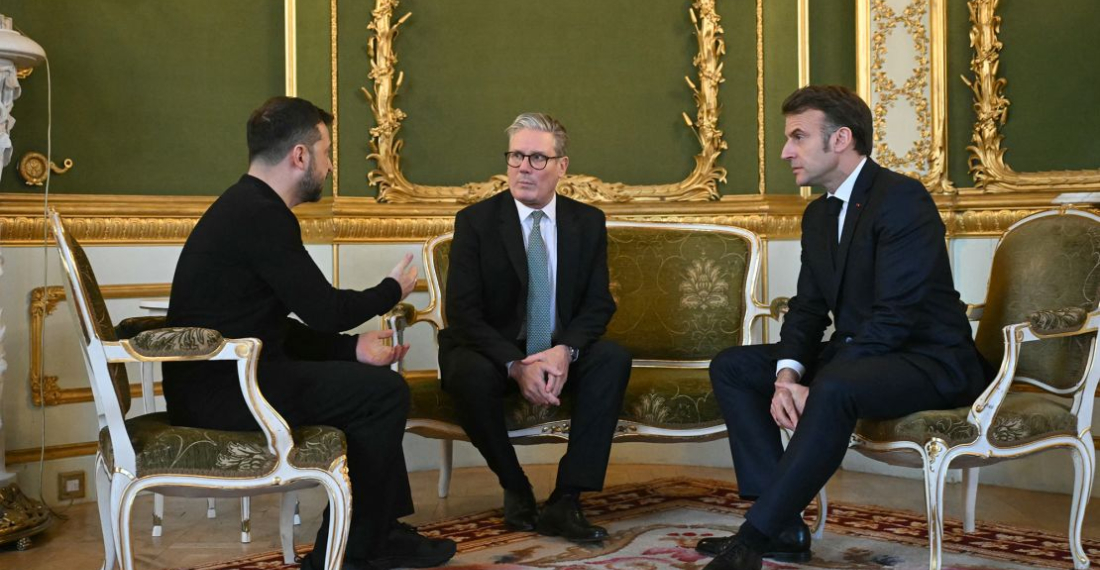
The leaders of UK, France and Germany will join Zelensky at No 10 as they seek to ensure any deal deters a future Russian attack.

The high-level meeting follows three days of talks in Florida, where Zelensky's chief negotiator pushed for changes to a White House plan widely considered to accommodate central Kremlin demands.

The US and Ukraine said there was progress but US President Donald Trump appeared to criticise Zelensky on Sunday, saying he "hasn't read" the draft.

Trump told reporters that he was "a little disappointed that President Zelensky hasn't yet read the proposal, that was as of a few hours ago".

He continued: "His people love it... [Russia] would rather have the whole country when you think of it, but Russia is, I believe, fine with it - but I'm not sure that Zelensky is fine with it."

Trump appeared to be referring to the latest draft of the proposed peace deal, which was revised in Miami following talks led by Zelensky's new chief negotiator Rustem Umerov, and Trump's close aides, special envoy Steve Witkoff and son-in-law Jared Kushner.

Around the same time as Trump's comments on Sunday, Zelensky said he was due to be briefed on the negotiations by Umerov either in London or Brussels, adding "some issues can only be discussed in person" as opposed to over the phone.

Zelensky added that discussions with Witkoff and Kushner were "constructive, though not easy".

source: commonspace.eu with BBC (London)

photo: Ukrainian President Zelensky with British prime minister Starmer, and French President Macron (archive picture)

 

Image removed.


Related articles

Editor's choice
News
Israel recognises Somaliland, opening a pandora's box in Africa

Israel recognises Somaliland, opening a pandora's box in Africa

Israel ‍has recognized Somaliland as an "independent and sovereign state," Israeli Prime Minister Benjamin Netanyahu said on Friday. "Together with Foreign Minister Sa'ar and the President of the Republic of Somaliland, we signed a joint and mutual declaration," Netanyahu posted to X. "This declaration is in the spirit of the Abraham Accords signed at the initiative of President Trump," he said. In doing so, Israel became the first country to recognize the breakaway region. Somalia's Foreign Ministry denounced Israel's "deliberate attack" on its sovereignty and warned that recognizing Somaliland as an independent state would "undermine regional peace." "Illegitimate actions of this nature seriously undermine regional peace and stability, exacerbate political and security tensions," the ministry said in a statement. Egyptian Foreign Minister Badr Abdelatty said he held phone calls with his counterparts from Somalia, Turkey and Djibouti to discuss what they described as dangerous developments in the Horn of Africa, following Israel's announcement The ministers condemned Israel’s recognition of Somaliland, reaffirmed their full support for Somalia’s unity and territorial integrity, and warned that recognizing breakaway regions poses a threat to international peace and security, Egypt's Foreign Ministry said. "This initiative by Israel, which aligns with its expansionist policy and its efforts to do everything to prevent the recognition of a Palestinian state, constitutes overt interference in Somalia's domestic affairs," the Turkish Foreign Ministry said in a statement.  The African Union (AU) joined the condemnations of Israel's recognition of Somaliland.  "Any attempt to undermine the unity, sovereignty, and territorial integrity of Somalia... risks setting a dangerous precedent with far-reaching implications for peace and stability across the continent," an AU statement read. Israel said that it has now established diplomatic relations with Somaliland, and the two will soon set up embassies. commonspace.eu political editor said in a comment that by recognising Somaliland Israel has opened Africa's pandora's box. "The borders of most African countries were drawn in colonial times, and in the post-colonial period of the last seventy years, these borders have been considered sacrosanct. The two exceptions are also to be found in the Horn of Africa, where Eritrea broke away from Ethiopia and South Sudan broke away from Sudan." (click the image to read the full article).

Popular