Region

Global

Stories in this section cover various issues and stories from all around the world.

Editor's choice
Monday Commentary
Monday Commentary: Europe still needs the OSCE

Monday Commentary: Europe still needs the OSCE

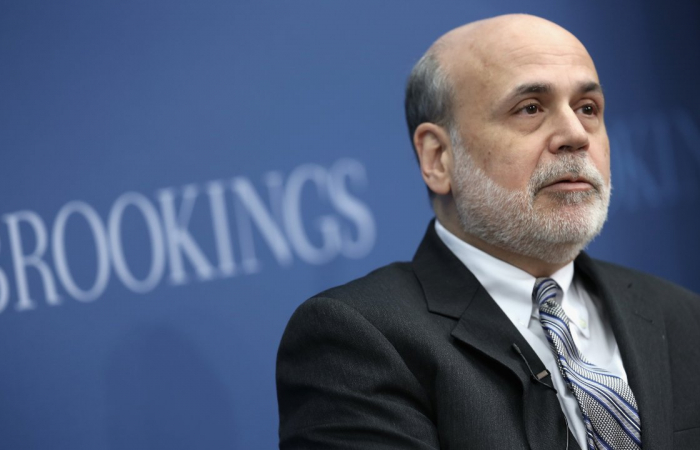
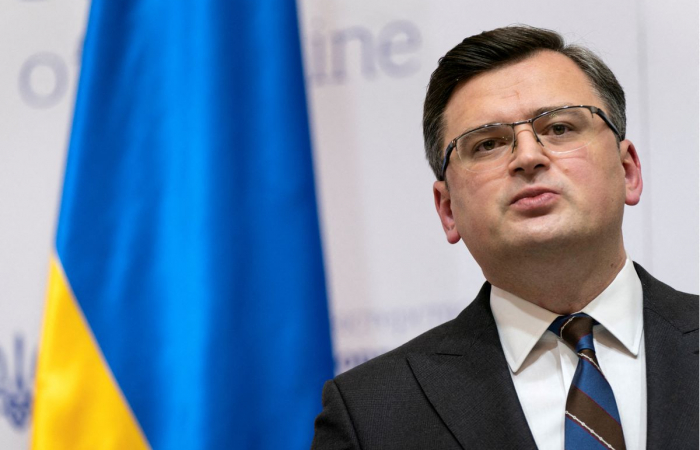
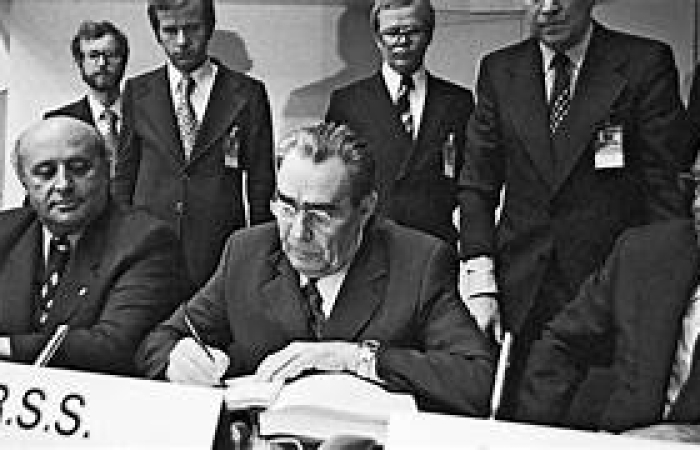
The Ministerial Council of the Organisation for Security and Co-operation in Europe (OSCE) will have its annual meeting in Vienna on 4-5 December. Foreign Ministers from the 57 member states, which also include the United States and Canada, and the Central Asian republics, and 11 partner countries, will congregate to discuss the future of European Security at a time when many believe that war in Europe over the next decade is likely. Ukraine is just a rehearsal for Russia’s ultimate ambitions. British diplomacy used to describe the OSCE as “the organization to manage Russia”. It has not done a good job of that, but this task remains paramount. The Ministerial Council will be the last major business of this year’s chairmanship, Finland, and will launch the new Chairmanship for 2026, Switzerland. The OSCE has been moribund for some time, and Russia’s invasion of Ukraine in February 2022, nearly ended it. But Europe still needs the OSCE, and there is hope that it will take a new lease of life in 2026. Switzerland has held the Chairmanship of the OSCE twice before, successfully. It has the experience, a wide network of embassies, and an able team in Bern, to successfully start what is likely to be a long and laborious journey. The new Chairman-in-office is Swiss Federal Foreign Minister Councillor, Ignazio Cassis. Cassis is also the current Vice President of the Swiss Confederation, and is fluent in Italian, English, German and French. Quite unusual also is the fact that currently the General Secretary of the OSCE is a Turk. Feridun Sinirlioğlu is an experienced Turkish diplomat, who has held the position for a year. Between them, Cassis and Sinirlioğlu will have to craft out the new OSCE, but in the end, it will largely depend on the will of the member states, including Russia. A new, reborn, OSCE, must understand that its core task remains European peace and security. It should resist the temptation of “looking busy” with a lot of secondary things. After peace and security return to Europe, it can consider other tasks. But we are far away from that yet. (Click the image to read the full commentary)
Editor's choice
News
Pope's visit to Türkiye and Lebanon has a strong ecumenical character, and places interreligious dialogue at its centre

Pope's visit to Türkiye and Lebanon has a strong ecumenical character, and places interreligious dialogue at its centre

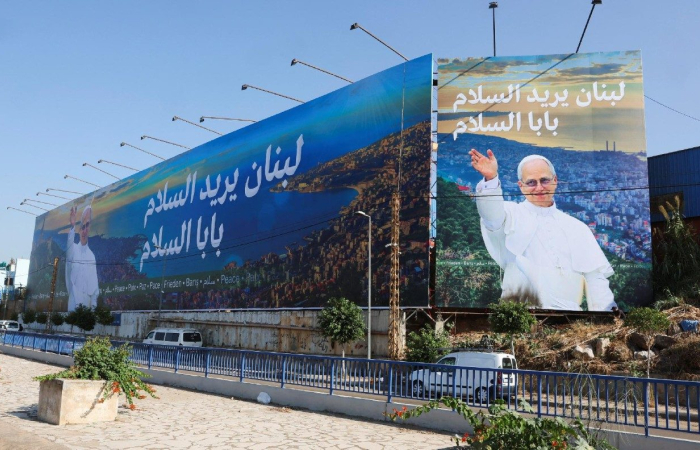
Pope Leo XIV has begun the first overseas trip of his pontificate, a six-day visit to Türkiye and Lebanon, which started yesterday (27 November) and ends on Tuesday (2 December). According to Vatican Radio, the visit "carries a strong ecumenical character and places interreligious dialogue at its centre. It will also be a moment of closeness to Christian communities and local populations across the region".   During nearly a week in the region, Pope Leo XIV will meet civil and religious authorities, visit mosques and ancient churches, pray at Beirut’s port in memory of the victims of the 2020 explosion, and hold private meetings with Presidents Recep Tayyip Erdoğan and Joseph Aoun.   A highlight of the visit will be a visit to Nicaea, where the Pope will mark the anniversary of the Council of Nicaea. Christians of many traditions recognise the Council of Nicaea as a foundation of shared faith. One of the most anticipated moments will be the Pope’s encounter with Lebanese youth in Bkerké, at the Maronite Patriarchate, a meeting expected to carry strong messages of hope in the Jubilee Year. A central event will be the ecumenical celebration in İznik, where the Pope and Ecumenical Patriarch Bartholomew will walk together toward the ruins of the Basilica of St Neophytos. The prayer, held before icons of Christ and the Council, will conclude with the lighting of a candle—a symbolic gesture of unity. The journey will also highlight interreligious engagement.   Memorable moments are expected throughout the trip: a wreath at Atatürk’s mausoleum, prayer inside the Blue Mosque, Mass at Istanbul’s Volkswagen Arena, the planting of a cedar at the presidential palace in Beirut, and prayer at the tomb of St Charbel in Lebanon. The Vatican said that "Pope Leo XIV’s pilgrimage to Türkiye and Lebanon aims to offer a voice of peace, unity, and hope at the heart of the Middle East."

Filter archive

Publication date
Editor's choice
News
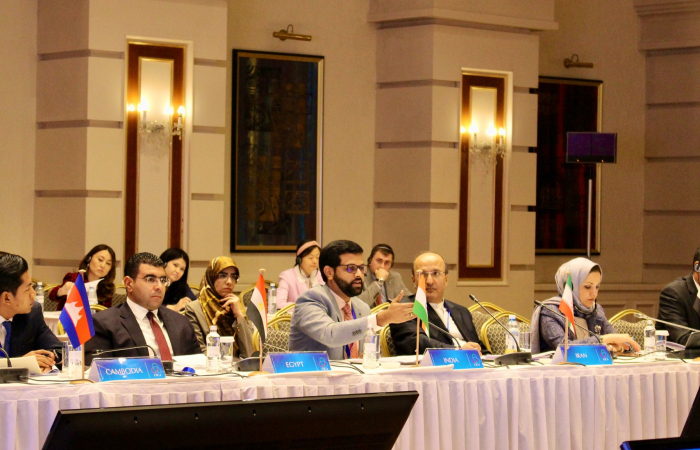
6th CICA summit opens in Astana

6th CICA summit opens in Astana

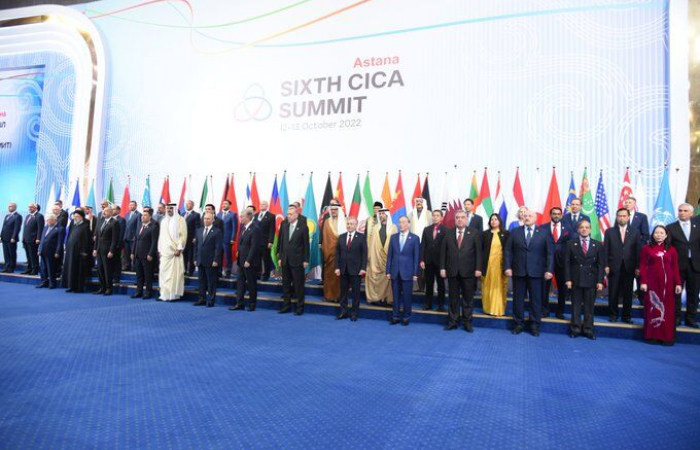
The sixth summit of the Conference on Interaction and Confidence-Building Measures in Asia (CICA) started on Wednesday (12 October) in Astana. The summit marks the 30th anniversary of CICA, and the end of Kazakhstan’s two-year chairmanship of the conference. The summit is also expected to agree the transformation of the process into a fully fledged international organisation. According to the spokesperson of the Kazakh Foreign Ministry Aibek Smadiyarov, the summit will welcome 11 heads of state, including the leaders of Azerbaijan, Iraq, Iran, Qatar, Kyrgyzstan, Palestine, Russia, Tajikistan, Turkey, and Uzbekistan. President of Belarus Alexander Lukashenko will participate as an observer and the Vice Presidents of Vietnam and China will also attend the summit. 
Editor's choice
News
G7 countries issue tough statement on Ukraine in response to Russian missile attacks against Ukrainian cities

G7 countries issue tough statement on Ukraine in response to Russian missile attacks against Ukrainian cities

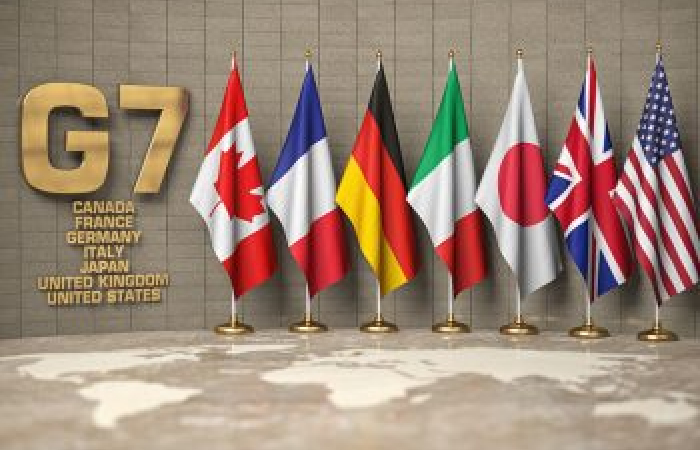
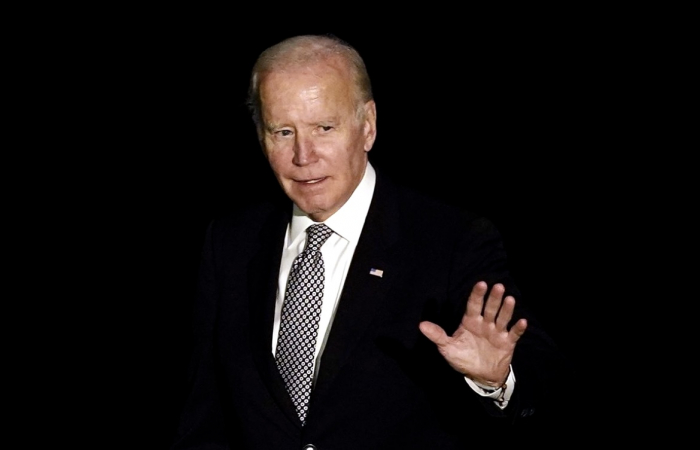
Leaders of the G7 countries (Canada, France, Germany, Italy, Japan, United States, United Kingdom, together with the European Union) met virtually in extraordinary session on Monday to discuss developments in the Ukraine situation, and particularly the recent Russian missile attacks against Ukrainian cities and civilian infrastructure. The meeting was convened by Germany which holds the current chairmanship of the Group. In a tough statement, the G7 leaders said that Russia has blatantly violated the principles enshrined in the UN Charter and called upon all countries to unequivocally reject these violations of international law and demand that Russia cease all hostilities and immediately, completely and unconditionally withdraw all of its troops and military equipment from Ukraine. The statement also had a word of warning for Russia: "We deplore deliberate Russian escalatory steps, including the partial mobilisation of reservists and irresponsible nuclear rhetoric, which is putting global peace and security at risk. We reaffirm that any use of chemical, biological or nuclear weapons by Russia would be met with severe consequences". Ukrainian president Volodymyr Zelensky also attended the virtual summit and he was assured that the G7 countries are undeterred and steadfast in their commitment to provide the support Ukraine needs to uphold its sovereignty and territorial integrity.
Editor's choice
News
Taiwanese President reiterates island's sovereignty on national day

Taiwanese President reiterates island's sovereignty on national day

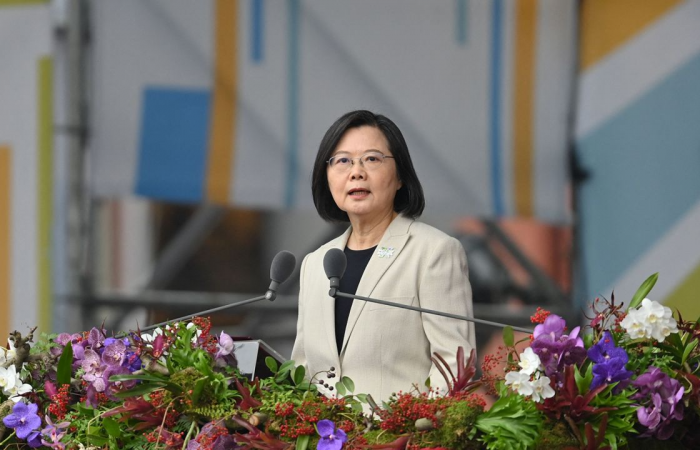
As Taiwan celebrated “Double Ten”, the island’s national day on Monday (10 October), President Tsai Ing-wen reiterated Taiwan’s sovereignty in an address to the people of Taiwan. During a ceremonial speech, President Tsai said that the Taiwanese people “must defend our national sovereignty and our free and democratic way of life. On this point, we have no room for compromise”.  Tsai Ing-wen said it was “regrettable” that China has increased its military and political presence thereby threatening peace and stability in the Taiwan Strait and region. President Tsai continued to say that they would be willing to have talks with Beijing in order to keep the peace, but only if the negotiations were conducted with “rationality, equality and mutuality”. On top of that, she emphasised that Beijing must not think there is any space for compromise in Taiwan’s commitment to democracy and freedom. 
Editor's choice
News
Pope urges Putin to stop "spiral of violence and death"

Pope urges Putin to stop "spiral of violence and death"

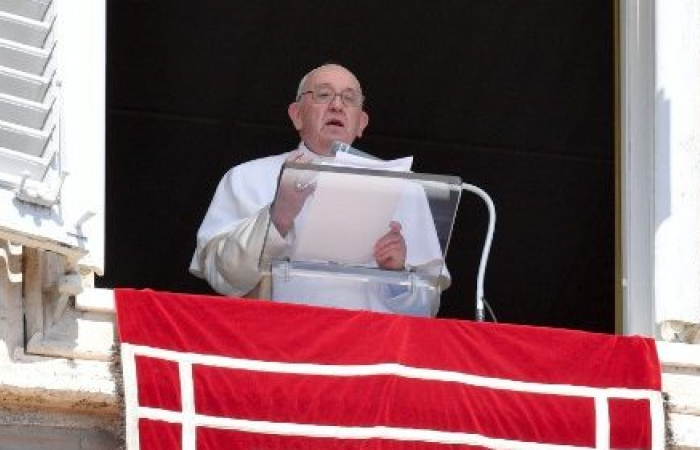
Pope Francis on Sunday (2 October) expressed concern over the nuclear threat and military escalation in the war in Ukraine, dedicating his entire Angelus address to the situation and issuing a powerful appeal for an immediate ceasefire. He deplored the annexation of Ukrainian territory by Russia, called for respect for the territorial integrity of every country and the rights of minorities. He expressed his saddness for the thousands of victims, especially children. "How much blood must still flow for us to realize that war is never a solution, only destruction? In the name of God and in the name of the sense of humanity that dwells in every heart, I renew my call for an immediate ceasefire. Let there be a halt to arms, and let us seek the conditions for negotiations that will lead to solutions that are not imposed by force, but consensual, just and stable. And they will be so if they are based on respect for the sacrosanct value of human life, as well as the sovereignty and territorial integrity of each country, and the rights of minorities and legitimate concerns", the Pope said. Pope Francis appealed to Russian President Vladimir Putin, imploring him to “stop this spiral of violence and death” in Ukraine and denounced the “absurd” risk to humanity of catastrophic nuclear war as tensions escalate.
Editor's choice
Monday Commentary
Opinion: Preparing for the worst, whilst working to avoid it

Opinion: Preparing for the worst, whilst working to avoid it

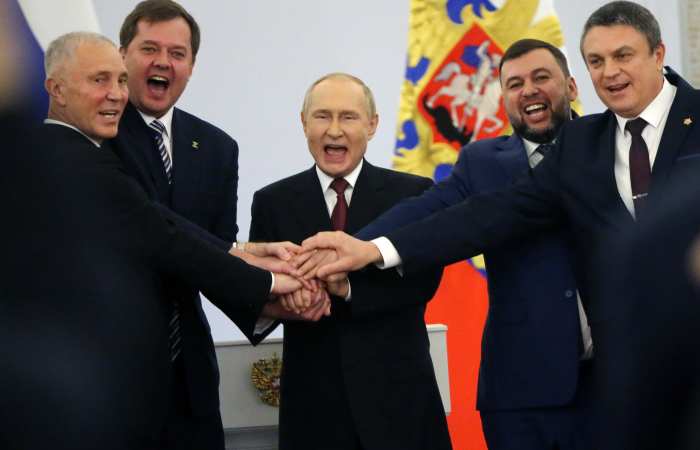
Putin’s annexation of parts of Ukraine takes the world to the verge of War, but a stronger and more united global condemnation of Russian aggression can still make Putin step back. Monday Commentary is back. Every Monday, commonspace.eu Managing Editor, Dennis Sammut discusses a hot topic on the European and international agenda. This week he weighs the implications of Russia’s annexation of parts of Ukraine, and the dilemma it poses to the rest of the world. He argues that it takes the world to the verge of a world war involving nuclear-armed states. But this can still be avoided if there is more global unity in condemnation of the Russian aggression.
Editor's choice
News
CICA set to become an international organisation at this month's Astana summit

CICA set to become an international organisation at this month's Astana summit

The Conference on Interaction and Confidence Building Measures in Asia (CICA) is set to become a fully fledged international organisation during a summit of leaders of its members to be held in Astana, Kazakhstan on 12-13 October. A Special Working Group (SWG) meeting held on 28-29 September, has made a major advance in preparing draft documents to be adopted at the upcoming sixth CICA Summit. The main document includes a draft Astana Statement on CICA Transformation, which is designed to transform CICA into a full-fledged international organization. Other draft documents include a draft of the CICA Leaders’ Statement on Cooperation in the Field of Security and in the Use of Information and Communications Technologies and draft the CICA Plan of Action on the Implementation of the United Nations (UN) Global Counter-Terrorism Strategy.