Region

Global

Stories in this section cover various issues and stories from all around the world.

Editor's choice
Monday Commentary
Monday Commentary: Europe still needs the OSCE

Monday Commentary: Europe still needs the OSCE

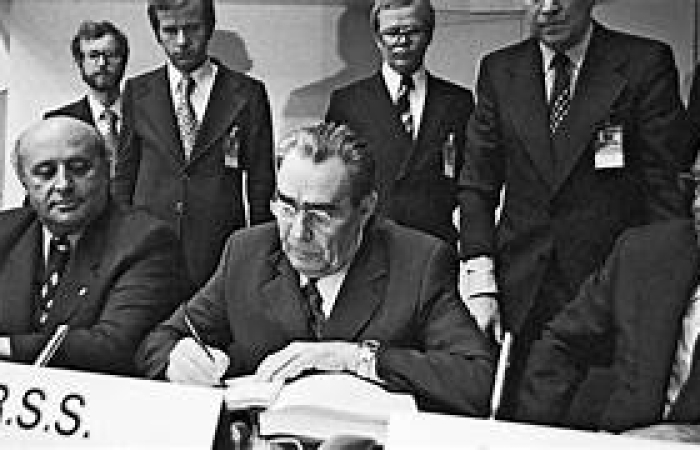
The Ministerial Council of the Organisation for Security and Co-operation in Europe (OSCE) will have its annual meeting in Vienna on 4-5 December. Foreign Ministers from the 57 member states, which also include the United States and Canada, and the Central Asian republics, and 11 partner countries, will congregate to discuss the future of European Security at a time when many believe that war in Europe over the next decade is likely. Ukraine is just a rehearsal for Russia’s ultimate ambitions. British diplomacy used to describe the OSCE as “the organization to manage Russia”. It has not done a good job of that, but this task remains paramount. The Ministerial Council will be the last major business of this year’s chairmanship, Finland, and will launch the new Chairmanship for 2026, Switzerland. The OSCE has been moribund for some time, and Russia’s invasion of Ukraine in February 2022, nearly ended it. But Europe still needs the OSCE, and there is hope that it will take a new lease of life in 2026. Switzerland has held the Chairmanship of the OSCE twice before, successfully. It has the experience, a wide network of embassies, and an able team in Bern, to successfully start what is likely to be a long and laborious journey. The new Chairman-in-office is Swiss Federal Foreign Minister Councillor, Ignazio Cassis. Cassis is also the current Vice President of the Swiss Confederation, and is fluent in Italian, English, German and French. Quite unusual also is the fact that currently the General Secretary of the OSCE is a Turk. Feridun Sinirlioğlu is an experienced Turkish diplomat, who has held the position for a year. Between them, Cassis and Sinirlioğlu will have to craft out the new OSCE, but in the end, it will largely depend on the will of the member states, including Russia. A new, reborn, OSCE, must understand that its core task remains European peace and security. It should resist the temptation of “looking busy” with a lot of secondary things. After peace and security return to Europe, it can consider other tasks. But we are far away from that yet. (Click the image to read the full commentary)
Editor's choice
News
Pope's visit to Türkiye and Lebanon has a strong ecumenical character, and places interreligious dialogue at its centre

Pope's visit to Türkiye and Lebanon has a strong ecumenical character, and places interreligious dialogue at its centre

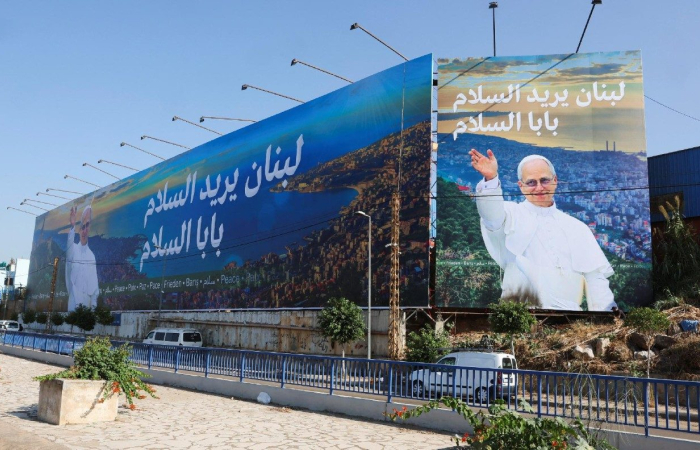
Pope Leo XIV has begun the first overseas trip of his pontificate, a six-day visit to Türkiye and Lebanon, which started yesterday (27 November) and ends on Tuesday (2 December). According to Vatican Radio, the visit "carries a strong ecumenical character and places interreligious dialogue at its centre. It will also be a moment of closeness to Christian communities and local populations across the region".   During nearly a week in the region, Pope Leo XIV will meet civil and religious authorities, visit mosques and ancient churches, pray at Beirut’s port in memory of the victims of the 2020 explosion, and hold private meetings with Presidents Recep Tayyip Erdoğan and Joseph Aoun.   A highlight of the visit will be a visit to Nicaea, where the Pope will mark the anniversary of the Council of Nicaea. Christians of many traditions recognise the Council of Nicaea as a foundation of shared faith. One of the most anticipated moments will be the Pope’s encounter with Lebanese youth in Bkerké, at the Maronite Patriarchate, a meeting expected to carry strong messages of hope in the Jubilee Year. A central event will be the ecumenical celebration in İznik, where the Pope and Ecumenical Patriarch Bartholomew will walk together toward the ruins of the Basilica of St Neophytos. The prayer, held before icons of Christ and the Council, will conclude with the lighting of a candle—a symbolic gesture of unity. The journey will also highlight interreligious engagement.   Memorable moments are expected throughout the trip: a wreath at Atatürk’s mausoleum, prayer inside the Blue Mosque, Mass at Istanbul’s Volkswagen Arena, the planting of a cedar at the presidential palace in Beirut, and prayer at the tomb of St Charbel in Lebanon. The Vatican said that "Pope Leo XIV’s pilgrimage to Türkiye and Lebanon aims to offer a voice of peace, unity, and hope at the heart of the Middle East."

Filter archive

Publication date
Editor's choice
News
A busy week for western leaders as they prepare the next steps in response to Russian aggression in Ukraine

A busy week for western leaders as they prepare the next steps in response to Russian aggression in Ukraine

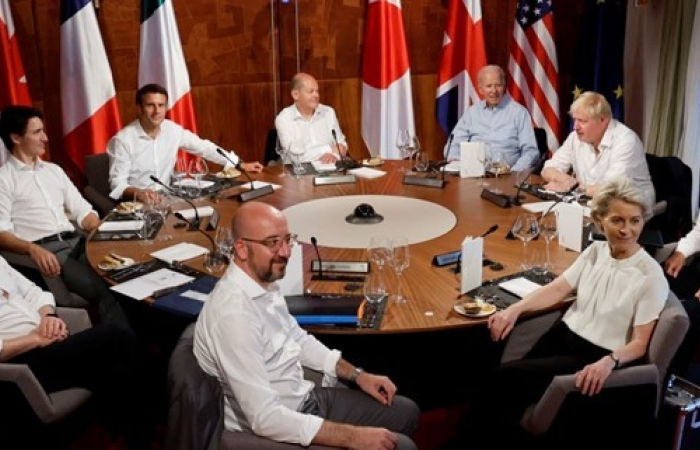
It is a busy week for Western leaders, as they prepare the next steps in response to Russian aggression in Ukraine. The leaders of the G7 - Canada, France, Germany, Italy, Japan, the United States and the Untied Kingdom, together with the European Union - started a summit meeting in Germany on Sunday. Later this week they will travel to Madrid for a summit meeting of NATO countries. The G7 meeting is taking place at a Castle in Germany’s Bavarian Alps were leaders went out of their way on Sunday (26 June), to show that they are united against Russian President Vladimir Putin’s invasion of Ukraine while discussing ways to minimize the war’s effect on rising global food and energy costs. U.S. President Joe Biden and German Chancellor Olaf Scholz met ahead of formal talks that also included the leaders of Britain, France, Canada, Italy, Japan and the European Union. Scholz said, "Germany and the U.S. will always act together when it comes to questions of Ukraine's security, and we made that clear once more." In a pre-summit show of force, Russia launched new missile attacks Sunday on Ukraine’s two biggest cities, the capital of Kyiv and Kharkiv, even as the G-7 leaders held talks to determine new ways to isolate Moscow. Biden announced the G-7 nations would ban new imports of Russian gold, the latest in an array of sanctions Western nations have imposed on Russia in an attempt punish it for Putin’s invasion of Ukraine, now in its fifth month.
Editor's choice
Commentary
US-Saudi Relations remain the bedrock for Gulf Security

US-Saudi Relations remain the bedrock for Gulf Security

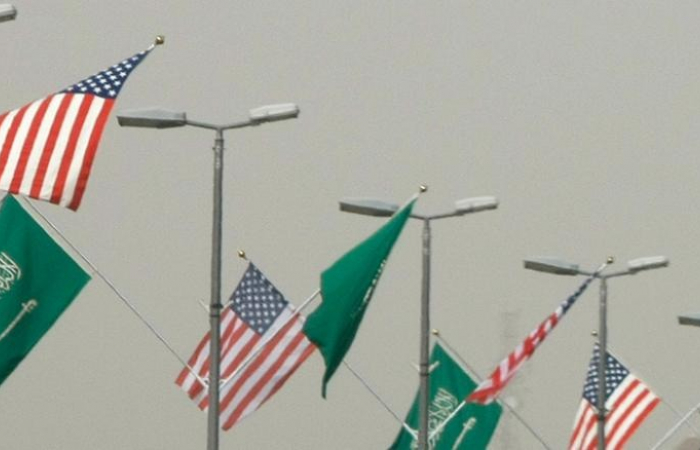
US President Joe Biden will visit Saudi Arabia on July 15 and 16 upon the invitation of King Salman. The US president will meet with the king and his Crown Prince Mohammed bin Salman “to discuss areas of bilateral cooperation as well as joint efforts to address regional and global challenges.” A statement from the White House said that Biden will also attend a Summit of the Gulf Cooperation Council plus Egypt, Iraq and Jordan while in the Kingdom. “The President appreciates King Salman’s leadership and his invitation. He looks forward to this important visit to Saudi Arabia, which has been a strategic partner of the United States for nearly eight decades,” the statement read. In this commentary the state of relations between the United States and Saudi Arabia is discussed in the light of tensions between the two sides over the last years.  “Now, it appears that the two sides are ready to make up. Biden will travel to Riyadh next month, and US officials have been in and out of the Saudi capital in recent weeks, softening the ground and preparing for the visit. Biden is right in working towards a reset. US-Saudi relations remain the bedrock for Gulf security.” It adds that “when Joe Biden visits Riyadh next month he has his work cut out for him. It will be a hugely important visit to a country where personalities still count. Both sides appear ready to put the difficult last few years in their relationship behind them. This is good for both, as well as for the rest of the world.”
Editor's choice
Opinion
Opinion: Safe passage for Ukrainian grain exports through the Black Sea is a humanitarian necessity

Opinion: Safe passage for Ukrainian grain exports through the Black Sea is a humanitarian necessity

Disruption of Ukrainian grain exports is causing a global humanitarian food crisis. Measures need to be taken to create a humanitarian task force to ensure safe passage for export of Ukrainian grain to the rest of the world through the Black Sea and the Turkish Straits, argues Maximiliaan van Lange in this op-ed for commonspace.eu. Russia's blackmailing of the world with global hunger and food shortages among the world's poorest people must also be severely condemned by the international community. The current circumstances, in many ways, resemble the Holodomor, the Stalin-created famine in Ukraine in 1932-1933, that killed millions. The fact that Moscow is using grain as a weapon again in the twenty-first century is despicable and abhorrent. Global cooperation is therefore necessary to resolve this crisis, beginning with an internationally agreed humanitarian escort mission in the Black Sea, otherwise the consequences will be unforeseen.
Editor's choice
News
Turkey holds delicate talks with Sweden and Finland ahead of a decision on their NATO membership application

Turkey holds delicate talks with Sweden and Finland ahead of a decision on their NATO membership application

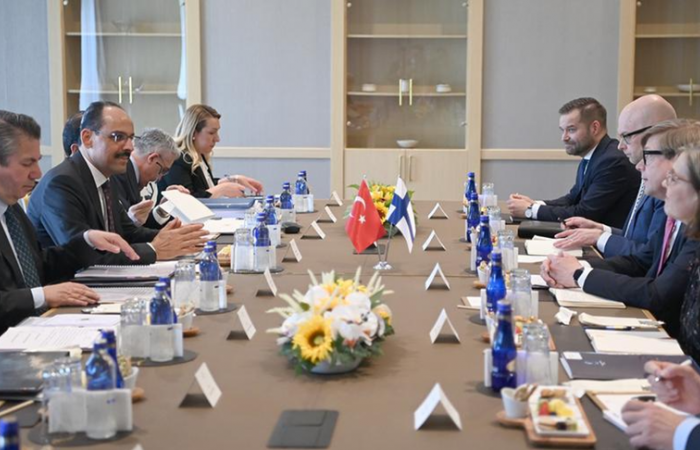
Senior Turkish officials have met with government delegations from Sweden and Finland as discussions continue following Ankara's threat to veto the NATO membership application of the two Nordic countries. Most NATO countries have warmly welcomed the decision of Sweden and Finland since their membership in NATO will considerably strengthen the northern flank of the alliance, but Turkey accuses both countries of having an ambivalent position on Turkey's struggle with militant Kurdish groups. On Wednesday, Swedish and Finnish government delegations travelled to Ankara to meet with Turkish representatives in an effort to resolve the country’s doubts regarding their accession to NATO. In their first face-to-face meeting since the two Nordic countries applied for membership, Turkish representatives stressed their security concerns, and conditions regarding Sweden’s “cooperation” with Kurdistan Workers’ Party (PKK). Turkish presidential spokesperson Ibrahim Kalin said in a statement late on Wednesday that positive steps towards the lifting of an arms embargo from Finland and Sweden had been taken. In October of 2019, Sweden and Finland were among some  European states that imposed an arms embargo on Turkey following a military incursion into Syria.