Region

Global

Stories in this section cover various issues and stories from all around the world.

Editor's choice
Monday Commentary
Monday Commentary: Europe still needs the OSCE

Monday Commentary: Europe still needs the OSCE

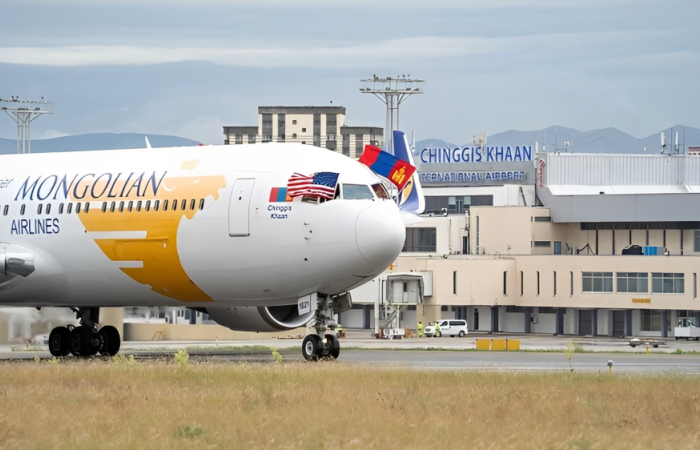
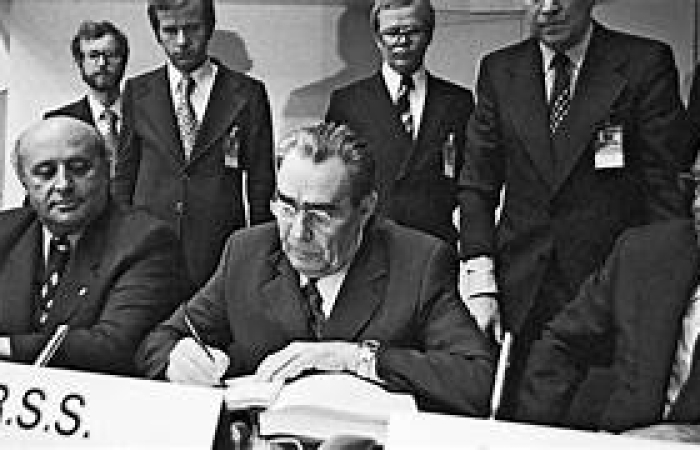
The Ministerial Council of the Organisation for Security and Co-operation in Europe (OSCE) will have its annual meeting in Vienna on 4-5 December. Foreign Ministers from the 57 member states, which also include the United States and Canada, and the Central Asian republics, and 11 partner countries, will congregate to discuss the future of European Security at a time when many believe that war in Europe over the next decade is likely. Ukraine is just a rehearsal for Russia’s ultimate ambitions. British diplomacy used to describe the OSCE as “the organization to manage Russia”. It has not done a good job of that, but this task remains paramount. The Ministerial Council will be the last major business of this year’s chairmanship, Finland, and will launch the new Chairmanship for 2026, Switzerland. The OSCE has been moribund for some time, and Russia’s invasion of Ukraine in February 2022, nearly ended it. But Europe still needs the OSCE, and there is hope that it will take a new lease of life in 2026. Switzerland has held the Chairmanship of the OSCE twice before, successfully. It has the experience, a wide network of embassies, and an able team in Bern, to successfully start what is likely to be a long and laborious journey. The new Chairman-in-office is Swiss Federal Foreign Minister Councillor, Ignazio Cassis. Cassis is also the current Vice President of the Swiss Confederation, and is fluent in Italian, English, German and French. Quite unusual also is the fact that currently the General Secretary of the OSCE is a Turk. Feridun Sinirlioğlu is an experienced Turkish diplomat, who has held the position for a year. Between them, Cassis and Sinirlioğlu will have to craft out the new OSCE, but in the end, it will largely depend on the will of the member states, including Russia. A new, reborn, OSCE, must understand that its core task remains European peace and security. It should resist the temptation of “looking busy” with a lot of secondary things. After peace and security return to Europe, it can consider other tasks. But we are far away from that yet. (Click the image to read the full commentary)
Editor's choice
News
Pope's visit to Türkiye and Lebanon has a strong ecumenical character, and places interreligious dialogue at its centre

Pope's visit to Türkiye and Lebanon has a strong ecumenical character, and places interreligious dialogue at its centre

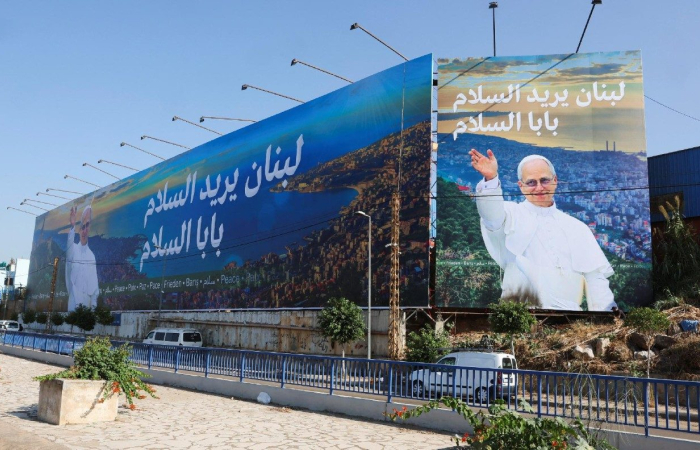
Pope Leo XIV has begun the first overseas trip of his pontificate, a six-day visit to Türkiye and Lebanon, which started yesterday (27 November) and ends on Tuesday (2 December). According to Vatican Radio, the visit "carries a strong ecumenical character and places interreligious dialogue at its centre. It will also be a moment of closeness to Christian communities and local populations across the region".   During nearly a week in the region, Pope Leo XIV will meet civil and religious authorities, visit mosques and ancient churches, pray at Beirut’s port in memory of the victims of the 2020 explosion, and hold private meetings with Presidents Recep Tayyip Erdoğan and Joseph Aoun.   A highlight of the visit will be a visit to Nicaea, where the Pope will mark the anniversary of the Council of Nicaea. Christians of many traditions recognise the Council of Nicaea as a foundation of shared faith. One of the most anticipated moments will be the Pope’s encounter with Lebanese youth in Bkerké, at the Maronite Patriarchate, a meeting expected to carry strong messages of hope in the Jubilee Year. A central event will be the ecumenical celebration in İznik, where the Pope and Ecumenical Patriarch Bartholomew will walk together toward the ruins of the Basilica of St Neophytos. The prayer, held before icons of Christ and the Council, will conclude with the lighting of a candle—a symbolic gesture of unity. The journey will also highlight interreligious engagement.   Memorable moments are expected throughout the trip: a wreath at Atatürk’s mausoleum, prayer inside the Blue Mosque, Mass at Istanbul’s Volkswagen Arena, the planting of a cedar at the presidential palace in Beirut, and prayer at the tomb of St Charbel in Lebanon. The Vatican said that "Pope Leo XIV’s pilgrimage to Türkiye and Lebanon aims to offer a voice of peace, unity, and hope at the heart of the Middle East."

Filter archive

Publication date
Editor's choice
News
Blinken heads to Central Asia on charm offensive amid increasing international interest in the region

Blinken heads to Central Asia on charm offensive amid increasing international interest in the region

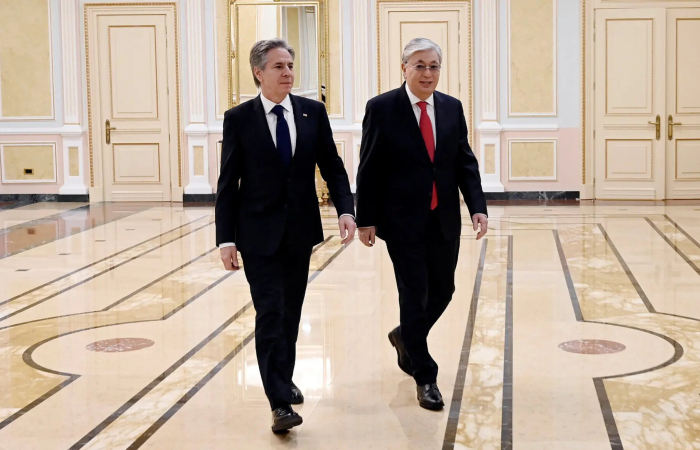
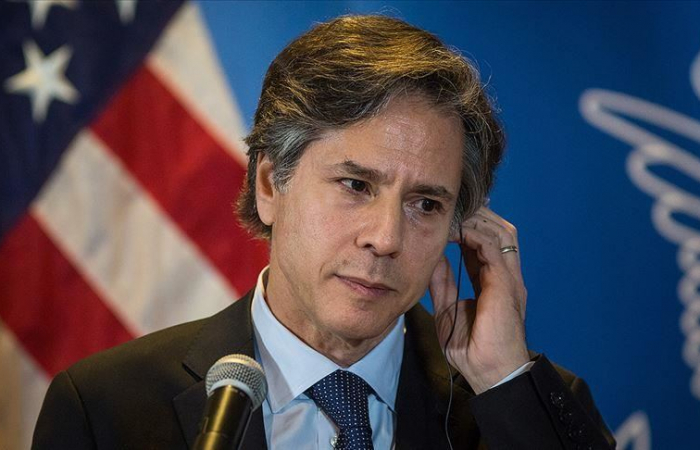
The US Secretary of State Antony Blinken has headed to Kazakhstan and Uzbekistan on his first official visit to the region as President Biden’s top diplomat. Announcing his departure from US soil overnight on 26-27 February, Secretary of State Blinken said that he was looking forward to “advancing our Central Asian partnerships”. After visiting the Kazakh and Uzbek capitals, he would then head to India for the coming G20 summit. The timing of the visit is notable, coming only days after the first anniversary of Russia’s disastrous full-scale invasion of Ukraine, which as one of its consequences has seen Central Asia reassert itself regionally and rapidly explore ties with other neighbouring power blocs including the EU, the Middle East, and China. On 28 February, Blinken had a joint meeting in Astana with the foreign ministers of all five Central Asian nations: Mukhtar Tileuberdi of Kazakhstan; Jeenbek Kulubaev of Kyrgyzstan; Rasit Meredov of Turkmenistan; Sirojiddin Muhriddin of Tajikistan; and Bakhtiyor Saidov of Uzbekistan. He also met with each FM in person in Astana, with the exception of the latter, whom he met later in Tashkent.
Editor's choice
News
US President Joe Biden visits Kyiv

US President Joe Biden visits Kyiv

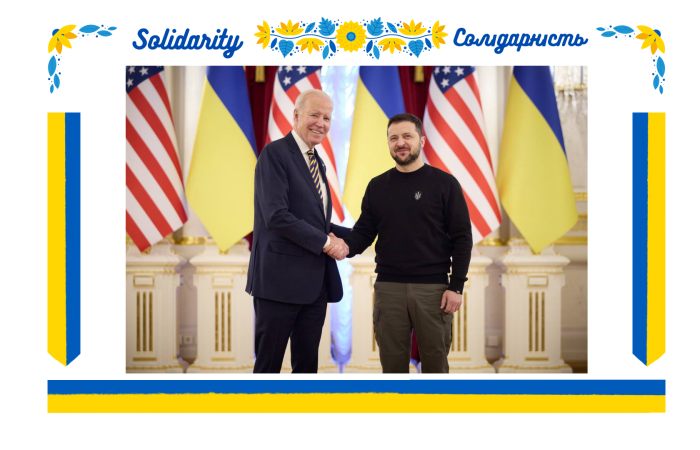
The President of the United States Joe Biden has made a surprise visit to Kyiv ahead of the first anniversary of Russia's full-scale invasion of Ukraine on 24 February last year. On Monday morning (20 February), there were reports of blocked roads and major traffic jams in the Ukrainian capital as speculation built over the potential arrival of an "important guest", according to Ukrainian officials.  The Ministry of Foreign Affairs and St Michael’s Cathedral has been blocked off with a police and military presence. Just before midday, pictures emerged on social media showing the Ukrainian President Volodymyr Zelensky walking alongside the US President Joe Biden in central Kyiv. As Joe Biden was seen walking beside Volodymyr Zelensky outside St Michael's Cathedral, heading towards a memorial wall honouring Ukrainian soldiers fallen in Russia's war against Ukraine since 2014, air raid sirens rang out over the Ukrainian capital. It was already known that Biden would be visiting Poland to mark one year of Russia's full-scale invasion, but his visit to Kyiv has come as a complete surprise.
Editor's choice
News
Ramstein summit: no decision on German tanks as countries make military aid pledges

Ramstein summit: no decision on German tanks as countries make military aid pledges

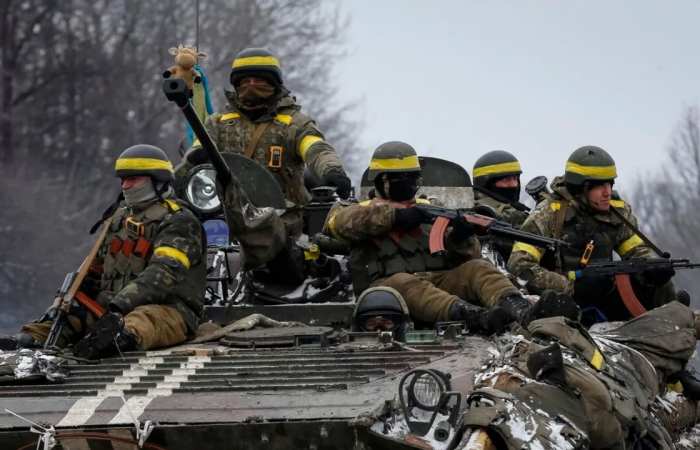
No decision has been reached on whether Berlin will approve the supply of Leopard 2 tanks to Ukraine at Ramstein Air Force base summit of global defence leaders in Germany on Friday (20 January). The BBC reports that the Polish Defence Minister, Mariusz Blaszczak, remains optimistic that efforts to supply the tanks would be successful, saying, "Defence ministers of 15 countries met on the sidelines of today's conference and we talked about this topic...I am convinced that coalition building will end in success." Both leading up to and during the summit on Friday, numerous countries had made separate pledges of military equipment to Ukraine. The Netherlands, Canada, Denmark, the Czech Republic, Estonia, Lativa, Lithuania, Poland, Slovakia, the UK, Sweden, Finland, Germany and the United States are among those to have pledged further military aid to Ukraine in the past week.
Editor's choice
Opinion
Opinion: Armenia - India Relations: Time is right to develop a strategic partnership

Opinion: Armenia - India Relations: Time is right to develop a strategic partnership

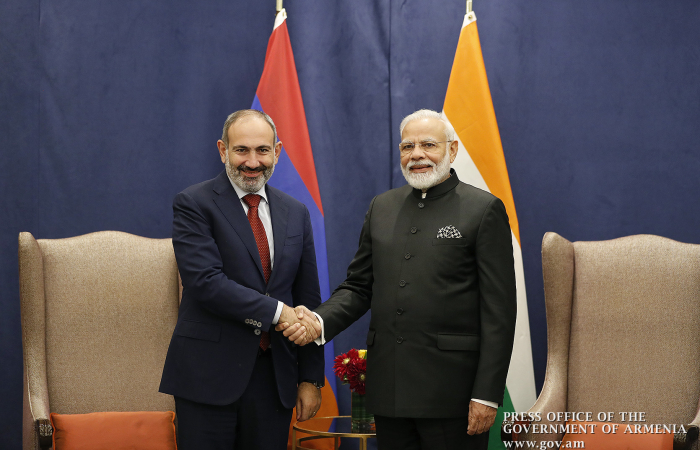
The defeat in the 2020 Nagorno Karabakh war shocked Armenia and Armenians all around the world, and destroyed many deeply entrenched perspectives on Armenia's geo-political realities, writes Benyamin Poghosyan in this op-ed for commonspace.eu. "Armenia should establish new partnerships that will allow Yerevan to decrease its economic and military development gap with Azerbaijan while adding a new layer of deterrence against Turkey in addition to the existing strategic alliance with Russia. In this context, India is the natural choice for Armenia", he argues. All the necessary ingredients are there to boost Armenia – India relations and bring them to the level of strategic partnership. There is an urgent need to institutionalize the ties, and the first step toward that direction could be establishing an Armenia - India high-level cooperation council. It should have annual sessions with the participation of Armenian and Indian Prime Ministers. At the same time, joint strategic planning groups should be established under the council to develop concrete projects in different spheres. 
Editor's choice
News
Orthodox Christians celebrate Christmas in the shadow of the Ukraine-Russia War

Orthodox Christians celebrate Christmas in the shadow of the Ukraine-Russia War

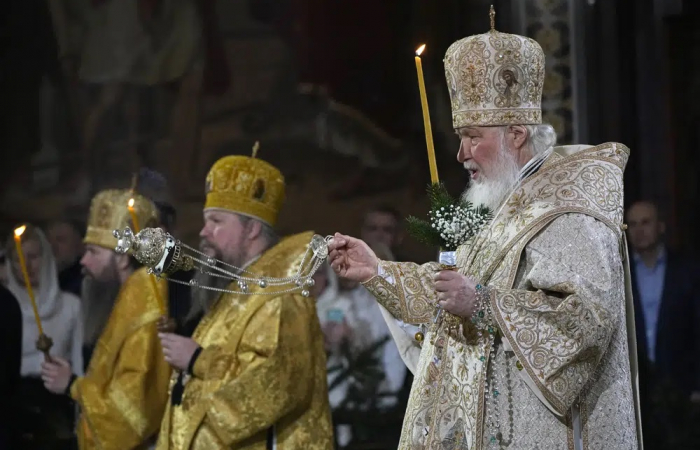
Orthodox Christians all over the world on Saturday (7 January) celebrate Christmas in accordance with the Julian Calander. On the eve, Russian Orthodox Patriarch Kirill delivered a Christmas service in the Christ the Saviour Cathedral in Moscow, and the scene was repeated in Christian Orthodox Churches across Eastern Europe and the Middle East and world wide. This Christmas however sees the Orthodox world in conflict with itself as the Ukraine-Russia War rages on. In the Ukrainian capital, Kyiv, Ukrainians ventured out into a light dusting of snow to buy gifts, cakes and groceries for Christmas Eve family celebrations.  In a video message, President Volodymyr Zelenskyy praised Ukrainians as “united as never before” and lamented that the conflict has forced many to abandon Christmas folk traditions that prohibit sewing and hunting. “It is forbidden to sew and knit, but we weave camouflage nets and sew bulletproof vests, overcoming evil. Our ancestors did not go hunting in these days, but we fight so that we do not become prey and to defeat the beast,” he said. Putin attended services at the Annunciation Cathedral, one of several churches on the grounds of the Kremlin.
Editor's choice
News
Blinken emphasises continued U.S. commitment to a two-state solution and opposition to policies that endanger its viability during phone call with new Israeli counterpart

Blinken emphasises continued U.S. commitment to a two-state solution and opposition to policies that endanger its viability during phone call with new Israeli counterpart

Benyamin Netanyahu is back in office as prime minister of Israel, at the head of a coalition that has been described as the most right wing in the history of the Jewish state. Changes are expected in policy on a number of issues, including a hardening of foreign policy positions and support for new settlements in the Palestinian territories. The United States, whist remaining Israel's staunchest supporter, is concerned about what the new policies may lead to. In a short statement on Monday (2 January) , the State Department said that "Secretary of State Antony J. Blinken spoke today with Israeli Foreign Minister Eli Cohen to congratulate him on his appointment and underscore the United States’ abiding commitment to the U.S.-Israel partnership and to Israel’s security."  The statement added that Blinken "emphasized the continued U.S. commitment to a two-state solution and opposition to policies that endanger its viability."