Region

Global

Stories in this section cover various issues and stories from all around the world.

Editor's choice
Monday Commentary
Monday Commentary: Europe still needs the OSCE

Monday Commentary: Europe still needs the OSCE

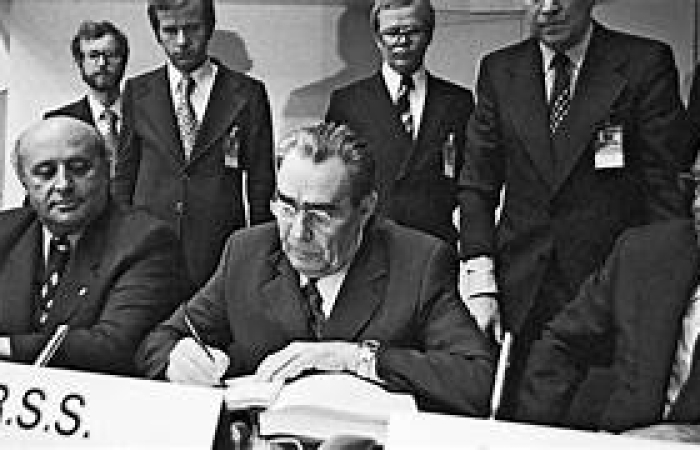
The Ministerial Council of the Organisation for Security and Co-operation in Europe (OSCE) will have its annual meeting in Vienna on 4-5 December. Foreign Ministers from the 57 member states, which also include the United States and Canada, and the Central Asian republics, and 11 partner countries, will congregate to discuss the future of European Security at a time when many believe that war in Europe over the next decade is likely. Ukraine is just a rehearsal for Russia’s ultimate ambitions. British diplomacy used to describe the OSCE as “the organization to manage Russia”. It has not done a good job of that, but this task remains paramount. The Ministerial Council will be the last major business of this year’s chairmanship, Finland, and will launch the new Chairmanship for 2026, Switzerland. The OSCE has been moribund for some time, and Russia’s invasion of Ukraine in February 2022, nearly ended it. But Europe still needs the OSCE, and there is hope that it will take a new lease of life in 2026. Switzerland has held the Chairmanship of the OSCE twice before, successfully. It has the experience, a wide network of embassies, and an able team in Bern, to successfully start what is likely to be a long and laborious journey. The new Chairman-in-office is Swiss Federal Foreign Minister Councillor, Ignazio Cassis. Cassis is also the current Vice President of the Swiss Confederation, and is fluent in Italian, English, German and French. Quite unusual also is the fact that currently the General Secretary of the OSCE is a Turk. Feridun Sinirlioğlu is an experienced Turkish diplomat, who has held the position for a year. Between them, Cassis and Sinirlioğlu will have to craft out the new OSCE, but in the end, it will largely depend on the will of the member states, including Russia. A new, reborn, OSCE, must understand that its core task remains European peace and security. It should resist the temptation of “looking busy” with a lot of secondary things. After peace and security return to Europe, it can consider other tasks. But we are far away from that yet. (Click the image to read the full commentary)
Editor's choice
News
Pope's visit to Türkiye and Lebanon has a strong ecumenical character, and places interreligious dialogue at its centre

Pope's visit to Türkiye and Lebanon has a strong ecumenical character, and places interreligious dialogue at its centre

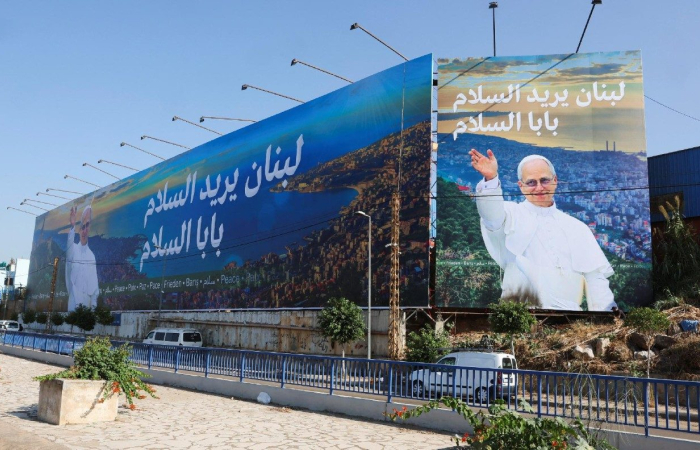
Pope Leo XIV has begun the first overseas trip of his pontificate, a six-day visit to Türkiye and Lebanon, which started yesterday (27 November) and ends on Tuesday (2 December). According to Vatican Radio, the visit "carries a strong ecumenical character and places interreligious dialogue at its centre. It will also be a moment of closeness to Christian communities and local populations across the region".   During nearly a week in the region, Pope Leo XIV will meet civil and religious authorities, visit mosques and ancient churches, pray at Beirut’s port in memory of the victims of the 2020 explosion, and hold private meetings with Presidents Recep Tayyip Erdoğan and Joseph Aoun.   A highlight of the visit will be a visit to Nicaea, where the Pope will mark the anniversary of the Council of Nicaea. Christians of many traditions recognise the Council of Nicaea as a foundation of shared faith. One of the most anticipated moments will be the Pope’s encounter with Lebanese youth in Bkerké, at the Maronite Patriarchate, a meeting expected to carry strong messages of hope in the Jubilee Year. A central event will be the ecumenical celebration in İznik, where the Pope and Ecumenical Patriarch Bartholomew will walk together toward the ruins of the Basilica of St Neophytos. The prayer, held before icons of Christ and the Council, will conclude with the lighting of a candle—a symbolic gesture of unity. The journey will also highlight interreligious engagement.   Memorable moments are expected throughout the trip: a wreath at Atatürk’s mausoleum, prayer inside the Blue Mosque, Mass at Istanbul’s Volkswagen Arena, the planting of a cedar at the presidential palace in Beirut, and prayer at the tomb of St Charbel in Lebanon. The Vatican said that "Pope Leo XIV’s pilgrimage to Türkiye and Lebanon aims to offer a voice of peace, unity, and hope at the heart of the Middle East."

Filter archive

Publication date
Editor's choice
News
Hungarian Parliament approves Finland NATO membership

Hungarian Parliament approves Finland NATO membership

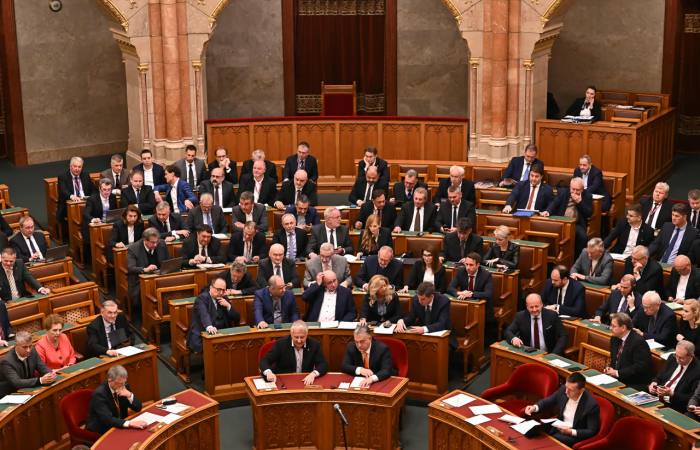
Over 10 months after Finland applied to join the NATO military alliance, the Hungarian Parliament has ratified Finland's application to the currently 30-member bloc in a vote on Monday (27 March). The vote was passed by 182 votes for and only 6 votes against. In order to become a NATO member, an applicant country must be approved by every member state individually, and following Hungary's approval yesterday only one country remains, Turkey. Turkey's approval of Finland's application to NATO is indeed expected soon as the country after the country's parliamentary committee on foreign affairs approved their application last week. A parliamentary vote on accession is expected before the country's presidential elections on 14 May. Yesterday's vote comes after months of delay in both Budapest and Ankara over Finland and Sweden's NATO membership prospects. While Hungarian officials had spent months insisting that they simply busy with other business, at the end of last month the Hungarian Prime Minister Viktor Orbán threatened to throw a spanner in the works over Finland and Sweden's history of open criticism of rule-of-law in Hungary.
Editor's choice
News
Muslims around the world welcome the start of the holy month of Ramadan

Muslims around the world welcome the start of the holy month of Ramadan

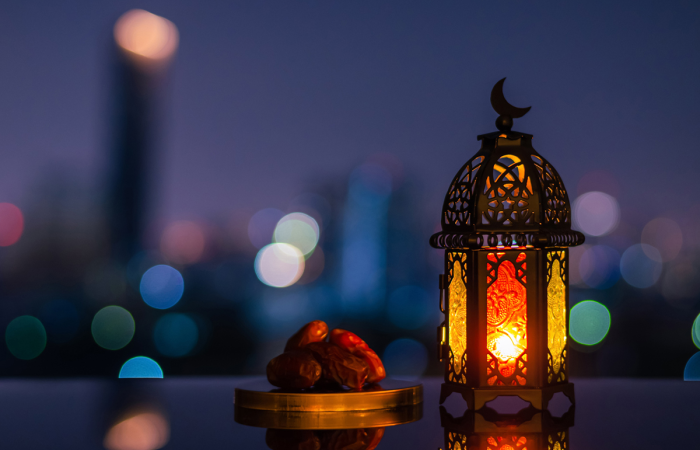
Muslims across the world are welcoming in the start of the holy month of Ramadan on Wednesday and Thursday (22 and 23 March). Muslims believe that Ramadan is the month in which the first verses of the Quran were revealed to the Prophet Muhammad more than 1,400 years ago. Throughout the month, observing Muslims fast from just before the sunrise prayer, Fajr, to the sunset prayer, Maghrib. The fast entails abstaining from eating, drinking, smoking, and sexual relations to achieve greater "taqwa", or consciousness of God. Some people are however exempt from observing Ramadan, including children who have not yet reached puberty, the young or elderly who are not physically or mentally capable of fasting, as well as pregnant women, breastfeeding mothers, and travellers. At the end of Ramadan, Muslims celebrate Eid al-Fitr. In Arabic, it means "festival of breaking the fast". Depending on the new moon sighting, Eid al-Fitr this year is likely to fall on 21 April. On the occasion of the start of the Muslim holy month of Ramadan the editorial team of commonspace.eu extends its best wishes to all our Muslim readers, subscribers and contributors across the world. Ramadan Mubarak!
Editor's choice
News
Xi Jinping arrives in Moscow to meet with Vladimir Putin

Xi Jinping arrives in Moscow to meet with Vladimir Putin

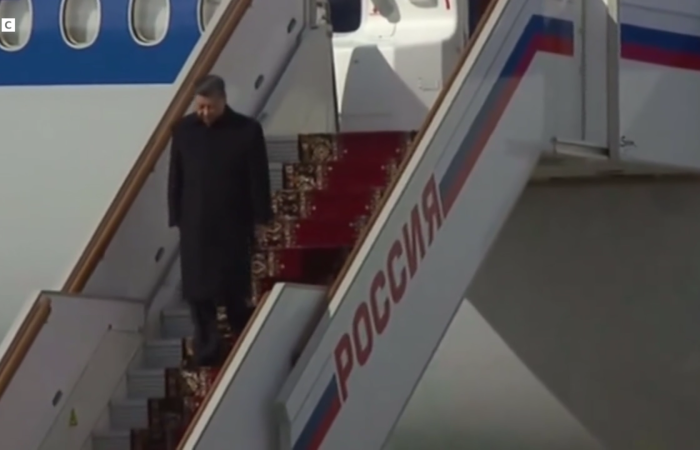
The Chinese President Xi Jinping has arrived in Moscow for face-to-face talks with Russian President Vladimir Putin on Monday (20 March). Both the Kremlin and China foreign ministry have been tight-lipped about the purpose of the trip, revealing only that Xi and Putin will discuss a "comprehensive partnership and strategic co-operation", adding that Xi will be in Moscow until Wednesday. The visit comes only days after the International Criminal Court in The Hague issued Vladimir Putin with an international arrest warrant for alleged war crimes, namely the unlawful deportation of people, including children, from Ukraine to Russia. Xi Jinping is scheduled to have lunch with the Russian President before an informal one-to-one meeting this afternoon, while formal talks with delegations are planned for tomorrow. Ever since 24 February 2022, China's stance over the full-scale Russian invasion of Ukraine has been somewhat ambiguous. China has neither openly welcomed the war, nor openly criticised Russia. Less than a month ago China also published its own 12-point peace plan to bring the war in Ukraine to an end, calling for peace talks and respect for national sovereignty.
Editor's choice
News
International Criminal Court issues arrest warrant for Vladimir Putin

International Criminal Court issues arrest warrant for Vladimir Putin

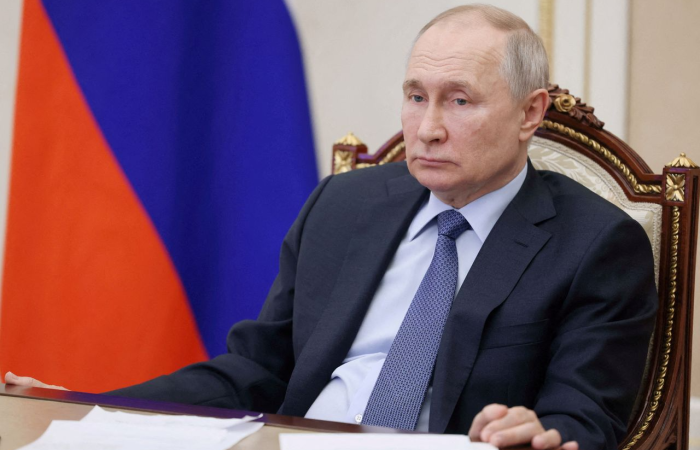
The International Criminal Court (ICC) in The Hague has issued an international arrest warrant for Russian President Vladimir Putin and his Commissioner for Children's Rights Maria Lvova-Belova. In a statement released on Friday (17 March), the ICC said that both Putin and Lvova-Belova are "allegedly responsible for the war crime of unlawful deportation of population (children) and that of unlawful transfer of population (children) from occupied areas of Ukraine to the Russian Federation". The statement says that there are "reasonable grounds" to believe that both Mr Putin and Ms Lvova-Belova bear "individual criminal responsibility for the aforementioned crimes". It also adds that the ICC had considered issuing secret warrants, but decided that public awareness of the warrants "may contribute to the prevention of the further commission of crimes". Since the start of Russia's full-scale invasion of Ukraine on 24 February 2022, the Ukrainian government estimates that Russia has deported as many as 16,000 Ukrainian children, to Russia.
Editor's choice
News
Russian fighter jet and US drone collide over the Black Sea

Russian fighter jet and US drone collide over the Black Sea

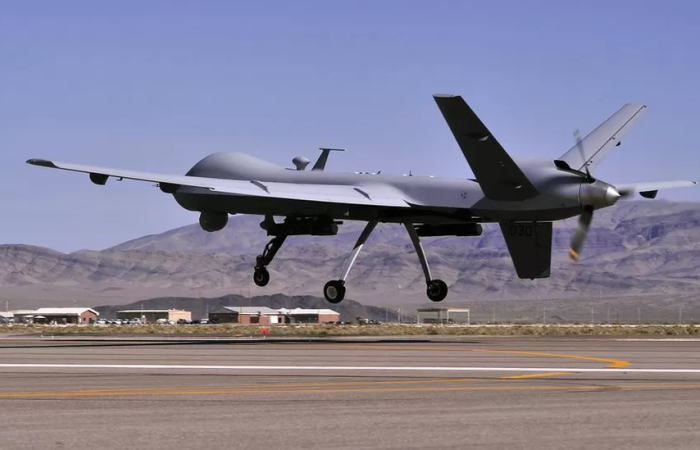
A Russian Su-27 fighter jet has collided with an American MQ-9 Reaper drone over the Black Sea. The collision rendered the drone "unflyable" according to the Pentagon, forcing the U.S. to crash the drone into the sea. Before the collision, Russian jets are said to have dumped fuel into the path of the drone which the US says was in international airspace. The confrontation between the drone and the fighter jet is said to have lasted between 30-40 minutes, with the collision happening at 07.03 CET. The collision occurred approximately 200km south of Ukraine's southern port city of Odesa. Russia has denied its two Su-27 fighter jets made any contact. In a statement, U.S. Air Force General James Hecker, commander of U.S. Air Forces Europe and Air Forces Africa, said "Our MQ-9 aircraft was conducting routine operations in international airspace when it was intercepted and hit by a Russian aircraft, resulting in a crash and complete loss of the MQ-9." "In fact, this unsafe and unprofessional act by the Russians nearly caused both aircraft to crash," Hecker said.
Editor's choice
Commentary
Saudi-Iran agreement: Welcome to the age of pragmatism

Saudi-Iran agreement: Welcome to the age of pragmatism

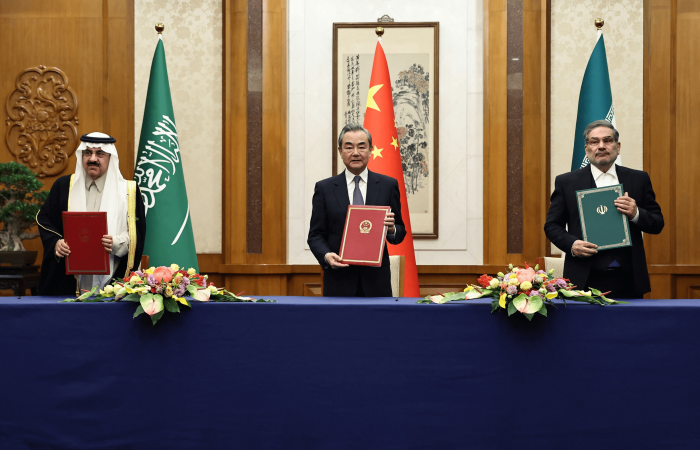
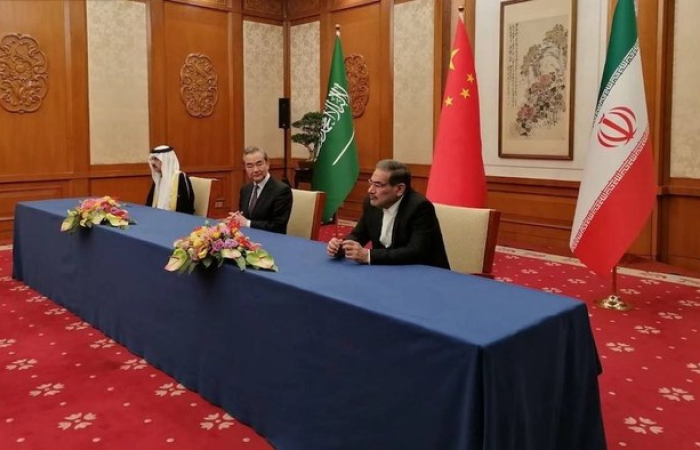
On Friday (10 March), it was announced in Beijing that with the mediation of China, Iran and Saudi Arabia had agreed to end decades of hostility, re-establish diplomatic relations that had been broken in 2016, re-open embassies in their respective capitals within two months, and work towards resolving all disputes between them through dialogue. The diplomatic world appeared taken by surprise, both by the Iranian-Saudi reconciliation, as well as by China’s involvement. The sight of a Sunni Kingdom, a Shia revolutionary republic, and a Communist state cosying together was somewhat unsettling for some. Many rushed to welcome the deal, others, especially among the chattering classes in Washington, rushed to criticise it. Diplomatic contacts have been ongoing between Tehran and Riyadh for some time, held mainly in Baghdad and Muscat with Iraqi and Omani facilitation. After the UAE normalised relations with Iran some months ago, it was assumed that sooner or later Saudi Arabia will follow. But the timing and context of the deal announced in Beijing last week remains a very significant development, with wide-ranging consequences. It also appears to herald a new age of pragmatism in international relations, with considerable implications.
Editor's choice
News
Saudi Arabia and Iran reach agreement to renew diplomatic relations

Saudi Arabia and Iran reach agreement to renew diplomatic relations

Following a meeting in Beijing, on Friday (10 March), Saudi Arabia and Iran have agreed to reestablish diplomatic relations and reopen their embassies within two months following years of tensions between the two countries. A joint statement released by the Saudi state news agency SPA read: “In response to the noble initiative of His Excellency President Xi Jinping, President of the People’s Republic of China, of China’s support for developing good neighborly relations between the Kingdom of Saudi Arabia and the Islamic Republic of Iran...the three countries announce that an agreement has been reached between the Kingdom of Saudi Arabia and the Islamic Republic of Iran." "That includes an agreement to resume diplomatic relations between them and re-open their embassies and missions within a period not exceeding two months, and the agreement includes their affirmation of the respect for the sovereignty of states and the non-interference in internal affairs of states,” the statement said.
Editor's choice
News
International Women's Day: defiant and steadfast for full equality in the digital world

International Women's Day: defiant and steadfast for full equality in the digital world

8 March marks International Women's Day, a global day celebrating the social, economic, cultural, and political achievements of women. Marking the day, the Sima Bahous, UN Under-Secretary-General and Executive Director of UN Women, has released the following statement: "Women and girls have just as much right to access the digital world and prosper in it as men and boys. Their creativity, knowledge and perspectives can shape a future where technology contributes to transforming social norms, amplifying women’s voices, pushing forward against online harassment, preventing the perpetuation of algorithmic biases, and distributing the benefits of digitalization as the great equalizer to achieve the Sustainable Development Goals. All over the world, women’s and girls’ movements are defiant and steadfast in the face of regressive gender norms and pushback against their rights. Activists are raising their powerful voices for inclusion, and an end to violence and to discrimination in education, the workplace and in legislation. On International Women’s Day we honour and celebrate them, adding our committed support to their energy and drive..."
Editor's choice
News
Blinken and Lavrov meet in India for first time since full-scale Ukraine invasion

Blinken and Lavrov meet in India for first time since full-scale Ukraine invasion

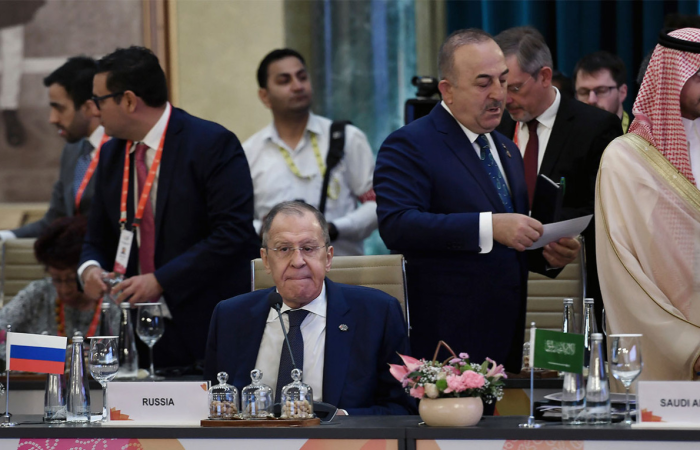
Yesterday, on Thursday (2 March) the US Secretary of State Antony Blinken met Russian Foreign Minister Sergei Lavrov for the first time since the beginning of Russia’s full-scale invasion of Ukraine, over one year ago. Taking place in the Indian capital New Delhi, sources report that the two spoke "on the move" for only ten minutes, and apparently not much resulted from it. Blinken reiterated US support for Ukraine, and pressed the Kremlin to reverse their decision to pull out of the 2010 START treaty on nuclear proliferation. In remarks released after his address at the closed-door meeting of foreign ministers, Antony Blinken said, "we must continue to call on Russia to end its war of aggression and withdraw from Ukraine for the sake of international peace and economic stability". According to reports from the American side, Blinken also brought up the case of the former American soldier Paul Whelan, who in 2020 was sentenced to 16 years hard labour after being convicted of spying by Russian authorities.