Region

Global

Stories in this section cover various issues and stories from all around the world.

Editor's choice
Monday Commentary
Monday Commentary: Europe still needs the OSCE

Monday Commentary: Europe still needs the OSCE

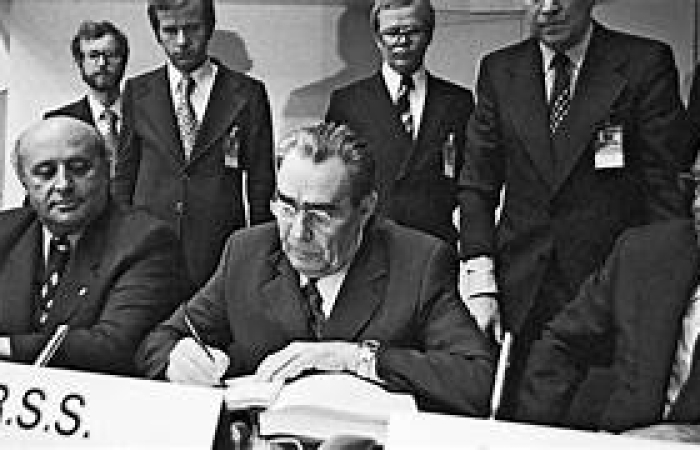
The Ministerial Council of the Organisation for Security and Co-operation in Europe (OSCE) will have its annual meeting in Vienna on 4-5 December. Foreign Ministers from the 57 member states, which also include the United States and Canada, and the Central Asian republics, and 11 partner countries, will congregate to discuss the future of European Security at a time when many believe that war in Europe over the next decade is likely. Ukraine is just a rehearsal for Russia’s ultimate ambitions. British diplomacy used to describe the OSCE as “the organization to manage Russia”. It has not done a good job of that, but this task remains paramount. The Ministerial Council will be the last major business of this year’s chairmanship, Finland, and will launch the new Chairmanship for 2026, Switzerland. The OSCE has been moribund for some time, and Russia’s invasion of Ukraine in February 2022, nearly ended it. But Europe still needs the OSCE, and there is hope that it will take a new lease of life in 2026. Switzerland has held the Chairmanship of the OSCE twice before, successfully. It has the experience, a wide network of embassies, and an able team in Bern, to successfully start what is likely to be a long and laborious journey. The new Chairman-in-office is Swiss Federal Foreign Minister Councillor, Ignazio Cassis. Cassis is also the current Vice President of the Swiss Confederation, and is fluent in Italian, English, German and French. Quite unusual also is the fact that currently the General Secretary of the OSCE is a Turk. Feridun Sinirlioğlu is an experienced Turkish diplomat, who has held the position for a year. Between them, Cassis and Sinirlioğlu will have to craft out the new OSCE, but in the end, it will largely depend on the will of the member states, including Russia. A new, reborn, OSCE, must understand that its core task remains European peace and security. It should resist the temptation of “looking busy” with a lot of secondary things. After peace and security return to Europe, it can consider other tasks. But we are far away from that yet. (Click the image to read the full commentary)
Editor's choice
News
Pope's visit to Türkiye and Lebanon has a strong ecumenical character, and places interreligious dialogue at its centre

Pope's visit to Türkiye and Lebanon has a strong ecumenical character, and places interreligious dialogue at its centre

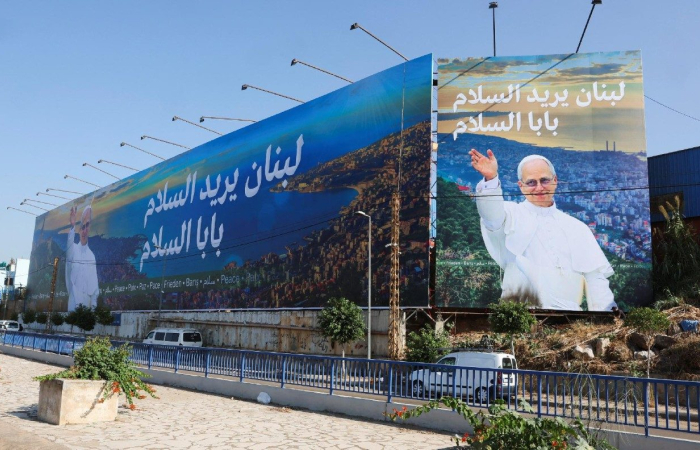
Pope Leo XIV has begun the first overseas trip of his pontificate, a six-day visit to Türkiye and Lebanon, which started yesterday (27 November) and ends on Tuesday (2 December). According to Vatican Radio, the visit "carries a strong ecumenical character and places interreligious dialogue at its centre. It will also be a moment of closeness to Christian communities and local populations across the region".   During nearly a week in the region, Pope Leo XIV will meet civil and religious authorities, visit mosques and ancient churches, pray at Beirut’s port in memory of the victims of the 2020 explosion, and hold private meetings with Presidents Recep Tayyip Erdoğan and Joseph Aoun.   A highlight of the visit will be a visit to Nicaea, where the Pope will mark the anniversary of the Council of Nicaea. Christians of many traditions recognise the Council of Nicaea as a foundation of shared faith. One of the most anticipated moments will be the Pope’s encounter with Lebanese youth in Bkerké, at the Maronite Patriarchate, a meeting expected to carry strong messages of hope in the Jubilee Year. A central event will be the ecumenical celebration in İznik, where the Pope and Ecumenical Patriarch Bartholomew will walk together toward the ruins of the Basilica of St Neophytos. The prayer, held before icons of Christ and the Council, will conclude with the lighting of a candle—a symbolic gesture of unity. The journey will also highlight interreligious engagement.   Memorable moments are expected throughout the trip: a wreath at Atatürk’s mausoleum, prayer inside the Blue Mosque, Mass at Istanbul’s Volkswagen Arena, the planting of a cedar at the presidential palace in Beirut, and prayer at the tomb of St Charbel in Lebanon. The Vatican said that "Pope Leo XIV’s pilgrimage to Türkiye and Lebanon aims to offer a voice of peace, unity, and hope at the heart of the Middle East."

Filter archive

Publication date
Editor's choice
News
Armenia and Azerbaijan meet in Washington D.C. for a week of talks

Armenia and Azerbaijan meet in Washington D.C. for a week of talks

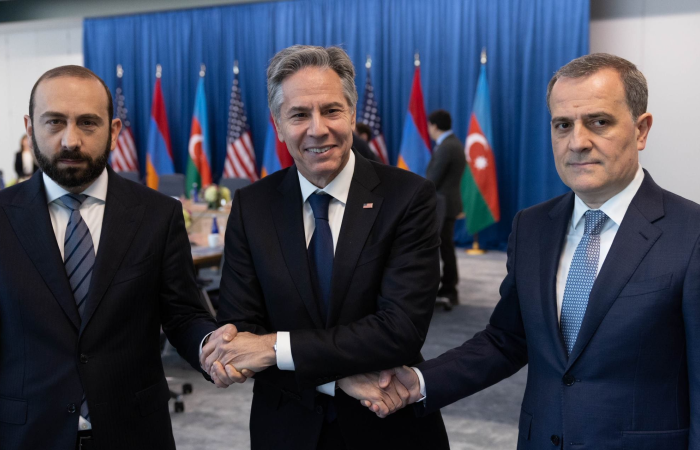
On Monday (1 May) the foreign ministers of Armenia and Azerbaijan met with the US Secretary of State Antony Blinken for the first day of talks understood to be taking place until latest Friday (5 May). AFP have reported that the talks will last four days. Armenian Foreign Minister Ararat Mirzoyan and Azerbaijani Foreign Minister Jeyhun Bayramov, along with their delegations, are meeting at the George P. Schultz National Foreign Affairs Training Center in Arlington, Virginia, a short distance south-west of Washington D.C. Mirzoyan, Bayramov and Blinken are understood to have sat down for negotiations at 09:45 local time yesterday, after both foreign ministers had their own individual meetings with Blinken beforehand. Statements issued by both Armenia and Azerbaijan said that issues of the security situation in the region and the process of normalisation of relations between the two countries were discussed in the meeting hosted by Blinken. Radio Free Europe/Radio Liberty's Armenian Service report that the talks are more aimed at "an agreement on the normalisation of relations" rather than a peace treaty, citing a U.S. official speaking to reporters on the condition of anonymity.
Editor's choice
News
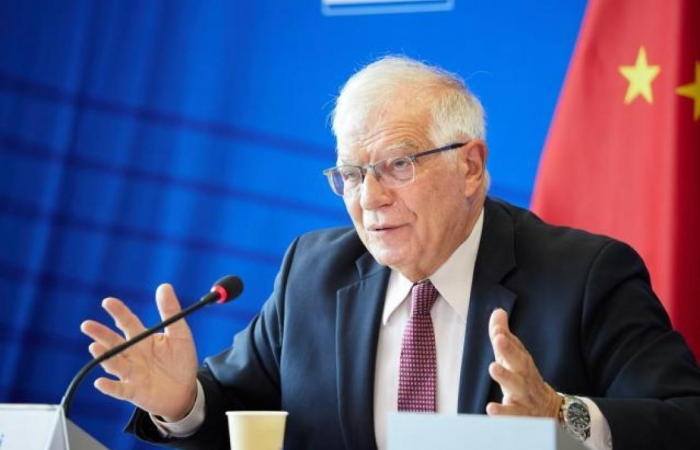
Borrell addresses European Parliament on EU-China relations

Borrell addresses European Parliament on EU-China relations

The Vice-President of the European Commission and European Union High Representative for Foreign Affairs and Security Policy Josep Borrell addressed the European Parliament on Tuesday (18 April) on "The need for a coherent strategy for EU-China Relations”. Beginning by recognising that different member states have different interests vis-a-vis China, Borrell said, "if we want to define a coherent EU strategy towards China, it is necessary for each and every EU actor to exercise their respective roles and responsibilities in accordance with, and in full respect of, the Treaties. "The main focus of his address was on integrating "economic security" into wider "national security" strategies. "This concept of ‘national security’ - ‘economic security’ - will have a determining influence on the way we conceive our foreign relations," Borrell said, adding that the EU should aim to replicate the strategies of the USA and Japan in this regard. Borrell said the four key issues in the EU's relationship with China are "values, economic security, Taiwan, and Ukraine".
Editor's choice
Editorial
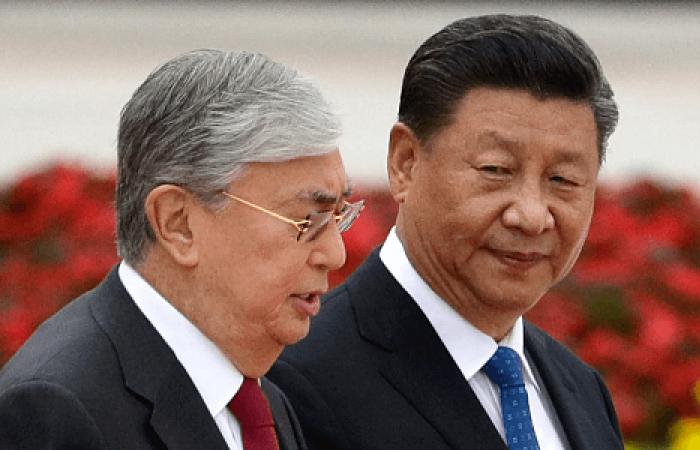
Editorial: Chinese strategy in Central Asia aims to keep the west out, the Russians down, and everyone else on the margin

Editorial: Chinese strategy in Central Asia aims to keep the west out, the Russians down, and everyone else on the margin

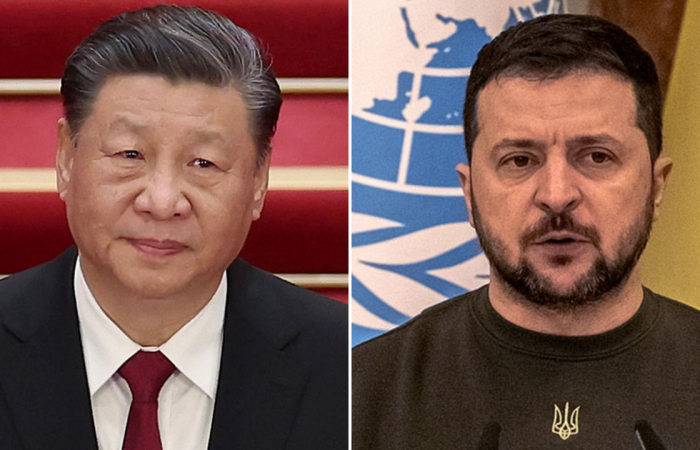
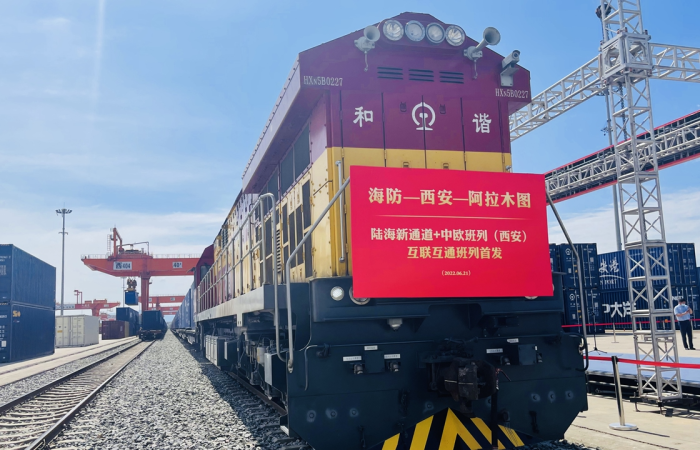
Events of the past year have unleashed a new "Great Game" in Central Asia, writes commonspace.eu in this editorial. "The plan, it seems, builds on China’s “Belt and Road” programme, but there also now appears to be a much stronger political angle to China’s engagement. China is worried that Russia’s increasing weakness is creating a vacuum in Central Asia that others may be tempted to fill. It is determined to get there first. China’s approach seems to be to keep the west out, the Russians down, and everyone else on the margin." There is little doubt that the big loser in this “great game in the new era” is Russia. But the Kremlin at this point has little choice but to try to cut its losses. It desperately needs China’s support - at least economically, politically and diplomatically, if not militarily - as it tries to sort out the mess it created for itself in Ukraine, and resist Western sanctions imposed after its invasion.
Editor's choice
News
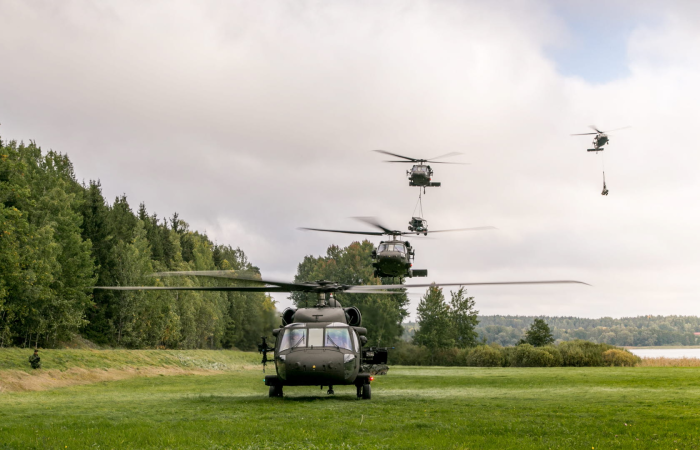
Aurora 23 military exercise kicks off in Sweden, 26,000 soldiers from 14 countries take part

Aurora 23 military exercise kicks off in Sweden, 26,000 soldiers from 14 countries take part

Sweden has commenced its largest military exercise in 25 years, involving some 26,000 soldiers from 14 different countries. The Aurora 23 exercises kicked off yesterday, on Monday (17 April) and will run until 11 May. Other than Sweden, participating nations are the US, UK, Poland, Norway, Estonia, Latvia, Lithuania, Denmark, Austria, Germany, France, Finland, who joined NATO on 4 April this year, and Ukraine. In a statement released two weeks ago, the Swedish Armed Forces said that the purpose of Aurora 23 is "to enhance the collected capability to counter an armed attack on Sweden", with drills taking place "in the air, on the ground and at sea". The exercise will focus mostly on southern Sweden and the strategically important island of Gotland in the south-east, which lies in the middle of the Baltic Sea and approximately 350km north of the Russian exclave of Kaliningrad. Drills will also be taking place in northern Sweden, the country's Armed Forces added. The biggest military exercises held in Sweden in 25 years come amid the country's stalled NATO membership application. Stockholm, along with Helsinki, applied for NATO membership in May after being rattled by Russia's full scale invasion of Ukraine in February.
Editor's choice
Monday Commentary
Opinion: The claim that a multipolar world is necessarily a better one is a fallacy

Opinion: The claim that a multipolar world is necessarily a better one is a fallacy

The European and Global international system is broken. Whilst others have contributed to its decline and subversion in the past, it was Russia’s actions in Ukraine, and other parts of the former Soviet space before that, that have dealt it the decisive fatal blow."What is desperately needed in the international system are rules, and the mechanism to ensure that these rules are abided with", writes Dennis Sammut in today's Monday Commentary. "Multi-polarity may sound like an attractive solution, especially to small countries who have been under pressure from bigger players or international actors, but with closer inspection, on its own, it is not."