Region

EU plus

Stories in this section cover the EU-27 countries plus the UK, Norway, Switzerland, Iceland, Liechtenstein, Monaco, Andorra and the Balkan Countries (Albania, Serbia, Montenegro, Bosnia-Herzegovina, Kosovo, North Macedonia).

Editor's choice
Opinion
Opinion: The European Union must recognise that the C5 have now become the C6

Opinion: The European Union must recognise that the C5 have now become the C6

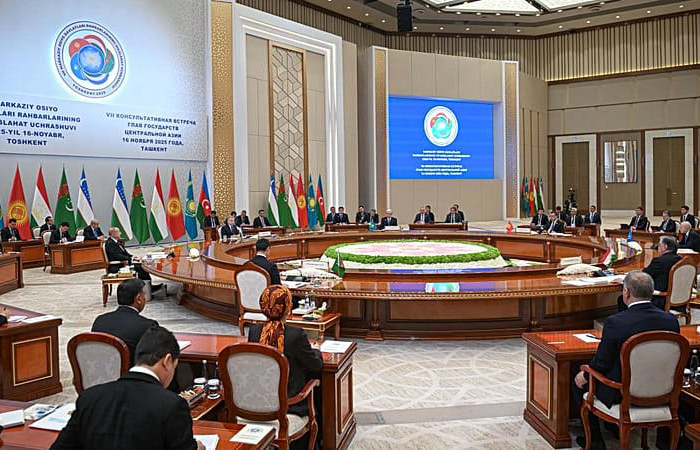
In recent years, Eurasia has undergone a structural transformation in how regions connect, trade, and cooperate. The combination of geopolitical shocks, disrupted supply chains, and the search for secure east–west routes has elevated the importance of the Trans-Caspian space. The states of Central Asia, once constrained by geography, have taken unprecedented steps to strengthen regional coordination, modernize infrastructure, and integrate more closely with Europe. Meanwhile, Azerbaijan has rapidly emerged as an indispensable connector linking Central Asia with the South Caucasus, Türkiye, and European markets. This new reality was formally acknowledged in November 2025 when Azerbaijan was unanimously welcomed as a full participant in the Consultative Meeting of Central Asian Heads of State in Tashkent. What had long been a C5 grouping transformed into a C6, marking a historic moment: the Caspian was no longer a frontier separating two regions but the center of a unified geopolitical and geo-economic space. President Ilham Aliyev described this alignment as the emergence of “a single geopolitical and geo-economic region,” while President Shavkat Mirziyoyev called Azerbaijan’s inclusion “historic” and proposed transforming the consultative platform into a structured regional institution capable of shaping security, economic, environmental, and digital policy. The Caspian is no longer a boundary; it is the heart of an integrated region. The transformation of the EU and U.S. C5+1 formats into C6+1 is the logical next step to ensure that both sides of the Caspian advance together – coherently, strategically, and with shared purpose. (click the image to read the full op-ed).
Filter archive

Publication date
Editor's choice
News
US votes with Russia in United Nations resolutions on Ukraine

US votes with Russia in United Nations resolutions on Ukraine

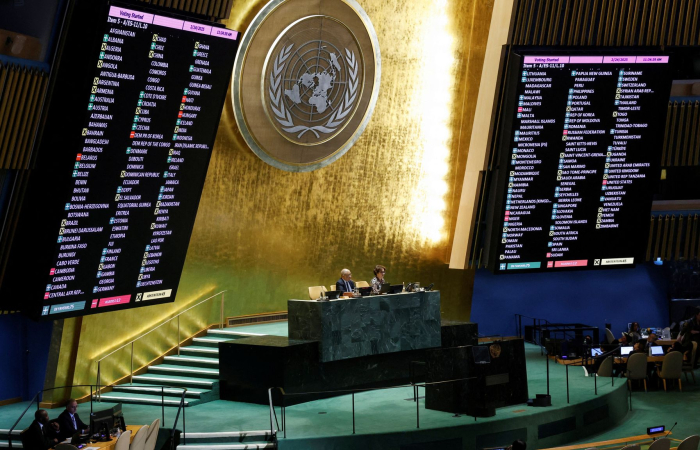
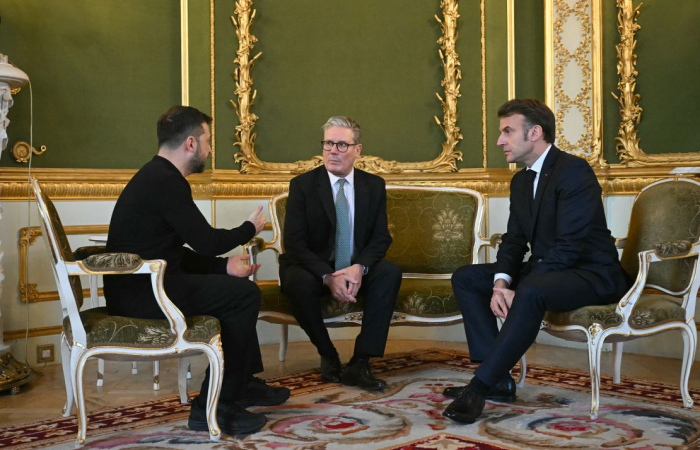
The US has twice sided with Russia in votes at the United Nations to mark the third anniversary of the Russian invasion of Ukraine, highlighting the Trump administration's change of stance on the war. First the US opposed a European-drafted resolution condemning Moscow's actions and supporting Ukraine's territorial integrity, voting the same way as Russia and countries including North Korea and Belarus at the UN General Assembly (UNGA) in New York. Then the US drafted and voted for a resolution at the UN Security Council which called for an end to the conflict but contained no criticism of Russia. The Security Council passed the resolution but two key US allies, the UK and France, abstained after their attempts to amend the wording were vetoed.
Editor's choice
News
Russia and US agree without Ukraine to press ahead on path to peace

Russia and US agree without Ukraine to press ahead on path to peace

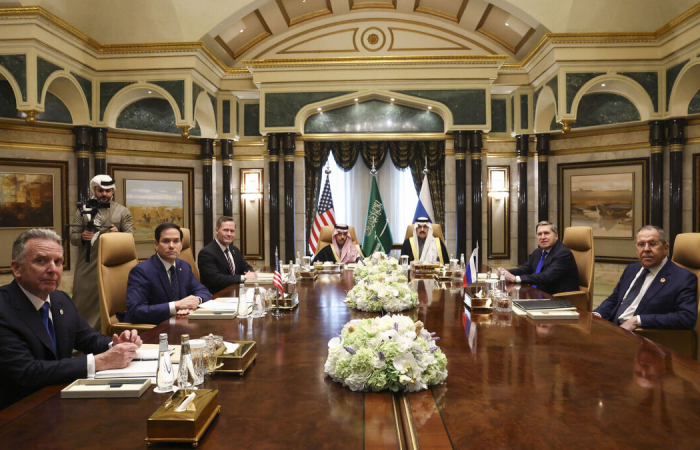
The United States and Russia agreed in Riyadh on Tuesday to press ahead with efforts to end the war in Ukraine, a US official said, as Kyiv and its European allies watched anxiously from the sidelines and Moscow raised a major new demand. US State Department spokesperson Tammy Bruce said the two sides agreed to appoint "respective high-level teams to begin working on a path to ending the conflict in Ukraine as soon as possible in a way that is enduring, sustainable, and acceptable to all sides".
Editor's choice
News
US tells its NATO allies that European security is no longer top priority

US tells its NATO allies that European security is no longer top priority

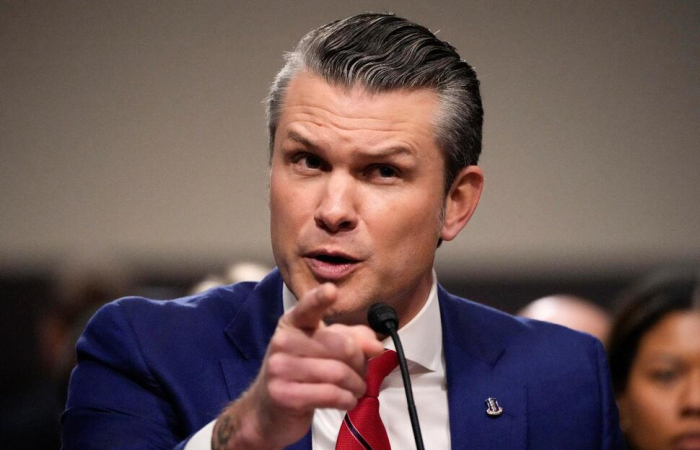
U.S. Defense Secretary Pete Hegseth has told Washington's NATO allies that they would have to step up and assume greater responsibility for Europe's security since the U.S. no longer remains "primarily focused on the security of Europe". He said "stark strategic realities", such as U.S. border security issues and threats posed by China are a greater priority. Hegseth also said that a return to Ukraine's pre-2014 borders was unrealistic and the Trump administration does not see NATO membership for Kyiv as part of a solution to the war triggered by Russia's invasion.
Editor's choice
News
Poland takes over presidency of the European Union after a stormy six month Hungarian Presidency

Poland takes over presidency of the European Union after a stormy six month Hungarian Presidency

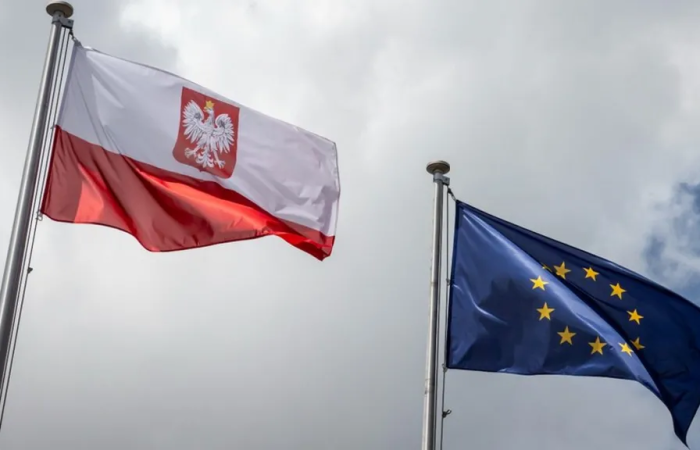
Poland on Wednesday(1 January) took over the Presidency of The European Union for a period of six months ending a stormy six month Hungarian presidency that often left the member states dismayed, frustrated and angry. Poland is ready to lead Europe towards security and economic competitiveness, Polish Prime Minister Donald Tusk said in Brussels just before Christmas. Coming after Hungary the Polish presidency is a symbol of change and great hope of the entire EU for a democratic and secure future of the continent.  Summing up the Polish ambitions prime minister Tusk said I would very much like Poles, to give faith to the whole of Europe that a Europe free from corruption, free from threats, confident in its own strengths, helping those who need help, but also thinking very pragmatically about its own interests is possible. The Hungarian presidency of the Council of the EU began with an unexpected visit by Prime Minister Victor Orban to Moscow and ended with, among other things, a declaration of Hungary's lack of support for the extension of sanctions against Russia.
Editor's choice
Analysis
Opinion: Growing dissatisfaction with status quo has propelled the rise of Călin Georgescu in Romania

Opinion: Growing dissatisfaction with status quo has propelled the rise of Călin Georgescu in Romania

The first round of presidential elections in Romania that took place on the 24th of November had a shocking result: an independent ultranationalist candidate – Calin Georgescu – with a campaign solely on TikTok and YouTube won the majority of votes. The independent candidate had no party backing him and none of the pre-election polls picked up on his popularity, raising questions of potential electoral manipulation via social media.
Editor's choice
Editorial
Editorial: Macron’s state visit to Saudi Arabia highlights shared vision for strategic cooperation

Editorial: Macron’s state visit to Saudi Arabia highlights shared vision for strategic cooperation

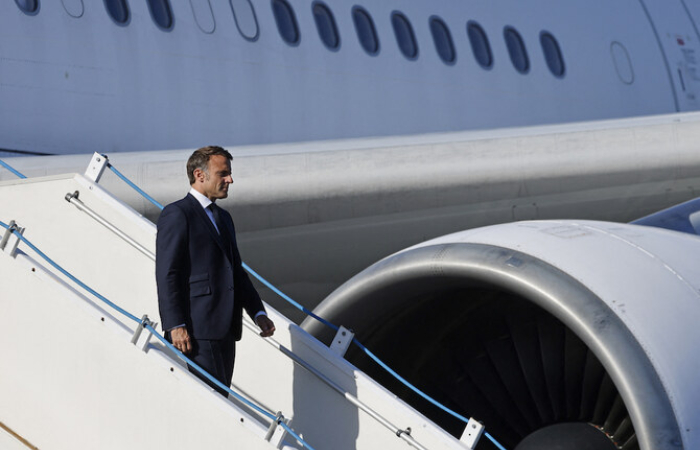
French President Emmanuel Macron’s arrival in Riyadh on Monday for a three-day state visit demonstrates the deepening ties between France and Saudi Arabia. The visit follows an invitation from Crown Prince Mohammed bin Salman and it reflects the shared ambition to enhance cooperation across various sectors in conjunction with both Saudi Vision 2030 and France 2030.
Editor's choice
News
Cargo plane crash in Lithuania, cause still unknown

Cargo plane crash in Lithuania, cause still unknown

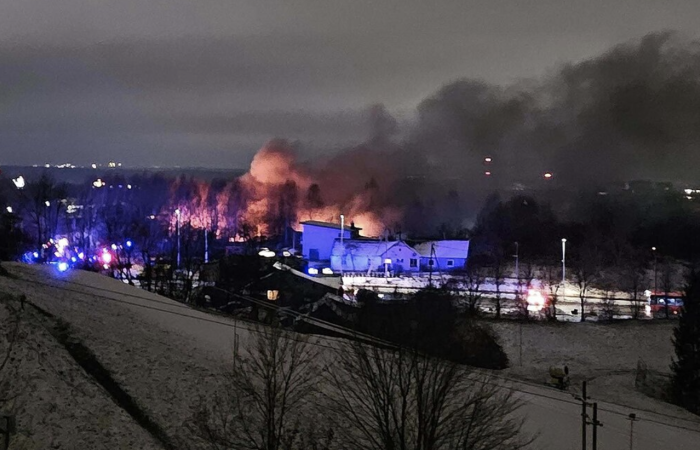
A DHL cargo plane crashed near the Lithuanian capital Vilnius on Monday morning (25 November). One of the passengers died in the crash. He was reportedly a Spaniard. Three other crew members were injured. This was reported by Lithuanian media, including public broadcaster LRT.
Editor's choice
News
Paris and Berlin seek 'a more united Europe'

Paris and Berlin seek 'a more united Europe'

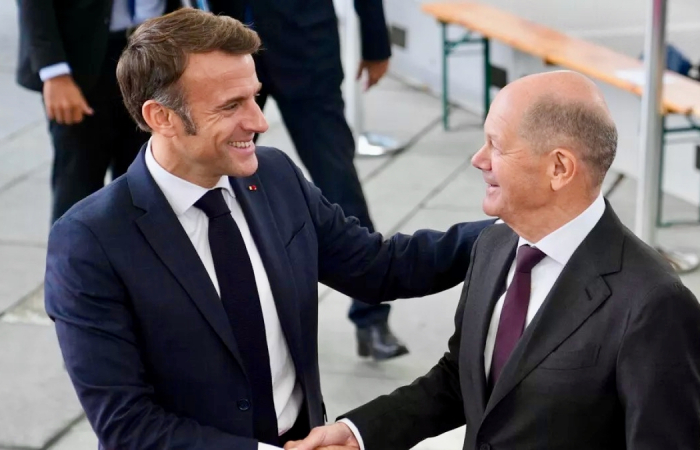
French President Emmanuel Macron and German Chancellor Olaf Scholz met in Berlin today to discuss their vision for the future of Europe in light of the recent US presidential election, which Donald Trump claimed victory in. The meeting underlined their commitment to steer Europe towards greater unity, resilience and sovereignty amid evolving global dynamics.
Editor's choice
News
Azerbaijan-NATO event focused on energy security and climate change challenges

Azerbaijan-NATO event focused on energy security and climate change challenges

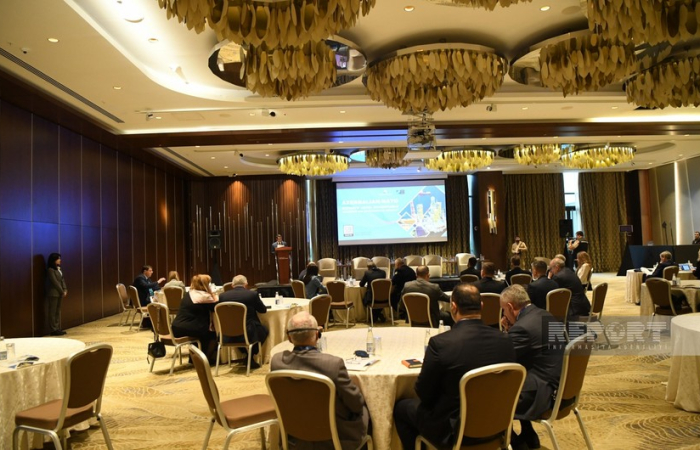
On Monday (28 October), Azerbaijan held a meeting in Baku with NATO's Climate and Energy Security Sector representatives from the Innovation, Hybrid Issues and Cybersecurity Division and representatives from NATO member and partner countries to discuss energy security and climate change.