Region

EU plus

Stories in this section cover the EU-27 countries plus the UK, Norway, Switzerland, Iceland, Liechtenstein, Monaco, Andorra and the Balkan Countries (Albania, Serbia, Montenegro, Bosnia-Herzegovina, Kosovo, North Macedonia).

Editor's choice
Opinion
Opinion: The European Union must recognise that the C5 have now become the C6

Opinion: The European Union must recognise that the C5 have now become the C6

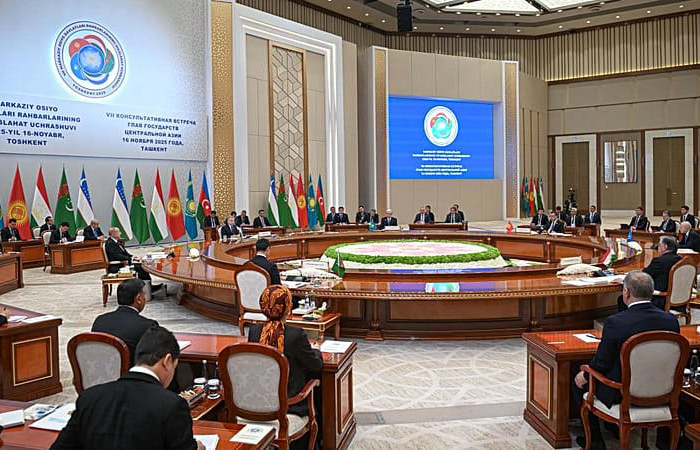
In recent years, Eurasia has undergone a structural transformation in how regions connect, trade, and cooperate. The combination of geopolitical shocks, disrupted supply chains, and the search for secure east–west routes has elevated the importance of the Trans-Caspian space. The states of Central Asia, once constrained by geography, have taken unprecedented steps to strengthen regional coordination, modernize infrastructure, and integrate more closely with Europe. Meanwhile, Azerbaijan has rapidly emerged as an indispensable connector linking Central Asia with the South Caucasus, Türkiye, and European markets. This new reality was formally acknowledged in November 2025 when Azerbaijan was unanimously welcomed as a full participant in the Consultative Meeting of Central Asian Heads of State in Tashkent. What had long been a C5 grouping transformed into a C6, marking a historic moment: the Caspian was no longer a frontier separating two regions but the center of a unified geopolitical and geo-economic space. President Ilham Aliyev described this alignment as the emergence of “a single geopolitical and geo-economic region,” while President Shavkat Mirziyoyev called Azerbaijan’s inclusion “historic” and proposed transforming the consultative platform into a structured regional institution capable of shaping security, economic, environmental, and digital policy. The Caspian is no longer a boundary; it is the heart of an integrated region. The transformation of the EU and U.S. C5+1 formats into C6+1 is the logical next step to ensure that both sides of the Caspian advance together – coherently, strategically, and with shared purpose. (click the image to read the full op-ed).
Filter archive

Publication date
Editor's choice
News
Finland, Poland and Baltic countries to withdraw from anti-personnel mine ban treaty due to Russian threat

Finland, Poland and Baltic countries to withdraw from anti-personnel mine ban treaty due to Russian threat

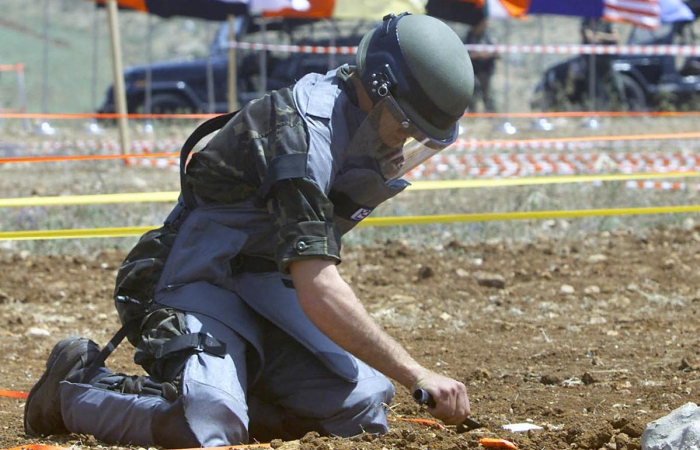
Finland's prime minister has announced that Finland plans to withdraw from the international treaty banning the use of anti-personnel mines, citing the threat from Russia. The announcement comes two weeks after Poland, Lithuania, Latvia and Estonia took a first step towards also quitting the treaty, with them all pointing to the increased security risk from Russia following its invasion of Ukraine.Finland's prime minister has announced that Finland plans to withdraw from the international treaty banning the use of anti-personnel mines, citing the threat from Russia. The announcement comes two weeks after Poland, Lithuania, Latvia and Estonia took a first step towards also quitting the treaty, with them all pointing to the increased security risk from Russia following its invasion of Ukraine.
Editor's choice
News
Trump tariffs shock global economy

Trump tariffs shock global economy

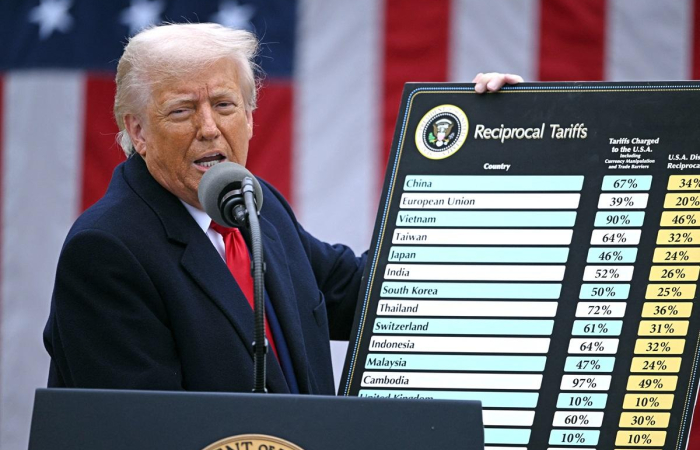
Stock markets and the dollar have tumbled after US President Donald Trump's latest worldwide tariffs caused a trade war that many fear will spark recession and ramp up inflation. The dollar slumped by as much as 2.6 percent versus the euro, its biggest intraday plunge in a decade. European Commission President Ursula von der Leyen said the EU was "preparing for further countermeasures" but she emphasised it was "not too late to address concerns through negotiations". China announced on Friday that it will impose a 34% tariff on imports of all U.S. products beginning April 10 as a retaliatory measure.
Editor's choice
News
Landmark EU - Central Asia summit held in Samarkand

Landmark EU - Central Asia summit held in Samarkand

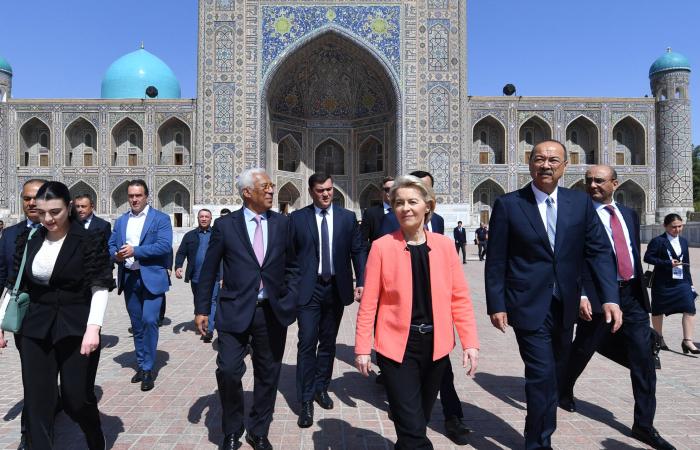
European Commission President Ursula von der Leyen and European Council President António Costa travelled to Uzbekistan to participate in a landmark EU–Central Asia summit. Held on 3–4 April, the event brings together EU leaders with the heads of state and government of the five Central Asian republics. Alongsidei the host, Uzbek President Shavkat Mirziyoyev, the summit was also attended by Kazakh President Kassym-Jomart Tokayev, Kyrgyz President Sadyr Japarov, Tajik President Emomali Rahmon, and Turkmen President Serdar Berdimuhamedov.
Editor's choice
News
EU wants its citizens to have survival kits at home in case of crisis or war

EU wants its citizens to have survival kits at home in case of crisis or war

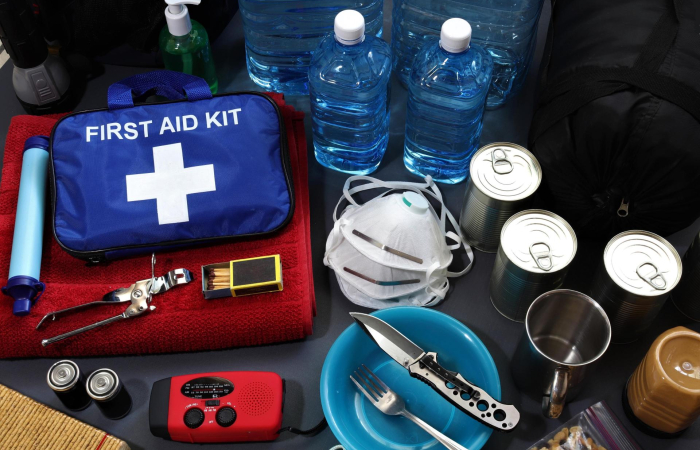
Bottled water, energy bars, a flashlight and more: the European Union is pushing for every household in the 27-country bloc to have a three-day survival kit ready in case a crisis strikes - be it a war or natural disaster. EU crisis management commissioner Hadja Lahbib told AFP that the idea would be formally presented as part of a broader "preparedness strategy" for the European Union
Editor's choice
News
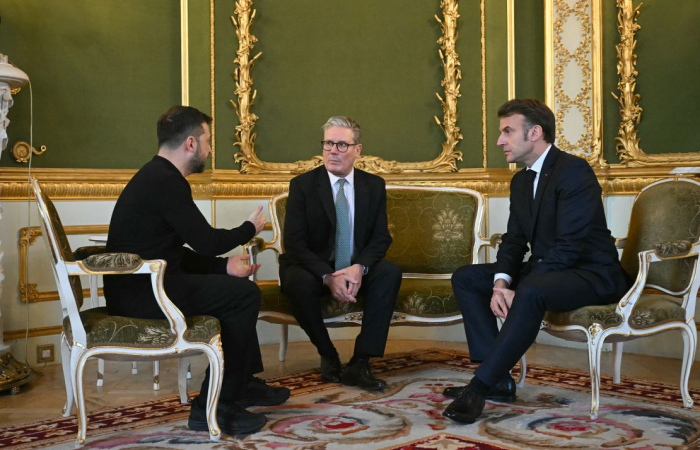
President Macron gathers leaders to discuss aid to Ukraine and a European Armed Force

President Macron gathers leaders to discuss aid to Ukraine and a European Armed Force

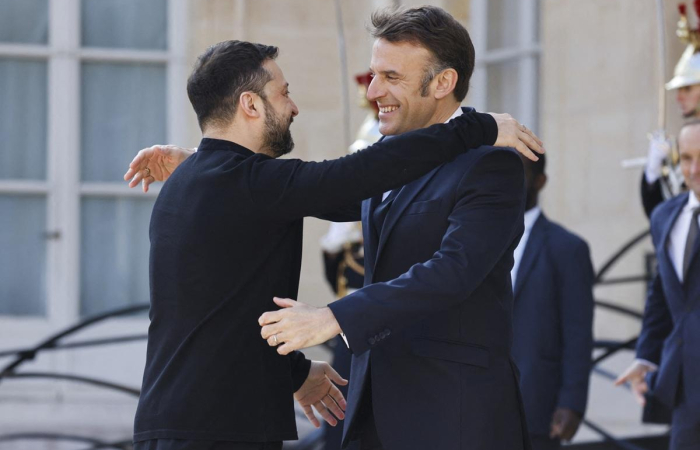
Ukraine’s allies from across Europe gathered for talks in Paris on Thursday to discuss how to strengthen Kyiv’s hand and its military as it pushes for a ceasefire with Russia, and to consider proposals to deploy European troops in the country in tandem with any peace deal. French President Emmanuel Macron is hosting the leaders of nearly 30 countries plus NATO and European Union chiefs. The summit comes at a crucial juncture in the war, with intensifying diplomatic efforts to broker ceasefires, driven by pressure from US President Donald Trump  to end the fighting.
Editor's choice
News
US brokers agreement to end Russia - Ukraine military action in the Black Sea

US brokers agreement to end Russia - Ukraine military action in the Black Sea

Russia and Ukraine agreed Tuesday to halt military strikes in the Black Sea and on energy sites during talks brokered by the United States, which offered as a first concrete incentive to Moscow to ease pressure on agricultural exports. With President Donald Trump pushing for a rapid end to the war that has killed tens of thousands of people, US negotiators shuttled separately over three days in the Saudi capital Riyadh between delegations from Ukraine and Russia.
Editor's choice
Opinion
Opinion: Lessons Learnt for the South Caucasus from the Russia-USA ‘Rapprochement’

Opinion: Lessons Learnt for the South Caucasus from the Russia-USA ‘Rapprochement’

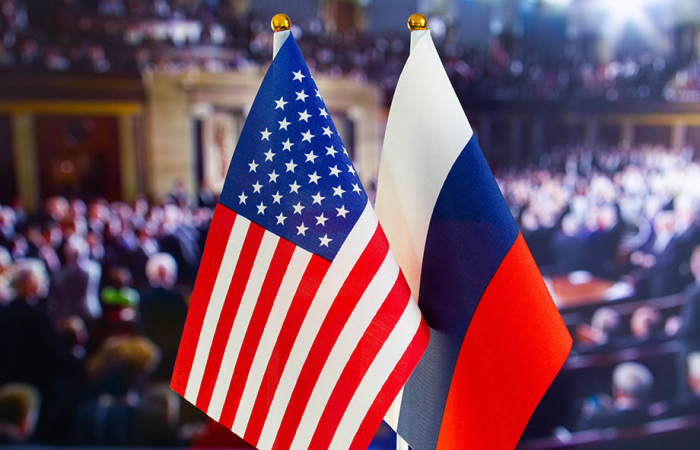
The evolving dynamics of Russia-USA relations have sent shockwaves through the post-Soviet space, with the South Caucasus emerging as a critical region to observe the fallout. Recent negotiations between the United States and Russia, particularly those aimed at resolving the war in Ukraine, have exposed fault lines in international diplomacy that carry profound lessons for Armenia, Azerbaijan, and Georgia. The implications of this “rapprochement” are starkly illustrated by Ukraine’s experience, Azerbaijan’s strategic foresight, and Armenia’s persistent miscalculations in relying on external powers for security.
Editor's choice
Monday Commentary
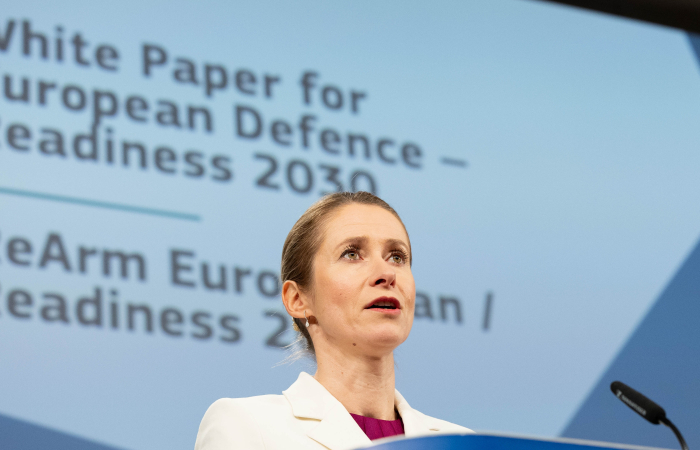
The EU Defence White Paper is a timely and important contribution to the debate on the future of Europe

The EU Defence White Paper is a timely and important contribution to the debate on the future of Europe

The Defence White Paper, published in Brussels on 19 March by the European Commission and the EU High Representative for Foreign Affairs and Security Policy, entitled “Joint White Paper for European Defence Readiness 2030” was a welcome, major contribution, to the debate on European Defence and Security. Unlike similar epistles coming out of Brussels, who one often wonders are written for whom, and by whom, the Defence White Paper is informative, candid and containing well-argued steps going forward. It gives the reader a good sense of the urgency of the situation and sets out clearly a set of steps aimed at addressing the urgency in a timely manner.
Editor's choice
News
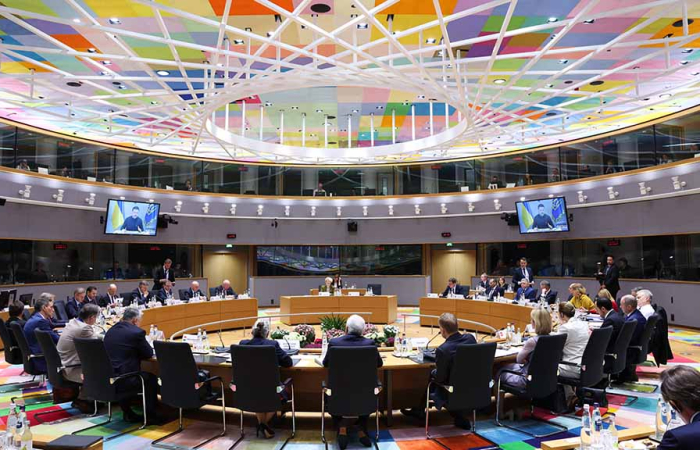
EU leaders vow to continue support for Ukraine but make no concrete pledge

EU leaders vow to continue support for Ukraine but make no concrete pledge

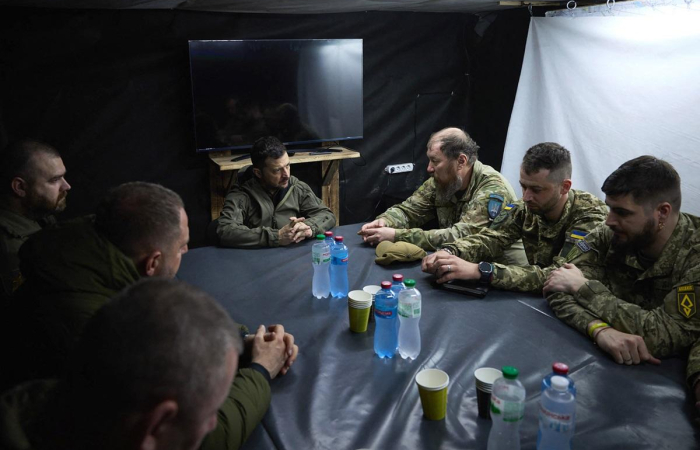
European Union leaders said on Thursday that they will continue to support Ukraine, but they did not immediately endorse a call by Ukrainian President Volodymyr Zelenskiy to provide at least 5 billion euros for artillery ammunition purchases. The EU’s leaders also discussed the Commission's defence proposals, which include a call for European countries to pool resources on joint military projects and buy more European arms.