

What lies between solution and resumption of the Nagorny Karabakh conflict?
Dr. Laurence Broers, Conciliation Resources
The risk of neglect and the neglect of risk
Although the lack of ongoing headline news about the Armenian-Azerbaijani conflict for Nagorny Karabakh (NK) means that it is rarely remembered or talked about, those closely watching it seem to share a rising sense of urgency. Next year it will be 20 years since the ceasefire; in the intervening period, although we have seen five different peace proposals and some near-misses for the peace process, the overall picture is one of entrenchment, increasing militarization and contagion of the conflict’s effects across all spheres of political life in Armenia and Azerbaijan.
Armenia and the Armenians of NK, victors of the three-year war in 1991-94, are committed to the status quo; in a commanding defensive position, they also occupy wide swathes of Azerbaijani territory beyond that originally under dispute. Territories once seen as chips to trade in a bargaining game have increasingly come to be portrayed and understood as organic – hence non-negotiable – Armenian lands. Letting go of them becomes more difficult with each passing day, yet holding onto them is also an affirmation of the use of force and the spoils of war, and undermines Armenian claims on other conflict issues.
Azerbaijan is the revisionist challenger seeking to change the status quo, transformed over the last five years by Caspian petrodollars into a wealthy regional hub, and the driver of an arms race to which it is committed to spending $4 billion a year. Belligerent rhetoric and military display have become part of the public face of the Aliyev regime, closing off space for non-violent alternatives. To this day, no one knows what “the highest level of autonomy in the world” promised to Karabakh Armenians means; the only reference point is the Soviet-era Nagorno-Karabakh Autonomous Region, taking us back twenty-five years to the root causes of the conflict. Although a soft power strategy to drive a non-violent transformation of the conflict was possible and feasible, over the last decade Azerbaijan has consistently gone for the hard power option.
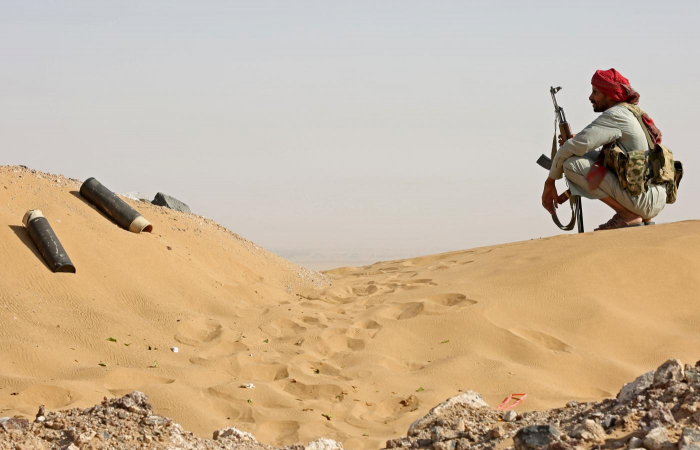
Tensions and mutual threats are not new. But heightened militarism needs to be seen in the context of two other factors. First is the scale and scope of military deployment on the ground. Along a 160-mile Line of Contact (LOC), some 40,000 Armenian and Azerbaijani troops, many of them raw conscripts, face off against one another. With regular probes testing adversarial capacities, casualties along the LOC have been more frequently reported in recent years. Accidental war, an unintended escalation that gets out of hand, is a real risk. There are no hotlines across the frontline, and international capacities to investigate incidents are minimal. Furthermore, newly acquired hardware would make a new Karabakh war far more destructive and wide-ranging than the 1991-94 war. Patterns of geopolitical alliance mean that spillover effects could be difficult to contain; a five-day war of the kind witnessed in Georgia in 2008 is unlikely. The concern that Armenian and Azerbaijani leaderships have worked themselves into a fearsome game of blink, with very little room for maneuver, is therefore legitimate.
The second factor is the slow-burning degradation of state-society relations in both Armenia and Azerbaijan. The politics of diversity, pluralism and opposition has become an increasingly dangerous game in both Armenia and Azerbaijan – dangerous for those challenging power, a game for those who hold it. The number of Armenians voting with their feet by leaving the country is a serious concern in Armenia, while Azerbaijan has been rocked by eruptions of popular protest against local misgovernment. The type of exile might differ – external or internal – but one thing is clear: rising militarism is happening in a context of increasingly impoverished and dysfunctional state-society relations across the conflict. We ignore this context at our peril.
Unfreezing our thinking
What should actors in the international community do? First, we need to update our conceptual toolkit. The Karabakh conflict is still widely thought of as a ‘frozen conflict’, or a situation of “no war, no peace”, or a “post-Soviet” conflict; these inherently static, retrospective and intellectually lazy categories invite a sense of complacency not warranted by the situation on the ground today. This conflict has increasingly less in common with Transnistria or Abkhazia, and increasingly more with enduring interstate rivalries of the kind seen between India and Pakistan, the two Koreas or the kinds of rivalry that Israel and some of its Arab neighbours have engaged in. It might sound pessimistic, but comparative learning with these contexts – alongside cases of successful resolution – would seem appropriate.
Second, if we accept this kind of reframing of the conflict, it follows that we should also review our strategies for resolving it. We’ve lived for many years with the notion that an internationally mediated peace process is moving incrementally towards an agreement. However, it’s also clear from the history of the Karabakh peace talks that this idea is sharply at odds with real processes, both controlled and uncontrolled, ongoing in Armenia and Azerbaijan. Rather than the conflict, it is the peace process that has been frozen, like the surface of a frozen over river, beneath which unknown currents keep flowing.
The unbearable starkness of choices
The gap between expectation of progress and the reality of impasse is a huge disconnect in our thinking and strategizing. There is a view that keeping the peace process frozen is a lesser evil, and that conflict management is as much as we can hope for. This is a position hugely compounded by the starkness of the options that are the staple of Karabakh debates and discussions. It seems that there is only a choice between a peace deal, which at this point in time seems utopian bordering on the fantastic, or a new all-out war. This is an all or nothing choice, whichever way you look at it. All or nothing choices are hugely appealing for semi-authoritarian leaders reliant on symbolic politics, yet they have stark implications for those closest to frontlines, present and future. Why has the horizon of possibility come to be defined in such stark and narrow terms, and by whom? Although there will be Azerbaijani objections against entrenching the status quo, and Armenian objections concerning security, I believe a priority for the Karabakh peace process is to open up and diversify this two-option menu.
There are a number of European peacebuilding organizations working with local partners towards this goal, including a European Union-funded consortium, known as the European Partnership for the Peaceful Resolution of the Conflict over Nagorno-Karabakh (EPNK). We support Armenian-Azerbaijani initiatives for research and dialogue, people to people contacts, cross-border media work and activism with youth, women and displaced communities. Outsiders familiar only with the information war in the international media, when exposed to this work are invariably surprised at the level of interaction achieved. But these efforts remain, unfortunately, low profile. Budgets are a fraction of what is spent on slick state-funded publicity campaigns or new military hardware. Our partners in civil society are engaged on multiple fronts, not just on peacebuilding. And many – insiders and outsiders alike – find the oil and gas agenda more compelling than regional peace.
Between solution and resumption: what can be done?
These are some of the reasons why it’s difficult to carve out a third way between a new war and an excessively utopian peace deal. Yet there is a wide middle-range of policy options that could be deployed, primarily by the governments of Armenia and Azerbaijan, to introduce a new dynamic to the current situation. Opening up the middle range could mean first and foremost abandoning the rhetoric of war and the staging of military spectacle, because in the words of one of our partners, “even the best peace deal would fail in the current climate”. More tangibly in terms of conflict prevention, it could mean withdrawal of snipers, re-establishment of hotlines crossing the frontline, and establishment of more robust incident investigation mechanisms by international organizations working with Armenian and Azerbaijani forces.
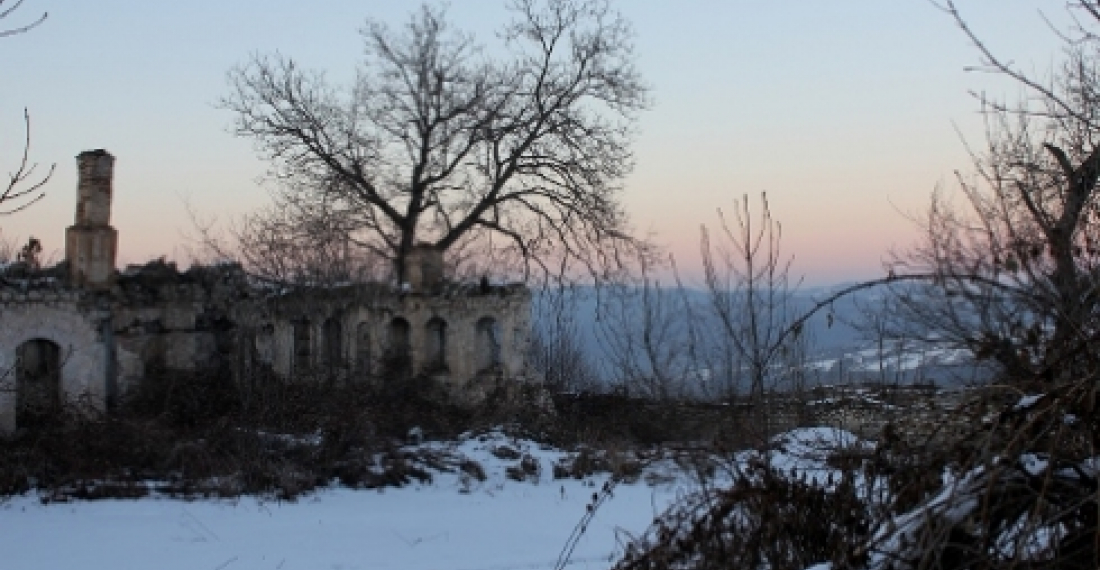
Cross-border visits, which were quite regular prior to 2003, need to be reintroduced into the repertoire of Armenian-Azerbaijani initiatives. Displaced persons should be enabled to visit their former communities in safety and dignity to re-establish ties for those who wish to do so; these need to be reciprocal, i.e. on both sides of the conflict, to secure legitimacy. Pilot withdrawals from limited territories could open up scope for pilot projects supporting displaced community return; the restoration of monuments and their collaborative curation could serve as a bridge between communities, instead of being used as symbols of their destruction. Rather than spending money on new books trying to prove that Armenians don’t belong in the Caucasus, Azerbaijan could establish an Armenian Cultural Fund in Azerbaijan, restoring heritage collaboratively and reversing the destructive trends of recent years. And rather than allowing and promoting maps that depict the spoils of war as organic Armenian territory, Armenia and NK can start planning for the more comprehensive release of occupied territory back to Azerbaijani jurisdiction.
There are many objections, primarily from those in power, to such ideas, which are no doubt deemed naïve, unfeasible and dangerous; they entrench the status quo, they compromise security. Yet these ideas are vastly more modest than those contained in the Madrid Principles that have been discussed at the negotiating table at the highest level for more than five years. What such initiatives could achieve is the release of Armenian and Azerbaijani societies from a permanently securitized politics of existential threat and all or nothing choices. What is the alternative? If there is a ‘positive’ middle range that is more realistic than a utopian peace deal, then there is also a ‘negative’ middle range that is more real than a new war. This is what we have today: the slow poisoning of all domains of Armenian and Azerbaijani social and political life by the conflict, rewards for those who can control and deploy it as a weapon in domestic struggles, and growing risk that at some point they will lose control – and confront an unknown tiger of their own making.
Dr. Laurence Broers is Caucasus Project manager at Conciliation Resources. He contributed this article to commonspace.eu.