“Time is not on the side of either the mediators or the parties in the Karabakh conflict”.

Former co-Chair of the OSCE Minsk process, retired French diplomat Jacques Faure, on Friday told participants of the 89th Rose Roth Seminar organized by the NATO Parliamentary Assembly in Yerevan that despite the fact it was unlikely that a full war will start in Karabakh soon, incidents will continue and maybe increase. Faure said that military reforms were taking place within the Azerbaijan army but were not completed. The country had purchased large quantities of arms but training on them was still not finished. But he warned that time "was not on the side of neither the mediators nor the parties involved in the Karabakh conflict".

Faure was speaking in a panel discussing the role of mediation in the current Nagorno-Karabakh conflict.

Opening the discussion the Deputy Minister of Foreign Affairs of Armenia, Ashot Hovakimian spoke of a deteriorating situation on the front line since July 2014, including the use of large caliber weapons, sabotage and the targeting of civilians. He said that the OSCE Co-Chair mediators had reminded Azerbaijan of the need to respect the cease fire and the peace process. Hovakimian said that Armenia always supported confidence building measures in all forms and believes that without trust and mutual confidence no solution to the conflict is possible. Deputy Foreign Minister Hovakimian said that Armenia has the political will to resolve the conflict and had shown this in the negotiations, but that Azerbaijan lacked this political will.

Zaur Shiriev, Researcher at Chatham House in London said that there was a huge gap between expectations of what the Minsk Group can do, and the actual track record of what they had practically delivered. Azerbaijan wants either to get rid of the redundant Minsk Group or revise its format by adding other countries to reinvigorate the process. What was important was not the number of co-chairs but how to improve the format and make it more efficient. Shiriev said that the Madrid principles must be transformed into a framework agreement as a basis for starting negotiations on a comprehensive peace agreement. As they stand the Madrid principles are subject to different interpretations. Shiriev spoke about the importance of having a timeline to which all sides would be expected to adhere, and said this will increase public confidence in the process. Shriev also proposed that each side should widen the negotiating process by establishing a peace commission and that the two commissions could then work to develop confidence building measures.

Laurence Broers, Caucasus Programme Associate at Conciliation Resources said that since it was created in 1992 the Minsk Group had produced five clusters of key ideas for the resolution of the conflict. The first four were not very long-lasting but the fifth cluster, which eventually came to be known as the Madrid Principles were presented in 2007 and remain on the table. They now constitute the basis on which all the negotiations hinge, but the Minsk Process has no plan, and the ability of the Madrid Principles to be the basis for a solution to the Karabakh conflict is less than it seems.. No eureka moment for a break-through is expected in the peace process but for a number of reasons both sides see advantages in remaining engaged with it, although the Azerbaijani side criticizes it from time to time. Broers said that the international community, and particularly the west, has little leverage on the sides, and therefore more energy needs to be spent on persuasion and on developing new ideas. He suggested that the peace process be "brought home" with meetings of the Foreign Ministers held in Armenia and Azerbaijan and Nagorno-Karabakh, and said that there needs to be much more investment in work with societies. He criticized the "ritual condemnation of elections in Nagorno-Karabakh" by the international community which he said was not helpful.

In his remarks to the panel Jacques Faure explained the work done by the Minsk Group co-Chair, sometimes at personal risk. He said the co-Chair worked regularly with the Foreign Ministers on both sides, who often refer matters back to their presidents. The co-Chair work with the agreement of both sides, but there was a lack of trust at the highest level. Faure chastised those who criticize the work of the Minsk group or are proposing changing the composition of the group, and said that this was highly risky.

Among those attending the seminar were two representatives from Nagorno-Karabakh. Karen Topohyan welcomed what he described as a rare opportunity to participate in such an international event, but emphasized the need that Nagorno-Karabakh is represented in the negotiations.

This morning's discussion was chaired by Portuguese Member of Parliament Julio Miranda Calha. Members of Parliament from NATO countries and NATO partner countries are attending the event in Yerevan, however the Azerbaijani and Turkish Delegations to the NATO Parliamentary Assembly are not present.

The meeting will end on Saturday with a discussion on the domestic political situation in the South Caucasus.

Source: commonspace.eu

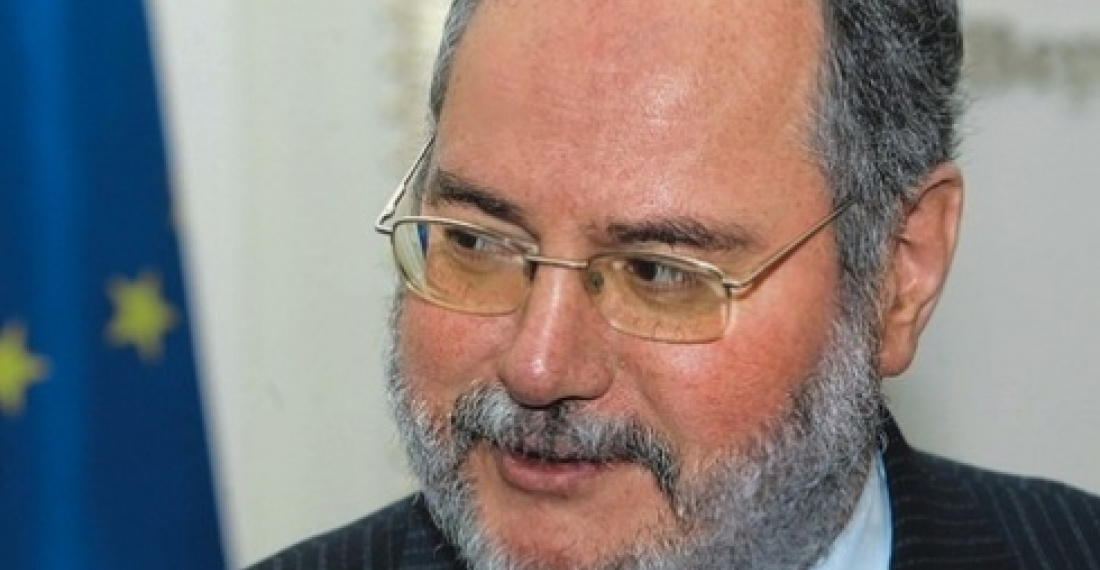
photo: French diplomat Jacques Faure (photo from archive)
Related articles

Editor's choice
News
Council of Europe launches new International Claims Commission for Ukraine

Council of Europe launches new International Claims Commission for Ukraine

Thirty-four countries and the European Union have signed a new convention establishing an International Claims Commission for Ukraine at a diplomatic conference co-hosted by the 46-nation Council of Europe and the Netherlands in the Hague. The diplomatic conference was attended by leaders and high-level representatives from over 50 states, including the President of Ukraine, Volodymyr Zelenskyy, the President of the Republic of Moldova, Maia Sandu, and the Prime Minister of the Netherlands, Dick Schoof.  “Today marks a major step forward in ensuring accountability for Ukraine. The International Claims Commission represents justice and hope for tens of thousands of victims—our determination that those who have suffered will not be forgotten. I call for quick ratifications so we can get the commission rapidly up and running for the people of Ukraine,” said Council of Europe Secretary General Alain Berset. Ukrainian President Volodymyr Zelenskyy said: “We expect that every mechanism for compensation from the Register of Damage and Claims Commission to the actual payments – will start working and receive strong and sufficient international support, so that people can truly feel that any kind of damage caused by the war can be compensated. This war, and Russia’s responsibility for it, MUST become a clear example – so that others learn not to choose aggression.” “Accountability is about creating the conditions for peace that endures. And therefore, accountability is a condition of security – today and for the future. But accountability is not only about Ukraine. And it is not only about one aggressor and one victim. Accountability is about Europe. About every country in Europe. It is about whether Europe, as a whole, is willing to defend its peace,” said Maia Sandu, President of the Republic of Moldova, which currently holds the Presidency of the Council of Europe’s Committee of Ministers. The Prime Minister of the Netherlands, Dick Schoof, said: “Every day Russia is deliberately bombarding homes, destroying businesses and damaging infrastructure in Ukraine. Russia must compensate Ukraine for the damage caused. That is why we have launched the International Claims Commission for Ukraine and we are honoured to host it.” The International Claims Commission will be the second part of a comprehensive compensation mechanism related to Russia’s war of aggression, building on the existing Register of Damage for Ukraine. The claims commission will be established within the framework of the Council of Europe and will also be open to other countries. The Register of Damage for Ukraine, created in 2023, collects and records compensation claims submitted by individuals, organisations and public bodies in Ukraine. Forty-four states and the European Union have so far joined the Register, which has already received 86,000 claims. The International Claims Commission will review, assess and decide upon claims submitted to the Register of Damage for Ukraine and determine the amount of compensation, if any, which is due in each case. The convention establishing the commission will enter into force once it has been ratified by 25 signatories, as long as sufficient funds have been secured to support its initial work.

Popular

Editor's choice
News
Council of Europe launches new International Claims Commission for Ukraine

Council of Europe launches new International Claims Commission for Ukraine

Thirty-four countries and the European Union have signed a new convention establishing an International Claims Commission for Ukraine at a diplomatic conference co-hosted by the 46-nation Council of Europe and the Netherlands in the Hague. The diplomatic conference was attended by leaders and high-level representatives from over 50 states, including the President of Ukraine, Volodymyr Zelenskyy, the President of the Republic of Moldova, Maia Sandu, and the Prime Minister of the Netherlands, Dick Schoof.  “Today marks a major step forward in ensuring accountability for Ukraine. The International Claims Commission represents justice and hope for tens of thousands of victims—our determination that those who have suffered will not be forgotten. I call for quick ratifications so we can get the commission rapidly up and running for the people of Ukraine,” said Council of Europe Secretary General Alain Berset. Ukrainian President Volodymyr Zelenskyy said: “We expect that every mechanism for compensation from the Register of Damage and Claims Commission to the actual payments – will start working and receive strong and sufficient international support, so that people can truly feel that any kind of damage caused by the war can be compensated. This war, and Russia’s responsibility for it, MUST become a clear example – so that others learn not to choose aggression.” “Accountability is about creating the conditions for peace that endures. And therefore, accountability is a condition of security – today and for the future. But accountability is not only about Ukraine. And it is not only about one aggressor and one victim. Accountability is about Europe. About every country in Europe. It is about whether Europe, as a whole, is willing to defend its peace,” said Maia Sandu, President of the Republic of Moldova, which currently holds the Presidency of the Council of Europe’s Committee of Ministers. The Prime Minister of the Netherlands, Dick Schoof, said: “Every day Russia is deliberately bombarding homes, destroying businesses and damaging infrastructure in Ukraine. Russia must compensate Ukraine for the damage caused. That is why we have launched the International Claims Commission for Ukraine and we are honoured to host it.” The International Claims Commission will be the second part of a comprehensive compensation mechanism related to Russia’s war of aggression, building on the existing Register of Damage for Ukraine. The claims commission will be established within the framework of the Council of Europe and will also be open to other countries. The Register of Damage for Ukraine, created in 2023, collects and records compensation claims submitted by individuals, organisations and public bodies in Ukraine. Forty-four states and the European Union have so far joined the Register, which has already received 86,000 claims. The International Claims Commission will review, assess and decide upon claims submitted to the Register of Damage for Ukraine and determine the amount of compensation, if any, which is due in each case. The convention establishing the commission will enter into force once it has been ratified by 25 signatories, as long as sufficient funds have been secured to support its initial work.