Bulgaria’s April 2026 election saw a sweeping win for ex-President Rumen Radev’s Progressive Bulgaria party. While much international coverage focused on Radev’s perceived stance toward Russia, the more consequential story lies at home: his victory was shaped by youth-driven discontent that intensified after the collapse of the government led by Zhelyazkov in December 2025.
Young Bulgarians, particularly those in Generation Z, turned out in significant numbers, alongside previously disengaged voters. Their mobilisation appears to have been driven less by ideology than by frustration with entrenched corruption, weak economic prospects, and a broader sense that Bulgaria has struggled to offer a viable future for its younger generation.
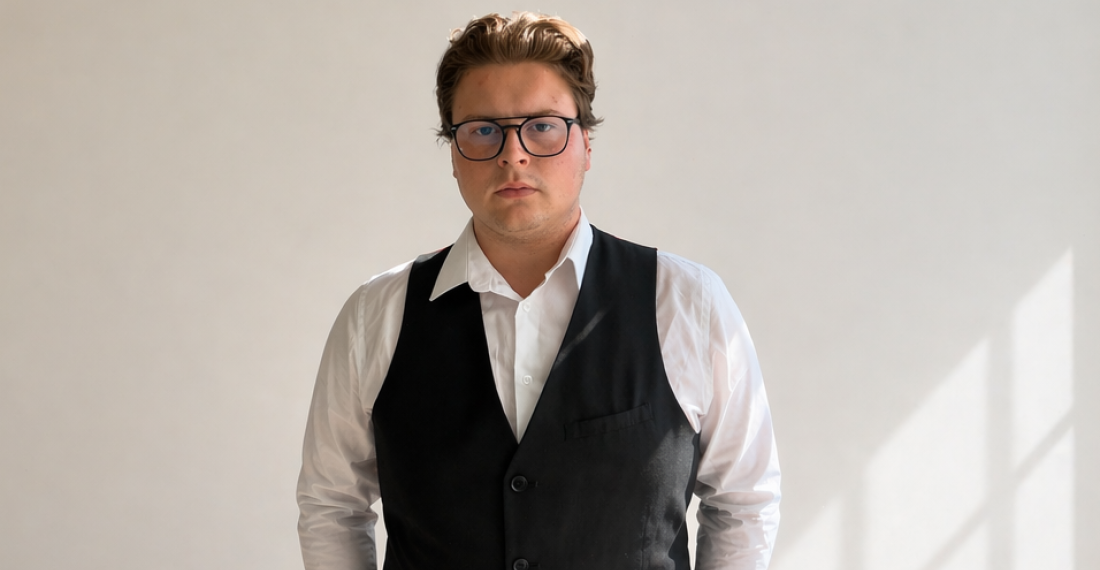
This week, Thursday Interview returns with Dimitar Borumov, a 23-year-old Bulgarian political economist, teacher of Bulgarian history, geography, and economy, and columnist at The European Times. We discuss the surge in youth participation, the frustrations and divides behind it, and how social media is shaping political news consumption among young Bulgarians.
“Young people were already taking to the streets in December 2025. That was a clear indicator that they wanted change. They wanted to change what I would call, cynically, the ‘rotten system’, the status quo they were tired of.
What Radev proposed was not a specific policy, apart from judicial reform. It was not directed against a specific party or person. It was a broader alternative, framed around a stronger Bulgaria.”
Read the full text of our conversation below:
Welcome, Mr. Borumov. Could you please introduce yourself to our audience?
Sure, thank you very much for the invitation. My name is Dimitar Borumov, and I’m a Bulgarian political economist currently based in The Hague.
I moved to the Netherlands when I was 18 to study International Studies, and later completed a Master’s in Political Economy, focusing on international relations and political economy.
Alongside that, I teach Bulgarian history, geography, and economy at a Bulgarian school here in The Hague. I’m also involved in interfaith dialogue through the United Religions Initiative, where I’m part of the Europe Earth Healing Team.
I also write a column for The European Times, where I focus on issues often overlooked in conventional economic debates.
When you discuss Bulgarian politics with friends or family, do you feel understood, or do you feel there is a generational divide in how people see Bulgaria’s future?
I do think there is a divide, but I would not necessarily call it generational.
As for whether I feel understood, I would say yes. People I speak to generally know where I come from, in terms of my background, political understanding, and what I believe in. Whether they agree with that is another matter. When I speak to family, for example, we do quarrel, but it is more a lack of agreement than a lack of understanding.
More broadly, I believe there is a deep societal divide in Bulgaria. We have now had the eighth round of elections in five years, which is a clear indicator that something is wrong in the Bulgarian political landscape, or more broadly in Bulgarian society.
I would not call it generational because there are many different opinions within each generation. I see more of an intragenerational divide than an intergenerational one.
Broadly, I see three types of young people. The first is pro-European Union: people who support the continuation of Bulgaria’s European integration, including joining Schengen and, as of 1 January 2026, the Eurozone.
The second is what I would call a “socialist nostalgic Gen Z”. These are young people between 18 and 30 who never lived in socialist Bulgaria, yet are somehow nostalgic for that period and how things supposedly used to be.
The third group is made up of those who simply do not care about what is going on politically.
These divisions are not limited to one generation. I also see similar ones among older Bulgarians, including those who actually lived through socialism.
From a political economy perspective, I would say that those who are pro-European tend to be people who suffered under socialism in one way or another, while those who are more pro-Eastern, or pro-Moscow, tend to be those who had less before socialism and felt more secure during that period. With the transition to democracy 35 years ago, many felt they lost that security.
So yes, there is a divide in Bulgarian society, but I would not call it generational. There are different types of people within each generation.
Western media largely focused on Rumen Radev’s “pro-Russian” reputation, though many young Bulgarians seemed more concerned with domestic issues. Why do you think so many young Bulgarians voted this time, and what issues or promises do you think motivated you or your peers to participate?
Radev has very much been portrayed as a pro-Moscow leader in Western media, but in Bulgaria people focus first and foremost on domestic issues. Before a country can start fixing the world or serving as a moral example, it needs to deal with its own problems. I think this is why many people voted for Radev as well.
This was, in many ways, another populist wave in Bulgaria. There was a status quo, people did not like it, and someone else appeared offering something different. Not necessarily concrete promises, but an alternative.
On the idea of him being a destabiliser, I do not think that should be the main focus. Yes, Radev has the numbers in parliament to form a government, but reversing Bulgaria’s European integration, whether on the euro or Schengen, would not be easy for anyone to do. So I do not think we should primarily be talking about destabilisation from a European perspective. We should focus on the domestic issues that motivated voters.
We have seen relatively high turnout in recent years. More than half of eligible voters cast their ballots this time. Abroad, many people waited for hours at polling stations, and some could not vote because of time constraints.
Young people were already taking to the streets in December 2025. That was a clear indicator that they wanted change. They wanted to change what I would call, cynically, the “rotten system”, the status quo they were tired of.
What Radev proposed was not a specific policy, apart from judicial reform. It was not directed against a specific party or person. It was a broader alternative, framed around a stronger Bulgaria.
So I think young people wanted to vote. They showed it in the protests, and then they showed it again at the ballot box. How they voted, why they voted that way, and what will happen next are different questions. But I do think it was time for Bulgaria to have a stable government, and hopefully we will have one now.
That said, stability also raises questions. Previously, Bulgarian parliaments were fragmented, with five, six, or seven parties struggling to form coalitions. Now power is concentrated in one political formation. That creates another kind of risk: how much power should one party in a democratic country hold, and how quickly should it be able to pass laws?
At the same time, Radev’s political formation is relatively new. The people in it are either new to Bulgarian politics or come from different political backgrounds, including the Socialist Party and others. So it is one thing to have enough people to form a government, and another to mobilise them consistently in one direction. Whether this formation will be able to do that remains to be seen.
It has been noted that many young Bulgarians bypass traditional media and get political news through social platforms and influencers. How do you think younger people evaluate political messages, especially when it comes to spotting bias or propaganda?
For example, my students at the Bulgarian School rely much more on social media than on traditional media. Three of my students recently turned 18 and were eligible to vote, and their primary sources of information were TikTok and Instagram. On the one hand, I would say this is very normal. It is part of a transition that is naturally happening.
As for propaganda and bias, I would say they exist globally across all media. They exist in newspapers, on television, and on social media. Of course, it is easier to talk about propaganda on social media because of the techniques that exist nowadays, with bot farms and so on.
It is now much easier to spread a political message using thousands of fake accounts with just a few clicks, and these campaigns may not even come from the country they are targeting. That can influence people who are less aware of how such mechanisms work.
I am a great believer in first learning about an issue and then discussing it and looking for solutions. Education is key when it comes to limiting the influence of propaganda, because we cannot fully control its existence.
To some extent, propaganda is now an integral part of social media. Unfortunately, that is the reality. But what we can do is inform ourselves, become more aware, and learn how these mechanisms work.
At the same time, getting information only through social media, by which I mean Instagram, TikTok, and similar platforms, can be very biased. But this is the direction the world is going in, and we cannot stop it. So instead of trying to resist it, we should adapt to it and educate those who have not experienced traditional media.
Traditional outlets themselves have moved online and created Instagram and TikTok accounts in order to keep up. This is an inevitable development. The question is not how to stop it, but how to use it better.
The more informed we are, and the more aware we are of how propaganda and bias work, the more objective an opinion we can form, and the better we can use newer platforms for news and information to our own benefit.
Many young people have cited issues such as job prospects, economic opportunity, and corruption as reasons to become politically engaged. What would you ask the new government or political leaders to do to keep Gen Z engaged and convince young Bulgarians that Bulgaria is a place worth staying in and building a future in?
I would say that the gap between generations in Bulgaria has narrowed, at least in the sense that more political leaders are now trying to involve young people in their campaigns. Whether this is a populist move or a genuine attempt to engage young people, I do not know.
Again, I would point to the protests of December 2025. The fact that young people took to the streets means they are becoming more politically aware.
This growing awareness can mean two things: either they want to be directly engaged in politics, by becoming part of decision-making, or indirectly, by electing their representatives in parliament. Either way, that is already a significant development.
However, I do not think that alone is enough for the Bulgarian political landscape. Even though many familiar faces remain in parliament, the new political formation is new, and it did not make many specific promises. Interestingly, that may actually have helped it. The fact that it did not make empty promises, unlike parts of the previous status quo, was one of the reasons many people voted for it. As for whether Bulgaria is a place worth staying in and building a future in, it is difficult for me to answer fully, because I have lived abroad for the past five years.
What I can say is that I believe in the future of Bulgarian society in Bulgaria. I believe Bulgarian people are capable of much more than what we are currently seeing politically.
There is potential in what is happening now, mainly from a domestic perspective. I believe the new political structure will first focus on domestic issues in order to respond to voters, and only later move to broader foreign policy questions, which would hopefully continue Bulgaria’s European path.
Bulgaria is a beautiful country. I am proud to have been born Bulgarian, and proud to call myself Bulgarian. Whether the current political landscape will create a better environment for people like me to return and contribute to the country’s future remains to be seen. But I do hope we are on the right path.
I also hope that Bulgaria continues on its European path, because so far it has taken significant steps towards European integration, including Schengen and the Eurozone.
For me, this is the path towards a stronger Bulgaria within a stronger Europe, and towards an environmentally, politically, and economically sustainable future. Above all, sustainability should be about people. The focus should be on people first.