Theme

Diplomacy

Editor's choice
News
Key European countries back Denmark in the face of Trump's continuing insistence on taking over Greenland

Key European countries back Denmark in the face of Trump's continuing insistence on taking over Greenland

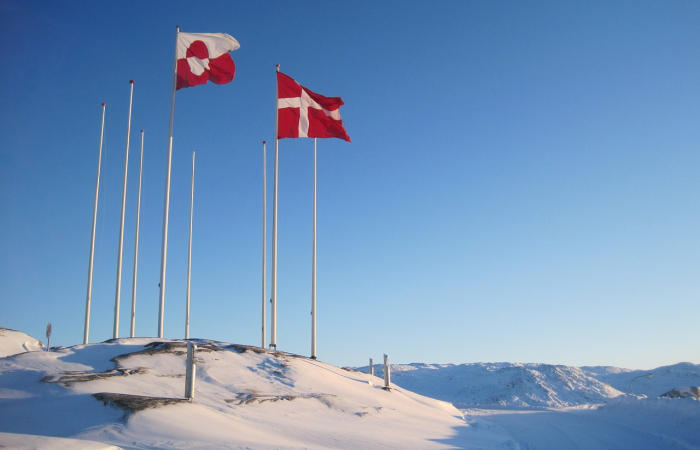
 Six major European countries have declared their support to Denmark following renewed insistence by the US that it must have control over Greenland. "Greenland belongs to its people, and only Denmark and Greenland can decide on matters concerning their relations," said the leaders of the UK, France, Germany, Italy, Poland, and Spain, in a joint statement, issued on Tuesday (6 January), together with Denmark. On Sunday, Donald Trump said the US "needed" Greenland - a semi-autonomous region of fellow Nato member Denmark - for security reasons. He has refused to rule out the use of force to take control of the territory, and Danish Prime Minister Mette Frederiksen warned on Monday that an attack by the US would spell the end of Nato. The issue of Greenland's future resurfaced in the wake of the US military intervention in Venezuela, during which elite troops went in to seize the country's President Nicolás Maduro and take him to face drugs and weapons charges in New York. Following the raid, Trump said the US would "run" Venezuela for an unspecified period of time. He also said the US was returning to an 1823 policy of US supremacy in its sphere of influence in the Western hemisphere - and he warned a number of countries the US could turn its attention to them. The US military raid in Venezuela has reignited fears that the US may consider using force to secure control of Greenland. A day after the raid, Katie Miller - the wife of one of Trump's senior aides - posted on social media a map of Greenland in the colours of the American flag, alongside the word "SOON". On Monday, her husband Stephen Miller said it was "the formal position of the US government that Greenland should be part of the US". In an interview with CNN, he also said the US "is the power of Nato. For the US to secure the Arctic region, to protect and defend Nato and Nato interests, obviously Greenland should be part of the US." Asked repeatedly whether the US would rule out using force to annex it, Miller responded: "Nobody's going to fight the US over the future of Greenland." Stressing they were as keen as the US in Arctic security, the seven European signatories of Tuesday's joint statement said this must be achieved by Nato allies, including the US "collectively" - whilst "upholding the principles of the UN Charter, including sovereignty, territorial integrity and the inviolability of borders". Greenland's Prime Minister Jens-Frederik Nielsen welcomed the statement and called for "respectful dialogue". "The dialogue must take place with respect for the fact that Greenland's status is rooted in international law and the principle of territorial integrity," Nielsen said. Trump has claimed that making Greenland part of the US would serve American security interests due to its strategic location and its abundance of minerals critical to high-tech sectors. Greenland, which has a population of 57,000 people, has had extensive self-government since 1979, though defence and foreign policy remain in Danish hands. While most Greenlanders favour eventual independence from Denmark, opinion polls show overwhelming opposition to becoming part of the US.
Editor's choice
News
Donald Tusk: "One for all, and all for one! Otherwise we are finished."

Donald Tusk: "One for all, and all for one! Otherwise we are finished."

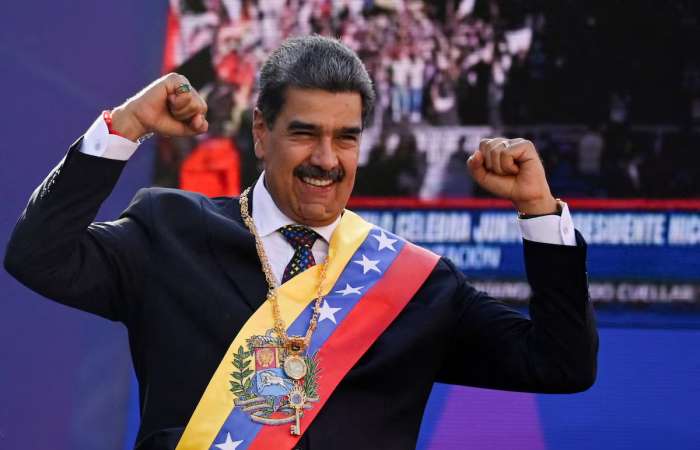
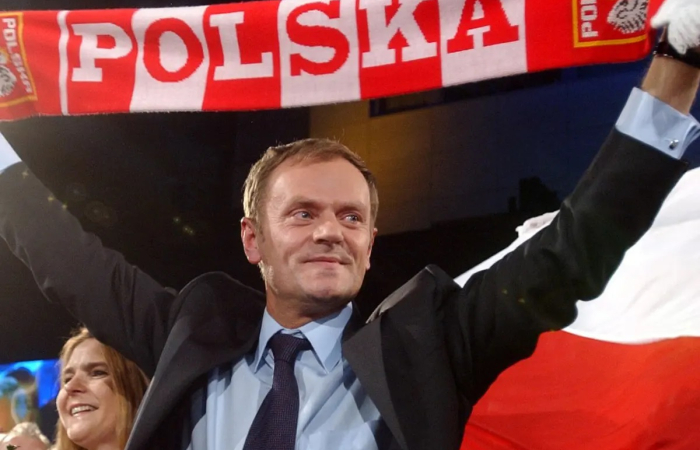
Europe is rattled by events in Venezuela, and there are serious concerns that US disregard for international law may have consequences close to home.  The BBC diplomatic correspondent, James Landale, said, the question is how Europe may respond in the longer term to America's military operation in Venezuela. Will it provide a catalyst for the continent to take greater responsibility for its own security in the face of so much instability from what many see as an unreliable ally? Polish prime minister, Donald Tusk, appears to have answered the question, saying on social media: "No-one will take seriously a weak and divided Europe: neither enemy nor ally. It is already clear now. "We must finally believe in our own strength, we must continue to arm ourselves, we must stay united like never before. One for all, and all for one. Otherwise, we are finished." The US seizing of Venezuela's leader has faced strong criticism from both America's friends and foes at an emergency meeting of the United Nations Security Council, held on Monday, 5 January. Many member states agreed with the US that Nicolás Maduro had been an illegitimate and repressive leader. But many also condemned the US military action as a breach of international law and the UN Charter, and they demanded a democratic transition that reflected the will of the Venezuelan people. (click the image to read the full article).

Filter archive

Publication date
Editor's choice
Opinion
Opinion: The future of the China-US-Russia triangle after Pelosi's visit to Taiwan

Opinion: The future of the China-US-Russia triangle after Pelosi's visit to Taiwan

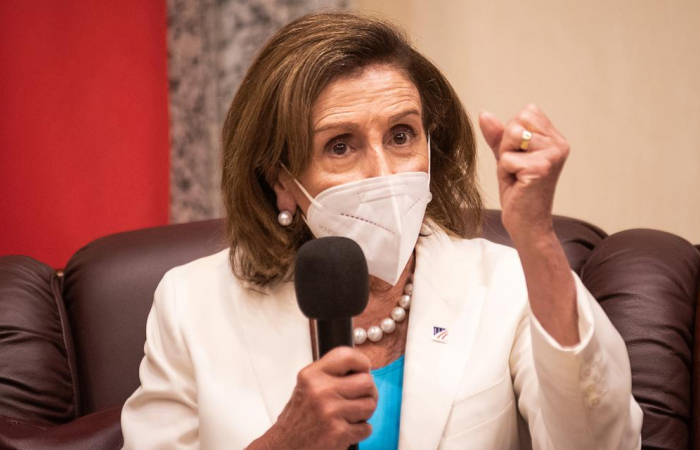
Since February 24, 2022, the international community's focus was concentrated entirely on the war in Ukraine and the growing Russia – West confrontation. It seemed that nothing could change the situation until the end of hostilities in Ukraine. However, on August 2 and 3, almost everyone’s attention shifted from Ukraine to Taiwan. As the Speaker of the US House of Representatives, Nancy Pelosi, stated her intention to visit Taiwan, up to half a million people were watching the trajectory of her plane on air flight tracking sites. The negative reaction of China, including the warning of President Xi during his conversation with President Biden that those who played with fire would be perished by it, created hype around this visit. Many were discussing the possibility of Chinese military jets closing the airspace over Taiwan and preventing Pelosi’s plane from landing in Taiwan, while some enthusiasts were even contemplating the possibility of a US-China direct military clash. As Pelosi landed in Taiwan and met with the Taiwanese President, the global social media was full of amateur assessments about the strategic victory of the US and the confirmation of the US global hegemony. However, as the dust settles down, and information noise and manipulation eventually decreases, a more serious assessment is needed to understand the real consequences of this visit.
Editor's choice
News
Key European countries back Denmark in the face of Trump's continuing insistence on taking over Greenland

Key European countries back Denmark in the face of Trump's continuing insistence on taking over Greenland

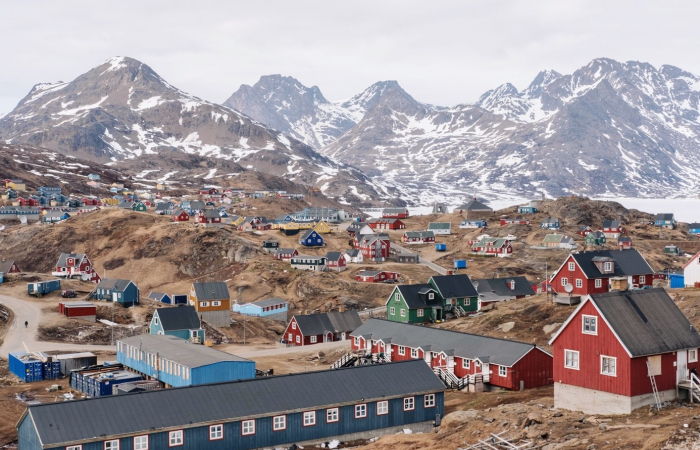
 Six major European countries have declared their support to Denmark following renewed insistence by the US that it must have control over Greenland. "Greenland belongs to its people, and only Denmark and Greenland can decide on matters concerning their relations," said the leaders of the UK, France, Germany, Italy, Poland, and Spain, in a joint statement, issued on Tuesday (6 January), together with Denmark. On Sunday, Donald Trump said the US "needed" Greenland - a semi-autonomous region of fellow Nato member Denmark - for security reasons. He has refused to rule out the use of force to take control of the territory, and Danish Prime Minister Mette Frederiksen warned on Monday that an attack by the US would spell the end of Nato. The issue of Greenland's future resurfaced in the wake of the US military intervention in Venezuela, during which elite troops went in to seize the country's President Nicolás Maduro and take him to face drugs and weapons charges in New York. Following the raid, Trump said the US would "run" Venezuela for an unspecified period of time. He also said the US was returning to an 1823 policy of US supremacy in its sphere of influence in the Western hemisphere - and he warned a number of countries the US could turn its attention to them. The US military raid in Venezuela has reignited fears that the US may consider using force to secure control of Greenland. A day after the raid, Katie Miller - the wife of one of Trump's senior aides - posted on social media a map of Greenland in the colours of the American flag, alongside the word "SOON". On Monday, her husband Stephen Miller said it was "the formal position of the US government that Greenland should be part of the US". In an interview with CNN, he also said the US "is the power of Nato. For the US to secure the Arctic region, to protect and defend Nato and Nato interests, obviously Greenland should be part of the US." Asked repeatedly whether the US would rule out using force to annex it, Miller responded: "Nobody's going to fight the US over the future of Greenland." Stressing they were as keen as the US in Arctic security, the seven European signatories of Tuesday's joint statement said this must be achieved by Nato allies, including the US "collectively" - whilst "upholding the principles of the UN Charter, including sovereignty, territorial integrity and the inviolability of borders". Greenland's Prime Minister Jens-Frederik Nielsen welcomed the statement and called for "respectful dialogue". "The dialogue must take place with respect for the fact that Greenland's status is rooted in international law and the principle of territorial integrity," Nielsen said. Trump has claimed that making Greenland part of the US would serve American security interests due to its strategic location and its abundance of minerals critical to high-tech sectors. Greenland, which has a population of 57,000 people, has had extensive self-government since 1979, though defence and foreign policy remain in Danish hands. While most Greenlanders favour eventual independence from Denmark, opinion polls show overwhelming opposition to becoming part of the US.
Editor's choice
News
Donald Tusk: "One for all, and all for one! Otherwise we are finished."

Donald Tusk: "One for all, and all for one! Otherwise we are finished."

Europe is rattled by events in Venezuela, and there are serious concerns that US disregard for international law may have consequences close to home.  The BBC diplomatic correspondent, James Landale, said, the question is how Europe may respond in the longer term to America's military operation in Venezuela. Will it provide a catalyst for the continent to take greater responsibility for its own security in the face of so much instability from what many see as an unreliable ally? Polish prime minister, Donald Tusk, appears to have answered the question, saying on social media: "No-one will take seriously a weak and divided Europe: neither enemy nor ally. It is already clear now. "We must finally believe in our own strength, we must continue to arm ourselves, we must stay united like never before. One for all, and all for one. Otherwise, we are finished." The US seizing of Venezuela's leader has faced strong criticism from both America's friends and foes at an emergency meeting of the United Nations Security Council, held on Monday, 5 January. Many member states agreed with the US that Nicolás Maduro had been an illegitimate and repressive leader. But many also condemned the US military action as a breach of international law and the UN Charter, and they demanded a democratic transition that reflected the will of the Venezuelan people. (click the image to read the full article).
Editor's choice
News
Keir Starmer: Only Greenland and Denmark should decide the future of Greenland

Keir Starmer: Only Greenland and Denmark should decide the future of Greenland

Only Greenland and Denmark should decide the future of Greenland, British Prime Minister Sir Keir Starmer has told the BBC. It comes after President Trump again said "we need Greenland from the standpoint of national security". Both Greenland's prime minister and Denmark's prime minister strongly rejected the idea over the weekend. Greenland's Prime Minister Jens Frederik Nielsen responded to Trump's latest comments by saying "that's enough now" and described the notion of US control over the island as a "fantasy". Meanwhile, Denmark's Prime Minister Mette Frederiksen had said "the US has no right to annex any of the three nations in the Danish kingdom". Asked whether he would also say to President Trump "hands off Greenland", Sir Keir's response was definitive, when so often in diplomacy answers are caveated and nuanced. "Yes," he replied. "Greenland and the Kingdom of Denmark must decide the future of Greenland and only Greenland and the Kingdom of Denmark. "And Denmark is a close ally in Europe, is a Nato ally and it is very important that the future of Greenland is for the Kingdom of Denmark and for Greenland themselves and only for Greenland and the Kingdom of Denmark."
Editor's choice
Opinion
Opinion: The US strikes Venezuela, Consequences for Ukraine and Europe

Opinion: The US strikes Venezuela, Consequences for Ukraine and Europe

This is a Flash Analysis published on 3 January 2026 by the European Policy Centre in Brussels. Chris Kremidas-Courtney is a Senior Visiting Fellow at the European Policy Centre. As 2026 barely takes its first breath, we are already drifting back into an age where great powers manage their own neighbourhoods and look away from everyone else’s. It’s a world order that prizes control over legitimacy and stability over justice until neither one survives. The most immediate consequence of the US strike on Venezuela may be felt not in Latin America, but first in Ukraine. As foreshadowed in the Trump administration’s National Security Strategy, Washington is intent on rooting its power firmly in the Western Hemisphere while potentially leaving Russia and China greater freedom of action in their ‘backyards’. Seen through this lens, the strike on Venezuela looks more like part of a broader reversion to regional spheres of influence. The emerging message is that the United States will enforce primacy close to home but its willingness to underwrite security beyond its hemisphere is increasingly transactional and politically fragile. This is a 21st century version of the 1823 Monroe Doctrine, in which US hemispheric dominance was paired with strategic disengagement from Europe’s wars. It is also the world Putin has long argued for. It is hard to see an upside for Europe, but there may be one small silver lining. Prior to the strike, Caracas had been demonstrating how a sanctioned regime could survive and adapt by embedding itself into alternative economic and financial networks backed by China, Russia and Iran. That resilience was undermining the credibility of sanctions as a systemic tool, on which the EU relies far more heavily than the United States. By decapitating the Maduro regime, Washington has reasserted that sanctions are not an end state, but a step on an escalation ladder that can still culminate in the use of force. Yet this restoration of the credibility of sanctions comes at a great cost. It risks signalling to other revisionist or embattled regimes that force is the ultimate arbiter. All eyes are now on Moscow, since, as former US National Security Council official Fiona Hill testified in 2019, Russia had informally offered to end its support for Venezuela in exchange for US acquiescence on Ukraine.  Meanwhile, online advocates in China are calling on their regime to emulate the US and take similar steps against Taiwan. Worse still, Venezuela is now politically hollowed out. Any opposition figure who emerges now could be instantly labelled a US proxy. It is not yet clear what the thinking is in Washington about the day after, but the precedents of Iraq and Afghanistan are not encouraging. Once again, Washington has demonstrated its ability to act decisively – but also reminded us of its lack of staying power. For Ukraine, that distinction may prove fatal unless Europe can step up and support Kyiv more decisively in 2026.
Editor's choice
News
Gulf countries edgy after very rare and very public spat between Saudi Arabia and UAE

Gulf countries edgy after very rare and very public spat between Saudi Arabia and UAE

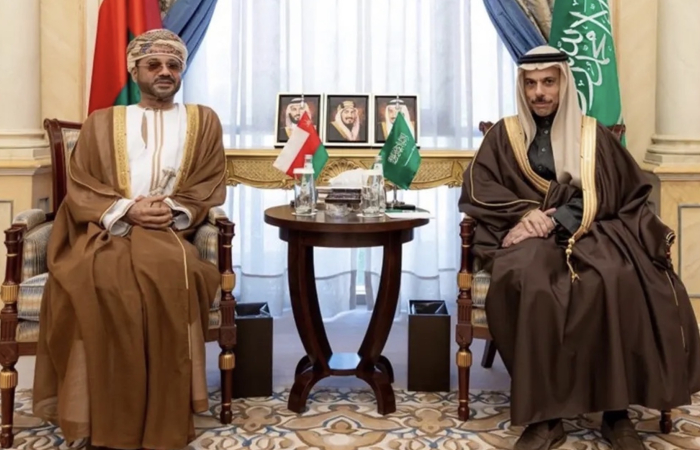
The very public, and very rare, spat between Saudi Arabia and the United Arab Emirates, which saw Saudi planes bombarding cargo in Mukalla in Southern Yemen, which had just been unloaded from two ships that arrived from the UAE port of Fujeirah, has caused concern among the four other GCC countries, and other neighbours in the region. Omani Foreign Minister Badr Al Busaidi visited Riyadh on Wednesday for talks with Saudi Foreign Minister Prince Faisal bin Farhan on the developments in Yemen, which have raised concern across the region. Oman's Foreign Ministry said the meeting between the ministers “addressed efforts to contain the escalation of violence and ways to support the political process aimed at addressing the root causes of the crisis”. Tension has risen in recent weeks after the military takeover of Mahra and Hadhramaut, which share a 700km border with Saudi Arabia, by the Southern Transitional Council. The STC is the largest faction within the forces of the ruling Presidential Leadership Council, led by Rashad al Alimi.  In Riyadh, Mr Al Busaidi and Prince Faisal discussed “achieving a comprehensive and sustainable settlement that preserves the sovereignty of the Republic of Yemen over its security and stability, while also taking into account the aspirations of its people and the higher national security interests of neighbouring countries and the rest of the region”, Oman's Foreign Ministry said. Oman has played a vital mediation role in Yemen since Houthi rebels seized the capital, Sanaa, in 2014, forcing the government to flee south. A Saudi-led coalition, including the UAE, intervened at the request of the government to counter the Houthis, who control most of the north. On Monday ( 28 December) the UAE announced that it was heeding calls by Mr Alimi, backed by Saudi statements, which called for the withdrawal of UAE forces from Yemen. This in turn raised concerns about internationally backed efforts to counter terror groups there. Gulf countries have called for calm and restraint following the escalation in recent days. GCC members, Bahrain, Qatar, Oman and Kuwait said they were monitoring the situation closely, highlighting the important role played  in the past by Saudi Arabia and UAE supporting “stability and security” in Yemen. Bahrain expressed its “confidence in the leadership of the kingdom of Saudi Arabia and the United Arab Emirates and their ability to contain any differences in viewpoints within the framework of a unified Gulf”. Qatar and Kuwait commended statements issued by the UAE and Saudi Arabia, which reflected “a commitment to prioritising the interests of the region, strengthening the principles of good neighbourliness and adhering to the foundations and principles upon which the GCC Charter is based”, Qatar's Foreign Ministry said. (click picture to read the article in full).
Editor's choice
News
Not quite there yet!

Not quite there yet!

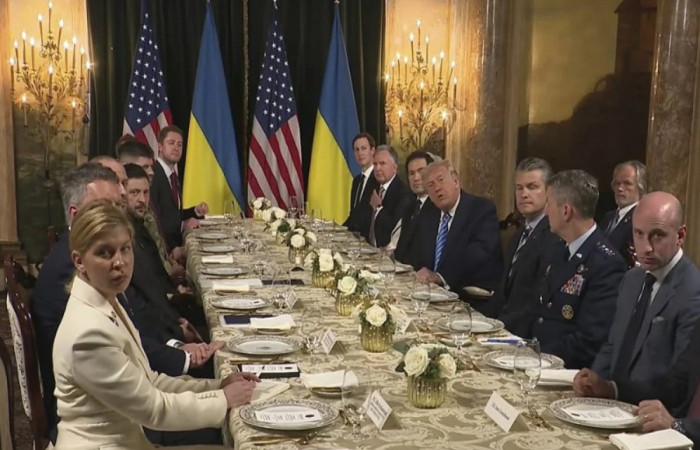
The presidents of Ukraine and the United States were both upbeat after their talks on Sunday (28 December), but clearly there is yet no agreement on how to end the war in Ukraine. Donald Trump and Volodymyr Zelensky said progress had been made during Florida talks but the US president admitted the problem of territory remained "unresolved". While both the US and Ukrainian presidents described the talks as "great", Trump said "one or two very thorny issues" remained outstanding - most notably on the issue of land. Addressing reporters at Mar-a-Lago, Zelensky said they had come to an agreement on "90%" of the 20-point peace plan, while Trump said a security guarantee for Ukraine was "close to 95%" done. Zelensky later said US and Ukrainian teams would meet next week for further talks on issues aimed at ending Russia's nearly four-year war in Ukraine. "We had a substantive conversation on all issues and highly value the progress that the Ukrainian and American teams have made over the past weeks," Zelensky said in a statement on the Telegram messaging app. Russia launched a full-scale invasion of Ukraine in February 2022, and Moscow currently controls about 20% of Ukrainian territory. A proposal to turn the Donbas region in eastern Ukraine, which Russia largely controls, into a demilitarised zone remains "unresolved", Trump said. "Some of that land has been taken," he told reporters after the meeting. "Some of that land is maybe up for grabs, but it may be taken over the next period of a number of months." Moscow currently controls about 75% of the Donetsk region, and some 99% of the neighbouring Luhansk. The regions are collectively known as Donbas. Russia wants Ukraine to pull back from the small part of the territory it still controls in Donbas, while Kyiv has insisted the area could become a free economic zone policed by Ukrainian forces. The US president has repeatedly changed his own position on Ukraine's lost territories, and in September stunned observers by suggesting that Ukraine might be able to take it back. He later reversed course. "[That] is a very tough issue," he said. "One that will get resolved." Security guarantees for Ukraine are "95% done", Trump said, without formally committing to logistical support or troop deployment to help protect Ukraine from future attacks. Trump floated the possibility of trilateral talks between the US, Russia, and Ukraine, saying it could happen "at the right time". Immediately after their bilateral talks, Trump and Zelensky held a one hour meeting with European leaders. European Commission president, Ursula von der Leyen, wrote on X "We had a good hour-long conversation with President Trump and Zelensky. Several European leaders were present and discussed future peace talks. Good progress has been made. Europe stands ready to work with its partners to consolidate this."  
Editor's choice
News
Israel recognises Somaliland, opening a pandora's box in Africa

Israel recognises Somaliland, opening a pandora's box in Africa

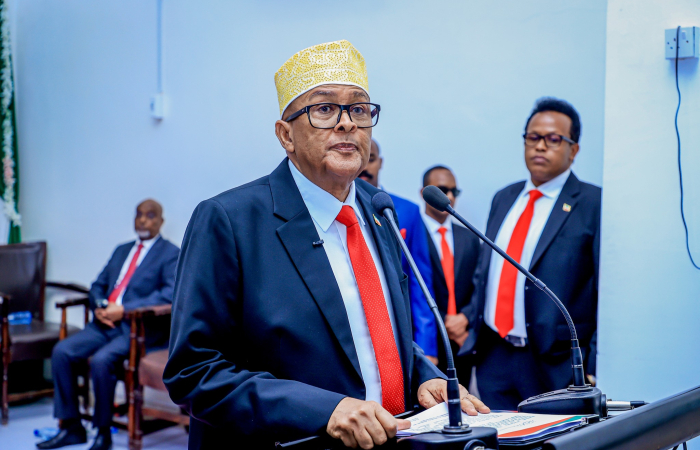
Israel ‍has recognized Somaliland as an "independent and sovereign state," Israeli Prime Minister Benjamin Netanyahu said on Friday. "Together with Foreign Minister Sa'ar and the President of the Republic of Somaliland, we signed a joint and mutual declaration," Netanyahu posted to X. "This declaration is in the spirit of the Abraham Accords signed at the initiative of President Trump," he said. In doing so, Israel became the first country to recognize the breakaway region. Somalia's Foreign Ministry denounced Israel's "deliberate attack" on its sovereignty and warned that recognizing Somaliland as an independent state would "undermine regional peace." "Illegitimate actions of this nature seriously undermine regional peace and stability, exacerbate political and security tensions," the ministry said in a statement. Egyptian Foreign Minister Badr Abdelatty said he held phone calls with his counterparts from Somalia, Turkey and Djibouti to discuss what they described as dangerous developments in the Horn of Africa, following Israel's announcement The ministers condemned Israel’s recognition of Somaliland, reaffirmed their full support for Somalia’s unity and territorial integrity, and warned that recognizing breakaway regions poses a threat to international peace and security, Egypt's Foreign Ministry said. "This initiative by Israel, which aligns with its expansionist policy and its efforts to do everything to prevent the recognition of a Palestinian state, constitutes overt interference in Somalia's domestic affairs," the Turkish Foreign Ministry said in a statement.  The African Union (AU) joined the condemnations of Israel's recognition of Somaliland.  "Any attempt to undermine the unity, sovereignty, and territorial integrity of Somalia... risks setting a dangerous precedent with far-reaching implications for peace and stability across the continent," an AU statement read. Israel said that it has now established diplomatic relations with Somaliland, and the two will soon set up embassies. commonspace.eu political editor said in a comment that by recognising Somaliland Israel has opened Africa's pandora's box. "The borders of most African countries were drawn in colonial times, and in the post-colonial period of the last seventy years, these borders have been considered sacrosanct. The two exceptions are also to be found in the Horn of Africa, where Eritrea broke away from Ethiopia and South Sudan broke away from Sudan." (click the image to read the full article).