Region

Türkiye and the Levant

Stories under this heading cover Türkiye as well as the Levant – a large area in the Eastern Mediterranean region of Western Asia, consisting of Syria, Lebanon, Jordan, Israel and Palestine.

Filter archive

Publication date
Editor's choice
News
Grain deal dominates talks between Putin and Erdogan, but there are other issues on the agenda too

Grain deal dominates talks between Putin and Erdogan, but there are other issues on the agenda too

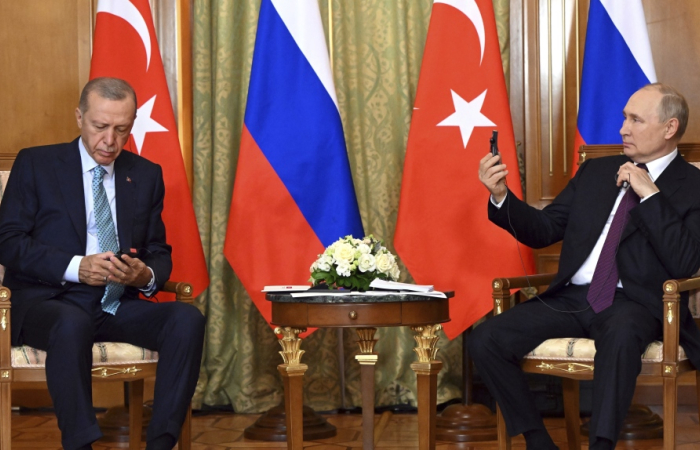
Turkish President Recep Tayyip Erdoğan on Monday (4 September) is holding a long-awaited summit meeting with Russian President Vladimir Putin in the Black Sea resort of Sochi. Central to the discussions is the question of the export of Ukrainian grain to world markets. Türkiye and the United Nations seek to revive a key agreement that allowed Ukraine to export grain and other commodities from three Black Sea ports despite the 18-month war. The visit comes more than one month after Mosow suspended the deal, which was brokered by Türkiye and the U.N. and was seen as vital for global food supplies, especially in Africa, the Middle East and Asia. Ukraine and Russia are major suppliers of wheat, barley, sunflower oil and other goods that developing nations rely on. President Erdoğan said the grain deal was the headline issue at the daylong talks between the two leaders. But whilst the grain deal may be the centre-piece of today's discussions there are other issues on the agenda too. Turkiye and Russia have an extensive and complex bilateral agenda which the two presidents are bound to review. There are also issues related to regional peace and security, including the situation in Syria, where Russian and Turkish interests have often clashed, and the situation in the South Caucasus, where on-going tensions between Armenia and Azerbaijan mar the prospects of a peace deal. The trip to the Black Sea resort city marks a rare visit by a leader of a NATO country to Russia amid Moscow's all-out war in Ukraine. Erdogan has kept open his lines of communication with Putin
Editor's choice
Opinion
Türkiye's Evolving South Caucasus Policy under Re-Elected Erdoğan

Türkiye's Evolving South Caucasus Policy under Re-Elected Erdoğan

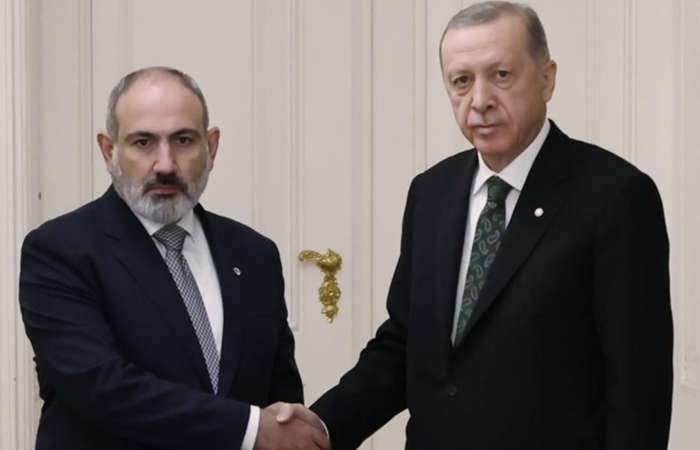
The South Caucasus has consistently occupied a pivotal position within Turkish foreign policy. This significance has been underscored by Türkiye's deepening influence in the region, a trend that has gained momentum especially in the wake of the Second Karabakh War. With the recent re-election of Recep Tayyip Erdoğan to the Presidency of the country, it is certain that Ankara will continue its active engagement in the South Caucasus. However, a nuanced analysis is imperative to fully grasp the multi-pronged approach that Türkiye has adopted in its dealings with this region. This strategy involves complex engagements with Azerbaijan, Armenia, and Georgia, offering a perspective through which the intricate web of geopolitical challenges can be unraveled. In this op-ed for commonspace.eu, Simona Scotti says that "this dynamic foreign policy stance also underscores the significance of the South Caucasus in extending Turkish influence to Central Asia.  In recent years, the growing importance of this region has garnered significant attention, not only for Türkiye but also for Europe. Situated at the crossroads of continents, Central Asia has emerged as a hub of economic potential, strategic significance, and cultural exchange. Türkiye, with its historical ties and shared Turkic heritage, recognizes the value of strengthening its relations with Central Asian countries. Consequently, the South Caucasus assumes a pivotal role in Türkiye's efforts to foster deeper diplomatic, economic, and cultural connections with Central Asia, ultimately benefiting both Türkiye and Europe by promoting regional cooperation and diversification of partnerships."
Editor's choice
News
Erdogan visits Gulf countries to seal strategic partnerships

Erdogan visits Gulf countries to seal strategic partnerships

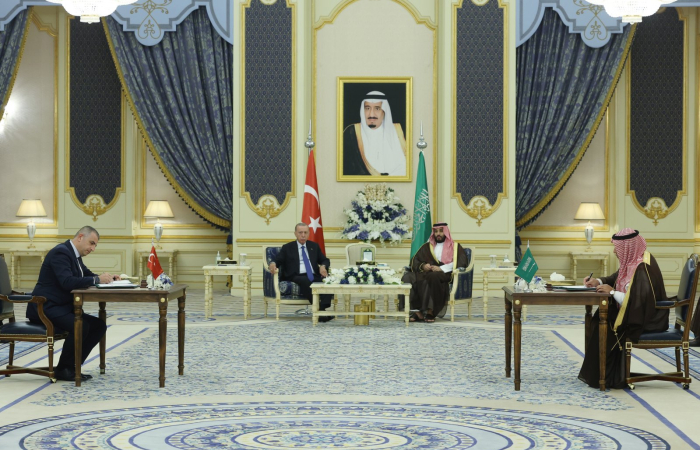
Turkish prime minister, Recip Tayip Erdogan, on Monday embarked on a tour of the Gulf region which will see him visiting Saudi Arabia, the United Arab Emirates and Qatar. The trip, coming shortly after Erdogan's re-election as President, is seen as part of an effort to consolidate a strategic partnership with the Gulf countries, based on new realities that have emerged in recent years. The rift between Turkey and Saudi Arabia and UAE has now been fully healed, and this visit is no longer about fixing the past, but is definitely about charting the future. Economic co-operation, and co-operation in the defence sector are key elements of Erdogan's agenda.
Editor's choice
News
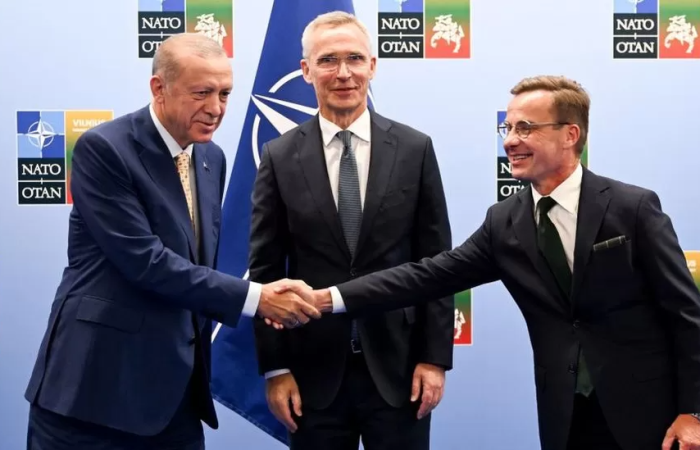
Turkey agrees Sweden NATO membership as summit begins in Lithuania

Turkey agrees Sweden NATO membership as summit begins in Lithuania

The Turkish President Recep Tayyip Erdogan has agreed to Sweden's membership of the North Atlantic Treaty Organization (NATO), hours before the military alliance's summit is due to get underway in the Lithuanian capital of Vilnius on Tuesday (11 July). The NATO General Secretary Jens Stoltenberg said on Monday evening (10 July) that President Erdogan would forward Sweden's bid to the Turkish parliament in Ankara and "ensure ratification". He described it as a "historic step" but stressed that a "clear date" for Sweden's formal accession to the organisation could not yet be given as this relies on both the Turkish parliament as well as Prime Minister Viktor Orban of Hungary and the Hungarian parliament. Hungary and Turkey remain the only two NATO members who are not yet to retify Sweden's membership. Hungarian Foreign Minister Peter Szijjarto said on Tuesday that ratification of Sweden's bid is now "only a technical question". Reacting to the news, Swedish Prime Minister Ulf Kristersson said: "I am very happy, it is a good day for Sweden."
Editor's choice
News
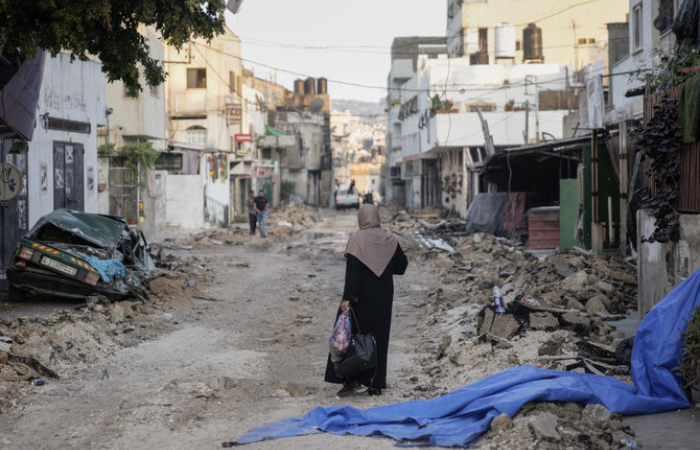
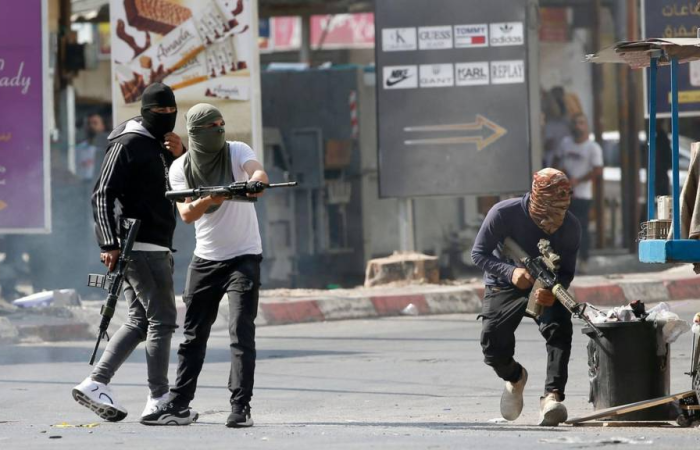
Israeli operation in West Bank refugee camp continues, at least 10 dead and 100 injured

Israeli operation in West Bank refugee camp continues, at least 10 dead and 100 injured

On Monday (3 July) Israel launched a major military operation in the Jenin refugee camp in the north of the occupied West Bank in what the Israeli government described as an "extensive counter-terrorism effort". Monday morning began with drone strikes on targets in the militant stronghold, before Israel deployed hundreds of troops into the West Bank refugee camp. The operation came after growing domestic pressure following a series of attacks on Israelis, including a shooting last month that killed four Israelis. As of Tuesday morning (4 July), Palestinian officials have announced that 10 Palestinians have been killed during the Israeli operation in Jenin, while over 100 have been injured. Some 3,000 people have fled the refugee camp overnight, reports the Palestinian Red Crescent. While the Israeli government said that its operation "dealt a heavy blow to terrorist organisations", Palestinian officials have described the events as a "war crime" and an "invasion".
Editor's choice
News
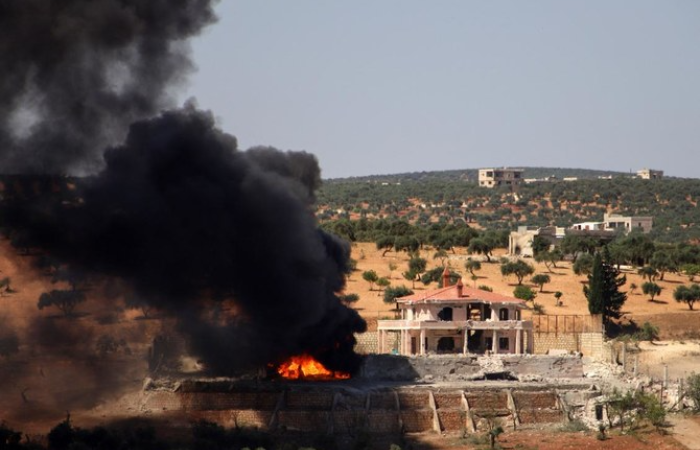
Russian airstrike on Idlib market in Syria kill at least 13, injures dozens

Russian airstrike on Idlib market in Syria kill at least 13, injures dozens

A Russian airstrike launched on a market in the north-western Syrian city of Idlib on Sunday (25 June) have killed 13 people, reports Arab News. At least nine civilians are among the dead, including two children. Around 30 people are understood to have been injured in the Russian strike on the rebel-held city, and it is expected that the death toll will rise. The regime of Syrian President Bashar al-Assad - backed by Russia and Iran - has won back most of the territory that it lost to various groups in the early years of the Syrian Civil War that began in 2011 after the regime violently surpressed pro-democracy protests that had swept through a number of Arab countries. The violent repression of the protests led to President Assad and Syria being a pariah state for a number of years, although a process of the country's rehabilitation has recently taken place with Syria re-joining the Arab League in May this year, at the 32nd summit of the group in Jeddah. You can read more about this here. Over the years, Russia has repeatedly launched airstrikes across rebel-held regions of Syria. Although deadly Russian airstrikes on civilians in Syria have been limited this year - likely due to its ongoing invasion of Ukraine - Sunday's strike is the deadliest attack on Syria this year.
Editor's choice
News
Swedish negotiators head to Ankara for renewed talks on NATO membership

Swedish negotiators head to Ankara for renewed talks on NATO membership

Swedish negotiators are in the Turkish capital city of Ankara today, on Wednesday (14 June), for the first set of talks with Turkey on its NATO membership bid since President Erdogan's election victory on 28 May. Sweden applied for NATO membership alongside Finland on 18 May 2022, almost three months after Russia launched its full-scale invasion of Ukraine on 24 February. While Finland joined the military alliance on 4 April, Sweden's bid continues to be held up by objections from Turkey and Hungary. Sweden's chief NATO negotiator Oscar Stenström and top civil servant in the Swedish foreign ministry, Jan Knutsson, are expected to meet Akif Cagatay Kilic, the new security advisor appointed by President Erdogan following his 28 May victory. The two sides will discuss Sweden's membership of NATO, and the extent to which the country has fulfilled its promises in the so-called "trilateral memorandum" between Turkey, Sweden and Finland signed at NATO's summit in Madrid on 28 June last year. Last Sunday (4 June), NATO Secretary-General Jens Stoltenberg urged Turkey to approve Sweden's membership ahead of the bloc's summit in Vilnius, Lithuania, on 11-12 July.