Armenia-Türkiye disaster diplomacy: the view from Baku

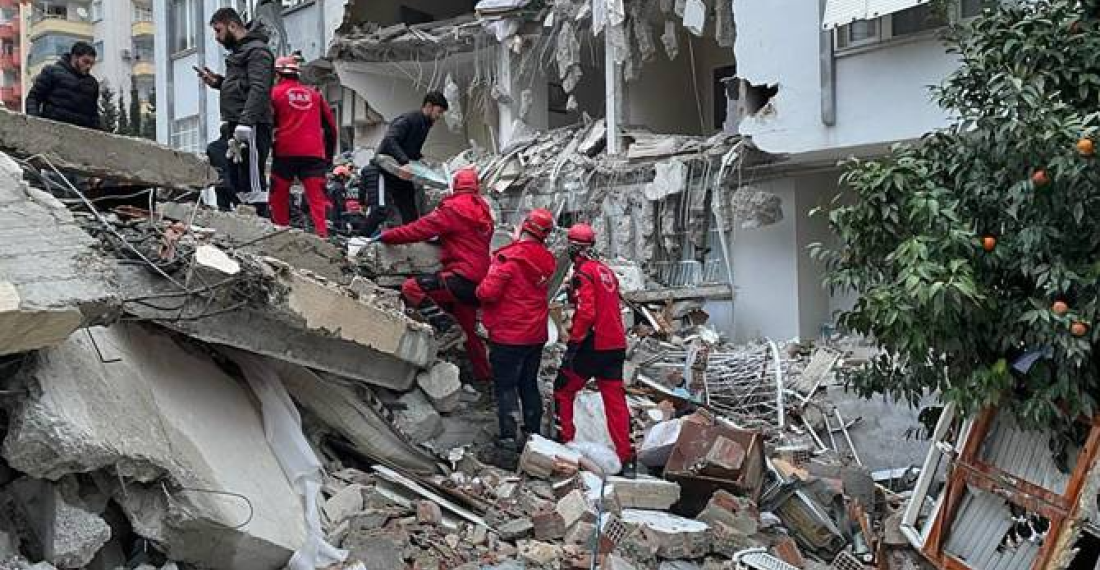
A 7.8-magnitude earthquake hit Türkiye and Syria on 6 February 2023. More than 40,000 people have died as a result of the earthquake in Türkiye alone at the time of writing. Nations from all over the world sent aid missions in response to this catastrophe, which caused suffering for millions of people as well as the devastation of dozens of residential districts. Türkiye's neighbor Armenia was one of the first states that extended its helping hand.

In hope of rescuing survivors trapped under collapsed buildings, Armenian rescue teams started searching through the rubble a day after the phone call between Turkish President Erdogan and Armenian Prime Minister Pashinyan. Together with this, lorries transporting relief to earthquake victims crossed the border between Armenia and Türkiye. Armenia's Foreign Minister Ararat Mirzoyan personally welcomed several of the lorries on 15 February, while he was in Türkiye to show that Armenia supports the Turkish people during these difficult times and is ready to assist in any way.

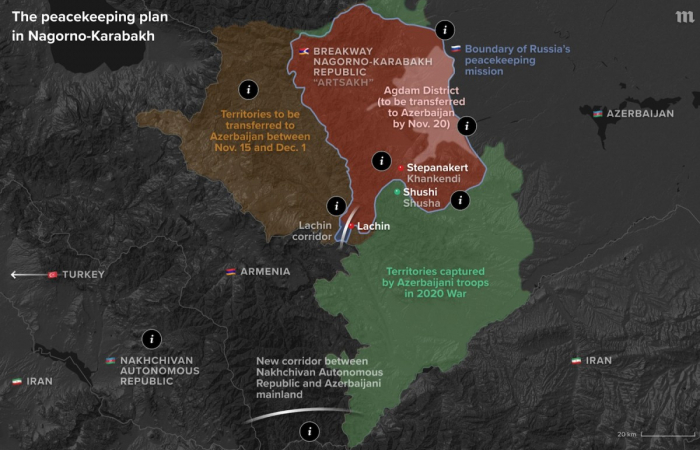
In such times, every bit of help matters, whether it comes from Germany or Japan. Nonetheless, Armenia's aid to Türkiye is significant both symbolically and historically due to the long history of strained relations between these two nations stemming from the WW1-era trauma. Relations were also severely harmed by Armenia's occupation of Azerbaijani territories in the 1990s; Türkiye severed all ties with Armenia and shut its land borders to show solidarity with the ethnic Azerbaijanis who are close to Turks from an ethno-cultural standpoint. 

Various attempts have been made to restore frozen relations, the biggest of which was the signing of the Zurich Protocols between Armenia and Türkiye in 2009. This was a great diplomatic chance for Yerevan to change the attitude of Türkiye - the biggest ally and supporter of Azerbaijan. However, this process forced Baku to sound the alarm, fearing that the regional isolation card against Armenia would be lost at the negotiating table. On the other hand, the normalization of relations between Armenia and NATO member Türkiye seriously worried decision-makers in Moscow.

The Baku-Ankara tandem is more intertwined than ever

Long story short, the scenario that Azerbaijan stressed the most did not happen. Ankara refrained from taking steps that would harm Azerbaijan's interests and clearly stated that Armenia-Türkiye normalization can take place only after the end of the military occupation of Nagorno-Karabakh and the surrounding territories. Thus, this rapprochement process, promoted mainly by the United States and other Western countries, ended before it even started. The Zurich protocols, despite being signed, were never ratified and the borders were never opened. Armenia's policy of splitting the Baku-Ankara tandem and gaining stronger positions in negotiations with Azerbaijan ultimately failed.

In 2020, the Second Karabakh War and its aftermath made the reevaluation of the Armenia-Türkiye rapprochement relevant. On the one hand, the long-standing hurdle in relations between Ankara and Yerevan - the occupation of Azerbaijani territories - has been removed. Armenia, on the other hand, has encountered a Baku-Ankara tandem that is more intertwined than ever. "Azerbaijan and Türkiye express the need for mutual coordination of activities on regional and international strategic issues of mutual interest", says the declaration of alliance signed between Azerbaijan and Türkiye in 2021 in the strategically important city of Shusha.

Notwithstanding this, over the past two years, there has been some progress in reconciliation between Armenia and Türkiye. By designating their special representatives in December 2021, both states formally began the normalization process. The year 2022 saw a number of firsts in the Ankara-Yerevan dialogue, including the visit to Türkiye of the Armenian Foreign Minister and the first meeting between the Armenian Prime Minister and the Turkish President. Also, both nations have agreed to open their land borders, albeit only to visitors from third countries.

It is still not certain whether "disaster diplomacy" will lead to a final political settlement

The "disaster diplomacy” that occurred in the aftermath of the 6 February earthquake gave many reasons to be more upbeat about the prospect of normalizing relations. But many people are still unsure as to whether these goodwill interactions would lead to a final political settlement. This time, unlike the previous attempt at normalization, Azerbaijan states that it is comfortable with the contact between Ankara and Yerevan.

Following the Second Karabakh War, officials from Azerbaijan have emphasized on numerous occasions that they are not opposed to Armenia and Türkiye returning to normal relations. Farid Shafiyev, the director of the Baku-based AIR Center think tank, says that Azerbaijan has no reason to object to the normalization process between Armenia and Türkiye (author’s interview, February 2023).

The phrase "no objection" itself, however, does not enable the puzzle's overall explanation. The key issue at hand is whether Türkiye would mend all ties with Armenia regardless of how the Armenia-Azerbaijan peace track turns out. Baku's confidence and composure over the talks between Ankara and Yerevan is largely a result of Türkiye’s official admission that this procedure is coordinated with Azerbaijan. In other words, Türkiye made it clear to Armenia that it follows an "Azerbaijan First" policy even in the Ankara-Yerevan normalization process.

 "The melting of the ice between Ankara and Yerevan goes through an agreement between Baku and Yerevan," Farid Shafiyev adds (ibid.). The agreement between Baku and Yerevan, however, appears to be extremely challenging in the near future, although hopes have recently risen in this direction. It is not an easy decision for Yerevan to fulfill the most important condition - to sign a peace treaty with Azerbaijan - that Türkiye has set for Armenia.
source: Shujaat Ahmadzada is an expert at Topchubashov Center focusing on conflict transformation and foreign and security policies of the South Caucasus countries. Shujaat has taken a graduate certificate course in Conflict Analysis and Mediation at the University of San Diego in 2023. He holds an MA in Central and East European, Russian and Eurasian Studies from the University of Glasgow (UK) and BA in International Relations from the Academy of Public Administration (Azerbaijan). Moreover, Shujaat has years of experience in youth work, policy advisory, project management and peacebuilding. 
photo: Armenpress
The views expressed in opinion pieces and commentaries do not necessarily reflect the position of commonspace.eu or its partners

Related articles

Editor's choice
News
UAE says it will withdraw from Yemen, but division emerges in Yemeni presidential council

UAE says it will withdraw from Yemen, but division emerges in Yemeni presidential council

In a move seen as an attempt to de-escalate a crises with Saudi Arabia, the United Arab Emirates, on Tuesday (30th December) announced that it was heeding a call to withdraw its troops from Southern Yemen. UAE says that its presence included counter-terrorism teams that were crucial in fighting against Islamist groups. UAE sources said that parts of Yemen not controlled by the Houthis have had Al Qaeda in the Arab Peninsula (AQAP) operatives using the territory to launch attacks on Europe, the US and Middle East. UAE teams have co-ordinated with American and British special forces and intelligence. The sources added that Emirati forces and their Yemeni allies also helped reverse Houthi gains in the south. including the liberation of Aden port. The small UAE contingent has remained in place since the UAE withdrew most of its military personnel in 2019. The leading English-language newspaper in Abu Dhabi, The National, said that the main UAE force was based at Riyan Mukalla International Airport, with access to fixed-wing aircraft and helicopters, but also operated smaller contingents in the port town Balhaf and Shabwa. "It is understood it also flew a number of drones from the airbase that were able to track terrorist movements, pass information back to its allies and assisted special forces' missions." Meanwhile a division has emerged in Yemen's presidential council after four members denounced what they called the 'unilateral decisions' by the chairman. Four of Yemen’s eight Presidential Leadership Council members on Tuesday denounced an announcement by the council’s chairman accusing him of breaching the governing agreement. Tension between Yemeni leaders has been rising for weeks, underscoring the fragility of the country's already fractured political landscape and further complicating efforts to confront the Iran-backed Houthi rebels. The latest rift took an unprecedented turn on Tuesday morning, marked by a Saudi-led coalition “limited operation” striking combat vehicles Riyadh linked to the Southern Transitional Council, which has three members in the PLC. The PLC Chairman, Rashad al Alimi, on Tuesday said that he was seeking to cancel the joint defence agreement with the UAE. “What has been issued … constitutes a clear violation of the Declaration of the Transfer of Power [agreement], which explicitly stipulates that the Presidential Leadership Council is a collective body whose decisions are taken by consensus, or by majority when consensus is not possible,” the statement by the four members said. “It does not, under any circumstances, allow for unilateral decision-making on sovereign, military, or major political matters." The statement was signed by STC chief Aidarous Al Zubaidi, Faraj Al Bahsani, Tariq Saleh and Abu Zaraa al Muharrami. (click the picture to read the full article).

Popular

Editor's choice
News
UAE says it will withdraw from Yemen, but division emerges in Yemeni presidential council

UAE says it will withdraw from Yemen, but division emerges in Yemeni presidential council

In a move seen as an attempt to de-escalate a crises with Saudi Arabia, the United Arab Emirates, on Tuesday (30th December) announced that it was heeding a call to withdraw its troops from Southern Yemen. UAE says that its presence included counter-terrorism teams that were crucial in fighting against Islamist groups. UAE sources said that parts of Yemen not controlled by the Houthis have had Al Qaeda in the Arab Peninsula (AQAP) operatives using the territory to launch attacks on Europe, the US and Middle East. UAE teams have co-ordinated with American and British special forces and intelligence. The sources added that Emirati forces and their Yemeni allies also helped reverse Houthi gains in the south. including the liberation of Aden port. The small UAE contingent has remained in place since the UAE withdrew most of its military personnel in 2019. The leading English-language newspaper in Abu Dhabi, The National, said that the main UAE force was based at Riyan Mukalla International Airport, with access to fixed-wing aircraft and helicopters, but also operated smaller contingents in the port town Balhaf and Shabwa. "It is understood it also flew a number of drones from the airbase that were able to track terrorist movements, pass information back to its allies and assisted special forces' missions." Meanwhile a division has emerged in Yemen's presidential council after four members denounced what they called the 'unilateral decisions' by the chairman. Four of Yemen’s eight Presidential Leadership Council members on Tuesday denounced an announcement by the council’s chairman accusing him of breaching the governing agreement. Tension between Yemeni leaders has been rising for weeks, underscoring the fragility of the country's already fractured political landscape and further complicating efforts to confront the Iran-backed Houthi rebels. The latest rift took an unprecedented turn on Tuesday morning, marked by a Saudi-led coalition “limited operation” striking combat vehicles Riyadh linked to the Southern Transitional Council, which has three members in the PLC. The PLC Chairman, Rashad al Alimi, on Tuesday said that he was seeking to cancel the joint defence agreement with the UAE. “What has been issued … constitutes a clear violation of the Declaration of the Transfer of Power [agreement], which explicitly stipulates that the Presidential Leadership Council is a collective body whose decisions are taken by consensus, or by majority when consensus is not possible,” the statement by the four members said. “It does not, under any circumstances, allow for unilateral decision-making on sovereign, military, or major political matters." The statement was signed by STC chief Aidarous Al Zubaidi, Faraj Al Bahsani, Tariq Saleh and Abu Zaraa al Muharrami. (click the picture to read the full article).