PIPELINES ON THE AGENDA OF VISIT OF PRESIDENT GUL TO MOSCOW

Ahead of an important visit by Turkish President Abdullah Gul to Russia that will start on Thursday, issues related to energy pipelines are causing concerns to the Turkish side. Over the weekend the Russian oil transportation company Transneft "has upped the ante in its game of brinkmanship against Turkey", announcing that the proposed Samsun-Ceyhan oil pipeline "was not economically feasible",  according to the influential Turkish Paper, Hurriyet Daily News.

Following the comments by Transneft Vice President, Mikhail Barkov over the weekend, who also said that the studies of the project had been frozen, the Turkish Minister of Energy Taner Yildiz told the paper that “Transneft is not the only determinant of the project. However, it has to be taken into account,”  adding that all issues need to be discussed between the two governments.

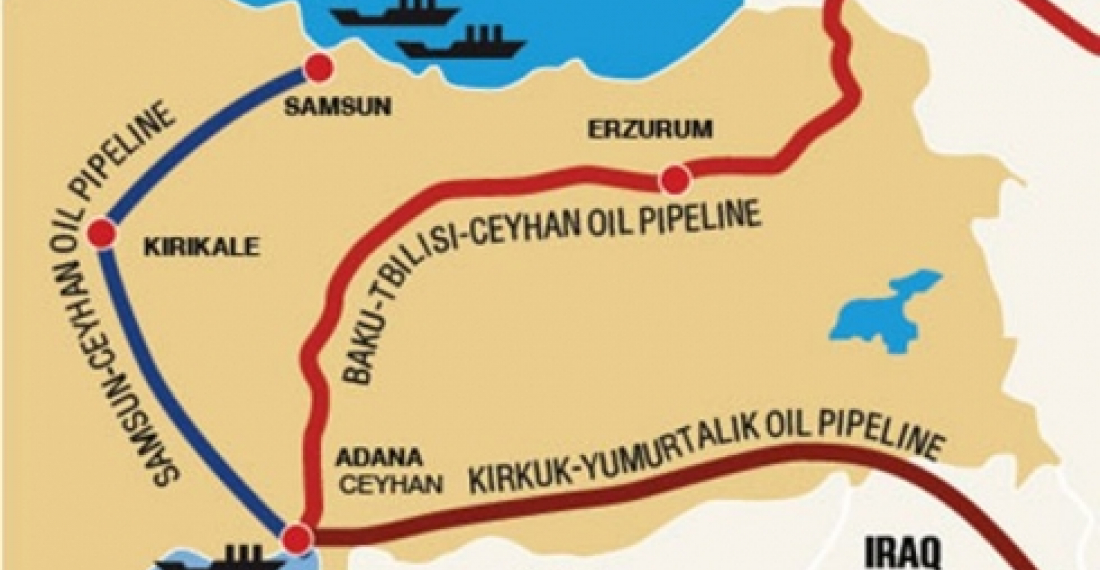
The Samsun-Ceyhan pipeline, which would bypass the Bosphorus by linking Turkey’s Black Sea province of Samsun with the Mediterranean port of Ceyhan, could cost $3 billion, according to estimates.

Turkey imports $31.5 billion worth of goods – especially energy – from Russia each year, while it exports $6.5 billion worth of goods.

Russian-Turkish relations have improved dramatically over the last decade and the two countries now see each other as natural partners in many spheres, but traditional competition for influence in regions such as the Caucasus and Central Asia, as well as energy issues, where both countries seek to play a role in global energy markets, continue to remain problematic.


source: Hurriyet Daily News with further input from commonspace.eu newsroom

Related articles

Editor's choice
News
Ukraine Intercepts Ballistic Missiles as Russia Continues Nationwide Air Assault

Ukraine Intercepts Ballistic Missiles as Russia Continues Nationwide Air Assault

Ukraine's air defenses intercepted five Russian ballistic missiles during a large-scale overnight attack on July 14–15, marking the first reported successful interceptions of ballistic missiles in nearly two weeks as Kyiv seeks to strengthen its air defense capabilities amid continuing Russian strikes. According to the Ukrainian Air Force, Russia launched eight Iskander-M/S-400 ballistic missiles, two Kh-59/69 cruise missiles, and 135 attack drones overnight. Ukrainian forces said they destroyed seven missiles, including five ballistic missiles, and intercepted 108 drones. However, several missiles and drones penetrated the country's defenses, damaging civilian infrastructure in Kyiv and other regions. In the capital, explosions were reported shortly after midnight, with President Volodymyr Zelensky saying that 16 sites were damaged, including a school and a civilian enterprise. Kyiv Mayor Vitali Klitschko reported fires at two warehouses. While no fatalities were recorded in the capital, Russian attacks elsewhere in the country killed at least seven people and injured 78, according to regional authorities. Casualties were reported in Kherson, Zaporizhzhia, Sumy, Dnipropetrovsk, Kharkiv, and Chernihiv oblasts, with critical infrastructure also struck in several regions. The successful interceptions come after weeks of concern over Ukraine's dwindling supply of interceptor missiles. Following a massive Russian strike on July 6, Ukrainian officials said they failed to intercept any of the 29 ballistic missiles launched, prompting Air Force spokesperson Yurii Ihnat to warn that the country lacked sufficient interceptor missiles to counter such attacks. Although the Ukrainian Air Force did not specify which system was used during the latest attack, the ballistic missiles were likely intercepted by U.S.-supplied Patriot systems, Ukraine's most effective defense against Russian ballistic threats. President Volodymyr Zelensky himself has repeatedly cautioned that Patriot interceptor stocks are critically low, a shortage that recently prompted the United States to approve a licensing agreement allowing the missiles to be produced in Ukraine with U.S. support. Speaking after the latest bombardment, Zelensky has once again renewed calls for tougher sanctions against Russia and urged the European Union to adopt its 21st sanctions package. "Every day sanctions are delayed gives Russia additional time to prepare. Everything Russia uses to prolong this war and attack people – chips, microelectronics, dual-use goods – must be stopped," Zelensky argued. He also reiterated the need to establish a European anti-ballistic missile defense system, describing it as a more affordable, mass-produced complement to the U.S.-made Patriot system. The appeal comes as Ukraine and its allies expand defense cooperation. During Bastille Day events in Paris on July 14, Zelensky announced the creation of a coalition of ten countries to develop a shared European ballistic missile shield. He said the initiative aims to create a more affordable, mass-produced system that would complement existing Patriot batteries. During the same gathering of the “coalition of the willing,” France also pledged additional military assistance, including advanced SAMP/T-NG air defense systems, Rafale fighter jets, and cooperation on domestic production of Western missiles and precision-guided munitions. The initiative follows a separate agreement with the United States, conceived at the NATO Summit in Ankara, allowing Ukraine to begin licensed production of Patriot interceptor missiles. 

Popular

Editor's choice
Interview
Thursday Interview: Murad Muradov

Thursday Interview: Murad Muradov

Today, commonspace.eu starts a new regular weekly series. THURSDAY INTERVIEW, conducted by Lauri Nikulainen, will host  persons who are thinkers, opinion shapers, and implementors in their countries and spheres. We start the series with an interview with Murad Muradov, a leading person in Azerbaijan's think tank community. He is also the first co-chair of the Action Committee for a new Armenian-Azerbaijani Dialogue. Last September he made history by being the first Azerbaijani civil society activist to visit Armenia after the 44 day war, and the start of the peace process. Speaking about this visit Murad Muradov said: "My experience was largely positive. My negative expectations luckily didn’t play out. The discussions were respectful, the panel format bringing together experts from Armenia, Azerbaijan, and Turkey was particularly valuable during the NATO Rose-Roth Seminar in Yerevan, and media coverage, while varied in tone, remained largely constructive. Some media outlets though attempted to represent me as more of a government mouthpiece than an independent expert, which was totally misleading.  Overall, I see these initiatives as important steps in rebuilding trust and normalising professional engagement. The fact that soon a larger Azerbaijani civil society visits to Armenia followed, reinforces the sense that this process is moving in the right direction." (click the image to read the interview in full)