Filter archive

Publication date
Editor's choice
Interview
Thursday Interview: Dr. Andrzej Klimczyk

Thursday Interview: Dr. Andrzej Klimczyk

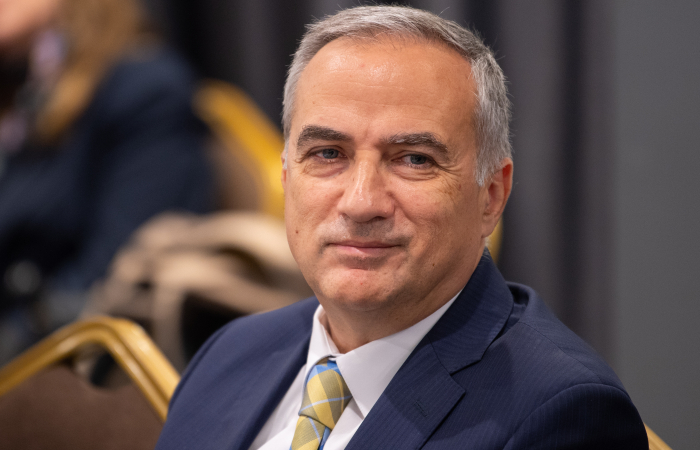
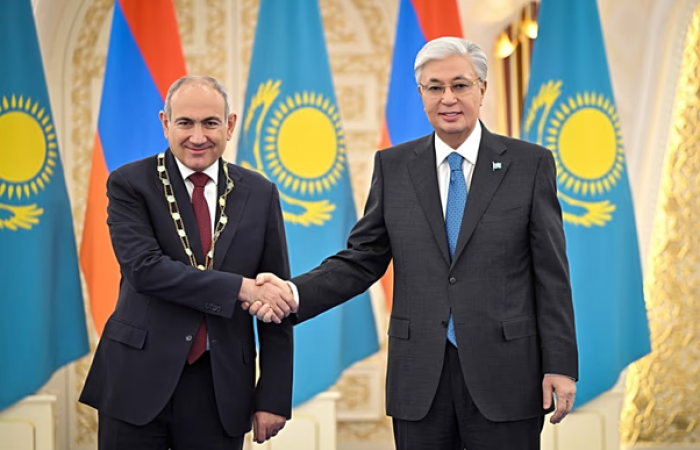
The Armenian parliamentary elections on 7 June are crucial in more ways than one. A fragile peace between Armenia and Azerbaijan is still at stake. While progress has been made since President Trump’s August 2025 meeting with Azerbaijani President Ilham Aliyev and Armenian Prime Minister Nikol Pashinyan, where a peace agreement was initialled, much remains uncertain. Key elements of the settlement are yet to be finalised, and the political will required to sustain momentum will depend heavily on the outcome of the vote. The peace agenda is heavily politicised, adding further sensitivity to the process, as conduits for Kremlin policy continue to disseminate fear and uncertainty within Armenian society regarding the ongoing peace process with Azerbaijan. In this week’s Thursday Interview, former Polish diplomat Dr. Andrzej Klimczyk draws on decades of experience across the post-Soviet space to reflect on Armenia’s upcoming parliamentary elections and the wider dynamics in the South Caucasus. He argues that while the European Union has the potential to play a stronger geopolitical role in the region, its approach remains too bureaucratic and insufficiently attuned to local realities. Klimczyk also outlines his proposal for a “South Caucasus Euroregion” as a long-term framework for cooperation between Armenia, Azerbaijan, and Georgia, aimed at unlocking the region’s economic and geopolitical potential. On Armenia’s June 2026 elections, he highlights a highly polarised political environment, with competition focused more on personalities than programmes and a fragmented opposition. He also warns of growing risks of disinformation and hybrid interference, cautioning that the main challenge may be the erosion of trust in the information environment rather than the integrity of the vote itself. (Click the image to read the full interview.) This interview marks the start of a special “Armenia Season” on commonspace.eu. The summit of the European Political Community will be held in Yerevan on 4 May. This will be immediately followed by an EU-Armenia summit. On 7 June Armenia will hold parliamentary elections. Our twice-weekly newsletter Armenia Election Monitor, will be published between 1 May and 15 June, and will track and analyse key developments ahead of the parliamentary elections on 7 June, with concise, fact-based and non-partisan insights, and will after analyse the results. LINKS Europe Foundation will host a webinar titled: Armenia between a historic summit and a crucial election. Join us on 6 May at 15:00 (Amsterdam) / 17:00 (Yerevan) for a panel discussion on the European Political Community Summit in Yerevan and Armenia’s upcoming parliamentary elections.
Editor's choice
News
Deputy Prime Minister of Azerbaijan Mustafayev visits Armenia

Deputy Prime Minister of Azerbaijan Mustafayev visits Armenia

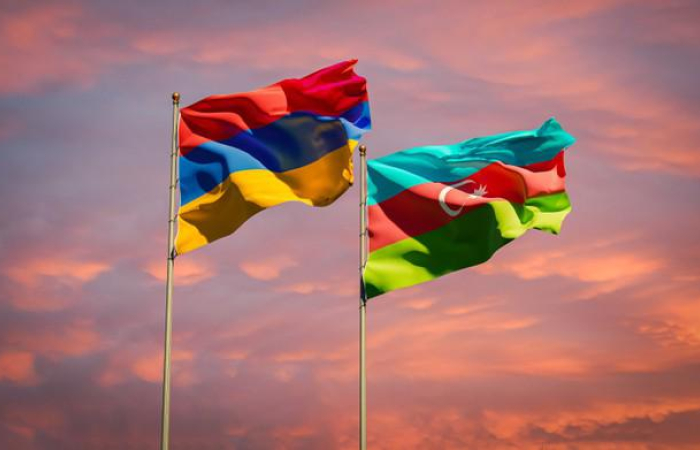
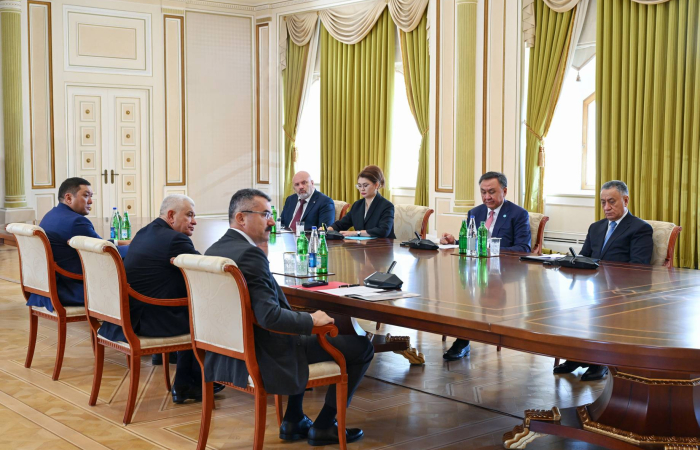
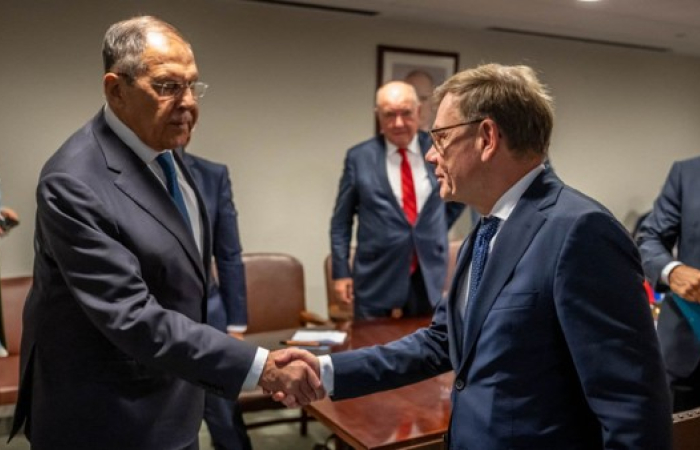
The Deputy Prime Minister of Azerbaijan has visited Armenia on Wednesday 29 April to participate in the the 13th meeting of the Commission on Demarcation and Border Security between Armenia and Azerbaijan and the State Commission on Demarcation of the State Border between Azerbaijan and Armenia, which was held in Aghveren. The Commission meeting was held under the chairmanship of Deputy Prime Minister of Armenia Mher Grigoryan and Deputy Prime Minister of Azerbaijan Shahin Mustafayev. A statement issued by the Ministry of Foreign Affairs of Armenia, noted with satisfaction that the 13th meeting of the commissions is once again taking place in the territory of one of the parties, in Aghveran, in the Republic of Armenia. "During the meeting, the parties exchanged detailed thoughts on organizational and technical issues related to border demarcation measures. The parties agreed and exchanged the texts of the following draft guidelines on the procedure for carrying out demarcation work:". Click the image to read the full report.
Editor's choice
GULF CRISIS
GCC countries condemn Iran, and say it has to make serious efforts to rebuild trust

GCC countries condemn Iran, and say it has to make serious efforts to rebuild trust

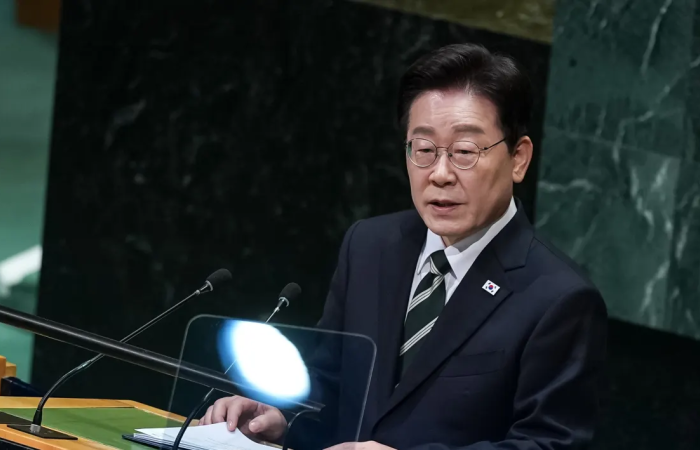
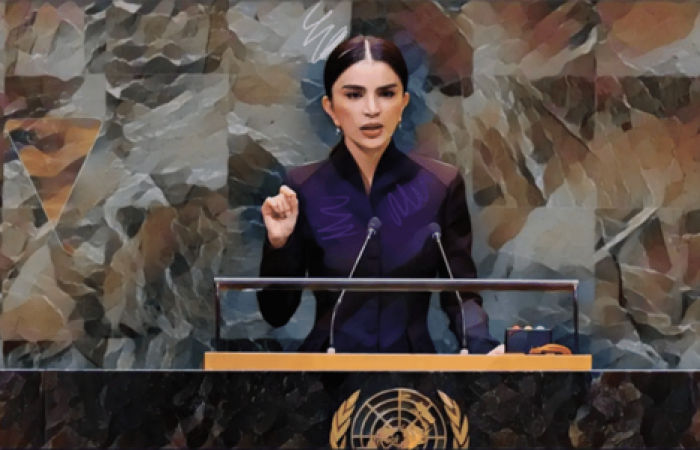
GCC countries have issued a strong condemnation of Iran for its attack on Gulf countries since 28th February.  "Iranian attacks have also led to a sharp loss of confidence by the Council states in Iran, which requires Iran to take the initiative to make serious efforts to rebuild trust", they said. This was stated by the Secretary General of the Gulf Co-operation Council (GCC), that bring together the six Gulf monarchies - Bahrain, Kuwait, Oman, Qatar, Saudi Arabia, and United Arab Emirates (UAE),  in a statement on Tuesday 28 April, at the end of a summit of the leaders of the member states held in Saudi Arabia. In his statement, Jasem Mohamed Albudaiwi said that the leaders discussed the current regional situation, particularly in relation to the escalation in the region, and the blatant Iranian attacks against the Council countries and the Hashemite Kingdom of Jordan, as well as ways to establish a diplomatic path that ends the crisis and paves the way for reaching agreements and understandings that address the sources of concern of the Council states and enhance security and stability in the long term. Click image to read the full statement.