South Korea Threatens Further Measures in Dispute with Ukraine Over North Korean POWs

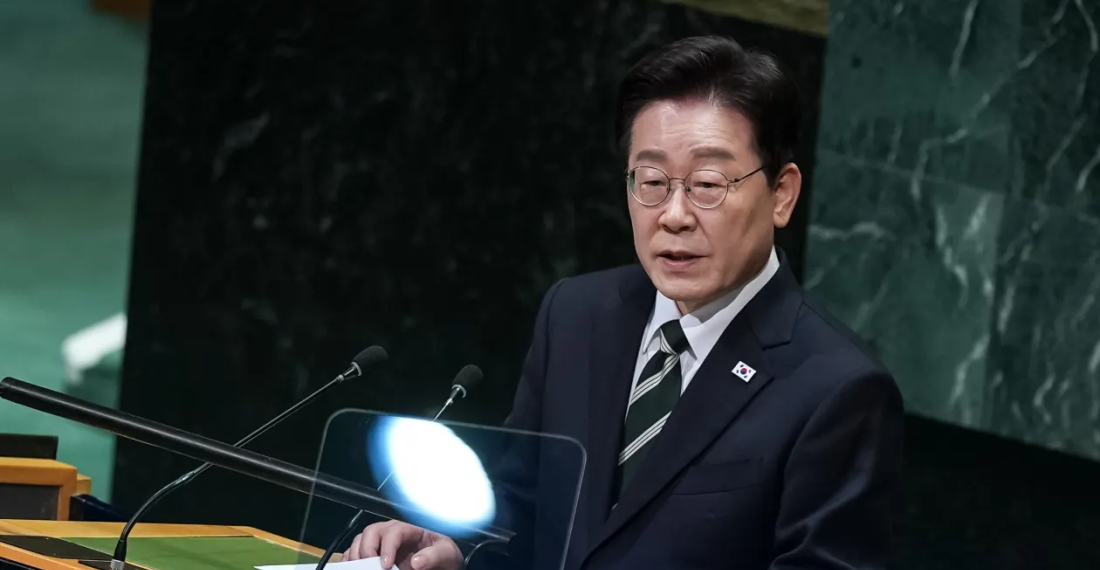
South Korean President Lee Jae Myung warned on Friday, 2 October, that Seoul would take “further action” if Ukraine continues to deny a confidentiality agreement concerning the transfer of two North Korean prisoners of war and refuses to apologise. The dispute began after Ukrainian President Volodymyr Zelensky publicly disclosed the prisoners’ transfer to South Korea during his address to the UN General Assembly last week.

Seoul maintains that Kyiv had agreed to keep the transfer confidential to protect the two prisoners and their families. According to the Independent, Lee accused Ukraine of undermining South Korea’s head of state and said the country’s “dignity” was at stake. He also criticised Ukrainian remarks referring to the possibility of a military confrontation between North and South Korea, warning that such statements invoked the risk of war on the Korean Peninsula.

Kyiv, however, has denied that such a confidentiality agreement existed and has sought to reduce tensions. Ukrainian Foreign Minister Andrii Sybiha described the dispute on Thursday (October 1) as a “diplomatic misunderstanding” rather than an incident. He said South Korea remained an important partner and expressed hope that the disagreement would be resolved quickly while cooperation continued.

The two North Korean soldiers were captured by Ukraine in January 2025, becoming the first North Korean servicemen captured alive after Pyongyang became directly involved in Russia’s war effort. North Korea has since deployed an estimated 14,000 troops to support Russian forces, while Zelensky said this week that more than 8,000 North Korean troops remained in Russia and another 10,000 were undergoing training for potential deployment.

The dispute comes despite existing cooperation between Seoul and Kyiv. South Korea has provided humanitarian and financial assistance to Ukraine since Russia’s 2022 invasion and pledged an additional $100 million in non-lethal support in July.

Source: commonspace.eu with Deutsche Welle (Bohn) and The Independent (London).
 

Related articles

Editor's choice
News
Indian Foreign Minister meets Aliyev in Baku

Indian Foreign Minister meets Aliyev in Baku

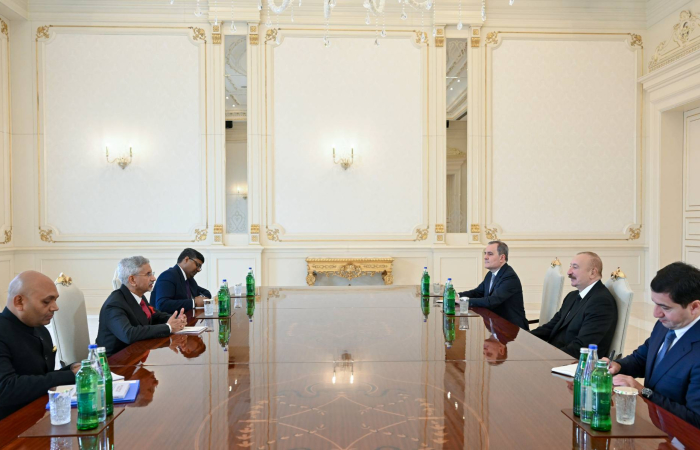
On October 23, the president of Azerbaijan Ilham Aliyev met in Baku with Subrahmanyam Jaishankar, Minister of External Affairs of India. This was the highest level visit by an Indian official to Azerbaijan in a long time. According to the website of the Azerbaijani president, Aliyev fondly recalled his meeting with Indian Prime Minister Narendra Modi in Bishkek and the exchange of views during that meeting. President Ilham Aliyev highly appreciated the visit of India’s Minister of External Affairs to Azerbaijan on the instructions of Prime Minister Narendra Modi, stressing its importance for discussing the current state and prospects of bilateral relations. During the meeting, the sides held an extensive exchange of views on the current state of relations between Azerbaijan and India, highlighting ample opportunities to develop cooperation in areas of mutual interest. The sides noted that Azerbaijan and India, as members of the Global South, share similar positions on a number of issues on the international agenda, including matters of concern to countries of the Global South. In this regard, they discussed prospects for bilateral cooperation in political, trade and economic, high-tech, cultural, humanitarian and other fields. The conversation also touched upon the importance of cooperation within international organizations. The sides emphasized the need to intensify political contacts and organize reciprocal visits at various levels, including exchanges involving economic and business delegations, to further advance bilateral relations.

Popular

Editor's choice
Interview
Thursday Interview: Murad Muradov

Thursday Interview: Murad Muradov

Today, commonspace.eu starts a new regular weekly series. THURSDAY INTERVIEW, conducted by Lauri Nikulainen, will host  persons who are thinkers, opinion shapers, and implementors in their countries and spheres. We start the series with an interview with Murad Muradov, a leading person in Azerbaijan's think tank community. He is also the first co-chair of the Action Committee for a new Armenian-Azerbaijani Dialogue. Last September he made history by being the first Azerbaijani civil society activist to visit Armenia after the 44 day war, and the start of the peace process. Speaking about this visit Murad Muradov said: "My experience was largely positive. My negative expectations luckily didn’t play out. The discussions were respectful, the panel format bringing together experts from Armenia, Azerbaijan, and Turkey was particularly valuable during the NATO Rose-Roth Seminar in Yerevan, and media coverage, while varied in tone, remained largely constructive. Some media outlets though attempted to represent me as more of a government mouthpiece than an independent expert, which was totally misleading.  Overall, I see these initiatives as important steps in rebuilding trust and normalising professional engagement. The fact that soon a larger Azerbaijani civil society visits to Armenia followed, reinforces the sense that this process is moving in the right direction." (click the image to read the interview in full)