Filter archive

Publication date
Editor's choice
News
Russia, Ukraine and US Begin Talks in Abu Dhabi

Russia, Ukraine and US Begin Talks in Abu Dhabi

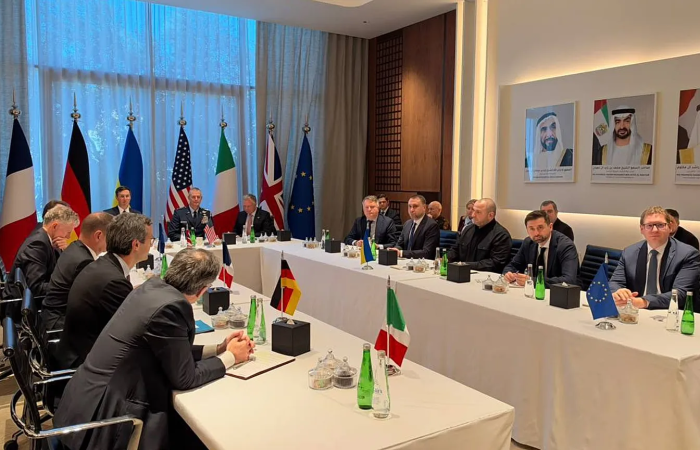
Three-way negotiations between Russia, Ukraine and the United States opened in Abu Dhabi on Tuesday, November 10, marking the resumption of direct peace talks since 28 February. The two-day discussions, mediated by Washington, aim to identify possible pathways towards ending the war, which has continued for nearly five years following Russia's full-scale invasion in February 2022. The negotiations come amid persisting disagreements over territorial concessions, Ukraine's future security arrangements and the role of European countries in determining the continent's security framework. The talks began with consultations between Ukrainian and American representatives and officials from the United Kingdom, France, Germany, Italy, NATO and the European Commission. Ukraine's chief negotiator, Rustem Umerov, said the participants would coordinate their positions before the subsequent trilateral discussions with Russia. Kyiv's delegation is also expected to include presidential chief of staff Kyrylo Budanov, while Moscow's team is led by Vladimir Medinsky, a long-standing Kremlin aide. Washington is represented by presidential envoys Steve Witkoff and Jared Kushner. Neither Russian President Vladimir Putin nor Ukrainian President Volodymyr Zelenskyy is attending. Territorial disputes remain the principal obstacle to a settlement. Moscow demands that Ukraine withdraw its troops from Donetsk, Luhansk, Zaporizhzhia and Kherson, four regions Russia declared annexed in September 2022 despite never establishing full control over them. Russia also insists that Kyiv abandon its NATO membership ambitions and accept restrictions on its military capabilities. Ukraine rejects these conditions, arguing that territorial concessions would reward Russian aggression and leave the country vulnerable to further attacks. According to a statement made by Zelenskyy on X, Kyiv will propose de-escalation measures and seek an agreement on arranging a future meeting between the Russian, Ukrainian and American leaders. Meanwhile, a senior US official reportedly indicated that both sides had demonstrated limited flexibility over territorial questions, although no details were provided. Post-war security guarantees are closely linked to the territorial negotiations. According to US media reports, Washington and Moscow have discussed arrangements potentially modelled on NATO's Article 4 and Article 5, covering security consultations and collective defence. Other proposals reportedly include reviving the NATO-Russia Council, suspended since 2022, and establishing a mechanism allowing sanctions against Moscow to be reinstated if it violates a ceasefire. (click image to read more)
Editor's choice
Event
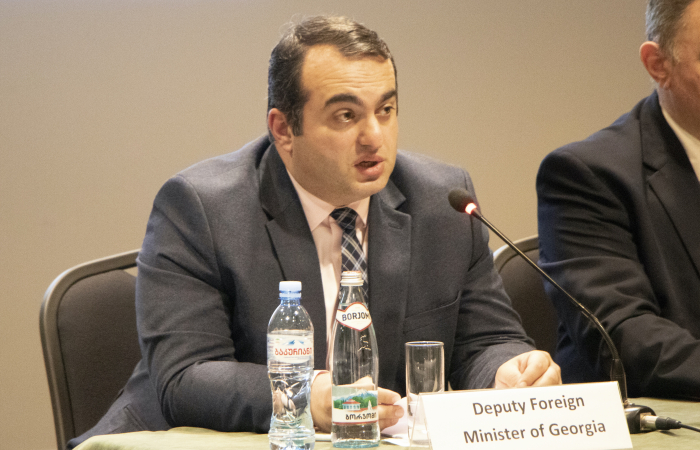
Lasha Darsalia:  "Today there are opportunities to have the South Caucasus as a real region, and especially a region where processes are based on cooperation and mutual respect"

Lasha Darsalia: "Today there are opportunities to have the South Caucasus as a real region, and especially a region where processes are based on cooperation and mutual respect"

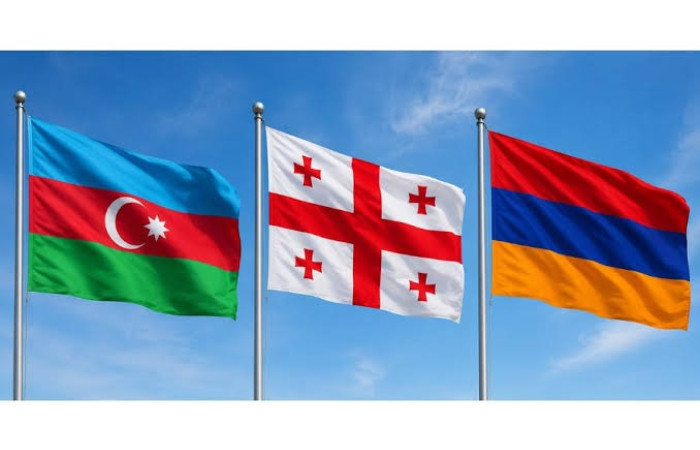
"Years ago the South Caucasus was not a political concept. It could be a geographical concept, anything, but not a political region. Maybe we are still not there yet. But definitely today there are opportunities to have the South Caucasus as a real region, and especially a region where processes are based on cooperation and mutual respect. This, at least, is how Georgia sees the South Caucasus and how we aim for this region to be. As independent countries for the last thirty years, we have been looking for this momentum, and Georgia sees it as an opportunity to build truly mutually beneficial cooperation inside our region.. This was stated by Georgian Deputy Foreign Minister, Lasha Darsalia, speaking in Yerevan, at the opening of the 3rd South Caucasus Dialogue Forum, on Friday, 6 November 2026. (click image to read speech in full)
Editor's choice
Event
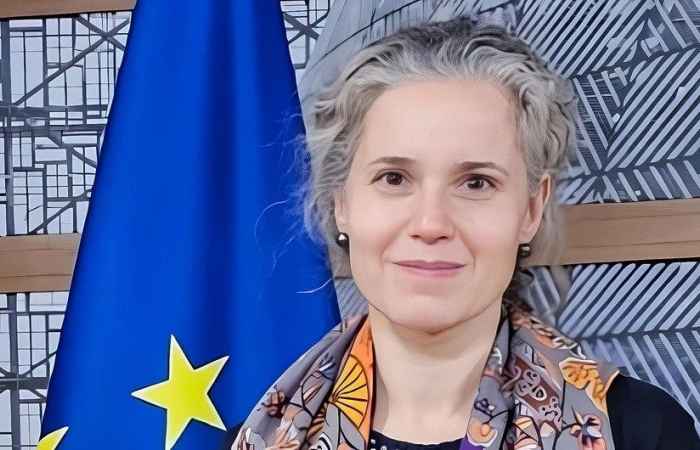
Magdalena Grono: "For the EU, the importance of the South Caucasus is uncontested"

Magdalena Grono: "For the EU, the importance of the South Caucasus is uncontested"

For the European Union the importance of the region is uncontested. It has been so for a very long time, but now the broader geopolitical challenges in the wider neighbourhood are highlighting that importance. We are ever more committed to continuing deep cooperation in bilateral ties, but also specifically regionally. As for the conflict resolution processes, in the Armenia–Azerbaijan context they are bilaterally driven, but there is a lot of space for supporting initiatives in very practical ways, and this is indeed what we're trying to do". This was stated by the EU Special Representative for the South Caucasus, Ambassador Magdalena Grono at the start of the 3rd South Caucasus Regional Dialogue Forum, on Friday,6 November 2026. (Click image to read her intervention in full) Around sixty participants, including Ambassadors, officials, experts and civil society activists from Armenia, Azerbaijan and Georgia, and from the international community, participated in the 3rd South Caucasus Dialogue Forum, held in hybrid form in Yerevan, and on line, on Friday, 6 November 2026. The keynote speaker was the Deputy Foreign Minister of Georgia, Lasha Darsalia.
Editor's choice
Event
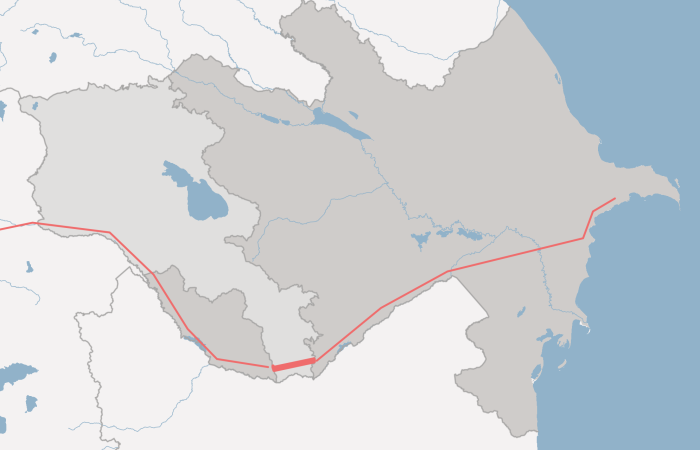
3rd South Caucasus Regional Dialogue Forum discusses challenges and opportunities in a changing region

3rd South Caucasus Regional Dialogue Forum discusses challenges and opportunities in a changing region

Around sixty participants, including Ambassadors, officials, experts and civil society activists from Armenia, Azerbaijan and Georgia, and from the international community, participated in the 3rd South Caucasus Dialogue Forum, held in hybrid form in Yerevan, and on line, on Friday, 6 November 2026... The keynote speaker was the Deputy Foreign Minister of Georgia, Lasha Darsalia. The European Union Special Representative for the South Caucasus, Ambassador Magdalena Grono, also addressed the forum. Dr Benyamin Poghosyan, Dr Vasif Huseynov, Dr Tornike Sharashenidze, Dr Anar Valiyev and Mr Narek Minasian made substantial interventions in the panel presentations, addressing some of the topics currently facing the region, and answered questions. The meeting was opened by Dr Stepan Grigoryan, Chairman of the Analytical Centre on Globalization and Regional Cooperation (Yerevan), and Dr Dennis Sammut, Director of LINKS Europe Foundation, the co-organisers of the 3rd Forum, made opening remarks in the event chaired by Alexandra Dumitrescu. The 3rd Forum built on the success of the 1st Forum held in Kachreti in August 2023, and in Tbilisi, in October 2025, and some of those attending these two events were also present in the 3rd Forum. Realism, hope, action and vision characterised the discussion and the mood of participants in the 3rd South Caucasus Regional Dialogue Forum. The forum will continue in Tbilisi in early 2027.
Editor's choice
News
UN Security Council Presidential Statement on the Role of Diplomacy during Active Hostilities

UN Security Council Presidential Statement on the Role of Diplomacy during Active Hostilities

The United Nations Security Council is today expected to adopt a presidential statement on the role of diplomacy during active hostilities. The draft text, which was authored by Pakistan, underscores the importance of maintaining diplomatic engagement even after the outbreak of armed conflict, with a view to containing escalation, facilitating cessations of hostilities and ceasefires, and creating conditions conducive to peaceful political settlements. Resolution 2788 of 22 July 2025, which was initiated by Pakistan, reaffirmed the Council’s commitment to the peaceful settlement of disputes under Chapter VI of the UN Charter. A year later, on 23 July, the Council convened an open debate to review the resolution’s implementation and examine ways of making more effective use of the peaceful dispute settlement tools available under Chapter VI.   The draft presidential statement builds on previous Council products, such as resolution 2788, but it is the first to focus specifically on the role of diplomacy in containing and de-escalating active hostilities. Since the open debate in July, Council members have continued to call for intensified efforts towards de-escalation and dialogue, although differences persist over how proactively the Council should promote mediation and other peaceful means of dispute settlement, particularly in situations where the consent of the parties is contested. In his statement opening the general debate of the 81st session of the General Assembly on 22 September, Secretary-General António Guterres highlighted the devastating consequences of ongoing conflicts in Ukraine, Sudan, and the Middle East, warning that these and other crises illustrate what happens when “force outpaces diplomacy” and stressing the urgency of sustained diplomatic engagement. The negotiations on the draft presidential statement do not appear to have been particularly contentious, although Council members expressed differing views on some elements of the text. Pakistan circulated the initial draft to Council members on 14 October. Following informal consultations with Council members to address comments on the initial draft, Pakistan circulated a first revised draft on 23 October, incorporating several proposed amendments. On 29 October, Pakistan circulated a second revised draft, which it placed under silence procedure until the following day (30 October). After the US broke silence, a third revised draft was circulated on 3 November and placed under silence procedure until this morning (4 November). The draft subsequently passed silence. The agreed presidential statement emphasises the importance of maintaining direct and indirect channels of communication between parties to armed conflict to reduce the risk of miscalculation and create opportunities for sustained political engagement. (click image to read more)