Editor's choice
News
Armenia-Azerbaijan Strategic Expert Platform: Members emphasise the importance of the present moment for the South Caucasus and call for the momentum to be used for the long-term peace and prosperity of the region

Armenia-Azerbaijan Strategic Expert Platform: Members emphasise the importance of the present moment for the South Caucasus and call for the momentum to be used for the long-term peace and prosperity of the region

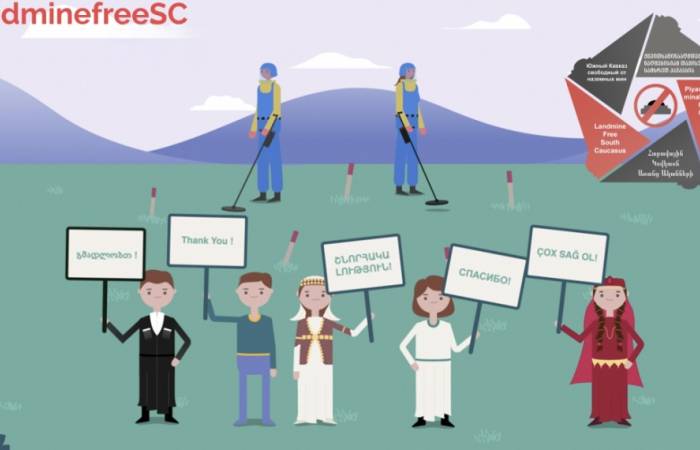
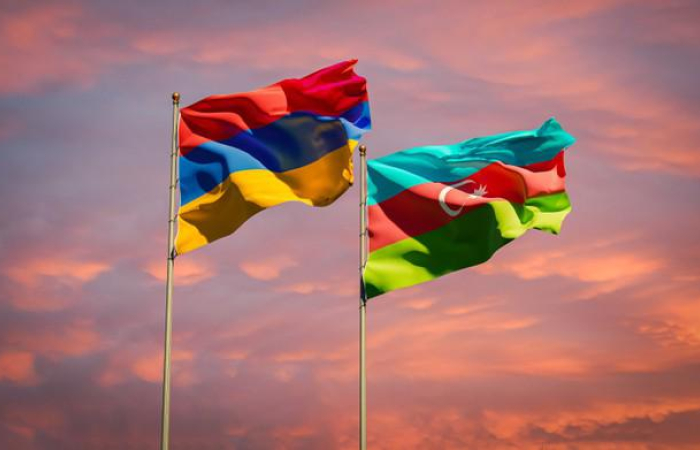
On 27 February 2026, the members of the Armenia-Azerbaijan Strategic Expert Platform met in Antwerp, Belgium, to assess developments in the South Caucasus following the initialling of a peace agreement between Armenia and Azerbaijan on 8 August 2025 at the White House. The members described the present moment as one of major importance for the region and its neighbours, urging leaders and societies alike to use the current momentum to secure long-term peace and prosperity. Established in 2024 with the support of LINKS Europe, the Platform provides a space for direct dialogue and joint analysis between Armenian and Azerbaijani experts. The members also reaffirmed the importance of continued international engagement and expressed strong support for LINKS Europe’s ongoing peacebuilding work in the region. (Click on the image above for the full statement.)
Editor's choice
Interview
Thursday Interview: Dr. Anar Valiyev

Thursday Interview: Dr. Anar Valiyev

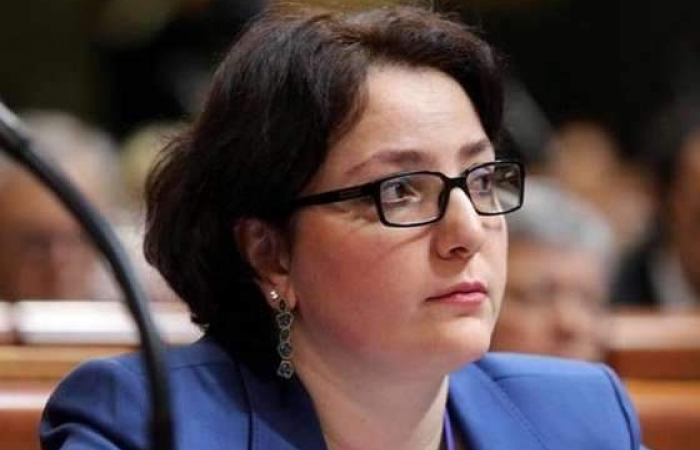
Dr. Anar Valiyev is an Associate Professor of Urban and Public Affairs at ADA University in Baku, Azerbaijan, with more than 18 years of experience in higher education. His research focuses on public policy, urban development, governance, and post-Soviet regional affairs. He holds a PhD in Urban and Public Affairs from the University of Louisville and has published widely on urbanisation, policy reform, and regional connectivity in the South Caucasus and beyond. This week, commonspace.eu spoke with Dr. Valiyev in Brussels ahead of a roundtable jointly organised by LINKS Europe Foundation and the European Policy Centre. He is taking part in a panel discussion focusing on the Armenia–Azerbaijan peace process, its implications for both countries and the wider region, the involvement of the European Union and the United States, and the challenges that lie ahead. In this interview, he reflects on how his research has evolved over nearly two decades in academia, examines the transformative potential of regional connectivity and trade, discusses the strategic role of energy in Azerbaijan’s foreign policy, and highlights the importance of people-to-people ties through education as a form of long-term soft power. (Read the full interview by clicking on the image above)

Filter archive

Publication date
Editor's choice
Monday Commentary
Monday Commentary: Europe’s deadly war enters its fifth year

Monday Commentary: Europe’s deadly war enters its fifth year

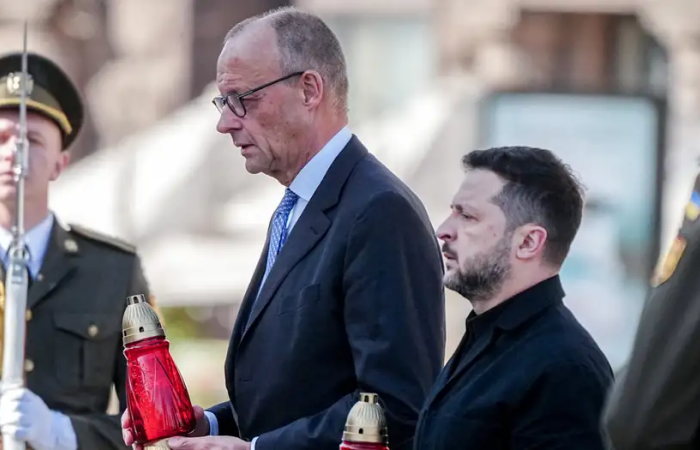
This week marks the fourth anniversary of Russia’s unprovoked attack and invasion of Ukraine, sparking a deadly European war. Despite the fact that only Ukrainian soldiers are fighting the Russian aggression, this war is a European war. Its outcome will have consequences throughout the continent. This has been a deadly war. Tens of thousands of soldiers on both sides have been  killed. Hundreds of thousands of Ukrainians have been displaced. The cost of the war unleashed by Vladimir Putin, in human, social and financial terms have been enormous, and cannot be accurately calculated as long as the fighting continues. The war in Ukraine must end this year! This can only happen if there is enough pressure on Putin’s Russia. Europe must sustain and increase its support for Ukraine. Fortunately leaders of the main European governments: France, Germany, UK and Poland are convinced of the importance of this, but they need to ensure the resolve of others, and of the European public. The support of the US is essential. Trump can end the war, not by agreeing to Russia’s terms, but by increasing pressure on Russia. There is still widespread support for Ukraine in American body-politic. Now is the time to show it. Ones the fighting stops the challenging task of rebuilding Ukraine – not just the infrastructure, but also the spirit of the Ukrainian nation – starts. In this Europe must lead, and EU accession is major and essential step that must happen quickly. Ukraine is a big country, damaged by war, and the EU will not digest it easily. For Europe however this is the ultimate test which it must pass honourable. And finally, once the guns are silent, what to do with Russia. Russia is too big, too important, and too close, to be ignored. However, under Putin Russia will remain a danger for its neighbours, for Europe, and ultimately, for the world. Relations with Russia will have to be re-invented. Europe must never again deal with Russia from a position of weakness or dependence. The decision of Finland and Sweden to abandon neutrality and join NATO, after the Russian invasion of Ukraine, has shown the way. A strong Europe can open a new dialogue with Moscow. But after Ukraine, trust will take a long time to build. (click the image to read the full Monday Commentary).
Editor's choice
News
Ukraine secures over €600 million in energy support at Paris meeting

Ukraine secures over €600 million in energy support at Paris meeting

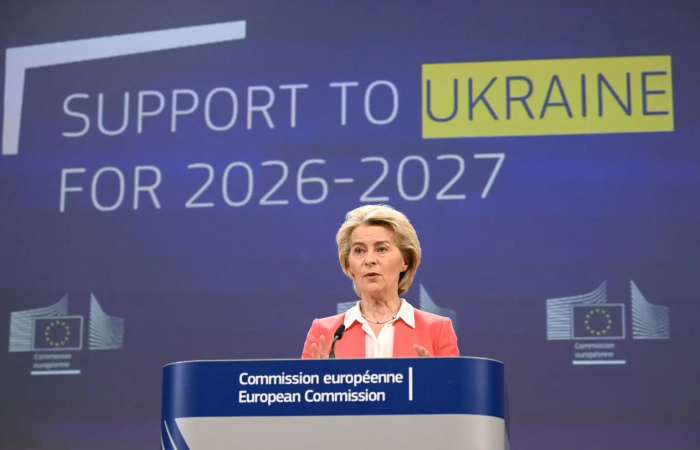
Ukraine’s Ministry of Energy and Western partners have agreed to allocate more than €600 million in support for Ukraine’s energy sector following a meeting in Paris, according to Energy Minister Denys Shmyhal. The funding package includes more than €250 million in contributions to the Ukraine Energy Support Fund, a separate United States assistance programme worth $276 million through the SPARK project, and €71 million in humanitarian energy assistance from France to be provided during 2026. The Paris meetings brought together representatives of the European Union, the United States, the United Kingdom, Denmark, Canada, Latvia, Germany, the Netherlands, Norway, Poland, Finland, and France. The support comes as Ukraine faces urgent needs to expand its energy generation capacity. Ukrainian officials have said that around 9.5 GW of new capacity will be required in the near future to stabilise the country’s energy system.
Editor's choice
Interview
Thursday Interview: Ambassador Akan Rakhmetullin

Thursday Interview: Ambassador Akan Rakhmetullin

His Excellency Mr. Akan Rakhmetullin is the Ambassador of the Republic of Kazakhstan to the Kingdom of the Netherlands and Permanent Representative to the Organisation for the Prohibition of Chemical Weapons (OPCW). A career diplomat with more than three decades of experience across bilateral and multilateral postings, he has represented Kazakhstan at the United Nations (UN) and the Organization for Security and Co-operation in Europe (OSCE), and played a central role in shaping the country’s multi-vector foreign policy and engagement with international institutions. Speaking to commonspace.eu, Ambassador Rakhmetullin reflected on his experience of representing a newly independent state in the 1990s, Kazakhstan’s ongoing domestic reform agenda, and how internal political changes shape the country’s external posture. He also discussed opportunities for deeper cooperation with Europe, particularly in energy, technology, and agriculture, defended the relevance of multilateral institutions under growing political strain, and explained why Kazakhstan continues to pursue a multi-vector foreign policy aimed at maintaining balanced relations with major powers. (Read the full interview by clicking the image above)