Editor's choice
News
Armenia-Azerbaijan Strategic Expert Platform: Members emphasise the importance of the present moment for the South Caucasus and call for the momentum to be used for the long-term peace and prosperity of the region

Armenia-Azerbaijan Strategic Expert Platform: Members emphasise the importance of the present moment for the South Caucasus and call for the momentum to be used for the long-term peace and prosperity of the region

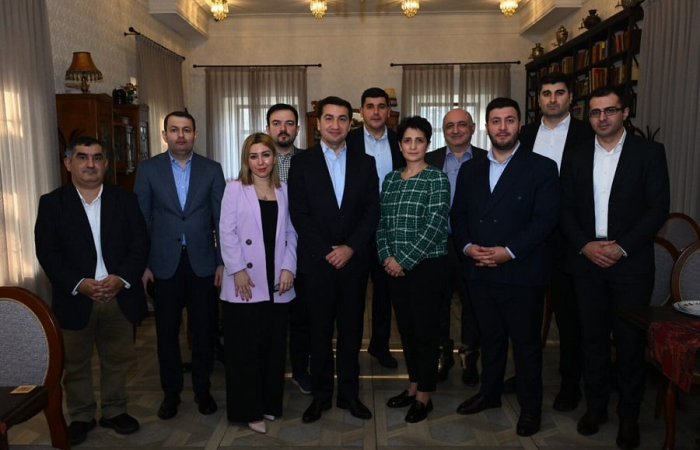
On 27 February 2026, the members of the Armenia-Azerbaijan Strategic Expert Platform met in Antwerp, Belgium, to assess developments in the South Caucasus following the initialling of a peace agreement between Armenia and Azerbaijan on 8 August 2025 at the White House. The members described the present moment as one of major importance for the region and its neighbours, urging leaders and societies alike to use the current momentum to secure long-term peace and prosperity. Established in 2024 with the support of LINKS Europe, the Platform provides a space for direct dialogue and joint analysis between Armenian and Azerbaijani experts. The members also reaffirmed the importance of continued international engagement and expressed strong support for LINKS Europe’s ongoing peacebuilding work in the region. (Click on the image above for the full statement.)
Editor's choice
Interview
Thursday Interview: Dr. Anar Valiyev

Thursday Interview: Dr. Anar Valiyev

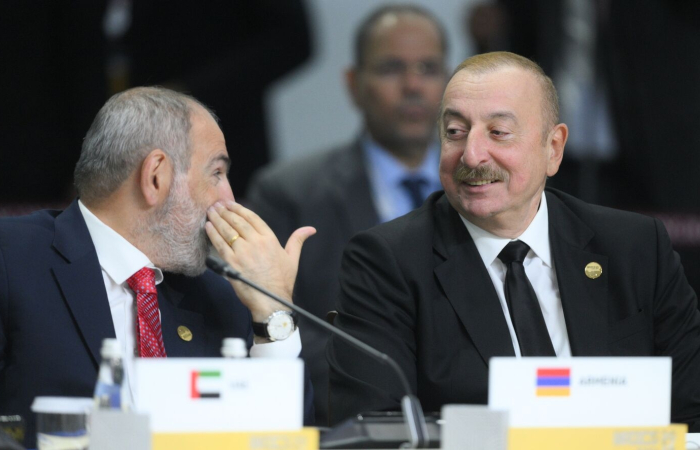
Dr. Anar Valiyev is an Associate Professor of Urban and Public Affairs at ADA University in Baku, Azerbaijan, with more than 18 years of experience in higher education. His research focuses on public policy, urban development, governance, and post-Soviet regional affairs. He holds a PhD in Urban and Public Affairs from the University of Louisville and has published widely on urbanisation, policy reform, and regional connectivity in the South Caucasus and beyond. This week, commonspace.eu spoke with Dr. Valiyev in Brussels ahead of a roundtable jointly organised by LINKS Europe Foundation and the European Policy Centre. He is taking part in a panel discussion focusing on the Armenia–Azerbaijan peace process, its implications for both countries and the wider region, the involvement of the European Union and the United States, and the challenges that lie ahead. In this interview, he reflects on how his research has evolved over nearly two decades in academia, examines the transformative potential of regional connectivity and trade, discusses the strategic role of energy in Azerbaijan’s foreign policy, and highlights the importance of people-to-people ties through education as a form of long-term soft power. (Read the full interview by clicking on the image above)

Filter archive

Publication date
Editor's choice
News
Ramadan begins

Ramadan begins

The Muslim Holy month of Ramadan started on Wednesday, 18 February. For Muslims across the world, the holy month of Ramadan is a time for religious reflection, increased worship, charity and community. Observant Muslims abstain from all forms of food and drink between the hours of dawn and sunset whilst trying to reconnect with their faith. Islam adheres to the lunar calendar. This means that the month of Ramadan begins when the first crescent of a new moon is sighted  The lunar calendar is 10 to 11 days shorter than the modern 365-day Gregorian calendar, which is based on the Earth's rotation around the sun. This difference means Ramadan begins on a different day each year.  In Muslim-majority countries, dedicated state committees check for the crescent moon and officially announce the start of Ramadan. Saudi Arabia, Qatar and several other Gulf countries claimed to have sighted the crescent moon on 17 February and declared 18 February as the first day of Ramadan. However, Egypt, Turkey Jordan and some other countries said the crescent moon was not sighted and therefore announced that Ramadan would begin on Thursday 19 February. This means that the month of fasting will likely end on either Wednesday 18 March or Thursday 19 March, as there are either 29 or 30 days in a lunar month. As a result, Eid al-Fitr, the festival of breaking the fast, is likely to fall on either Thursday 19 March or Friday 20 March. Eid al-Fitr marks the end of Ramadan. Muslims tend to celebrate Eid with a small breakfast and give to charity before Eid prayers in congregation.
Editor's choice
Opinion
Opinion: After the visit of US Vice President JD Vance, the South Caucasus is being rewired

Opinion: After the visit of US Vice President JD Vance, the South Caucasus is being rewired

"Vance’s visit did more than consolidate a peace process – it began rewiring the South Caucasus through energy, AI, and infrastructure. The region’s future alignment may well be determined less by traditional security blocs and more by who controls the region’s transport routes, builds its reactors, powers its data centers, and lays its fiber-optic cables", writes Vasif Husseynov, in this op-ed for commonspace.eu Vance’s February 9–11 visit to Armenia and Azerbaijan marked a structural turning point in the South Caucasus. Unlike previous high-level engagements of the United States that generated rhetorical alignment but limited follow-through, this visit embedded the region into long-term American economic, technological, and strategic frameworks. Taking place on the heels of the latest agreement (January 14) between Washington and Yerevan on the implementation framework for the Trump Route for International Peace and Prosperity (TRIPP), the visit served to consolidate the American influence in the region and taking it to higher levels. The consequences are unfolding along two axes: domestically, within Armenia and Azerbaijan’s political economies; and geopolitically, in the region’s recalibrating balance between the United States and Russia, with Georgia seeking entry into the new configuration. (click the image to read the op-ed in full).