Filter archive

Publication date
Editor's choice
Opinion
Shenzhen is not Yalta

Shenzhen is not Yalta

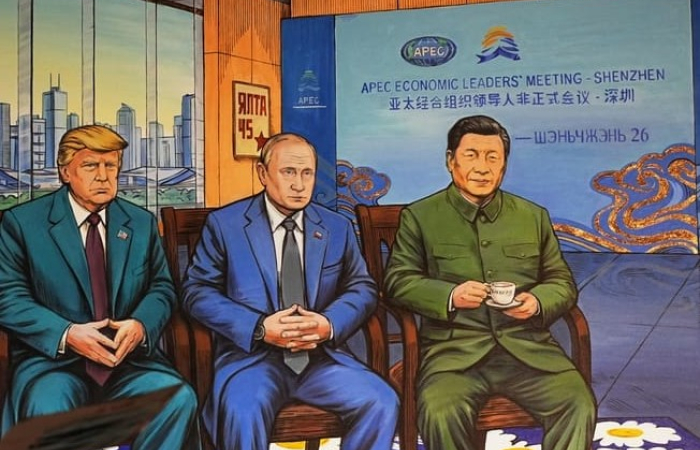
This is a comment prepared by the editorial team of commonspace.eu The leaders of Russia, China and the United States will meet on Thursday, 19 November 2026, in the city of Shenzhen, on the margins of the APEC summit, taking place in the Chinese city. Some are calling the summit historic, and the leaders of the three countries have never met in this format before. They call themselves the G3, and are being compared with the meeting of Roosevelt, Churchill and Stalin in 1945 in Yalta. But this is no Yalta 2.0, and the world does not have to hold it breath, and await the outcome. Yet the meeting is not without importance, and the messages that it sends are not without significance. As London’s Financial Times put it, “While expected to deliver few concrete outcomes, the powerful imagery of Trump meeting authoritarian Xi and revanchist Putin will reverberate throughout the world, especially in flashpoints such as Ukraine, Taiwan, and the Middle East”. Let us be clear, this is first and foremost a photo opportunity. The Russian and the American leaders need this. China less so, and at first were quite reluctant. In the end they saw something in it for them, and they acquiesced. For the US the main topic is arms control, and particularly how to bring China in the frame of a new arms control agreement; for Putin it is Ukraine. The Chinese are not ready to discuss either very deeply, and will instead focus on “global stability”. For Putin the summit is a win. It brings Russia back to the front. But the reality is that it is increasingly dependant on China, and Trump cannot deliver the kind of agreement on Ukraine that Russia wants. The G3 will not discuss Ukraine. The Chinese see the summit as another proof that they are now a superpower. They are happy to sustain the current trade truce with the US, whilst taking a long term view and using the interim period to strengthen their economic and military strength. Trump goes to the summit damaged. The war in Iran has done nothing but harm to the US. From January, Congress will be controlled by the Democrats. He is still the president, and still Commander in Chief, but he is much weakened. Its unlikely that anything positive will come out from the G3 summit. But it is good that the three are talking, and it is good that they will agree, as is likely, to talk more.
Editor's choice
News
Nuclear Safety Regulators Warn of Rising Risk of Nuclear Accident in Ukraine This Winter

Nuclear Safety Regulators Warn of Rising Risk of Nuclear Accident in Ukraine This Winter

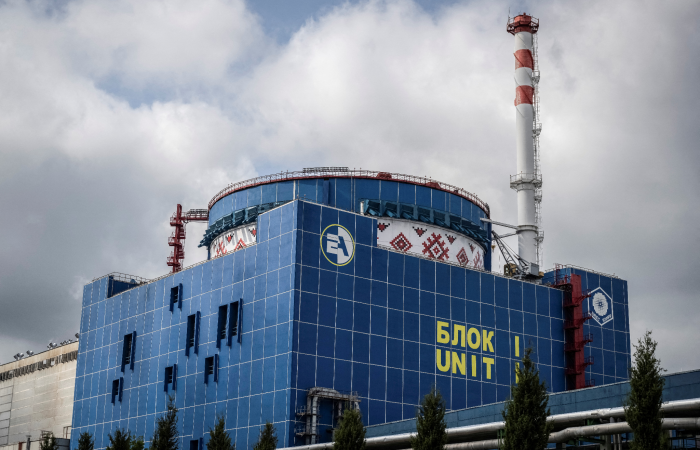
International nuclear safety regulators representing 38 countries have warned that the risk of a nuclear accident in Ukraine is increasing this winter as Russia intensifies attacks on the country's energy infrastructure. In a joint statement issued on Monday (November 16), three regulatory organisations called on Moscow to halt strikes against Ukrainian nuclear facilities and the electricity network essential to their safe operation. The statement was issued by the Heads of European Radiological Protection Competent Authorities (HERCA), the Western European Nuclear Regulators Association (WENRA) and the Heads of the Nordic Radiation Safety Authorities (NORA). Their members include representatives from all EU countries, as well as the United States, Britain, Canada and Japan. They expressed concern that continued attacks on power plants, transmission lines and electricity substations could undermine the safe operation of Ukraine's nuclear facilities. The main concern is the potential disruption of electricity supplies required to maintain reactor cooling systems. A prolonged loss of external power could force nuclear facilities to depend on emergency backup systems, increasing the risk of overheating and a possible meltdown. Such an incident could release radioactive material into the atmosphere, with consequences extending beyond Ukraine's borders. Per Strand, head of HERCA and NORA, told Reuters that Russian attacks had become more dangerous in recent weeks, with drones carrying larger payloads and demonstrating greater targeting precision. He identified this winter as the period of greatest risk, warning that the worst-case scenario would involve a nationwide blackout affecting all nine of Ukraine's operating nuclear reactors simultaneously. Strand stressed that the situation could still be prevented if Russia were pressured to stop attacking energy infrastructure, while urging European countries to strengthen their emergency preparedness. Already, the International Atomic Energy Agency (IAEA) reported on Saturday (November 14) that military activity had disrupted Ukraine's electricity supply during the preceding week, forcing some operating nuclear units to reduce their power output. Ukraine has four nuclear power plants, three of which are currently operational and supply approximately 80% of the country's electricity this winter. The fourth, the Russian-occupied Zaporizhzhia nuclear power plant, Europe's largest, is no longer generating electricity but continues to depend on external power to maintain the cooling of its nuclear material. According to the IAEA, the facility has lost its off-site electricity supply 27 times since the beginning of the war, repeatedly requiring emergency diesel generators to sustain essential operations.
Editor's choice
News
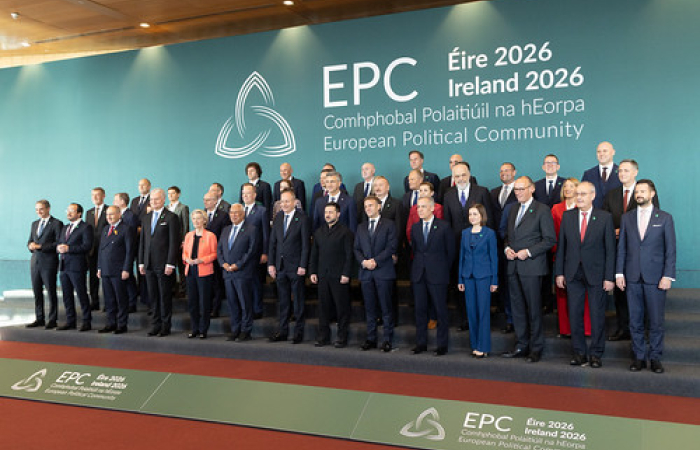
The 9th Summit of the European Political Community took place in Dublin on 12 November

The 9th Summit of the European Political Community took place in Dublin on 12 November

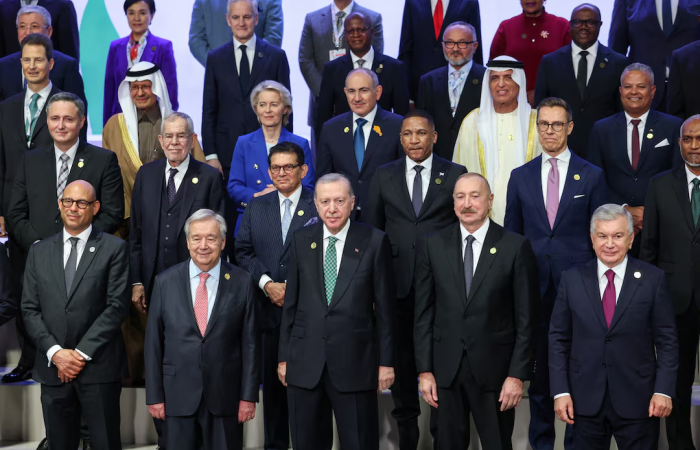
The ninth summit of the European Political Community brought together leaders from across the continent in Dublin, Ireland under the general theme 'Europe -strong, secure and connected'. Speaking at a press conference after the end of the summit the president of the European Council, Antonio Costa, summed up the discussions. He said: The search for a just lasting peace in Ukraine was the central theme of today’s discussions. Here is why it is important to recall Europe’s priorities in the ongoing negotiations. They are clear and they remain unchanged: first, reaching a ceasefire second, reestablishing navigation in the Black Sea third, creating the conditions for a peace agreement The fact is that, so far, there has been limited concrete progress in that direction. Because, so far, Russia continues to be focussed on escalating the war. It has yet to demonstrate that it prioritises peace over dominance. But, as the pace of diplomacy accelerates, it is important to recall that a lasting peace needs to be a just peace. And a just peace, a peace that allows for security in Europe to be restored, needs to be anchored in clear principles. First of all, Ukraine is a sovereign nation like any other nation in Europe. It must remain free to choose its alliances and its partnerships. Europe has consigned empires and zones of influence to the dustbin of history. And we will never allow for them to come to life again. Secondly, the future of European security cannot be discussed and decided without Europe. That is why the European Union, together with NATO and several European nations is playing its role in the ongoing diplomatic efforts. We are engaging as a team – side by side with our Ukrainian partners. The third principle concerns European security architecture. It is important to recall that Europe has an established European security architecture. Unfortunately, in the last decades Russia decided to undermine it by force. Culminating in the invasion of Ukraine. We are determined to continue to uphold on the same fundamental principles that have been guiding the foreign policies of peaceful European nations for decades: the sovereign equality between European nations refraining from the threat or use of force the inviolability of borders the territorial integrity of States the peaceful settlement of disputes These principles of international law will continue to guide the European Union in any negotiations about peace in Ukraine and security in Europe. The ninth summit of the European Political Community brought together leaders from across the continent in Dublin, Ireland under the general theme 'Europe -strong, secure and connected'. The summit was co-chaired by António Costa, the President of the European Council, and Micheál Martin, Taoiseach of Ireland. More than 40 heads of state and government took part in this ninth meeting of the European Political Community. The Prime Minister of Canada, Mark Carney, also participated in the European Political Community summit, for the second time, as a guest. The European Political Community aims to: foster political dialogue and cooperation to address issues of common interest strengthen the security, stability and prosperity of the European continent The next meetings of the European Political Community will take place in Switzerland and Greece.