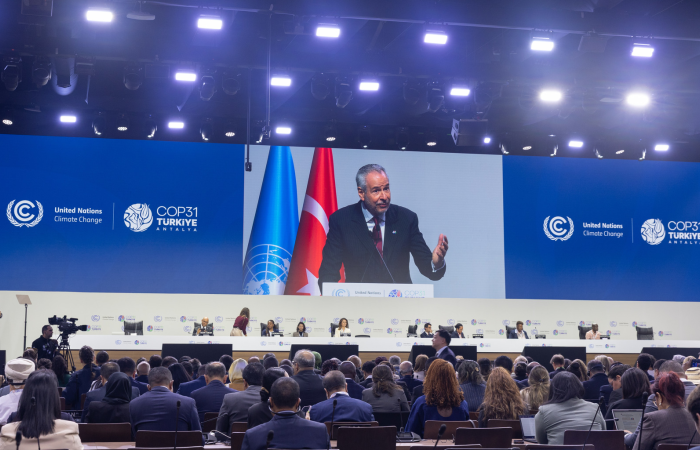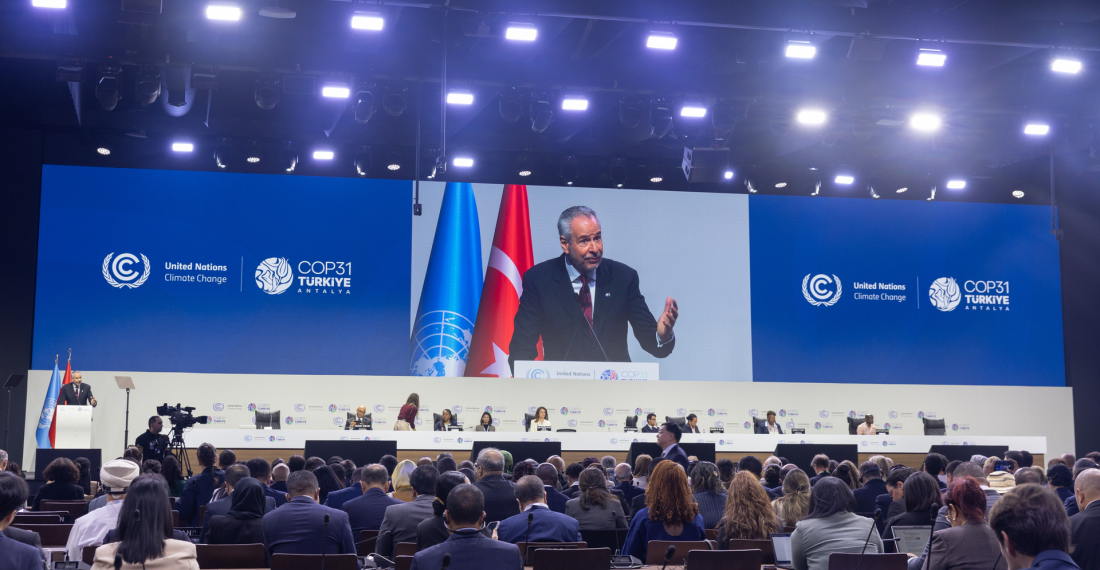
Nepal, Bhutan and Kyrgyzstan secured the inclusion of a dedicated mountain climate work programme in the draft cover decision of the 31st UN Climate Change Conference (COP31) on Tuesday, November 17. Simultaneously, the European Union reaffirmed its climate commitments and several new initiatives, establishing funding for forest, peatland and coral reef conservation, were announced.
The mountain climate proposal, submitted jointly by the three countries, is included in the draft 'Presidency-led, Party-driven Cover Decision'. It calls for a dedicated work programme to strengthen scientific research on the effects of climate change on mountain regions, improve adaptation measures and support communities dependent on glaciers. Besides this, the draft proposes keeping mountain-related issues on the COP agenda through regular dialogues and high-level discussions, including one at COP32. The initiative is specifically invoked as a way of addressing the threats of Himalayan glacier melt, glacial lake outburst floods, declining water resources and biodiversity loss.
Echoing a speech made by Turkish President Recep Tayyip Erdogan earlier during the summit, Wopke Hoekstra, European Commissioner for Climate, Net Zero and Clean Growth, described COP31 as an 'implementation COP' during a briefing in Antalya. Reaffirming the EU’s support for its climate commitments, he urged participating states to transition away from fossil fuels, triple renewable energy capacity, and increase climate adaptation finance and energy efficiency. Hoekstra also advocated faster electrification, including through solar, wind and nuclear energy.
Amidst these alarms, two countries presented promising developments. Ghana became the first African country to receive carbon credits under the ART TREES standard for jurisdictional REDD+. Accra was issued 6.57 million credits for reducing deforestation across 2.5 million hectares of cocoa-growing forest between 2017 and 2021, with each credit representing one tonne of avoided CO₂ emissions. Ghana expects approximately USD 43 million in initial payments. Meanwhile, Canada committed CAD 560 million (approximately USD 400 million) to the Tropical Forest Forever Facility, bringing its total capitalization to USD 8.3 billion against a USD 10 billion target.
The Peatland Breakthrough was also launched, targeting the restoration of 30 million hectares of degraded peatlands, mobilizing USD 100 billion. Germany, Ireland, Peru and Uganda became the project’s first Champion Countries, with Canada also giving its endorsement. Separately, the Global Fund for Coral Reefs declared the allocation of more than USD 30 million to expand conservation across 22 developing countries. Actions will include expanding marine protected areas in the Philippines, covering nearly one million hectares, and supporting conservation in Zanzibar, with expected adaptation benefits for 21,000 coastal residents.
Source: Anna Szedlacsek for commonspace.eu with Anadolu Ajansi (Ankara), The Rising Nepal (Kathmandu), UNFCC (Bonn).