Skirmishes in the Red Sea as Houthis attack shipping

Three commercial ships in the Red Sea were struck by ballistic missiles fired from Houthi-controlled Yemen on Sunday and a US warship shot down three drones in self-defence during the hours-long assault, the US military said. Responsibility for the attack was claimed by the Houthi rebels, who are backed by Iran.

The attacks marked an escalation in a series of maritime attacks in the Mideast linked to the Israel-Hamas war, as multiple vessels found themselves in the crosshairs of a single Houthi assault for the first time in the conflict.

In a statement, US Central Command said the attacks “represent a direct threat to international commerce and maritime security. They have jeopardized the lives of international crews representing multiple countries around the world.” It said the three commercial ships and their crews are connected to 14 countries.

According to Central Command, the USS Carney, a Navy destroyer, detected a ballistic missile fired from Houthi-controlled areas of Yemen at the Bahamas-flagged bulk carrier Unity Explorer. The missile hit near the ship. Shortly afterward, the Carney shot down a drone headed its way, although it’s not clear if the destroyer was the target. The drone was also launched from Yemen.
About 30 minutes later, the Unity Explorer was hit by a missile, and while responding to the distress call the Carney shot down another incoming drone. Central Command said the Unity Explorer reported minor damage from the missile.

Two other commercial ships, the Panamanian-flagged bulk carriers Number 9 and Sophie II, were both struck by missiles. The Number 9 reported some damage but no casualties, and the Sophie II reported no significant damage.
While sailing to assist the Sophie II, the Carney shot down another drone heading in its direction. The drones did no damage.

“We also have every reason to believe that these attacks, while launched by the Houthis in Yemen, are fully enabled by Iran,” Central Command said, adding that the US will consider “all appropriate responses.”

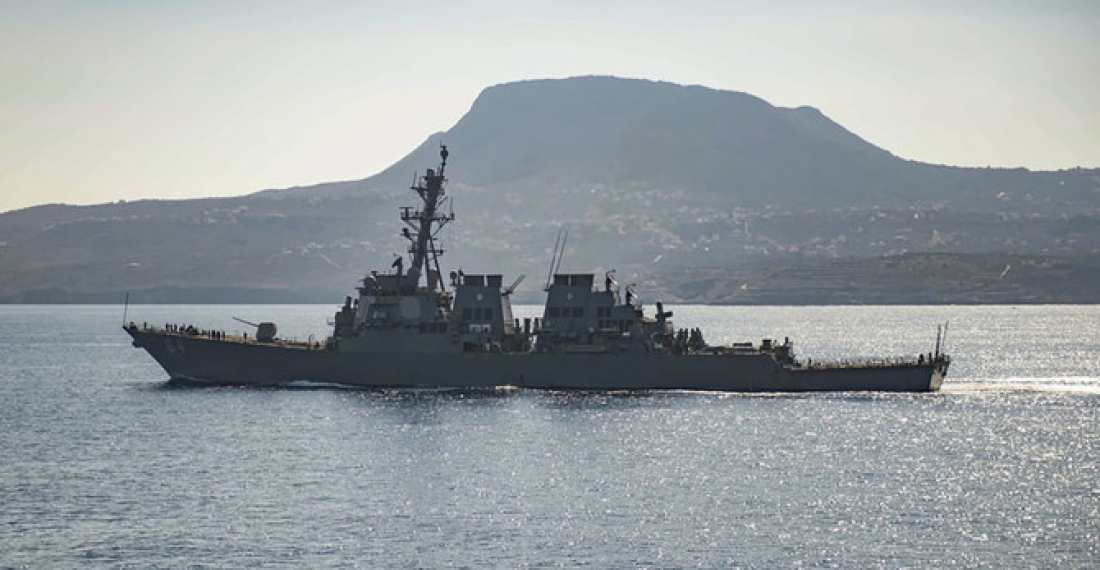
The Carney, an Arleigh Burke-class guided-missile destroyer, has already shot down multiple rockets the Houthis have fired toward Israel so far in the war. It hasn’t been damaged in any of the incidents and no injuries have been reported on board.
Houthi military spokesman Brig. Gen. Yahya Saree claimed Sunday’s attacks, saying the first vessel was hit by a missile and the second by a drone while in the Bab el-Mandeb Strait, which links the Red Sea to the Gulf of Aden. Saree did not mention any US warship being involved in the attack.

“The Yemeni armed forces continue to prevent Israeli ships from navigating the Red Sea (and the Gulf of Aden) until the Israeli aggression against our steadfast brothers in the Gaza Strip stops,” Saree said. “The Yemeni armed forces renew their warning to all Israeli ships or those associated with Israelis that they will become a legitimate target if they violate what is stated in this statement.” 

source: commonspace.eu with Associated Press and agencies
photo: USS Carney

Related articles

Editor's choice
News
Borrell tells the European Parliament that the situation in Afghanistan was critical, but the EU will remain engaged

Borrell tells the European Parliament that the situation in Afghanistan was critical, but the EU will remain engaged

Borrell underlined that the European Union will make every effort to support the peace process and to remain a committed partner to the Afghan people. "Of course, we will have to take into account the evolving situation, but disengagement is not an option.  We are clear on that: there is no alternative to a negotiated political settlement, through inclusive peace talks.
Editor's choice
News
Germany accuses Russia of cyberattacks and disinformation campaign

Germany accuses Russia of cyberattacks and disinformation campaign

The German government holds Russia responsible for a cyberattack on German air traffic control, and for targeted disinformation campaigns before the last federal election. According to the German Foreign Office in Berlin, the incidents could be clearly attributed to the Russian military intelligence service, the GRU. In response, the Russian ambassador to Berlin was summoned to the Foreign Ministry. "We have been observing a massive increase in threatening hybrid activities by Russia for some time now," a spokesperson for the Foreign Ministry stated. These range from disinformation campaigns and espionage to cyberattacks and sabotage attempts. The aim is to divide society, sow distrust, and undermine confidence in democratic institutions. The spokesperson added that with these actions, Russia is "very concretely threatening our security, not only through its war of aggression against Ukraine, but also here in Germany."  The Foreign Ministry spokesperson explained that the cyberattack on air traffic control in August 2024 was clearly attributed to the hacker collective "APT28," known as "Fancy Bear," and to the responsibility of the Russian military intelligence service, the GRU. Furthermore, it could now be "conclusively stated" that Russia had attempted "to influence and destabilize both the last Federal election and the ongoing internal affairs of the Federal Republic of Germany." There was "absolutely irrefutable evidence" for this". The so-called "Storm 1516" campaign, which has been running since 2024, is allegedly backed by "reliable information" that the Moscow-based think tank "Center for Geopolitical Expertise" is behind it. The Center is also said to be supported by Russian military intelligence. Its primary aim is to influence democratic elections in the West. (Click the image to read more).

Popular

Editor's choice
News
Germany accuses Russia of cyberattacks and disinformation campaign

Germany accuses Russia of cyberattacks and disinformation campaign

The German government holds Russia responsible for a cyberattack on German air traffic control, and for targeted disinformation campaigns before the last federal election. According to the German Foreign Office in Berlin, the incidents could be clearly attributed to the Russian military intelligence service, the GRU. In response, the Russian ambassador to Berlin was summoned to the Foreign Ministry. "We have been observing a massive increase in threatening hybrid activities by Russia for some time now," a spokesperson for the Foreign Ministry stated. These range from disinformation campaigns and espionage to cyberattacks and sabotage attempts. The aim is to divide society, sow distrust, and undermine confidence in democratic institutions. The spokesperson added that with these actions, Russia is "very concretely threatening our security, not only through its war of aggression against Ukraine, but also here in Germany."  The Foreign Ministry spokesperson explained that the cyberattack on air traffic control in August 2024 was clearly attributed to the hacker collective "APT28," known as "Fancy Bear," and to the responsibility of the Russian military intelligence service, the GRU. Furthermore, it could now be "conclusively stated" that Russia had attempted "to influence and destabilize both the last Federal election and the ongoing internal affairs of the Federal Republic of Germany." There was "absolutely irrefutable evidence" for this". The so-called "Storm 1516" campaign, which has been running since 2024, is allegedly backed by "reliable information" that the Moscow-based think tank "Center for Geopolitical Expertise" is behind it. The Center is also said to be supported by Russian military intelligence. Its primary aim is to influence democratic elections in the West. (Click the image to read more).