Georgian civil society organisations have given a negative assessment of the 31 October parliamentary elections. They say "the Georgian government has failed to ensure the elections adhere to democratic standards".
On October 31, 2020, the parliamentary elections were held in Georgia in accordance with the updated electoral system. The citizens of Georgia had the opportunity to elect a legislative body based on a model that is close to the proportional system, and this should be considered as an important step forward. Despite this change, we believe that the Georgian government has failed to ensure the elections adhere to democratic standards. Moreover, in our assessment, the 2020 parliamentary elections were the least democratic and free among the elections held under the Georgian Dream government.
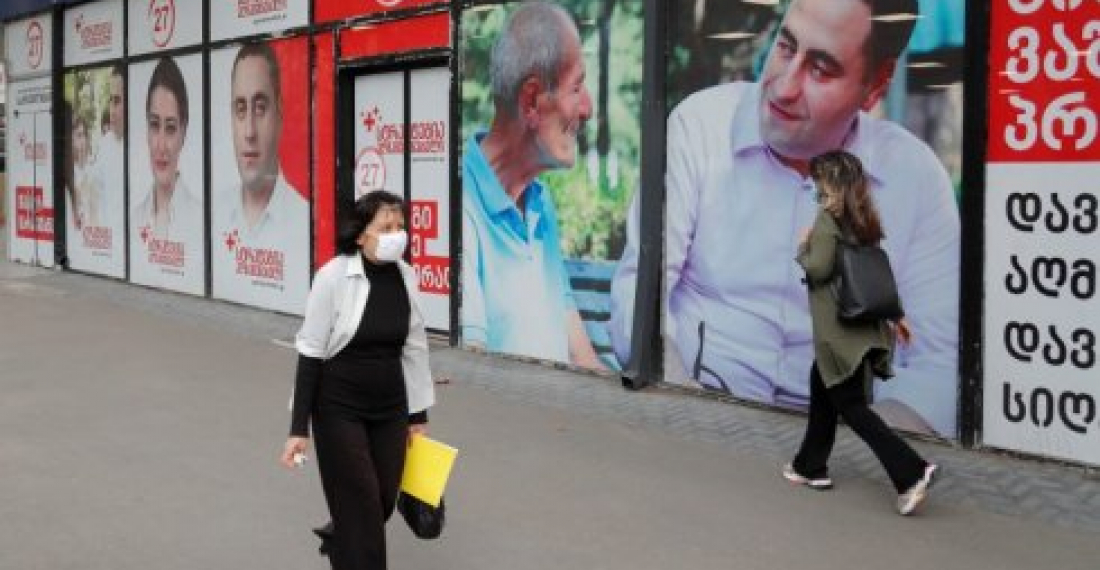
In the pre-election period, political parties had the opportunity to campaign without significant restrictions. However, during the campaign, there were instances of violent confrontations, harassment, and threats against voters and journalists, and these cases were not normally followed by an efficient investigation. This created a perception of a political bias of the investigative bodies in the part of the society. Also, the pre-election period was characterized by unprecedented use of administrative resources by the ruling party, blurring the line between the state and the party. The ruling party did not shy away from manipulating the patriotic feelings of the citizens and, presumably for this purpose, launched the so-called "Cartographers Case", which led to the arrest of two, most likely innocent, people.
On election day, there were cases of verbal and physical confrontations in and around polling stations, the observers, and journalists being obstructed and attacked. NGOs have reported numerous cases of breaches of the secrecy of the ballot and voter bribery. Just five NGOs, with about 3,000 observers, wrote more than 500 complaints at various polling stations. Some PEC members, as well as representatives of political parties, including the opposition, displayed a hostile attitude towards the observers.
There was also a problem of the Central Election Commission's delay in announcing the primary election results, about seven hours after polling stations closed, which should be seen as a deterioration in established practice over the past eight years. The delay in publishing the primary results has raised questions in the public about the fairness of vote counting. These questions were exacerbated after the public found out that there was a certain imbalance in the vote count protocols in 8% of polling stations. In view of these circumstances, NGOs request a recount of the results of the precincts where imbalances were observed in the protocols, as well as the lawful and impartial review of the submitted complaints.
In summary, we would like to note that the 2020 parliamentary elections were marked by a low degree of democracy, which would be detrimental to the stable development of our country and its international reputation.
The statement was signed by the following organisations:
Georgian Young Lawyers' Association (GYLA)
Transparency International Georgia (TI)
International Society for Fair Elections and Democracy (ISFED)
Georgian Democracy Initiative (GDI)
Open Society Georgia Foundation (OSGF)
Human Rights Education and Monitoring Center (EMC)
The Economic Policy Research Center (EPRC)
Union "Sapari"
Institute for Development of Freedom of Information (IDFI)
Human Rights Center (HRC)
Green Alternative
Democracy Reporting International Georgia (DRI)
Georgian Media Club
Atlantic Council of Georgia
The Georgian Institute of Politics (GIP)
International Center for Civic Culture (ICCC)
Regional Development Center
Georgia's Reforms Associates (GRASS)
Research Center for Human Rights and Social Justice (HRIDC)
Democratic Development Union of Georgia
In-Depth Reporting and Advocacy Center
Management Systems Development Center (MSDC)
Civic Initiative
Community Foundation "Leli"
Community Union "Nukriani"
Governance Monitoring Center (GMC)
source: commonspace.eu