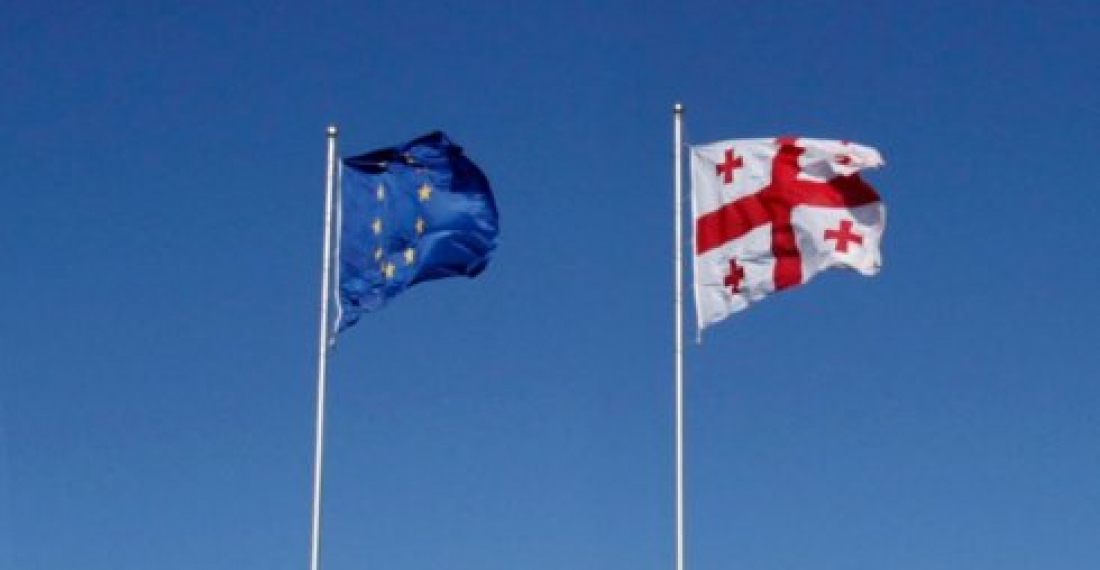
The European Union and Georgia held the 13th round of their annual Human Rights Dialogue by video-conference on 2 July 2020.
The Georgian delegation was headed by Mr. Vakhtang Makharoblishvili, First Deputy Minister of Foreign Affairs while the EU delegation was led by Mr Richard Tibbels, Head of Division in the European External Action Service. Reviewing developments since the previous dialogue in May 2019, the dialogue allowed as previously for an open, constructive exchange on the human rights situation in Georgia, on Georgia's commitment to making sustainable progress in human rights protection and on the latest developments with the EU's policy for the promotion and protection of democracy and human rights.
The sides stressed their commitment to the universality of human rights for all, regardless of religion or belief, ethnic origin, race, sex, language, sexual orientation, gender identity, ability or other. The EU and Georgia welcomed progress on human rights protection in Georgia, and acknowledged the particular challenges posed by the coronavirus pandemic to international human rights protection.
The EU reaffirmed its support to the sovereignty and territorial integrity of Georgia within its internationally recognised borders. The EU expressed concern about the deterioration of the human rights situation in the Georgian regions of Abkhazia and Tskhinvali region/South Ossetia, especially with regard to ethnic discrimination in particular towards ethnic Georgians, restriction of freedom of movement, including for health care and access to other social services, arbitrary detentions, violation of property rights and education in mother tongue, as well as about the persistent obstacles to the safe and dignified return of internally displaced persons and refugees to their homes.
The EU and Georgia reaffirmed that the Russian Federation has an obligation to implement the EU-mediated 12 August 2008 Ceasefire Agreement, and stressed the need for tangible results in the Geneva International Discussions in order to solve the security and human rights challenges of people affected by the conflict. The EU expressed deep concern about the complete closure of the administrative boundary line in Tskhinvali region/South Ossetia since September 2019, which has led to critical humanitarian consequences in Akhalgori district particularly during the Coronavirus pandemic. The sides underlined the importance of ending impunity in the cases of deprivation of life of Georgian citizens Archil Tatunashvili and Giga Otkhozoria. The EU and Georgia stressed the need for unhindered access by international humanitarian and human rights mechanisms of the relevant international organisations, as well as the EU Monitoring Mission (EUMM), to both Georgian regions. The EU encouraged increased efforts in addressing the fate of missing persons with a view to giving closure. The EU reiterated its support to Georgia's peace initiative "A Step to a Better Future" aimed at improving the socio-economic situation of conflict-affected people and at building confidence among the divided communities and welcomed its implementation
The EU welcomed the adoption of the constitutional amendments in Parliament on 29 June 2020 that establish a more proportional electoral system and will promote greater parliamentary pluralism. The EU raised the importance of adopting, with broad parliamentary support, ambitious electoral reform legislation arising from the OSCE/ODIHR recommendations as well as the importance of its timely adoption and effective implementation. Both sides agreed on the importance of maintaining a free and pluralistic media environment, and political pluralism as a prerequisite for the conduct of democratic elections, including in the context of the forthcoming parliamentary elections. The parties agreed on the importance of the fundamental freedoms including freedom of expression and freedom of assembly and committed to upholding them for all.
The EU welcomes progress on support to those belonging to ethnic minorities and ensuring civic integration processes in Georgia and encourages Georgia to continue efforts to improve the participation of women and representatives of those belonging to ethnic minorities in all areas of public life.
The EU recalled the importance of combating all forms of discrimination and of protection and better integration of those belonging to vulnerable groups including LGBTI persons. The EU welcomed Georgia's efforts to continue ensuring the effective implementation of its anti-discrimination law and strengthening the policy framework. The EU also encouraged Georgia to progress on legislation and coordinated efforts to deliver real benefits in the lives of persons with disabilities.
The EU noted progress made in combatting domestic violence and all violence against women, hate crimes and discrimination, and ensuring victim-centred investigations. The EU recalled the importance of implementing commitments related to the Istanbul Convention.
The Georgian Inter-Agency Human Rights Council's meaningful cooperation with civil society was recalled and the EU encouraged Georgia to continue integrating the voice of civil society into the policy making process. The valuable ongoing work of the Public Defender's Office and the new State Inspectorate Service was also discussed and the important role of independent oversight bodies in holding governments to account and in shaping laws and policies.
The EU welcomed progress in the implementation of the Law on Occupational Safety to all sectors of the economy and again encouraged efforts to ensure that the labour inspectorate is transformed into a fully-fledged labour inspectorate. The EU welcomed the adoption of the Child Rights Code and progress with the Juvenile Justice Code as part of necessary efforts to address the situation of children in vulnerable situations and children in situations of extreme poverty. The EU stressed the importance of finalising the deinstitutionalisation process.
The EU noted the considerable progress made in and priority attached by Georgia to preventing torture and ill-treatment. The EU welcomed the ongoing reform of the penitentiary and crime prevention systems under the Ministry of Justice of Georgia and human-centred corona responses of the Special Penitentiary Service. The EU looked forward to the continued implementation of all recommendations of the Committee on the Prevention of Torture and of the National Preventive Mechanism.
The parties highlighted the importance of coordinated work to protect and promote human rights utilising national policy mechanisms, such as the National Human Rights Strategy and Action Plan. The parties also agreed to continue to identify ways to further strengthen their cooperation on human rights issues in multilateral fora, including the UN, OSCE and the Council of Europe and on the importance of strengthening multilateralism. The EU welcomed Georgia's achievements under its Presidency of the Committee of Ministers of the Council of Europe. The EU also welcomed Georgia's continued active engagement in the "Good Human Rights Stories" initiative. In line with its policy of consulting civil society ahead of its meetings on human rights, the EU drew on the valuable input of Georgian and international NGOs and international and regional organisations active in Georgia.
source: commonspace.eu with the Europpean External Action Service