There are conflicting reports of serious incidents on the Armenia-Azerbaijan state border on Thursday (29 December). Armenia says it has killed seven Azerbaijani soldiers. Azerbaijan denies the report but says one of its soldiers is missing. Armenia says three of its own soldiers are dead. Both sides accuse each other of starting the incident.
Update at 15.00 GMT on 29 December 2016
Commonspace.eu political editor said that this incident, if confirmed, constitutes a serious escalation of the situation. It would be the most serious incident involving Armenian and Azerbaijani soldiers since the short "war" in April which left hundreds of dead people on both sides. However, if the number of casualties are confirmed, it would also constitute the most serious incident on the international border and outside the conflict zone, and this has serious implcations. Armenia is locked into a number of defence arrangements with Russia, including membership of the Collective Security Treaty Organisation. (CSTO). The CSTO always argued that it cannot be involved in issues in the Karabakh conflict zone, but that if the Armenian international border was vilolated that would be another matter.
CSTO Secretary General, Nikolay Bordyuzhas, said in a statement a few hours ago, quoted by the Armenian media:
"We assess such actions in the territory of a CSTO member state as a provocation, especially against the backdrop of the quite serious incident in the Nagorno-Karabakh Republic, in April of this year, with the use of heavy weapons and military equipment.
"Considering the efforts launched by the leaders of the two [conflicting] sides as well as of some [other] states, it seemed that the Karabakh conflict settlement process finally would be more active. However, the information being recently received from the region, [and] about the violation of the ceasefire agreements, especially the December 29 incident which has caused the death of military servicemen, gives rise to serious concern," said the CST0 Secretary General.
You can read the statement in Russian here
The statement has already been denounced by the Azerbaijani Foreign Ministry, who in an earlier separate statement blamed Armenia for the incident. Reference in the CSTO statement to the self-declared Nagorno-Karabakh Republic is likely to create controversy.
Media reports in Armenia also say that the co-Chair of the OSCE Minsk process are in contact with the sides.
--------------------------------------------------------------------
Armenian media sources, quoting sources in the Armenian Defence Ministry, say that "Azerbaijani troops launched a diversionary infiltration attempt, on early Thursday morning, southeast of Chinari village in Tavush Province, on the international border between Armenia and Azerbaijan."
Artsrun Hovhannisyan, Spokesperson of the Armenian Ministry of Defence, told the media that "the Armenian armed forces entered into a battle with the adversary". "Snipers' and grenade launchers' fires are shot, which continue," he noted. "The RA Armed Forces fully control the situation by preventing the encroachment of the adversary."
Armenia says that seven Azerbaijani soldiers were killed and that three of its soldiers were also killed. It named them as Senior Lieutenant Shavarsh Melikyan, and Privates Edgar Narayan and Erik Abovyan.
The Azerbaijani side is giving a different version of the incident. It says that information about the seven Azerbaijani casualties "was false and baseless".
The Azerbaijani Defence Ministry claims that "a reconnaissance group of the Armenian Armed Forces tried to violate the Azerbaijan-Armenia state border on December 29 in morning. The Armenian group was ambushed by the Azerbaijani army while violating the borders. The enemy suffered losses in the ensuing clash and had to retreat. A soldier of the Azerbaijani Armed Forces, Gurbanov Chingiz, is missing as a result of the shootout. He is being searched for", the source added.
Azerbaijan also says that there are reports that a private house in Ahmadaghali village of Aghdam district was shelled by Armenian armed forces.
In a statement issued in Yerevan, the Armenian Foreign Ministry
"We condemn in the strongest terms today's diversionary incursion attempt by Azerbaijan on the state border with Armenia, which resulted in human loses. We express our deepest condolences to the relatives and fellow servicemen of the fallen soldiers.
The location of the reported incidents is outside the Nagorno-Karabakh conflict zone, and on the international border between Armenia and Azerbaijan.
Source: commonspace.eu with agencies
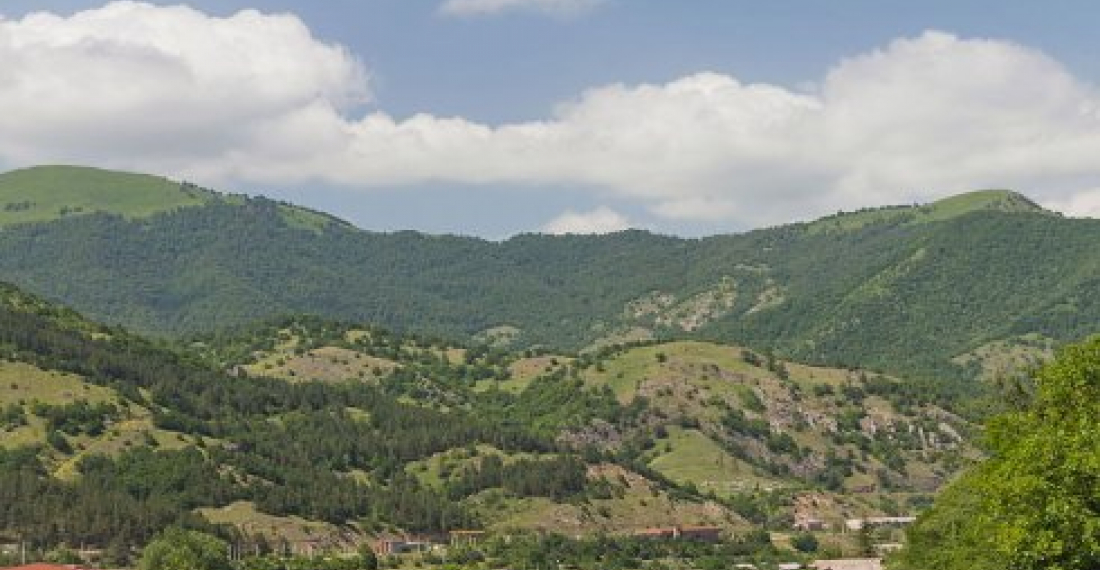
Photo: Tavush region (archive picture)