The leaders of Armenia. Azerbaijan and Georgia sent mixed messages to their compatriots in their usual New Year addressses televised a few minutes before the stroke midnight hailed in 2013.
Whilst all messages struck some note of hope their themes and tones were very different.
Georgia this year got two New Year messages, reflecting the auckward "political co-habitation " between Prime Minister Bidhzina Ivanishvili and President Mikheil Saakashvili.
In his thirteen minute address Saakashvili lambasted the new government for what he called “Destruction of democratic state institutions", “Systematic degradation of relations with Georgia’s western allies", “deteriorating crime situation” and “irresponsible decisions”. Saakashvili proposed to the government a five point programme which he said will lead "the ruling party and its leader on the path towards success".
In a much shorter address Prime Minister Ivanishvili said
"New and more difficult, but at the same time very interesting stage for the development of our country on the path of freedom, democracy and rebuilding is now starting."
"Georgia will definitely become such state; it will become the member of EU and NATO and next year [2013] will be the year of significantly getting closer to these goals".
Ivanishvili also sent his New Year greetings to Abkhaz and Ossetians: "I believe that we will find the ways leading us to each others' hearts and we will restore relations and we will jointly take care of our future,"
Azerbaijani President Ilham Aliev speech was upbeat and belligerent.
"Our economic and military power is building up. Our international positions are being strengthened", he told Azerbaijanis.
The President spoke about the Nagorno-Karabakh conflict:
"Very serious political events took place to solve the Nagorno-Karabakh conflict in 2012. First of all, I want to highlight the heads of Minsk Group co-chair states` statement, which underlined that the status quo is unacceptable. It shows that no one including mediators dealing with this issue, countries assuming functions refuse to put up with the occupation. Changing status quo means the end of occupation.
The summit of the Non-Aligned Movement that Azerbaijan acceded to adopted a very comprehensive and fair resolution in 2012, which says the conflict must be solved on the basis of territorial integrity of Azerbaijan only.
At the same time, the resolution adopted at the NATO summit in 2012 highlighted the issue of resolution of the Armenia-Azerbaijan conflict on the basis of territorial integrity. The countries, which are the members of the Non-Aligned Movement and NATO, constitute the vast majority of the world community and the stance of these countries is unambiguous: territorial integrity of Azerbaijan must be restored. There is no other solution to the conflict.
I want to reiterate that Azerbaijan will never allow creation of another so-called Armenian state in its native lands. The present Armenia was established on the historical Azerbaijani territories. We know this history very well. Irevan khanate, Zangazur, Goycha mahals are our historical lands. The creation of the second Armenian state in the Azerbaijani lands will never happen. Azerbaijan will never allow this. Nagorno-Karabakh will never get independence.
Azerbaijan will restore its territorial integrity and Azerbaijani flag will be raised in all currently occupied towns, including Shusha, Khankendi.
I think mediators must give more concrete proposals to solve the conflict in 2013 and aggressor must be forced to leave occupied lands as soon as possible.
It is not a secret to anybody that we are seriously working on the military build-up. The Azerbaijani army is the strongest force in the South Caucasus. All necessary measures are being put in place to beef up the army. Large amounts of military equipment, ammunition, aircrafts, helicopters, artillery, air-defense systems were acquired and, at the same time, production of over 40 military products was organized domestically.
We will strengthen our army even more in 2013. Our military spending is 50 percent more than the overall Armenia`s budget. This purposeful and comprehensive policy will be continued from now on so that the Armenia-Azerbaijan conflict over Nagorno-Karabakh could be solved and Azerbaijan`s territorial integrity could be recovered."

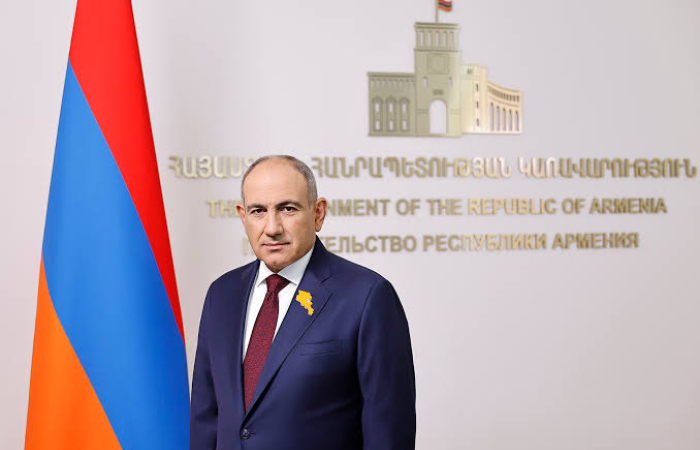
Armenian President Serzh Sargsyan sounded an optimistic note in his address to the Armenian people on new year's eve:
"We are entering the New Year with new hopes and great expectations of progress. We are confident that Armenia’s political and economic course is right and serves the interest of our nation. Certainly, there are things to amend, and we will do it together."
Earlier the President also payed tribute to conscritpts who serve in the Armenian Army:
"In 2012, tens of thousands of our sons were called by the Army to forge them as men, defenders of the land and pillars of the families. In 2012, strength of our sons' hands and their discipline, potent minds and vigilance kept our borders intact and our Motherland safe. Let years 2013 and 2014 bring them safe duty, keep them out of harms way. Let our boys come back home safe and sound, let they bring peace to our land."
Commonspace.eu political editor said in a comment: "The speeches of the four leaders reflect concerns, fears and hopes at a time when an air ox expectancy hangs over the region, with many considering the next year to be a defining one in many respects. Whilst nothing in the speeches is actually new, the emphasis put by the different leaders gives us some picture of what is on their mind in this time of year when people reflect on the future."
source: commonspace.eu with local media
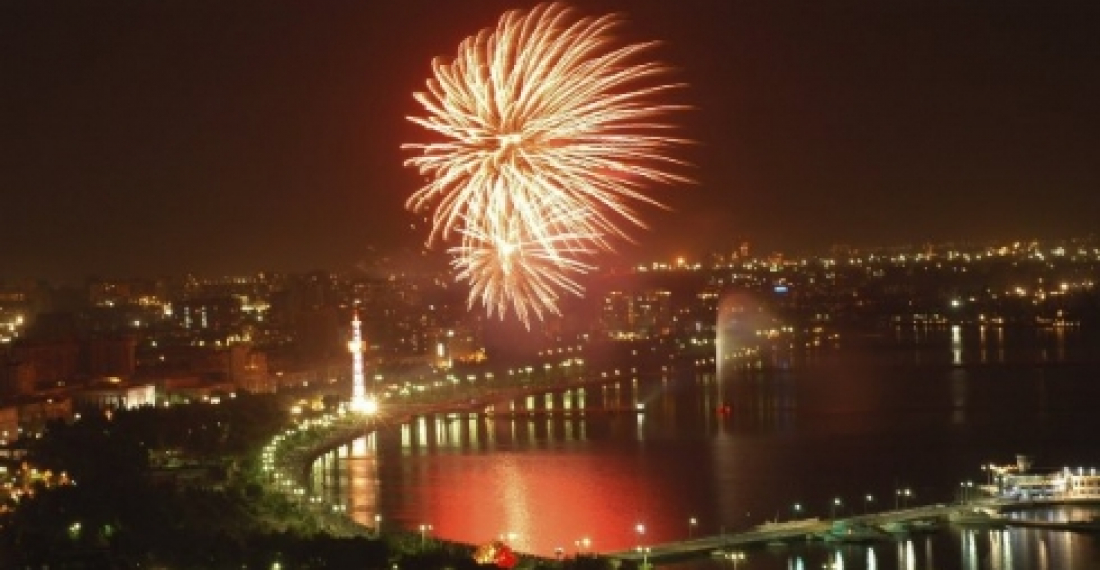
photo 1: Baku celebrates New Year with fireworks.
photo 2: Central Yerevan decorated for New Year