


Georgia's awkward neighbours.

Georgia has summoned the Armenian Ambassador following meeting between Chairman of Armenian Parliament and South Ossetian official. In this op-ed for commonspace.eu Dennis Sammut discusses tensions in Georgia's relations with Armenia and Azerbaijan

The relationship between Georgia and its two neighbours in the South Caucasus - Armenia and Azerbaijan - has always been unusual. Even at best of times it is a difficult balancing act, trying to keep the best of relations with the two neighbours that consider each other enemies, whilst getting the best deal for Georgia in the meantime.

Relations between Georgians and Armenians have traditionally been competitive, but reasonably friendly. The two countries share a common Christian background and both boast to have some of the oldest roots of civilisation. There were often tense moments in the history of Georgian-Armenian relations but, with a few exceptions, common sense prevailed. Both sides knew that their nations were too intertwined for anything but good neighbourly relations to be acceptable.

Georgia's relationship with Azerbaijan has in modern times been less competitive, and thus somewhat easier to manage. Recent Azerbaijani assertiveness, fuelled by oil revenues, has not changed this very much because it also came with considerable economic benefit.

This has been the trend for the last two decades and more. At times, for example during the administration of President Shevardnadze, Georgia projected itself as the champion of the South Caucasus and positively promoted regional co-operation. Under President Saakashvili regional co-operation was out of favour, but the Georgian government maintained very good bilateral relations with Armenia and Azerbaijan nonetheless. The current Georgian government has stuck mainly to this format, whilst also supporting a trilateral relationship with Azerbaijan and Turkey.

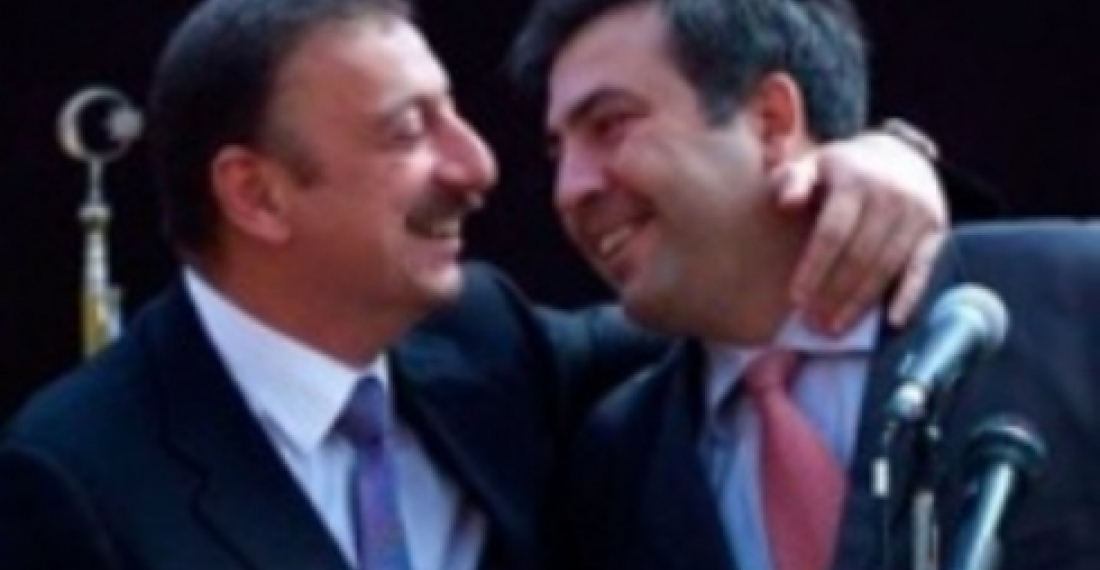
But under the façade of Presidential hugs and promises of eternal friendship tensions exist. The large Armenian and Azerbaijani communities in Georgia have always been both a bridge for friendship and a source of tension. Some Georgians persist in seeing them as a fifth column, although in truth most of the minority communities have for most of the time been nothing but very compliant.

Over the last few days a number of new irritants have been introduced to this complex relationship. First, former President Saakashvili, who is wanted in Georgia by the Prosecutor's Office, turned up in Baku for a high profile event attended by President Aliev. Such a development could hardly have been possible without the approval of Aliev himself. Georgian calls for Saakashvili to be extradited were as expected, ignored. Azerbaijan has been irritated recently by the dislocation of some of their opposition to Tbilisi, and by the focus on Azerbaijan of some Georgian human rights activists. Many saw the presence of Saakashvili in Baku as a gentle reminder to Tbilisi that people in glass houses should not throw stones.

Now in a second development in a week, the Armenian Ambassador in Tbilisi has been summoned to the Georgian Foreign Ministry and told in no uncertain terms of Georgia's displeasure that the Chairman of the Armenian Parliament had met the Chairman of the Parliament of South Ossetia. That the meeting has taken place has now been confirmed by both South Ossetian and Armenian sources, although a spokesman of the Armenian Parliament was quick to emphasise that the meeting was of a "private" nature. Georgia is very sensitive about contacts with the separatist leadership in South Ossetia, and Armenia would have been aware of these sensitivities. Why they chose to have the meeting now is not clear, but there is speculation that Armenia is upset with the new Georgia-Azerbaijan-Turkey relations.

It is most likely that for the moment all sides will let matters rest. There is neither the mood, nor the need at present to do otherwise. But the Georgian government would have drawn its own conclusions from the two incidents. There is a danger that the current Georgian government will imitate its predecessor and withdraw metaphorically from the Caucasus to the greener fields of Europe. After all Georgia is now the only South Caucasus country with Associate membership of the European Union. But such a policy is neither wise nor realistic. Georgia is the heart of the Caucasus and it has a role to play in the region. Georgia needs to manage its relationship with its two neighbours, even if, at least from Tbilisi's perspective, they are awkward neighbours.  

source: Dennis Sammut contributed this op-ed for commonspace.eu

photo: President Aliev of Azerbaijan with former president Saakashvili of Georgia (archive picture)

 

Related articles

Editor's choice
News
Council of Europe launches new International Claims Commission for Ukraine

Council of Europe launches new International Claims Commission for Ukraine

Thirty-four countries and the European Union have signed a new convention establishing an International Claims Commission for Ukraine at a diplomatic conference co-hosted by the 46-nation Council of Europe and the Netherlands in the Hague. The diplomatic conference was attended by leaders and high-level representatives from over 50 states, including the President of Ukraine, Volodymyr Zelenskyy, the President of the Republic of Moldova, Maia Sandu, and the Prime Minister of the Netherlands, Dick Schoof.  “Today marks a major step forward in ensuring accountability for Ukraine. The International Claims Commission represents justice and hope for tens of thousands of victims—our determination that those who have suffered will not be forgotten. I call for quick ratifications so we can get the commission rapidly up and running for the people of Ukraine,” said Council of Europe Secretary General Alain Berset. Ukrainian President Volodymyr Zelenskyy said: “We expect that every mechanism for compensation from the Register of Damage and Claims Commission to the actual payments – will start working and receive strong and sufficient international support, so that people can truly feel that any kind of damage caused by the war can be compensated. This war, and Russia’s responsibility for it, MUST become a clear example – so that others learn not to choose aggression.” “Accountability is about creating the conditions for peace that endures. And therefore, accountability is a condition of security – today and for the future. But accountability is not only about Ukraine. And it is not only about one aggressor and one victim. Accountability is about Europe. About every country in Europe. It is about whether Europe, as a whole, is willing to defend its peace,” said Maia Sandu, President of the Republic of Moldova, which currently holds the Presidency of the Council of Europe’s Committee of Ministers. The Prime Minister of the Netherlands, Dick Schoof, said: “Every day Russia is deliberately bombarding homes, destroying businesses and damaging infrastructure in Ukraine. Russia must compensate Ukraine for the damage caused. That is why we have launched the International Claims Commission for Ukraine and we are honoured to host it.” The International Claims Commission will be the second part of a comprehensive compensation mechanism related to Russia’s war of aggression, building on the existing Register of Damage for Ukraine. The claims commission will be established within the framework of the Council of Europe and will also be open to other countries. The Register of Damage for Ukraine, created in 2023, collects and records compensation claims submitted by individuals, organisations and public bodies in Ukraine. Forty-four states and the European Union have so far joined the Register, which has already received 86,000 claims. The International Claims Commission will review, assess and decide upon claims submitted to the Register of Damage for Ukraine and determine the amount of compensation, if any, which is due in each case. The convention establishing the commission will enter into force once it has been ratified by 25 signatories, as long as sufficient funds have been secured to support its initial work.

Popular

Editor's choice
News
Council of Europe launches new International Claims Commission for Ukraine

Council of Europe launches new International Claims Commission for Ukraine

Thirty-four countries and the European Union have signed a new convention establishing an International Claims Commission for Ukraine at a diplomatic conference co-hosted by the 46-nation Council of Europe and the Netherlands in the Hague. The diplomatic conference was attended by leaders and high-level representatives from over 50 states, including the President of Ukraine, Volodymyr Zelenskyy, the President of the Republic of Moldova, Maia Sandu, and the Prime Minister of the Netherlands, Dick Schoof.  “Today marks a major step forward in ensuring accountability for Ukraine. The International Claims Commission represents justice and hope for tens of thousands of victims—our determination that those who have suffered will not be forgotten. I call for quick ratifications so we can get the commission rapidly up and running for the people of Ukraine,” said Council of Europe Secretary General Alain Berset. Ukrainian President Volodymyr Zelenskyy said: “We expect that every mechanism for compensation from the Register of Damage and Claims Commission to the actual payments – will start working and receive strong and sufficient international support, so that people can truly feel that any kind of damage caused by the war can be compensated. This war, and Russia’s responsibility for it, MUST become a clear example – so that others learn not to choose aggression.” “Accountability is about creating the conditions for peace that endures. And therefore, accountability is a condition of security – today and for the future. But accountability is not only about Ukraine. And it is not only about one aggressor and one victim. Accountability is about Europe. About every country in Europe. It is about whether Europe, as a whole, is willing to defend its peace,” said Maia Sandu, President of the Republic of Moldova, which currently holds the Presidency of the Council of Europe’s Committee of Ministers. The Prime Minister of the Netherlands, Dick Schoof, said: “Every day Russia is deliberately bombarding homes, destroying businesses and damaging infrastructure in Ukraine. Russia must compensate Ukraine for the damage caused. That is why we have launched the International Claims Commission for Ukraine and we are honoured to host it.” The International Claims Commission will be the second part of a comprehensive compensation mechanism related to Russia’s war of aggression, building on the existing Register of Damage for Ukraine. The claims commission will be established within the framework of the Council of Europe and will also be open to other countries. The Register of Damage for Ukraine, created in 2023, collects and records compensation claims submitted by individuals, organisations and public bodies in Ukraine. Forty-four states and the European Union have so far joined the Register, which has already received 86,000 claims. The International Claims Commission will review, assess and decide upon claims submitted to the Register of Damage for Ukraine and determine the amount of compensation, if any, which is due in each case. The convention establishing the commission will enter into force once it has been ratified by 25 signatories, as long as sufficient funds have been secured to support its initial work.

