This editorial first appeared in the 18 April 2023 edition of our newsletter Central Asia Concise. If you would like to subscribe to Central Asia Concise, or any other of our newsletters, please click here.
Events of the past year have unleashed a new "Great Game" in Central Asia, writes commonspace.eu in this editorial. "The plan, it seems, builds on China’s “Belt and Road” programme, but there also now appears to be a much stronger political angle to China’s engagement. China is worried that Russia’s increasing weakness is creating a vacuum in Central Asia that others may be tempted to fill. It is determined to get there first. China’s approach seems to be to keep the west out, the Russians down, and everyone else on the margin."
“The Great Game” was the unfortunate name given to rivalry between Tsarist Russia and the British Raj in Central Asia in the 19th century. By all accounts the Russians won. The Raj has long disappeared, but the Tsar’s successors in the Kremlin maintained complete dominance over the region, first in the framework of the Soviet Union, and since 1991 as part of a privileged position in the near abroad.
The relationship was never equal - Moscow was always the net beneficiary. It is true that Russia brought to Central Asia a measure of modernisation in the 20th century, which it badly needed, but in return Moscow expected complete subjugation and fully exploited the region. Central Asia’s rich raw materials became a necessary element of the Soviet economy.
When the Soviet Union collapsed, the constituent republics in the Baltic States, the Caucasus and Eastern Europe rushed to declare their independence, but Central Asian leaders hesitated, not quite knowing what to do next. For most of the last thirty years the situation changed little. Central Asia’s exports to world markets continued to go largely via Moscow, whilst politically the five republics were firmly within the Russian grip – even if Turkmenistan tried to insulate itself by hermetically isolating itself from global processes. Things started to change over the last five years, but change accelerated considerably in the last year, following the Russian invasion of Ukraine. The invasion laid bare the ambitions of Putin’s Kremlin, to limit the sovereignty of the post-Soviet republics, and risked sucking the region into Russia’s quagmire. The Central Asian republics have finally mustered the strength to resist.
This has unleashed a new “Great Game”, one that is perhaps more subtle than the one that played out in the 19th century, and at least one of the players has changed. On the one hand Russia has remained, but challenging it, now in a big way, is Russia’s “friend without limits” - China. It is true that others are hovering around with different degrees of success - from the west: the EU, the Americans and the Turks all have their Central Asia agendas and ambitions; and from the South: the Gulf States, as well as India, are making some spirited inroads. But their efforts are mostly symbolic, or on a scale that can only give results in the long term. With the Chinese it is a different story.
China’s leadership has dubbed the present moment of Chinese political and military resurgence as “the new era”. The “great game” in “the new era” is now going in full swing. It is true that Chinese overtures to the region have been ongoing since the collapse of the USSR. They were mainly in the fields of trade and investment. Co-operation in the more sensitive political, military and security spheres came later. But things are now accelerating fast.
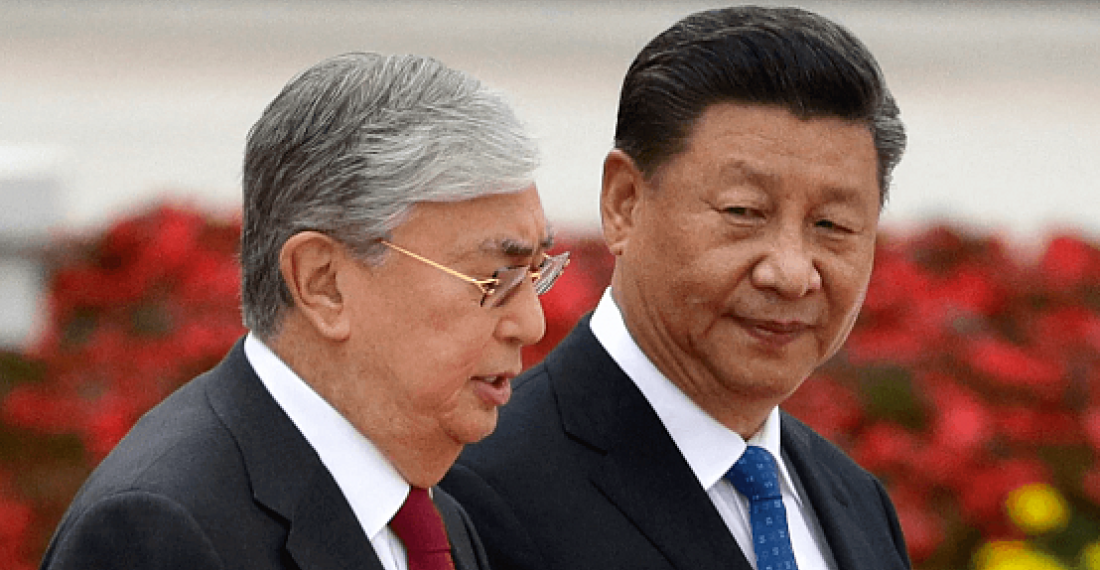
Following the last congress of the Chinese Communist Party, and the consolidation of the leadership of Xi Jinping at the helm of the party and country, Chinese Foreign Minister Qin Gang declared last month that China had “pressed [the] acceleration button” in diplomacy. Nowhere is this being played out more visibly than in Central Asia. In 2022 President Xi chose Central Asia as the first region to visit on his first trip abroad after the Covid-19 lockdown. Next month Xi will host the first China-Central Asia summit. In a similar message to the five Central Asian nations on the occasion of the Nowruz Holidays, Xi invited the leaders to the summit in Xian, and said that China was preparing a “grandiose plan” for co-operation with the region.
In the meantime the Chinese political and diplomatic tools have been in overdrive. In the last days China and Kazakhstan have announced they are close to introducing visa free travel between them. Intriguingly, China in recent weeks has also used the leadership of its Xinjiang province, which neighbours Central Asia as part of its diplomatic effort. It sent Ma Xingrui, the Communist Party chief in Xinjiang on a four-day visit to the region in late March. Xinjiang is seen in the west as a troubled region, but its ethnic, religious and commercial affinities to Central Asia make it well placed to play a key role in China’s outreach to the region.
During a series of meetings with top leaders from Kazakhstan, Uzbekistan and Kyrgyzstan, Ma reaffirmed Beijing’s commitment to cementing ties with Central Asia. Ma told Kazakh President Kassym-Jomart Tokayev, according to the Astana Times, “We consider Kazakhstan the top priority area for cooperation. In general, China’s cooperation with Kazakhstan is carried out through Xinjiang.”
Ma’s visit is however only a warming-up act. The real action is expected in May, when President Xi hosts the Central Asian leaders in China for the first China-Central Asia summit. In his invitation for the event sent out in March, Xi told the Central Asian leaders he is "eager to discuss a grand plan to develop relations". The plan, it seems, builds on China’s “Belt and Road” programme, but there also now appears to be a much stronger political angle to China’s engagement. China is worried that Russia’s increasing weakness is creating a vacuum in Central Asia that others may be tempted to fill. It is determined to get there first. China’s approach seems to be to keep the west out, the Russians down, and everyone else on the margin.
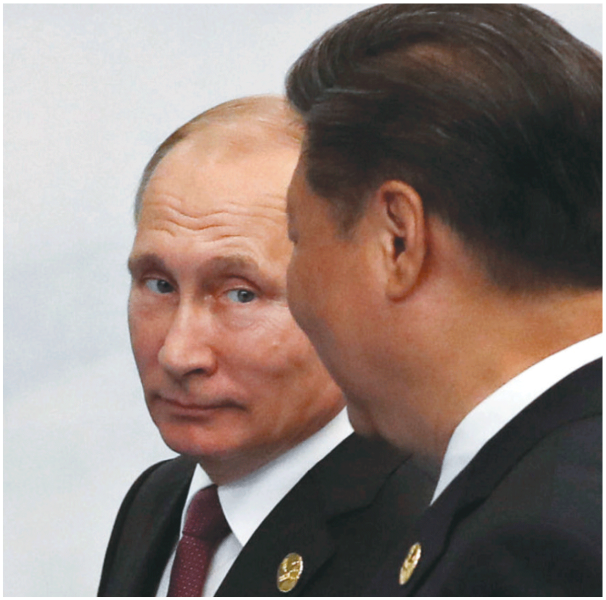
There is little doubt that the big loser in this “great game in the new era” is Russia. But the Kremlin at this point has little choice but to try to cut its losses. It desperately needs China’s support - at least economically, politically and diplomatically, if not militarily - as it tries to sort out the mess it created for itself in Ukraine, and resist Western sanctions imposed after its invasion. Russia still has a number of levers over Central Asia. Large Russian minorities continue to live in the region, especially in Kazakhstan, and conversely, millions of Central Asians work in Russia bringing in important remittances, especially for Uzbekistan, and Tajikistan.
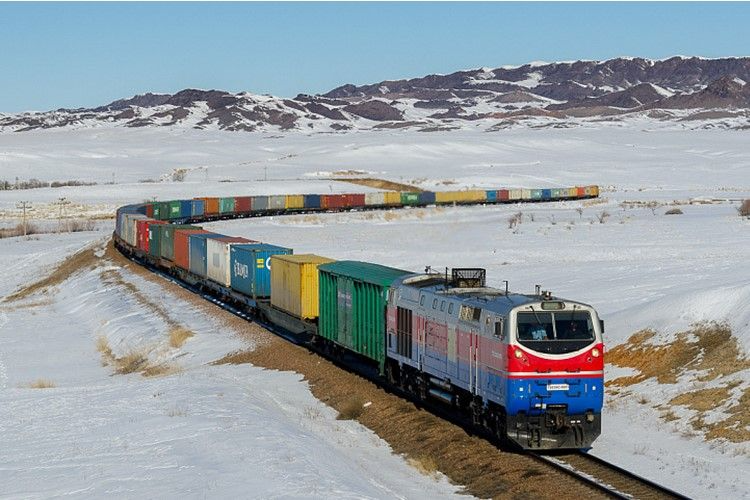
The Russian language remains the lingua franca in the region, and is still important for education and commerce. And, at least until new projects currently being discussed are realised, the Central Asian countries remain heavily dependent on Russia for their communications and trade with the outside world. But these factors alone are no longer enough to ensure Russian monopoly in the region, and are likely to dent rather than resist China’s inroads.
The leaders of the Central Asian republics, most of them relatively new, understand they are walking on a dangerous tightrope. Their approach so far has been to increase contact and co-operation between each other and co-ordinate positions - in some cases not an easy thing to do given that some have lingering border disputes - and on the other hand diversifying their relationships beyond Russia and China with new partnerships with the EU, US, India, Japan and the GCC countries. This has provided an opportunity for a number of other countries and entities to engage with the region as never before, as can be seen by the stream of high level visits in both directions.
But managing Moscow remains a priority. It is not by coincidence that the first trip overseas of the newly appointed Kazakh Foreign Minister, Murat Nurtleu, was to Moscow. Astana simply cannot afford Moscow’s ire.
So, a region that some wrongly considered until recently as a backwater, has all of a sudden emerged as one of intense big power rivalry. Clever diplomacy by the Central Asian republics can turn this to their benefit, but they fully realise that the stakes are high, and the risks even higher.