


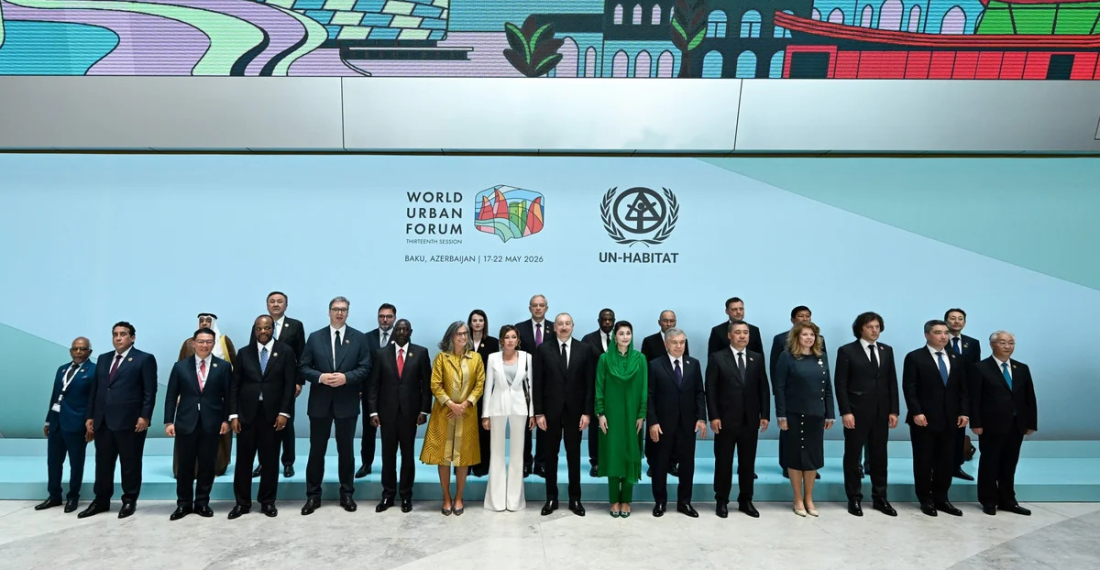
Azerbaijan is hosting the 13th session of the World Urban Forum from 17 to 22 May 2026. The World Urban Forum (WUF) was established by the United Nations in 2001 to address one of the world’s most pressing challenges: rapid urbanization and its far-reaching effects on communities, cities, economies, climate change, and public policy.
Anacláudia Rossbach, Under-Secretary-General and Executive Director of the United Nations Human Settlements Programme (UN-Habitat) says: “At the Forum, we will address crucial challenges, such as housing, land use, urban planning, governance and participation. We will listen to diverse stakeholders and tackle key issues: how to ensure affordable housing for all, transform informal settlements, recover and rebuild, and enhance climate resilience. We need to build strong coalitions for better solutions to challenges posed by the global housing crisis."
This year’s WUF is themed “Housing the World: Safe and Resilient Cities and Communities” and the Azerbaijani hosts are focusing on how housing intersects with climate change, social equity, economic development, and crisis recovery. The theme is central and brings attention to climate change, a transboundary challenge that is currently being sidelined from most political agendas due to conflicts, militarisation, and the rise in far-right politics.
The event itself was directly affected by the very issue it sought to address; Baku experienced severe rainfall that flooded streets, homes, and even the conference venue. In a video reported by OC Media, participants were seen crossing the water, holding their shoes in their hands, and with their pants rolled up. Despite this unfortunate event, the forum brought together over 40,000 people from around 182 countries to discuss the different issues.
While the WUF does not produce legally binding decisions, the forum seeks to provide a platform for policy dialogue. This year’s forum particularly focused on the world housing crisis, boldly asking participants, “The global housing crisis: what is the plan?” While building more may seem to be a quick fix, the panel encouraged countries to plan for sustainable urban development and cooperation with both the scientific community and the local civil society.
In his opening speech, the Azerbaijani President, Mr. Aliyev, stated that “in many parts of Azerbaijan, urban development is progressing very rapidly, and definitely this important gathering and the expertise of our friends from the United Nations and numerous guests who visit us will help all of us to learn more, to learn from each other, to learn from positive experiences, and also to talk about our mistakes.”
While the forum is not expected to reach major policy recommendations, it brings attention to climate resilience and, importantly, to shared international experience. This is a point that should be explored further, particularly when it comes to the South Caucasus. All three countries are affected by pollution, water scarcity, extreme heat, and extreme rainfall. Georgia’s Black Sea coastline, an area crucial for trade, faces significant risks from rising sea levels. By contrast, the Caspian Sea is retreating, posing threats to coastal infrastructure, food security, and local livelihoods. The countries also share two transboundary rivers, the Kura and the Aras, both of which face severe pollution.
While the region is affected in different ways by climate change, there are no regional strategies to manage water resources, share information, or coordinate responses. During the conflict between Armenia and Azerbaijan, this lack of coordination was understandable; however, now, it seems like a missed opportunity.
LINKS Europe, in November 2025, published a report written by Armenian and Azerbaijani experts that addressed environmental peace-building. The report proposed different areas of cooperation when it comes to shared environmental problems. These ideas shared in the report were not abstract but rooted in local knowledge and pragmatism. Armenia and Azerbaijan are taking significant steps towards institutionalising peace, and these developments should not be underestimated. However, a common regional strategy that addresses climate change in the South Caucasus is one area that cannot be afforded to be overlooked.
Source: This briefing was prepared by the editorial team of Commonspace.eu



