Theme

Diplomacy

Editor's choice
News
Germany accuses Russia of cyberattacks and disinformation campaign

Germany accuses Russia of cyberattacks and disinformation campaign

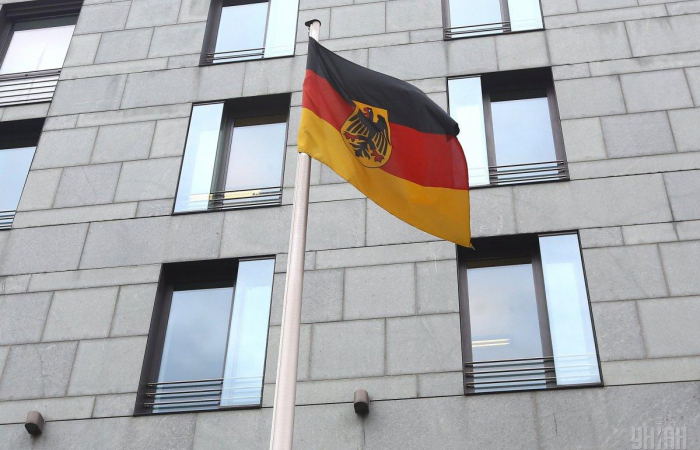
The German government holds Russia responsible for a cyberattack on German air traffic control, and for targeted disinformation campaigns before the last federal election. According to the German Foreign Office in Berlin, the incidents could be clearly attributed to the Russian military intelligence service, the GRU. In response, the Russian ambassador to Berlin was summoned to the Foreign Ministry. "We have been observing a massive increase in threatening hybrid activities by Russia for some time now," a spokesperson for the Foreign Ministry stated. These range from disinformation campaigns and espionage to cyberattacks and sabotage attempts. The aim is to divide society, sow distrust, and undermine confidence in democratic institutions. The spokesperson added that with these actions, Russia is "very concretely threatening our security, not only through its war of aggression against Ukraine, but also here in Germany."  The Foreign Ministry spokesperson explained that the cyberattack on air traffic control in August 2024 was clearly attributed to the hacker collective "APT28," known as "Fancy Bear," and to the responsibility of the Russian military intelligence service, the GRU. Furthermore, it could now be "conclusively stated" that Russia had attempted "to influence and destabilize both the last Federal election and the ongoing internal affairs of the Federal Republic of Germany." There was "absolutely irrefutable evidence" for this". The so-called "Storm 1516" campaign, which has been running since 2024, is allegedly backed by "reliable information" that the Moscow-based think tank "Center for Geopolitical Expertise" is behind it. The Center is also said to be supported by Russian military intelligence. Its primary aim is to influence democratic elections in the West. (Click the image to read more).
Editor's choice
Opinion
Opinion: A sustainable peace requires consistent long-term European involvement

Opinion: A sustainable peace requires consistent long-term European involvement

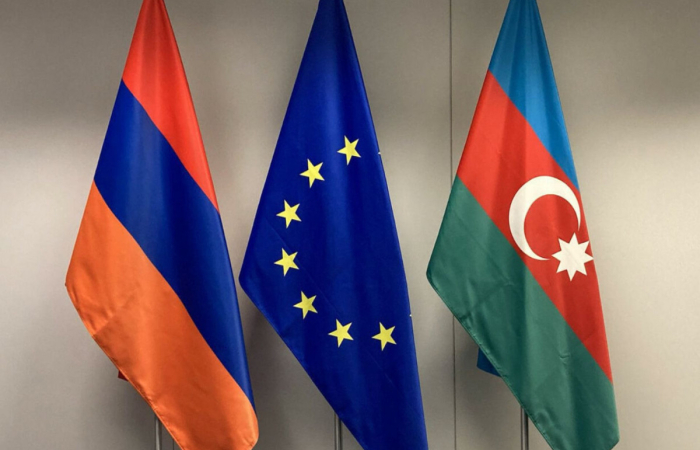
There is no denying that the EU, especially key member states acting in support, helped bring Baku and Yerevan closer to the Washington Declaration of August 8, 2025. But a declaration is not a treaty. Turning principles into a peace deal and eventually to a sustainable peace requires consistent long-term European involvement, writes Yalchin Mammadov in this-op-ed for commonspace.eu Before facilitating trust between Armenia and Azerbaijan, the EU is first expected to address its own credibility gap with Baku. A more balanced approach—such as including Azerbaijan, alongside Armenia, in the European Peace Facility—could be a useful first step. Diplomats can negotiate peace; societies must build peace. In this context, the EU can do what it does the best: long-term societal engagement. By expanding youth and academic exchange programmes, investing in cross-border civil society initiatives, and fostering people-to-people cooperation, Brussels can help shape a new generation equipped to sustain peace beyond political cycles. Such tools are slow and unglamorous, but if ignored, even the strongest treaty risks collapse. And obviously, these aspects require two-way engagement and genuine willingness by both governments to facilitate contact. If Brussels wants to remain influential, it needs to replace outdated one-size-fits-all policies with ambitious, interest-driven and differentiated approaches. Without a clear regional strategy, which appears to be the current situation, the South Caucasus will continue to sit at the margins of Europe’s security architecture—leaving space for other powers to take the lead. (You can read the op-ed in full by clicking the image.)

Filter archive

Publication date
Editor's choice
Analysis
Isolated

Isolated

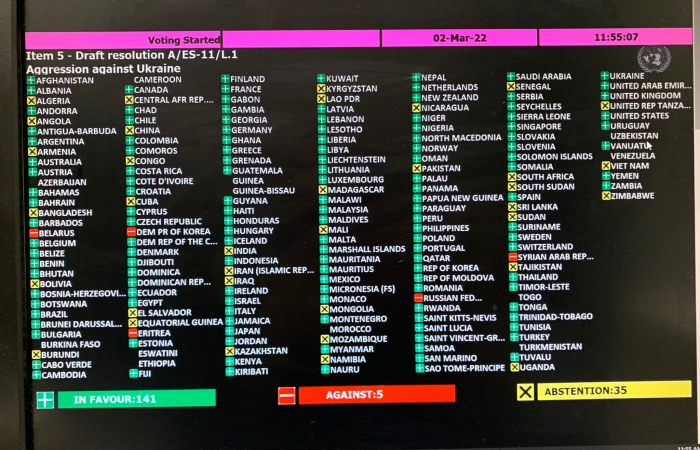
In a historic vote in the United Nations General Assembly condemning Russian aggression against Ukraine on Wednesday (2 March), Putin's Russia found itself isolated from the rest of the international community, with only North Korea, Belarus, Eritrea and Syria supporting its position in the 193 member world body. 141 countries voted for the resolution, 5 voted against and 35 abstained. 12 countries were absent. The vote was a stark revelation of Russia's isolation in the international community as it pursues its aggression against Ukraine. In a similar situation in 2014, when Russia annexed Crimea, a UN General Assembly resolution condemning the move received the support of 100 countries. This time the number was up by 41 countries, sending a resounding diplomatic message. The number of abstentions in 2014 was 58, compared to 35 this time. 24 countries were absent in 2014, this time only 12. Those supporting the Russian position in 2014 were 11, this time the number is down to 5.
Editor's choice
Editorial
Editorial: Give Ukraine and the other trio countries an EU membership perspective now

Editorial: Give Ukraine and the other trio countries an EU membership perspective now

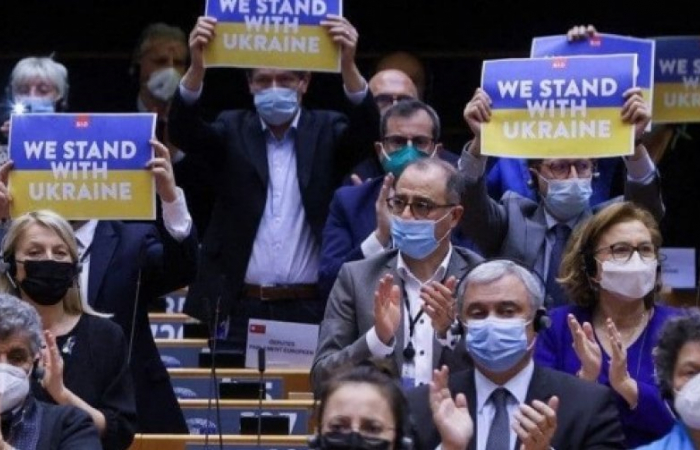
A European Parliament resolution yesterday urged EU countries to work towards granting Ukraine EU candidate status. A membership perspective in the form of candidate status is not membership. It is a political signal that the door of membership is open, and an opportunity to focus minds on all the sides to start the long and laborious process of EU membership. Whilst the resolution of the European Parliament speaks only about Ukraine, the three trio countries should be given the membership perspective and candidate status simultaneously. All three are very determined in pursuing this path; all three have strong Association Agreements with the EU; and all three are under considerable Russian pressure. A membership perspective will strengthen the hand of those working for reforms in these countries. It will also send another message to Putin's Russia that its nefarious policy towards the neighbours has failed. Now is the right time to do that. Give Ukraine, Moldova and Georgia a membership perspective now! Give them candidate status and work with them to make this an achievable task within this decade.
Editor's choice
Commentary
A bad day for UN as Russia vetoes Security Council resolution; China, India and UAE abstain

A bad day for UN as Russia vetoes Security Council resolution; China, India and UAE abstain

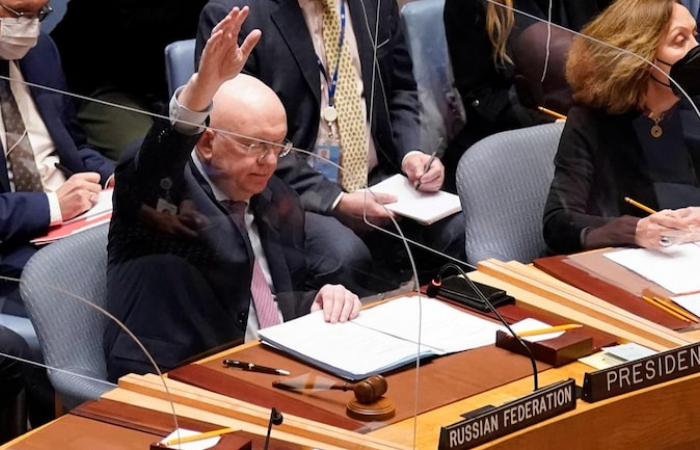
For those who are believers in multilateralism and a rules based international system last night's developments in the UN Security Council were a dark and disappointing moment. The Council considered a resolution put forward by more than sixty UN member states, which strongly condemned Russia’s invasion of Ukraine and called on Moscow to withdraw its troops immediately and provide safe access for humanitarian relief work. Russia, which has veto power as one of five permanent members of the council, voted against it and vetoed it as was expected. Eleven countries voted in favour. There was disappointment that three countries - China, India and UAE - abstained.
Editor's choice
Opinion
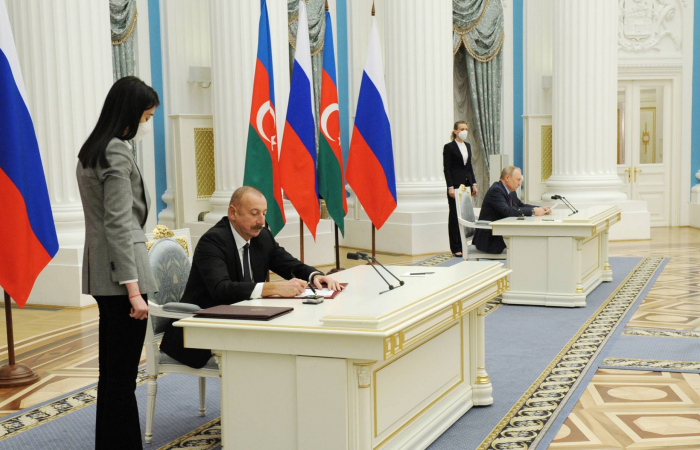
Opinion: Why non-aligned Azerbaijan signed an alliance declaration with Russia

Opinion: Why non-aligned Azerbaijan signed an alliance declaration with Russia

The signing of the an allied cooperation declaration with Russia should not come as a surprise since official Baku has long been maneuvering between Moscow and the West as much as it is possible to preserve its own “red lines” in terms of national interests, writes Fuad Shahbazov.