Theme

Diplomacy

Editor's choice
News
Pope's visit to Türkiye and Lebanon has a strong ecumenical character, and places interreligious dialogue at its centre

Pope's visit to Türkiye and Lebanon has a strong ecumenical character, and places interreligious dialogue at its centre

Pope Leo XIV has begun the first overseas trip of his pontificate, a six-day visit to Türkiye and Lebanon, which started yesterday (27 November) and ends on Tuesday (2 December). According to Vatican Radio, the visit "carries a strong ecumenical character and places interreligious dialogue at its centre. It will also be a moment of closeness to Christian communities and local populations across the region".   During nearly a week in the region, Pope Leo XIV will meet civil and religious authorities, visit mosques and ancient churches, pray at Beirut’s port in memory of the victims of the 2020 explosion, and hold private meetings with Presidents Recep Tayyip Erdoğan and Joseph Aoun.   A highlight of the visit will be a visit to Nicaea, where the Pope will mark the anniversary of the Council of Nicaea. Christians of many traditions recognise the Council of Nicaea as a foundation of shared faith. One of the most anticipated moments will be the Pope’s encounter with Lebanese youth in Bkerké, at the Maronite Patriarchate, a meeting expected to carry strong messages of hope in the Jubilee Year. A central event will be the ecumenical celebration in İznik, where the Pope and Ecumenical Patriarch Bartholomew will walk together toward the ruins of the Basilica of St Neophytos. The prayer, held before icons of Christ and the Council, will conclude with the lighting of a candle—a symbolic gesture of unity. The journey will also highlight interreligious engagement.   Memorable moments are expected throughout the trip: a wreath at Atatürk’s mausoleum, prayer inside the Blue Mosque, Mass at Istanbul’s Volkswagen Arena, the planting of a cedar at the presidential palace in Beirut, and prayer at the tomb of St Charbel in Lebanon. The Vatican said that "Pope Leo XIV’s pilgrimage to Türkiye and Lebanon aims to offer a voice of peace, unity, and hope at the heart of the Middle East."
Editor's choice
Analysis
Mehman Aliyev on what "peace" can look like for Ukraine

Mehman Aliyev on what "peace" can look like for Ukraine

In this analysis,  veteran Azerbaijani journalist and political commentator, Mehman Aliyev, draws lessons from the 1994 Armenia-Azerbaijan ceasefire, to assess what can be possible impact of ceasefire in Ukraine. According to diplomats, a negotiating format or a partial ceasefire based on a modified version of the twenty-eight points is entirely plausible in 2026. A frozen line of contact, monitored by international mechanisms while talks drag on, is more likely than a fully implemented peace treaty by early that same year. “This document opens a window,” said political commentator Farid Gakhramanov. “Whether it means the end of the war or the beginning of a new frozen conflict will depend on the decisions of Moscow, Kyiv, Washington, and Brussels — not on the document itself.” (You can read the full analysis by clicking the image)

Filter archive

Publication date
Editor's choice
News
NATO tells Russia to withdraw its troops from Georgia, Moldova and Ukraine

NATO tells Russia to withdraw its troops from Georgia, Moldova and Ukraine

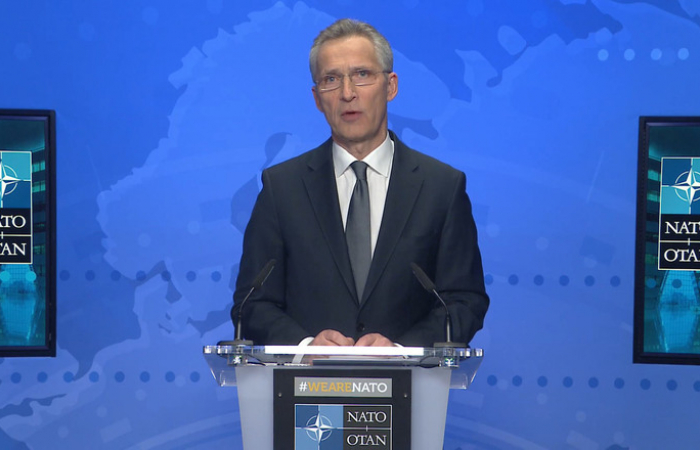
NATO has called on Russia to withdraw its troops from Georgia, Ukraine and Moldova where they are deployed without the consent of these countries. The call came as part of a western response to Russian sabre-rattling and attempts to assert the Kremlin's hegemonic control over its neighbouring countries, and amid fears of an imminent Russian military incursion in Ukraine
Editor's choice
News
The Kremlin is keeping Beijing informed of its talks with US and the west

The Kremlin is keeping Beijing informed of its talks with US and the west

Russia's ambassador to China, Andrey Denisov, on Tuesday (25 January) revealed that Moscow had been keeping Beijing informed on the content and progress of its security talks with the United States and Nato countries. Russia's president Vladimir Putin is expected in Beijing next week for the opening of the Winter Olympics.
Editor's choice
News
Brussels provides Ukraine with 1.2 billion euros financial assistance package

Brussels provides Ukraine with 1.2 billion euros financial assistance package

The European Commission proposes to support Ukraine with 1.2 billion euros of new financial assistance package made of both emergency loans and grants. The country is experiencing a financial shortage and borrowing is becoming more complex and expensive now that Russia uses threatening language and has deployed military troops and heavy weapons close to Ukraine's border.
Editor's choice
News
NATO sends additional military forces to Eastern Europe because of Russian threat

NATO sends additional military forces to Eastern Europe because of Russian threat

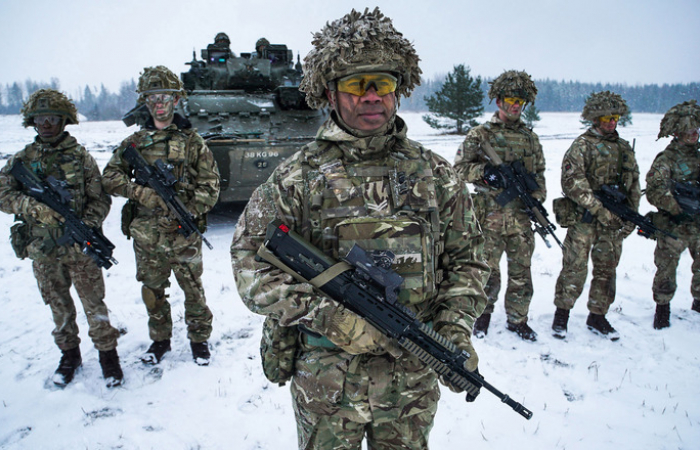
NATO is sending extra reinforcements to its member states in Eastern European because of Russia's military troop build-up on the border with Ukraine. The deployment includes frigates, fighter jets and troops for "collective defence". The reinforcements will be stationed in the Baltic Sea and Lithuania, among other places. A Russian invasion of Ukraine now appears increasingly likely, and the US and a number of western countries have evacuated non essential staff from their missions in Kyiv.
Editor's choice
News
US tells Russia in no uncertain terms: Don't do it!

US tells Russia in no uncertain terms: Don't do it!

The US, NATO, the EU and their members and partners believe Russia is about to intervene militarily in Ukraine. The message from US Secretary of State Blinken to Russian foreign minister Sergei Lavrov, at their talks in Geneva on Friday was clear and simple, "Don't do it, because the consequences will be swift and severe".
Editor's choice
News
In Tehran, at Friday prayers they hail Raisi's visit to Moscow

In Tehran, at Friday prayers they hail Raisi's visit to Moscow

Russia this week rolled out the red carpet for Iranian President Ebrahim Raisi. His visit included a rare invitation to address the State Duma, as well as a long meeting with president Putin. Raisi gave Putin the draft of "a document on strategic cooperation between our two countries" which he said can determine or at least clarify the co-operation between the two countries for the next two decades.