Theme

Diplomacy

Editor's choice
News
Germany accuses Russia of cyberattacks and disinformation campaign

Germany accuses Russia of cyberattacks and disinformation campaign

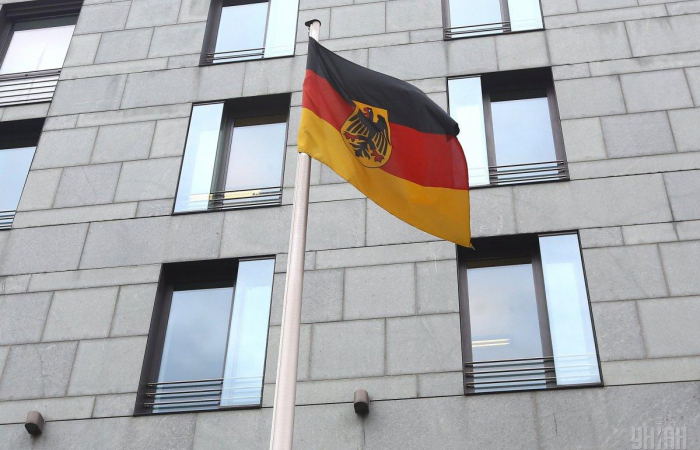
The German government holds Russia responsible for a cyberattack on German air traffic control, and for targeted disinformation campaigns before the last federal election. According to the German Foreign Office in Berlin, the incidents could be clearly attributed to the Russian military intelligence service, the GRU. In response, the Russian ambassador to Berlin was summoned to the Foreign Ministry. "We have been observing a massive increase in threatening hybrid activities by Russia for some time now," a spokesperson for the Foreign Ministry stated. These range from disinformation campaigns and espionage to cyberattacks and sabotage attempts. The aim is to divide society, sow distrust, and undermine confidence in democratic institutions. The spokesperson added that with these actions, Russia is "very concretely threatening our security, not only through its war of aggression against Ukraine, but also here in Germany."  The Foreign Ministry spokesperson explained that the cyberattack on air traffic control in August 2024 was clearly attributed to the hacker collective "APT28," known as "Fancy Bear," and to the responsibility of the Russian military intelligence service, the GRU. Furthermore, it could now be "conclusively stated" that Russia had attempted "to influence and destabilize both the last Federal election and the ongoing internal affairs of the Federal Republic of Germany." There was "absolutely irrefutable evidence" for this". The so-called "Storm 1516" campaign, which has been running since 2024, is allegedly backed by "reliable information" that the Moscow-based think tank "Center for Geopolitical Expertise" is behind it. The Center is also said to be supported by Russian military intelligence. Its primary aim is to influence democratic elections in the West. (Click the image to read more).
Editor's choice
Opinion
Opinion: A sustainable peace requires consistent long-term European involvement

Opinion: A sustainable peace requires consistent long-term European involvement

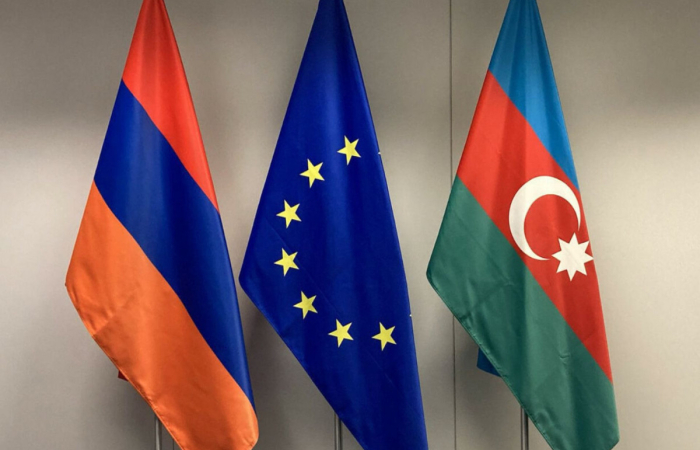
There is no denying that the EU, especially key member states acting in support, helped bring Baku and Yerevan closer to the Washington Declaration of August 8, 2025. But a declaration is not a treaty. Turning principles into a peace deal and eventually to a sustainable peace requires consistent long-term European involvement, writes Yalchin Mammadov in this-op-ed for commonspace.eu Before facilitating trust between Armenia and Azerbaijan, the EU is first expected to address its own credibility gap with Baku. A more balanced approach—such as including Azerbaijan, alongside Armenia, in the European Peace Facility—could be a useful first step. Diplomats can negotiate peace; societies must build peace. In this context, the EU can do what it does the best: long-term societal engagement. By expanding youth and academic exchange programmes, investing in cross-border civil society initiatives, and fostering people-to-people cooperation, Brussels can help shape a new generation equipped to sustain peace beyond political cycles. Such tools are slow and unglamorous, but if ignored, even the strongest treaty risks collapse. And obviously, these aspects require two-way engagement and genuine willingness by both governments to facilitate contact. If Brussels wants to remain influential, it needs to replace outdated one-size-fits-all policies with ambitious, interest-driven and differentiated approaches. Without a clear regional strategy, which appears to be the current situation, the South Caucasus will continue to sit at the margins of Europe’s security architecture—leaving space for other powers to take the lead. (You can read the op-ed in full by clicking the image.)

Filter archive

Publication date
Editor's choice
News
Brussels hosts important discussions between the leaders of Armenia and Azerbaijan

Brussels hosts important discussions between the leaders of Armenia and Azerbaijan

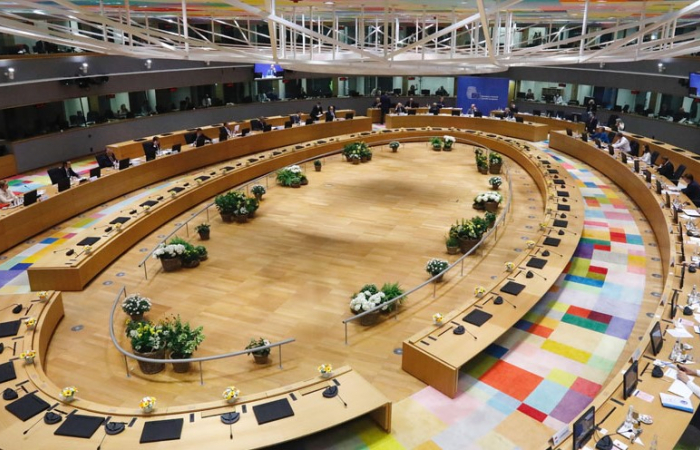
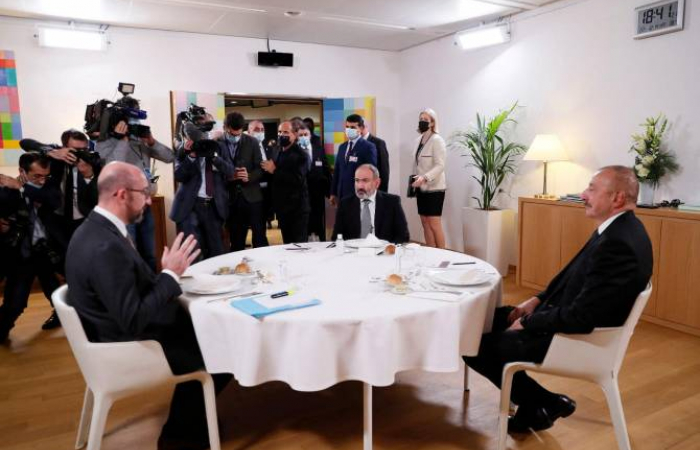
The leaders of Armenia and Azerbaijan, Nikol Pashinyan and Ilham Aliyev, will today meet in Brussels together with the president of the European Council, Charles Michel. The trilateral meeting is taking place at a critical moment for the future of the South Caucasus as Armenia and Azerbaijan seek ways to build peace between them following the 44 Day Karabakh war in the autumn of 2020. It is taking place in the shadow of the Russian invasion of Ukraine which has caused the bbiggest crisis on the European continent since World War II. Michel hosted a previous meeting with Aliyev and Pashinyan on 14 December 2021, and a new format appears to be emerging for contact between Armenia and Azerbaijan. Observers are hesitant to call it a peace process yet, but the importance of the talks is considerable. This was highlighted yesterday when US Secretary of State Antony Blinken spoke on the phone with the leaders of Armenia and Azerbaijan to stress the US support for the talks. In Brussels Michel is expected to urge Pashinyan and Aliyev, with who he has built a strong personal rapport over the last year, to work together to de-escalate tensions on the border, move forward with the process of agreeing the terms of a peace agreement, and implement confidence and security building measures to support their work and help build trust at the political, military and societal levels.
Editor's choice
News
UN Secretary General says  “Mine action is an investment in humanity. It is a prerequisite for humanitarian relief efforts and the foundation of lasting peace and sustainable development.”

UN Secretary General says  “Mine action is an investment in humanity. It is a prerequisite for humanitarian relief efforts and the foundation of lasting peace and sustainable development.”

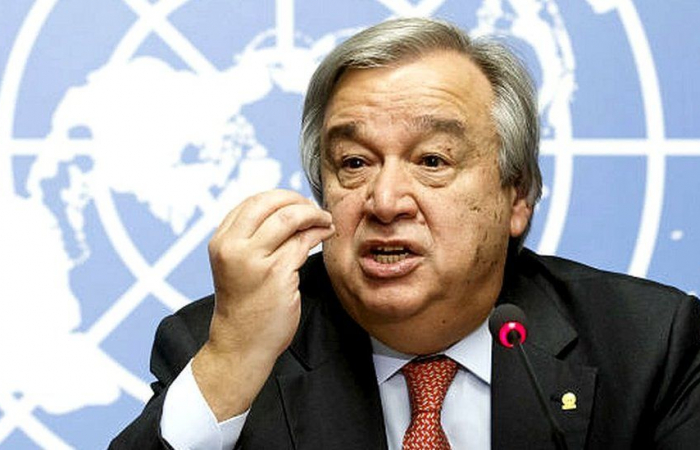
The United Nations marks 4 April as International Landmine Awareness Day.  This year, in a message on the occasion, UN Secretary General Antonio Gutteres said that the day  “reminds us how far we have come in clearing the world of explosive remnants of war – and how far we still have to go.” Gutteres pointed out that in Ukraine, the legacy of a single month of war – in the form of unexploded ordnance, landmines, and cluster munitions – will take decades to tackle, threatening lives long after the guns fall silent. In his message Antonio Gutteres also called on all states to accede without delay to the Ottawa Convention banning the production and use of landmines. "Permanent members of the Security Council in particular have a special responsibility", Gutteres said.
Editor's choice
Opinion
Opinion: A resumption of the Iran nuclear deal is also good for Armenia

Opinion: A resumption of the Iran nuclear deal is also good for Armenia

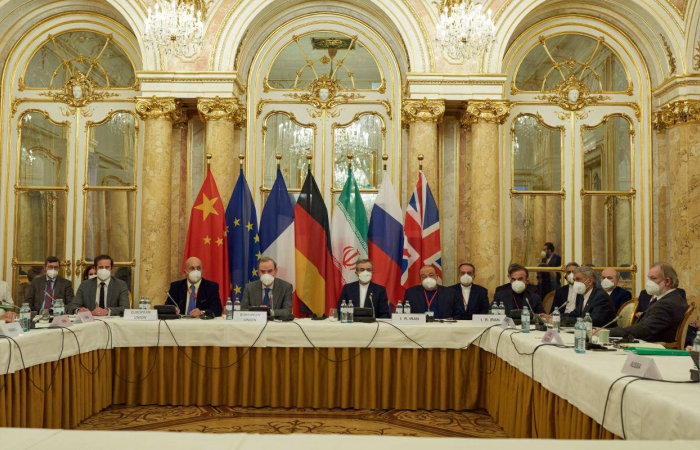
Reports from Vienna suggest that Iran and the world powers are close to agreeing on restoring the Iran Nuclear Deal. For a moment it appeared that the negotiations were going to get entangled in the current Ukraine crisis, but it appears that Iran has dissuaded Russia from doing so. In this op-ed for commonspace.eu Benyamin Poghosyan says a deal would be good for neighbouring countries like Armenia who are keen to exploit trade opportunities with Iran.
Editor's choice
News
European Parliament president Roberta Metsola visits war torn Kyiv in an act of solidarity with the Ukrainian people

European Parliament president Roberta Metsola visits war torn Kyiv in an act of solidarity with the Ukrainian people

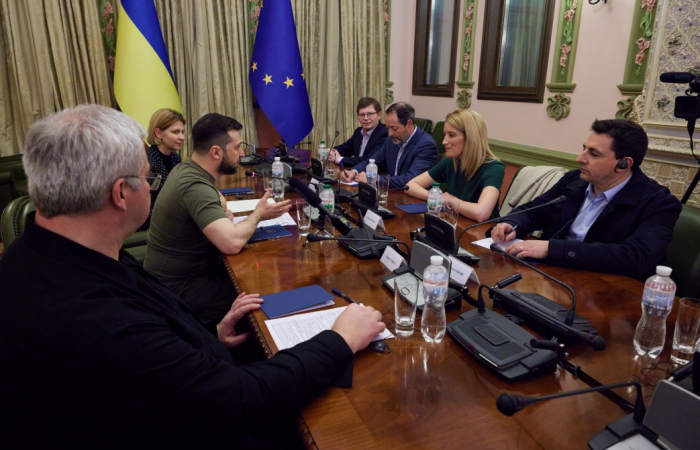
The president of the European Parliament on Friday (1 April) became the most senior EU official to visit Kyiv since the Russian invasion of Ukraine started more than a month ago.  In meetings with Ukrainian president  Volodymyr Zelenskyy, and with members of the Ukrainian parliament, Roberta Metsola assured Ukrainians that the people of Europe stand with Ukraine and will help rebuild its towns and cities after the war with Russia. Metsola, who took over as the European Parliament's president in January, also said the assembly would support Ukraine's efforts to start the process of joining the European Union.  "Please believe me when I say that the European Parliament, the European Union and the people of Europe stand with Ukraine. That is why I am here today, because we stand with you," she said after arriving in the capital Kyiv.
Editor's choice
Interview
In an interview with commonspace.eu Armenian Deputy Foreign Minister Paruyr Hovhannisyan describes EU-Armenia relations as "very diverse, multifaceted and dynamic"

In an interview with commonspace.eu Armenian Deputy Foreign Minister Paruyr Hovhannisyan describes EU-Armenia relations as "very diverse, multifaceted and dynamic"

In November of last year Paruyr Hovhannisyan was appointed Deputy Foreign Minister of Armenia with responsibility for relations with the European Union. This week he was in Brussels where he had meetings with officials from the EU institutions. Commonspace.eu spoke with the Deputy Foreign Minister on the current state of Armenia-EU relations and prospects for the future. Hovhannissian described relations as very diverse, multifaceted and dynamic.
Editor's choice
Interview
GEU Podcast: Giving EU citizens a voice on foreign policy – with Dr Dennis Sammut

GEU Podcast: Giving EU citizens a voice on foreign policy – with Dr Dennis Sammut

“I think what is important is that the issue of international affairs is understood not to be an elitist sphere but something that impacts the lives of everyone in one way or another; and as a result, discussions on foreign policy need to be extended to include the wider citizenry. This is a challenge going forward and an increasingly important one.” – Dr Dennis Sammut on the latest final episode of Global Europe Unpacked
Editor's choice
News
Intra-Yemeni consultations kick off in Riyadh under the auspices of the GCC

Intra-Yemeni consultations kick off in Riyadh under the auspices of the GCC

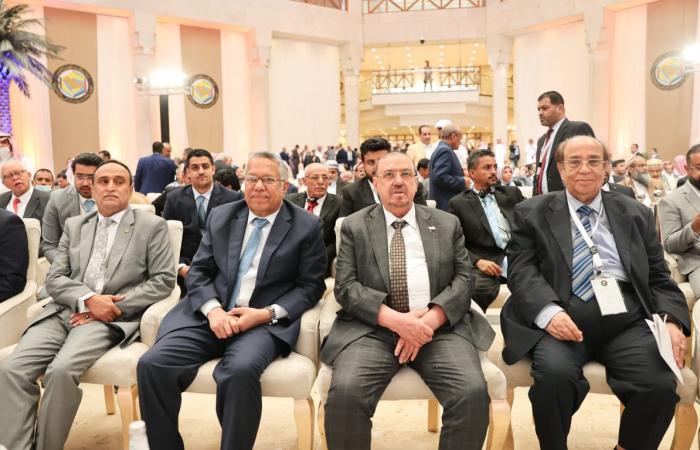
Under the auspices of the Gulf Cooperation Council, several Yemeni leaders, politicians and activists are meeting in Riyadh, Saudi Arabia for a week-long consultation aimed at ending the war in Yemen. The Riyadh consultations are considered to be the largest Yemeni-Yemeni dialogue event since the National Dialogue Conference in 2013. 
Editor's choice
News
Pashinyan and Aliyev will meet in Brussels next week

Pashinyan and Aliyev will meet in Brussels next week

President Ilham Aliyev of Azerbaijan and prime minister Nikol Pashinyan of Armenia will meet in Brussels on 6 April at the invitation of European Council president Charles Michel. The three leaders will review developments since their last meeting on 14 December 2021. In preparation of the leaders' meeting, the European Union on Wednesday (30 March) hosted a meeting of high-level officials from Armenia and Azerbaijan in Brussels to advance joint efforts to find solutions to a range of issues between both countries.   A statement posted on the website of the European External Action Service said, "the meeting between Secretary of the Security Council of the Republic of Armenia, Armen Grigoryan, and Assistant to the President of the Republic of Azerbaijan, Hikmet Hajiyev, was facilitated by EU Special Representative for the South Caucasus Toivo Klaar."